
📚 Regional Mango Names Guide
Did you know that Alphonso is called Badami in Karnataka and Hapus in Maharashtra? Explore our complete state-by-state guide mapping 30+ regional names across India.
Also known as: Amrapali x Janardhan Pasand Hybrid, CISH Hybrid-1
Typical diseases and disorders affecting this variety:
Detect these early using our Plant Guard AI.
Read our detailed Mango Diseases & Safety Guide.
Ambika is a premium late-season hybrid developed at the Central Institute for Subtropical Horticulture (CISH), Lucknow. Created by crossing the dwarf, regular-bearing Amrapali with the highly aromatic South Indian variety Janardhan Pasand, it represents a landmark achievement in modern Indian mango hybridization, combining high productivity with superb fruit quality.
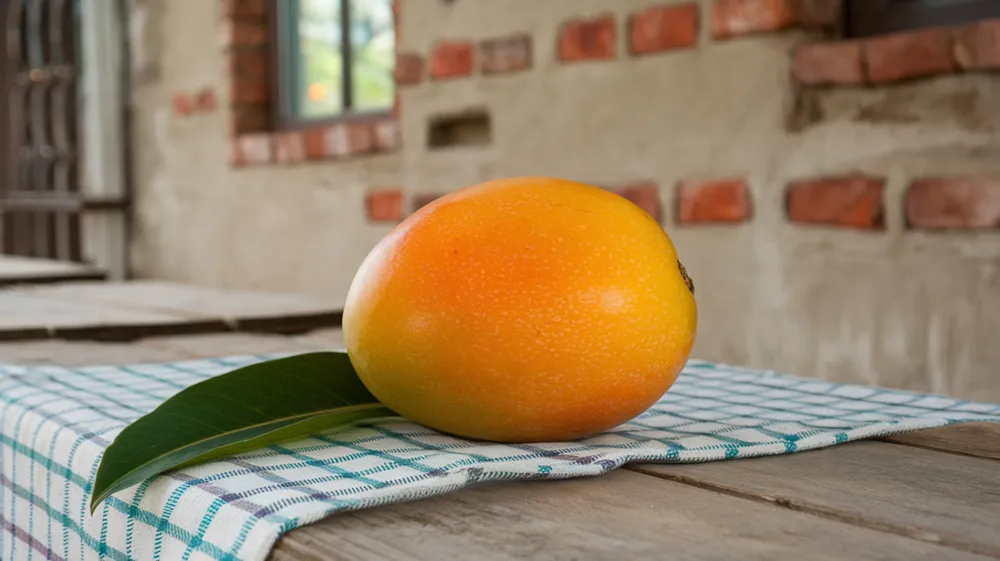
Physically, the Ambika is a large, attractive fruit, weighing between 300 and 400 grams, with a smooth oval-oblong shape. As it ripens, the base skin turns bright golden-yellow, decorated with a gorgeous reddish-purple sun blush near the shoulders. The flesh is firm, deep saffron-orange, and entirely fiberless, offering a premium slicing experience. TSS levels range from 19° to 21° Brix, providing a rich, satisfying sweetness.
The season is late, peaking throughout July. For commercial growers, Ambika offers a major advantage: it inherits the regular annual bearing habit of Amrapali, delivering high yields each year. Its post-harvest shelf life is outstanding, lasting 8 to 12 days at room temperature due to its firm skin, making it highly suitable for long-distance transport and export.
To distinguish Ambika from other varieties, look for its distinctive red blush and late July availability. When purchasing, choose fruits with firm skins and clean stem scars. For more hybrid variety guides or disease identification, explore our Mango Identifier Hub, or view profiles on Amrapali, Mallika, and Dasheri.
For comparisons with other regional and specialized cultivars, explore our profiles on Sindhu and Au Rumani.
Exotic sweetness balanced by a mild citrus tang, with pleasant undertones of apricot and papaya
Moderately strong, sweet, and tropical with clean melon-like notes
Highly firm, smooth, and completely fiberless
None
How to tell if it's a genuine Ambika:
Did you know that Alphonso is called Badami in Karnataka and Hapus in Maharashtra? Explore our complete state-by-state guide mapping 30+ regional names across India.
Released in the early 2000s by CISH Lucknow under the Indian Council of Agricultural Research (ICAR). It was designed to provide North Indian farmers with a high-value, blushed late-season alternative.
The parental combination of Amrapali's high sugars and Janardhan Pasand's exotic southern aromatics makes Ambika a unique hybrid that is highly appreciated by progressive orchardists.
Quick reference for identifying common healthy vs. problematic conditions:
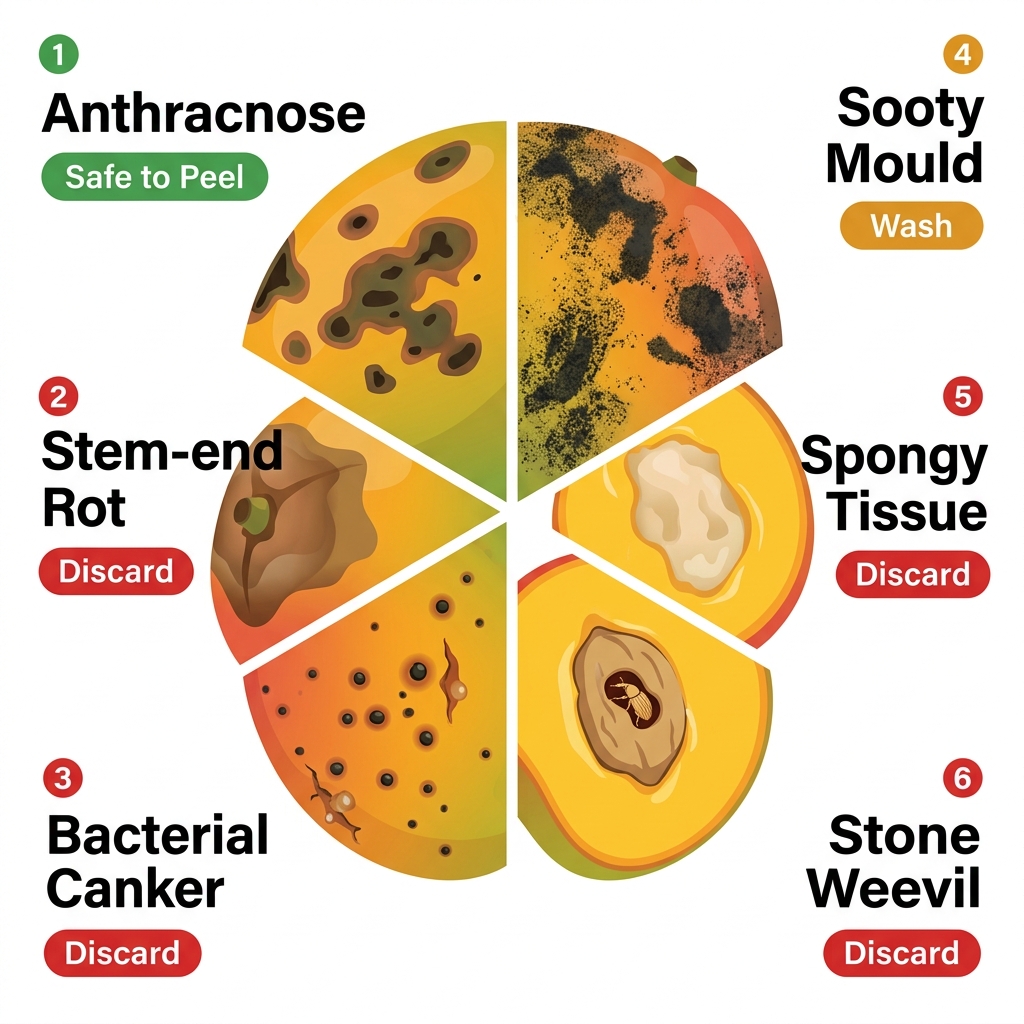
Pro Tip: Surface spots like Anthracnose are often harmless to the fruit inside, while Bacterial Canker or Stem-end Rot usually require discarding the fruit.
Ensure your Ambika mango is naturally ripened. Use Food Guard to detect Calcium Carbide and other chemical ripeners.