
📚 Regional Mango Names Guide
Did you know that Alphonso is called Badami in Karnataka and Hapus in Maharashtra? Explore our complete state-by-state guide mapping 30+ regional names across India.
Also known as: Florida Palmer, Late Red Palmer
Typical diseases and disorders affecting this variety:
Detect these early using our Plant Guard AI.
Read our detailed Mango Diseases & Safety Guide.
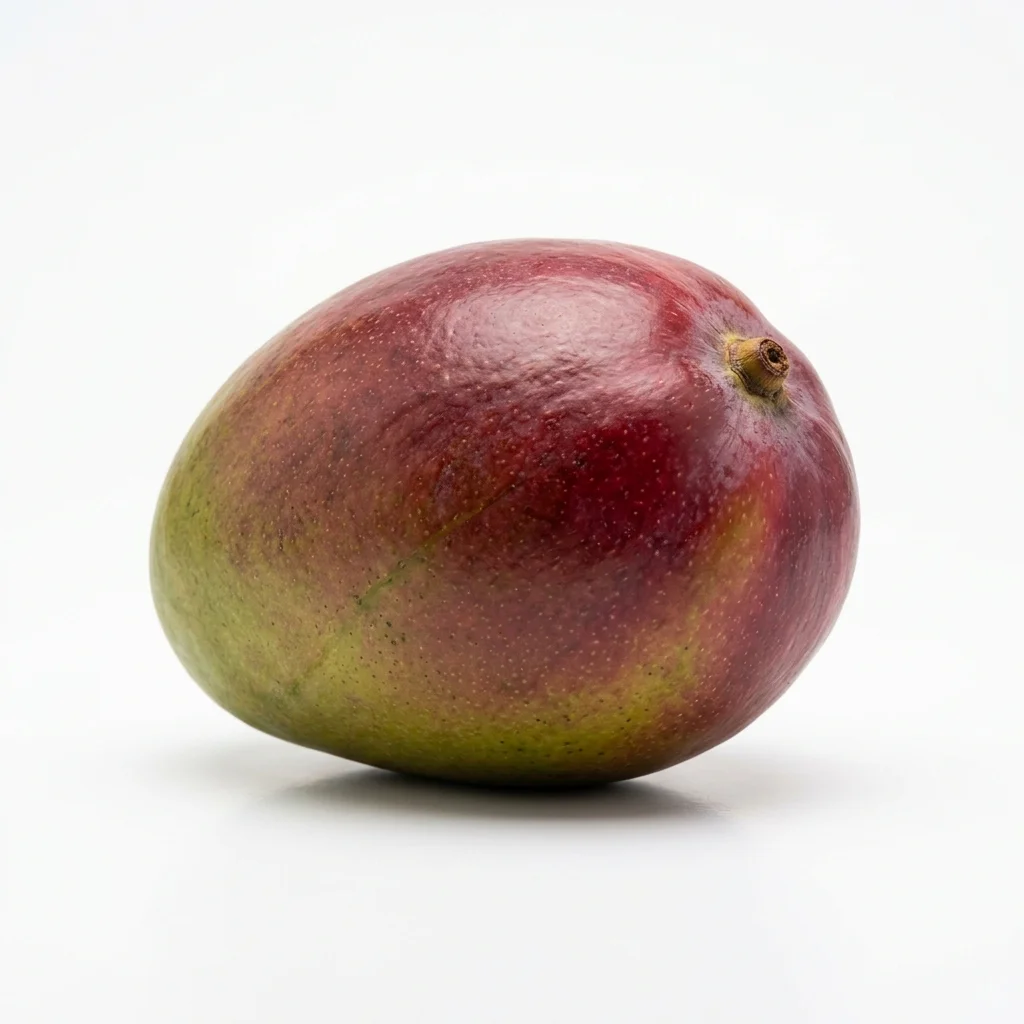
Palmer is a highly successful late-season commercial mango variety that originated in Miami, Florida, in 1925 as a seedling of Haden. Prized globally for its spectacular visual appeal and outstanding shipping durability, Palmer is grown extensively in Florida, Brazil, and has been introduced into western Indian states like Maharashtra for export. Its defining characteristic is its striking deep-purple or dark-red skin, which colors up early on the tree, making it highly attractive to commercial retail buyers.
In terms of physical appearance, Palmer is a large-to-very-large mango, typically weighing between 400 and 650 grams. It has an elongated, slender shape with a thick, smooth, and highly waxy skin. The pulp is a warm yellow-to-pale-orange, firm, and dense with minimal fiber located strictly around the flat stone. Its high pulp yield and firm texture make it perfect for fresh-cut commercial fruit bowls and supermarkets.
The flavor of Palmer is mild, clean, and refreshing, characterized by a sweet, simple taste with very low acidity and a gentle tropical aroma. Brix levels measure a consistent 16° to 18° Brix. Palmer's greatest asset is its exceptional post-harvest shelf life of 12 to 15 days under refrigeration. This extreme resilience allows it to be transported across oceans via sea freight, serving as a vital bridge in global mango availability during late summer.
The harvesting season for Palmer is very late, starting in mid-July and extending through late September, with peak harvests in late August. For more details on commercial and premium mango varieties, explore the Mango Identifier Hub, or view profiles on Mallika, Chausa, and Badami.
Mildly sweet, pleasant, low in acidity, highly refreshing
Mild, subtle, clean tropical scent
Firm, dense, juicy pulp with very minimal fiber near the stone
Minimal
How to tell if it's a genuine Palmer:
Did you know that Alphonso is called Badami in Karnataka and Hapus in Maharashtra? Explore our complete state-by-state guide mapping 30+ regional names across India.
Palmer was selected on the property of Mrs. Victor Mell in Miami, Florida, and was first propagated in 1945. Its parent, Haden, passed on its brilliant red color genes, but Palmer was selected for its later ripening date and elongated form.
Commercially, Palmer became a massive success in Brazil's São Francisco valley, where it is grown for export to Europe and North America. Its ability to tolerate long sea journeys revolutionized the off-season mango trade.
In India, progressive growers in Maharashtra have grafted Palmer to target late-season domestic and export markets, taking advantage of its premium pricing when local varieties have finished.
Quick reference for identifying common healthy vs. problematic conditions:
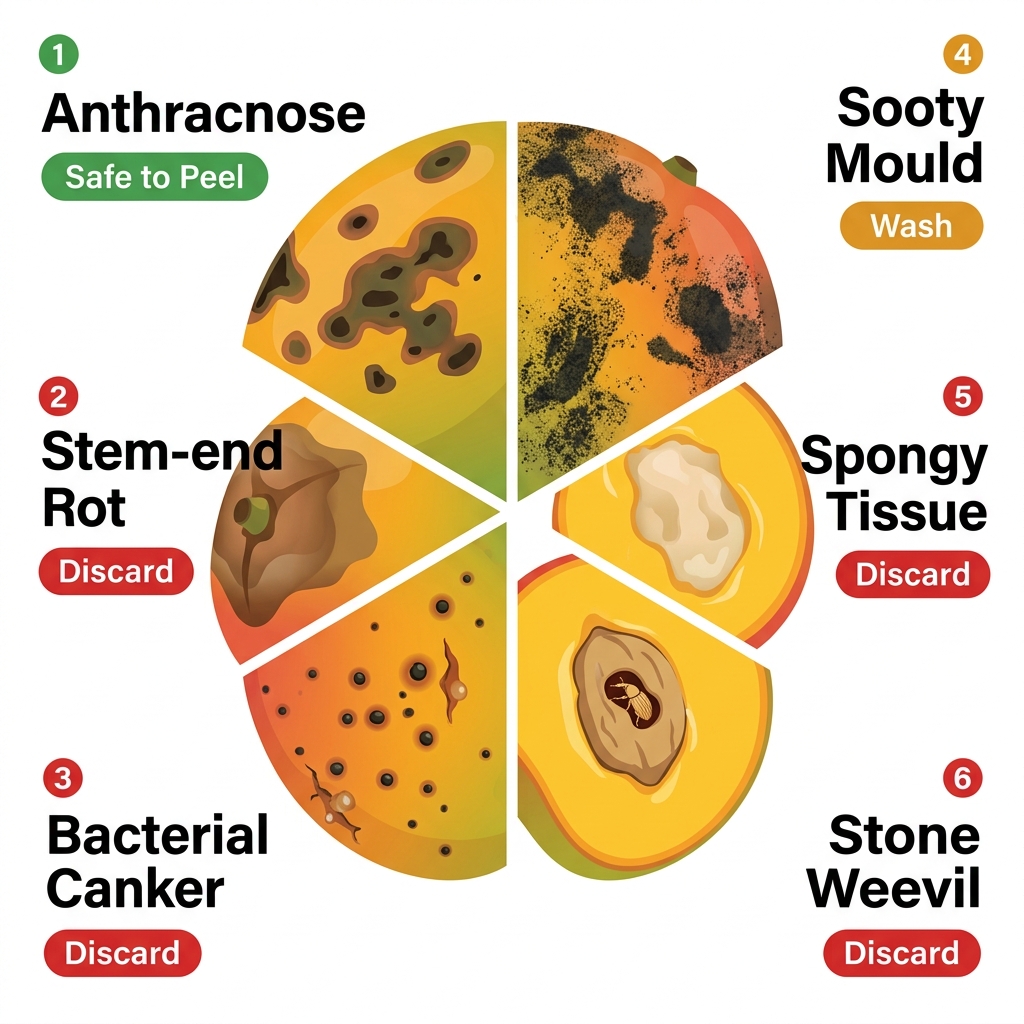
Pro Tip: Surface spots like Anthracnose are often harmless to the fruit inside, while Bacterial Canker or Stem-end Rot usually require discarding the fruit.
Ensure your Palmer mango is naturally ripened. Use Food Guard to detect Calcium Carbide and other chemical ripeners.