
📚 Regional Mango Names Guide
Did you know that Alphonso is called Badami in Karnataka and Hapus in Maharashtra? Explore our complete state-by-state guide mapping 30+ regional names across India.
Also known as: Varanasi Langra, Langda, Dudhiya Langra, Malda
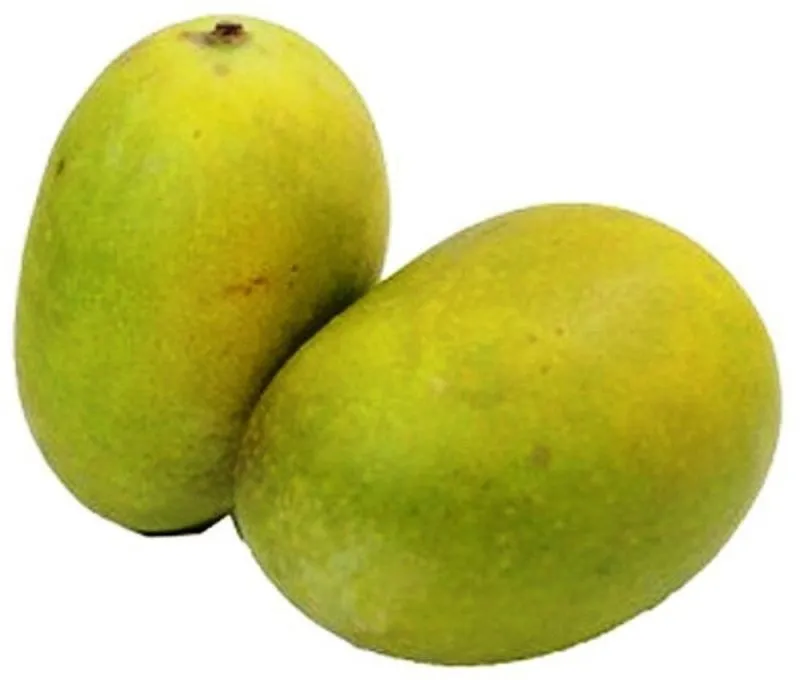
Typical diseases and disorders affecting this variety:
Detect these early using our Plant Guard AI.
Read our detailed Mango Diseases & Safety Guide.
The Langra mango is legally protected under India's Geographical Indications of Goods Act. Genuine Langra mangoes must originate from the certified soils of its designated region (e.g., Konkan coast for Alphonso, Saurashtra for Kesar) to carry this designation.
Langra (also known as Banarasi Langra, Malda, or Digha) is one of the most famous, highly aromatic, and beloved premium mango varieties of North and East India. Originating in Varanasi, Uttar Pradesh, it is an absolute favorite among mango connoisseurs for its complex, intense flavor.
Physically, Langra is a medium to large mango, weighing between 250 and 400 grams, with a distinct oval-round shape and a somewhat flattened profile. The most striking visual feature of Langra is its skin: it remains a vibrant, deep leaf-green even when completely ripe, never turning yellow or red.
The flavor profile of Langra is extraordinary. It is exceptionally sweet, juicy, and melting, characterized by a highly distinct, strong aroma that carries complex notes of citrus, pine, and turpentine. The pulp is a bright lemon-yellow and is almost completely fiberless, save for a tiny bit near the stone.
The Langra season is mid-season, making its grand entrance in mid-June and lasting through July. It is extensively cultivated across the Gangetic plains, primarily in Uttar Pradesh (Varanasi), Bihar (Digha/Malda), and West Bengal.
Compared to Dasheri, Chausa, Bombay Green, and Keitt, Langra is a completely different experience. While Dasheri is honey-sweet and yellow, Langra provides a more complex, acidic-sweet punch with its green skin. Unlike the early-season green variety Bombay Green which arrives in May, Langra is a mid-season variety. Learn more about regional mango traits at the Mango Identifier hub.
Post-harvest, Langra is highly delicate. It has a very thin skin and a short shelf life of about 3 to 5 days at room temperature. It bruises easily and is highly susceptible to fruit drop, making careful handling and quick distribution essential.
Unique sweet-sour balance
Aromatic, fruity
Fibrous
Moderate
How to tell if it's a genuine Langra:
Did you know that Alphonso is called Badami in Karnataka and Hapus in Maharashtra? Explore our complete state-by-state guide mapping 30+ regional names across India.
Legend has it that the variety was named 'Langra' (meaning 'lame') because the original mother tree appeared in the orchard of a lame sadhu (holy man) in Varanasi centuries ago.
It is an integral part of the cultural and literary heritage of Varanasi and Bihar.
Banarasi Langra holds a Geographical Indication (GI) tag, recognizing its unmatched quality in the region.
Quick reference for identifying common healthy vs. problematic conditions:
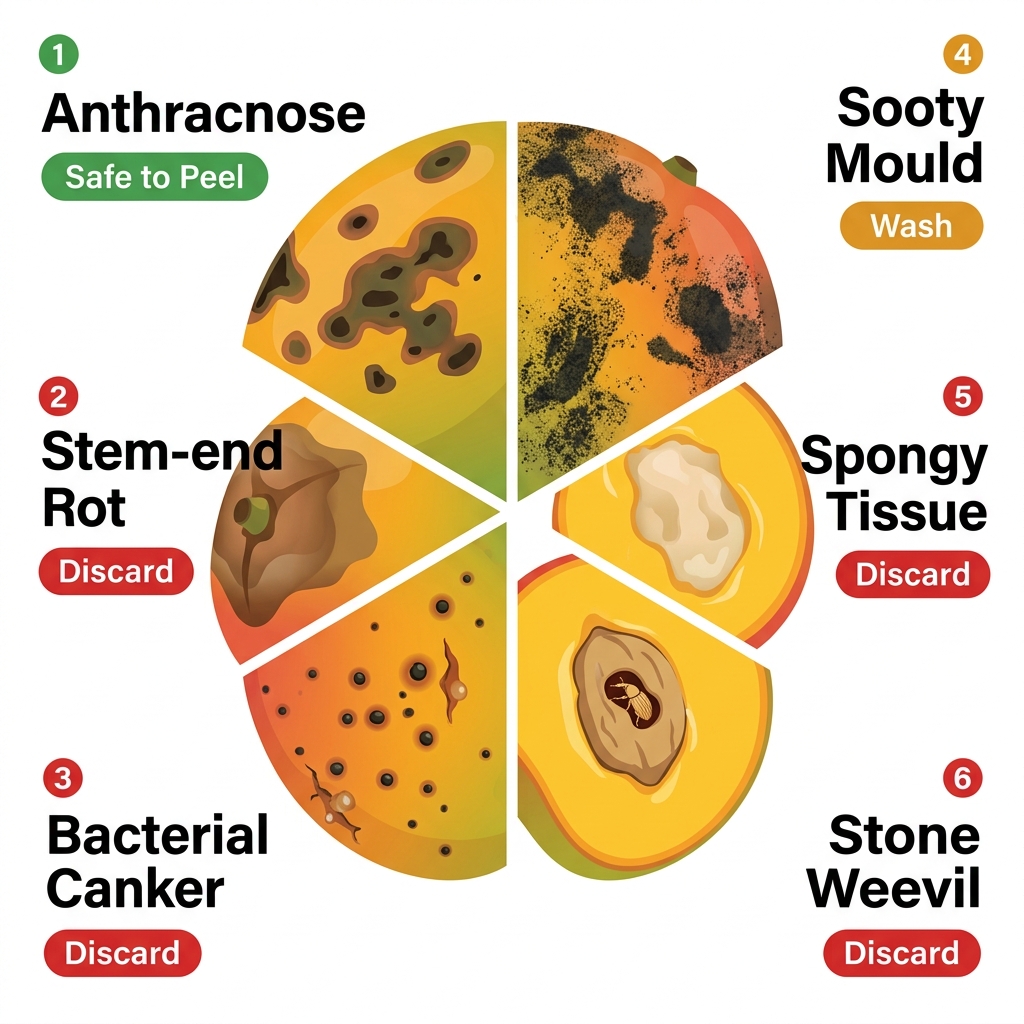
Pro Tip: Surface spots like Anthracnose are often harmless to the fruit inside, while Bacterial Canker or Stem-end Rot usually require discarding the fruit.
Ensure your Langra mango is naturally ripened. Use Food Guard to detect Calcium Carbide and other chemical ripeners.