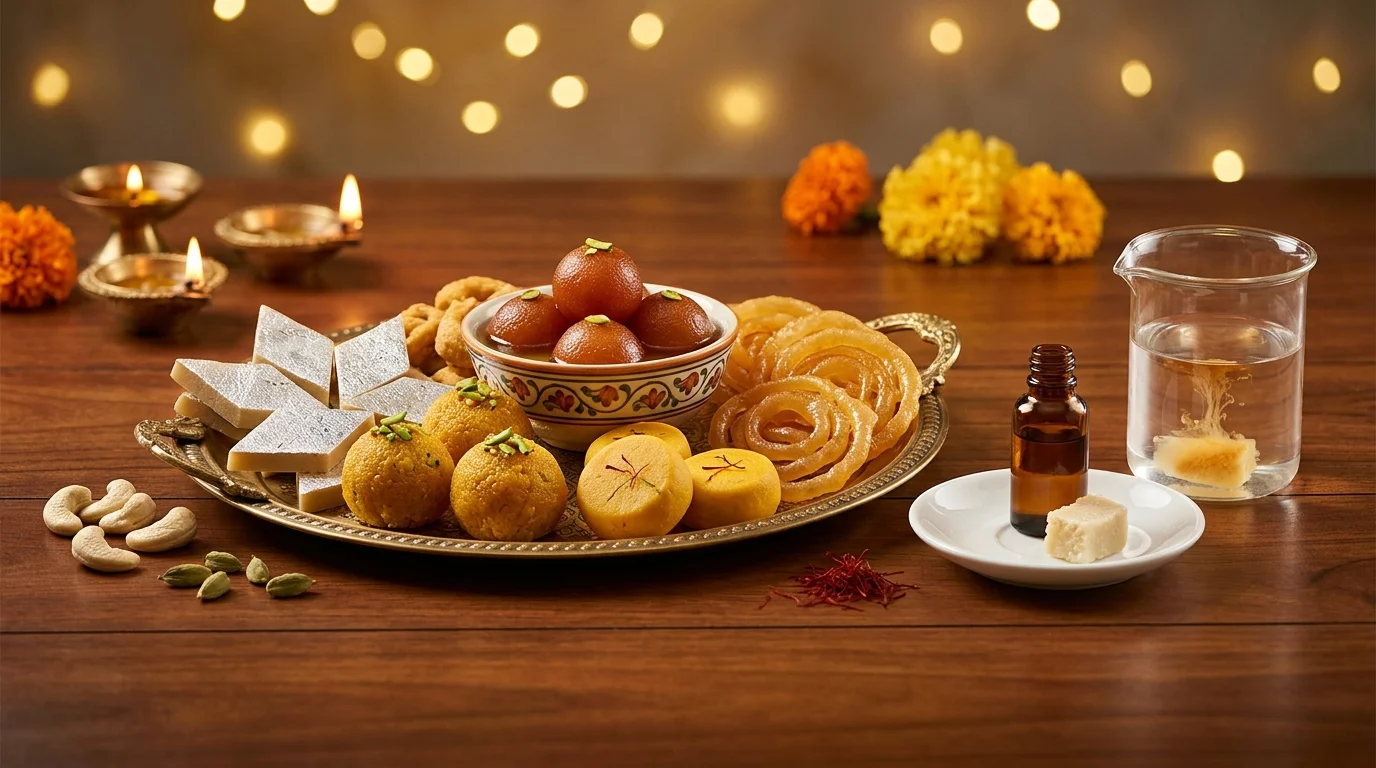
Whether opening a ribboned gift box of diamond-cut cashew fudge in London or New York, sharing warm syrup-soaked milk dumplings at a family banquet in Toronto or Sydney, or picking up artisanal saffron confections in Dubai, Singapore, or Mumbai, Festive Mithai and Traditional Milk & Nut Sweets are timeless emblems of hospitality, celebration, and shared joy.
Yet behind the shimmering silver leaf, fragrant cardamom steam, and jewel-toned saffron glazes lies an urgent food-safety reality. Whenever seasonal celebrations, weddings, autumn-winter holidays, Diwali, or Eid trigger a 300% to 500% surge in global demand, supply chains for the four costliest confectionery foundations—evaporated whole-milk solids, tree nuts, pure clarified butter, and saffron—stretch to their breaking point. International food safety inspections and import alerts from the US FDA, European Food Safety Authority (EFSA), UK Food Standards Agency (FSA), FSANZ, and Codex Alimentarius laboratories routinely flag commercial and imported celebration sweets for toxic aluminum leaf, synthetic detergent milk solids, undeclared peanut and wheat starch fillers, and banned industrial coal-tar dyes.
In an era of global specialty food retail and cross-continental gifting, knowing how to verify the purity of traditional confections is essential kitchen fluency. Below is our comprehensive scientific guide to the five most popular celebration sweets—Cashew Fudge (Kaju Katli), Spiced Gram-Flour & Nut Spheres (Ladoo), Cardamom Milk-Solid Syrup Dumplings (Gulab Jamun), Caramelized Milk Fudge Medallions (Peda), and Crisp Fermented Saffron-Syrup Coils (Jalebi)—alongside rapid 60-second home tests for every raw ingredient inside them.
The 4 Universal Adulteration Vectors in Celebration Confections
Before inspecting individual sweets, understanding the four structural points where unscrupulous manufacturers cut costs reveals why simple kitchen chemistry tests are so effective.
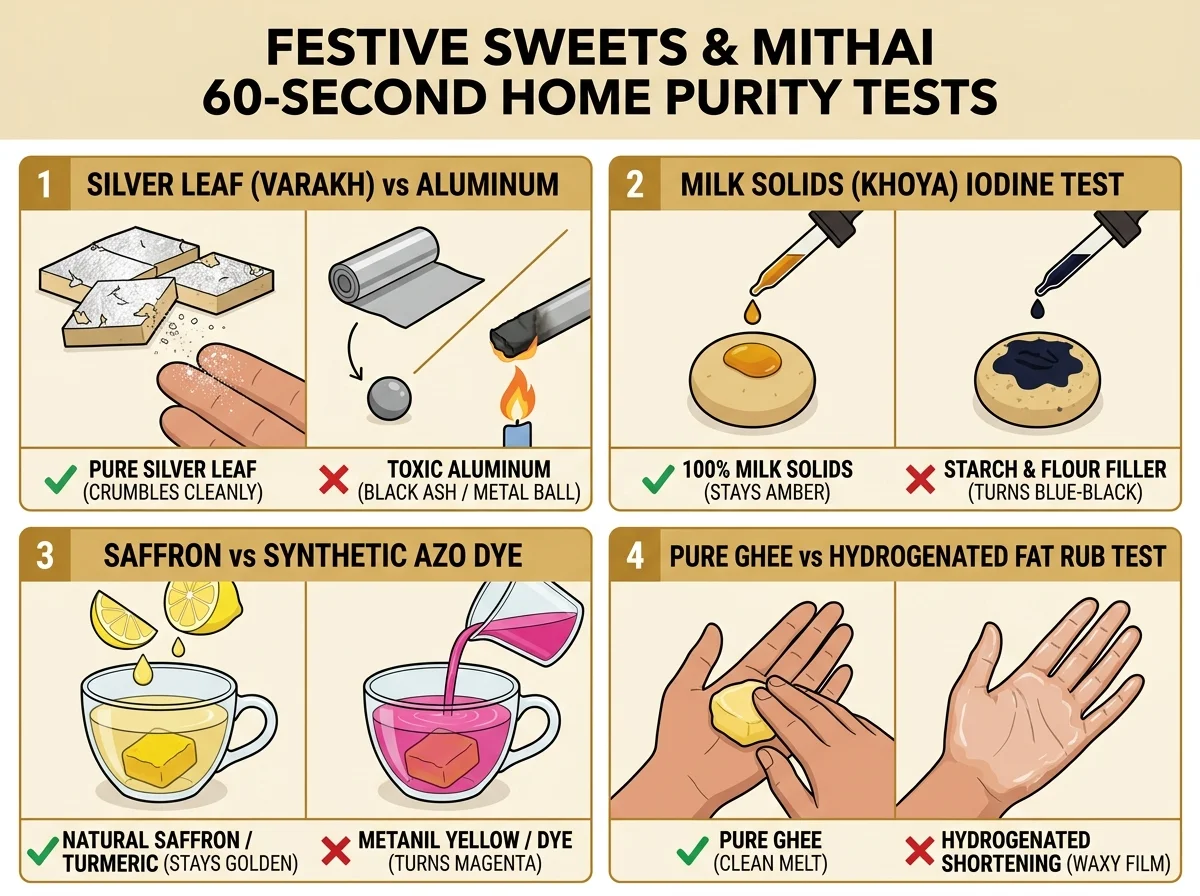
1. Heavy-Metal Metallic Foil Fraud (Edible Silver Leaf vs. Aluminum)
Traditional luxury sweets are crowned with micro-thin Edible Pure Silver Leaf (E174 / Silver Vark):- The Economic Incentive: Food-grade 99.9% elemental silver leaf (Ag, designated E174 in the EU and UK) is hammered to less than 0.2 microns thick and commands a high precious-metal price. Unregulated workshops substitute beaten industrial aluminum foil (Al) at a fraction of the cost, often contaminated with trace lead, cadmium, and nickel.
- The Biological Hazard: Unlike pure elemental silver, aluminum is a bio-accumulative neurotoxin and nephrotoxin that deposits in bone and neural tissue while irritating the gastrointestinal mucosa.
2. Synthetic & Starch-Extended Dairy Solids (Khoya & Chhena)
Milk fudges and syrup dumplings depend on slow thermal dehydration of Whole Dairy Milk:- Starch & Cereal Bulking: Authentic Evaporated Whole-Milk Solids (Khoya / Mawa) and Fresh Acid-Set Cheese Curd (Paneer / Chhena) are frequently stretched by 30% to 50% using All-Purpose / Refined Wheat Flour, boiled potato mash, rice flour, or blotting paper pulp.
- Chemical Emulsion Fraud: At the extreme end of food fraud, "synthetic mawa" is concocted by emulsifying cheap palm oil, water, industrial urea, and detergent or caustic soda to mimic the rich fat globules and nitrogen readings of real dairy solids.
3. Tree-Nut Substitution & Mycotoxin Masking
Nut pastes form the body of premium confections such as Cashew Fudge (Kaju Katli) and Festive Marzipan:- Undeclared Allergen Dilution: High-value Whole Cashews, Sweet Almonds, and Green Pistachios are blended with roasted Peanuts, melon seeds, or cereal starch, masked with synthetic nut essences—posing a severe, potentially fatal anaphylactic hazard for consumers with peanut or gluten allergies.
- Hidden Aflatoxins: Stale, insect-bored nut kernels contaminated with Aspergillus flavus mold (which produces hepatotoxic Aflatoxin B1) are ground into heavily sweetened, cardamom-spiced pastes to disguise their musty, rancid off-notes.
4. Banned Coal-Tar Dyes & Hydrogenated Trans-Fat Shortenings
Radiant golden and saffron hues are prized across festive tables:- Industrial Azo Dyes: Rather than steeping real Pure Saffron Threads or Ground Turmeric, bulk producers color Ladoo, Jalebi, and Peda with banned Metanil Yellow, Orange II, or excessive doses of Tartrazine (FD&C Yellow No. 5 / E102) and Sunset Yellow (FD&C Yellow No. 6 / E110).
- Trans-Fat Substitution: Confections advertised as "Made in Pure Clarified Butter (Ghee)" are routinely fried or bound in partially hydrogenated vegetable shortening (vanaspati / palm stearin) or repeatedly reheated frying oils high in toxic Total Polar Compounds (TPC).
Sweet-by-Sweet Diagnostic Guide (5 Core Confections)
Explore the authentic composition, step-by-step home chemistry tests, and visual purity vs. adulteration benchmarks for the five most popular celebration sweets.
1. Cashew Fudge (Kaju Katli): Silver Leaf Integrity, Nut Purity & Clean Snap
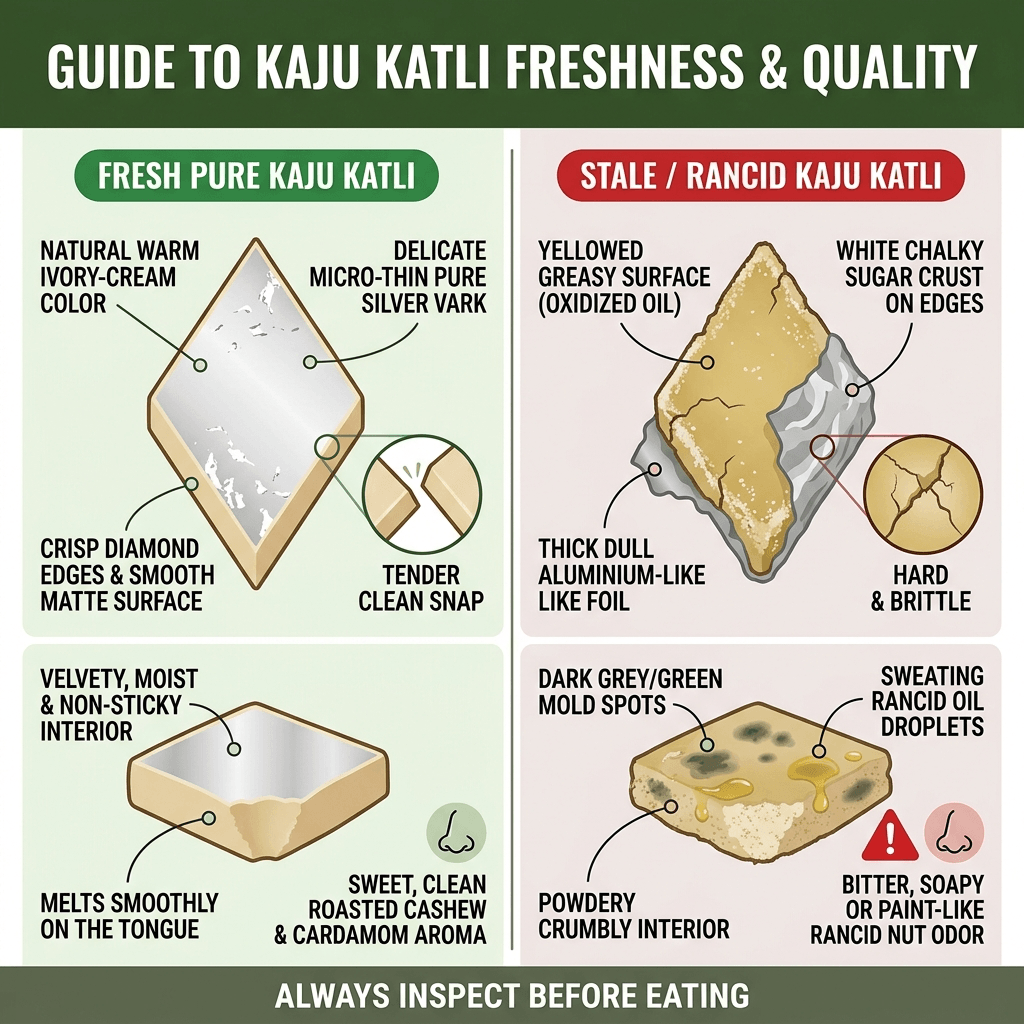
Known internationally as diamond-cut Cashew Fudge or Kaju Katli, this flagship confection should contain only finely ground Whole Cashews, Pure Cane Sugar syrup, a whisper of Green Cardamom or Clarified Butter (Ghee), and optional food-grade Edible Silver Leaf (E174).
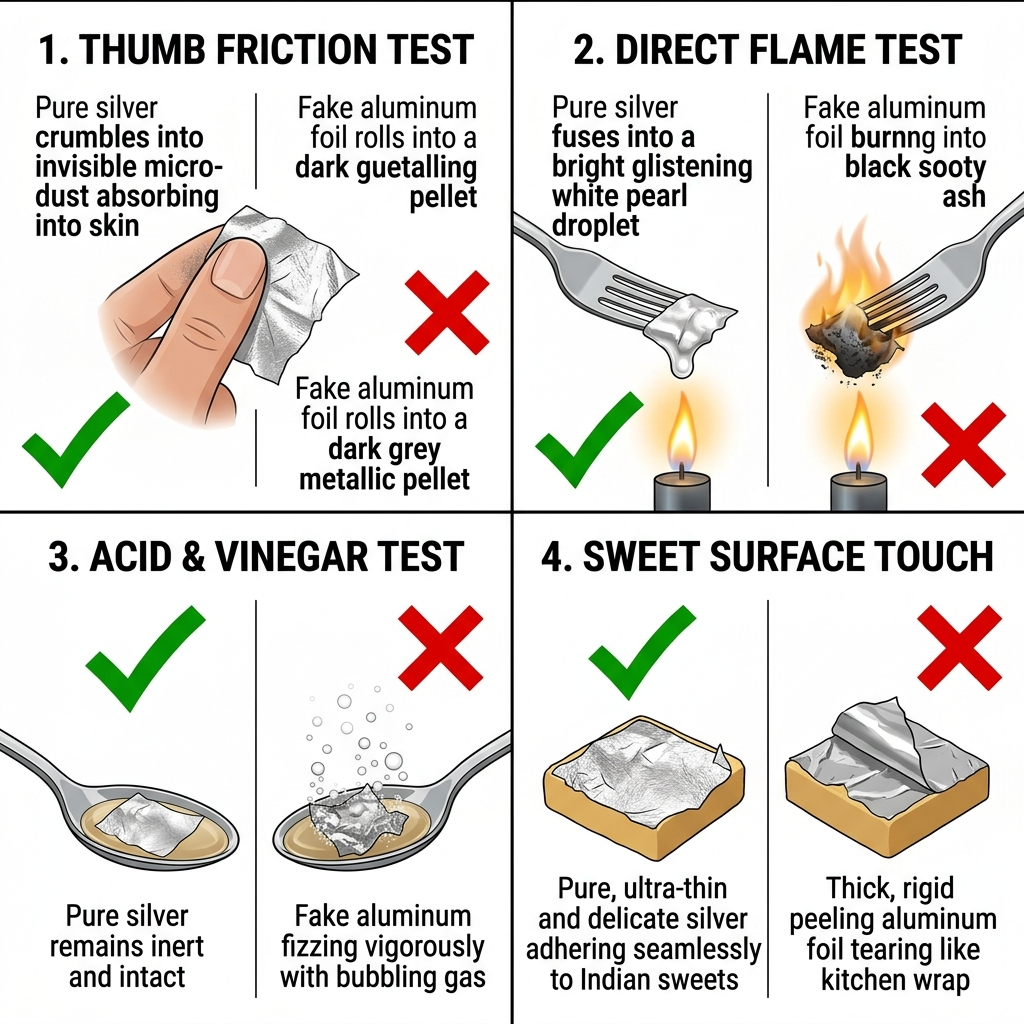
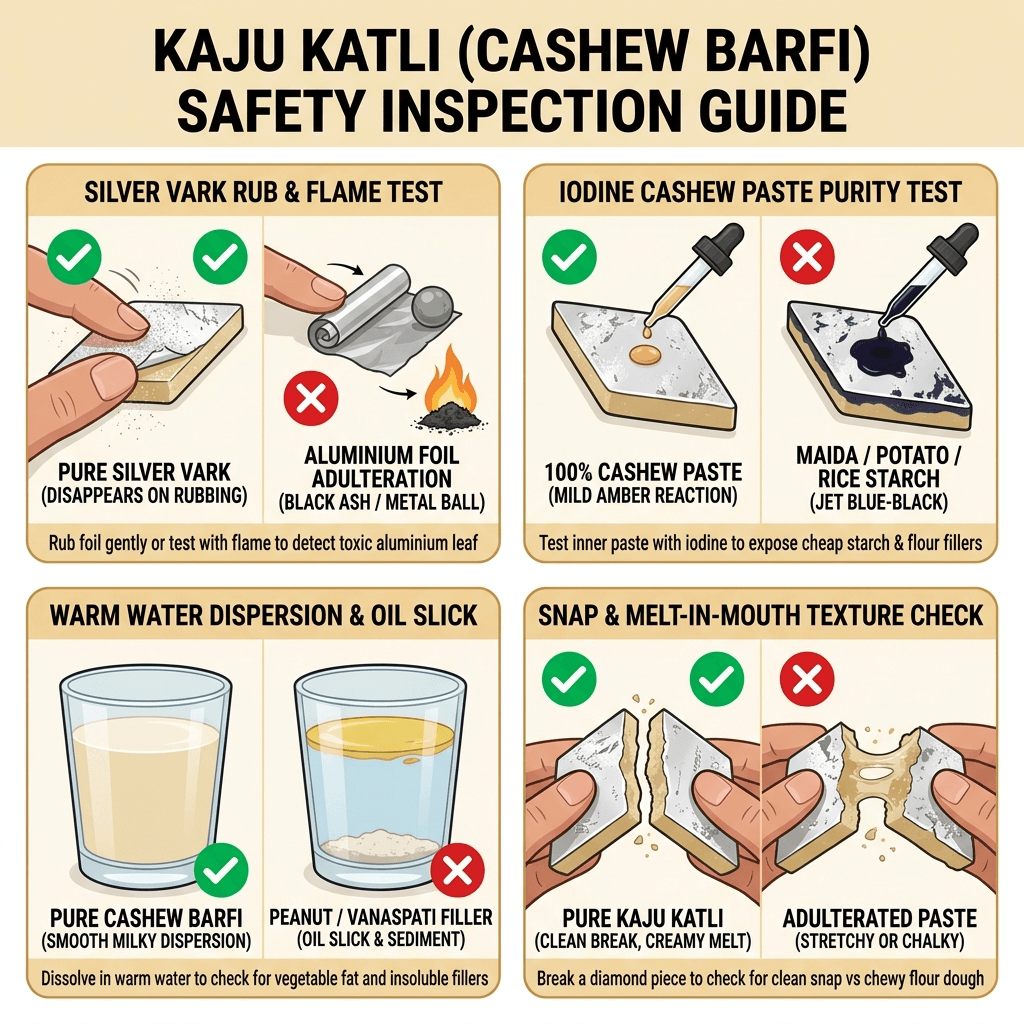
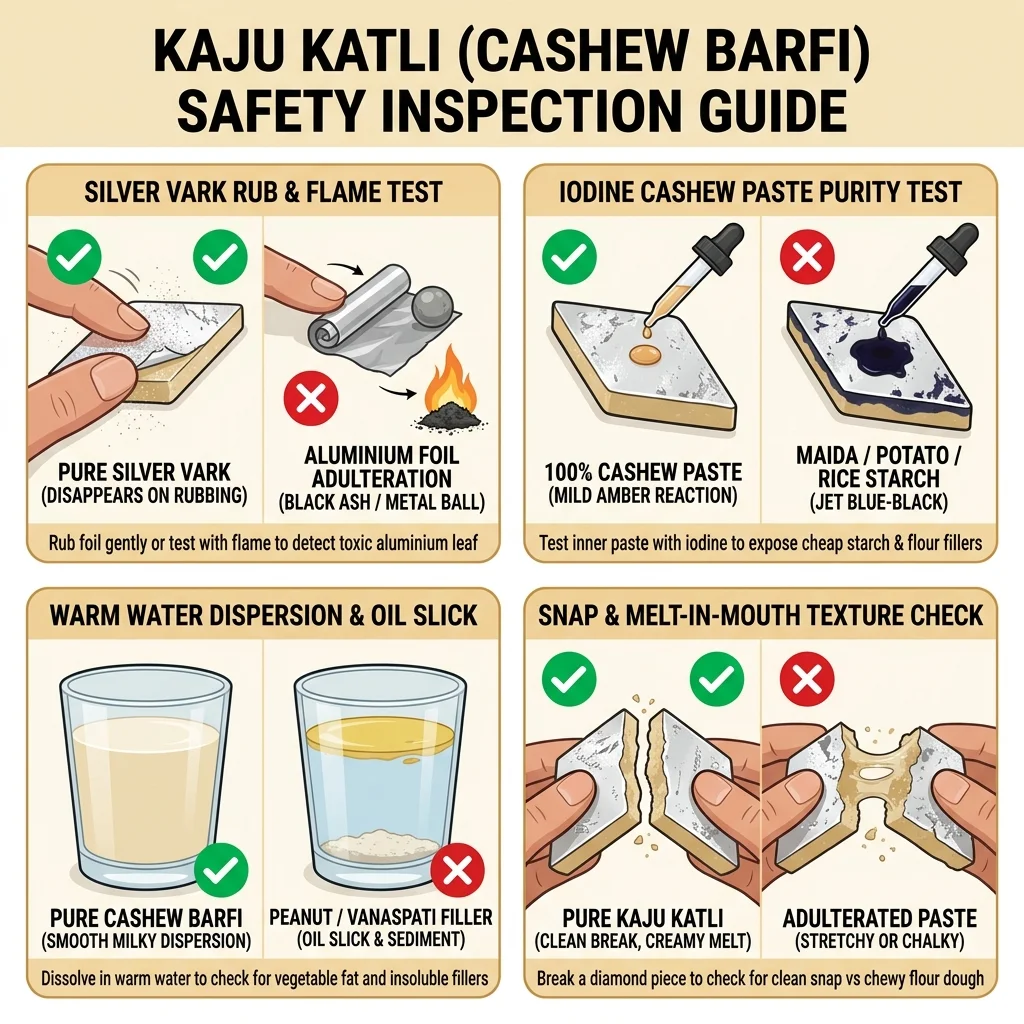
- The Foil Finger-Rub & Flame Test: Gently wipe a flake of the metallic foil off the surface of your Cashew Fudge and rub it briskly between your thumb and forefinger. Authentic 99.9% pure Edible Silver Leaf crumbles immediately into vanishing micro-sparkles. If the foil rolls into a cohesive grey metallic ball—or turns jet-black with acrid smoke in a lighter flame—it is toxic aluminum foil.
- The Inner-Paste Iodine Test: Scrape away any top garnish, mash 1/2 teaspoon of the pale-ivory interior paste in 1 tablespoon of warm water, let it cool, and add 1 drop of iodine tincture. Pure Cashews show only a mild amber-brown tint from natural nut carbohydrates; an instant ink-black or dark blue reaction exposes heavy bulking with Refined Wheat Flour or potato starch.
- Warm Water Emulsion & Snap Check: Stir a piece of fudge into warm water—pure cashew paste forms a smooth, milky dispersion, whereas hydrogenated fat floats as a greasy slick. Break a diamond piece at room temperature: pure cashew fudge snaps cleanly without a stretchy gluten pull.
- ⚠️ Critical Adulteration & Allergy Caution: Never consume foil-topped sweets if the metallic leaf rolls into a grey pellet on your fingers, and never serve unpackaged commercial Cashew Fudge to guests with peanut allergies or celiac disease unless verified free of undeclared Peanut and Wheat Flour fillers.
Authentic & Pure Benchmarks
Adulteration & Spoilage Red Flags
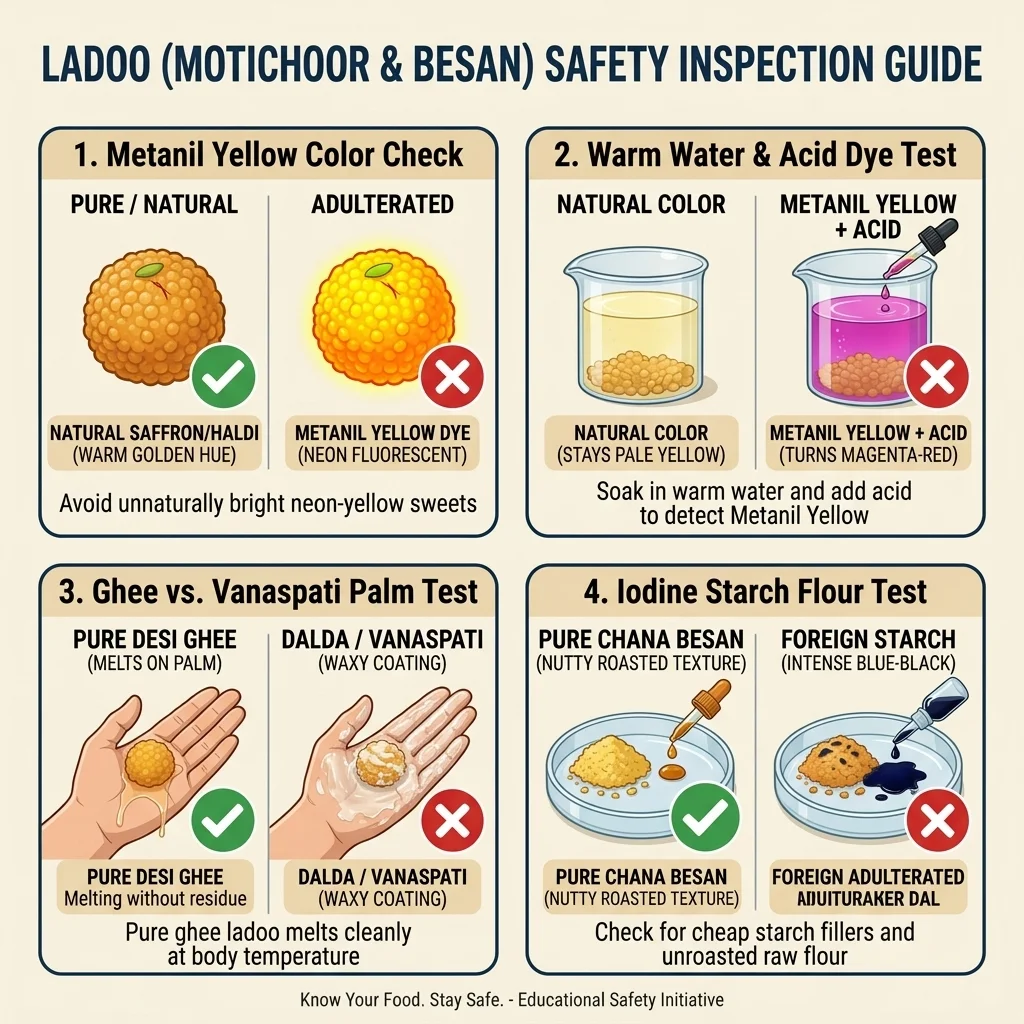
2. Spiced Gram-Flour & Nut Sweet Spheres (Ladoo): Acid Dye Shift, Legume Purity & Ghee Melt
Whether prepared from golden micro-pearls of fried batter (Motichoor), slow-roasted Chickpea / Gram Flour (Besan), Semolina, Desiccated Coconut, or dry-fruit medleys bound with Medjool Dates, Dried Figs, and Unrefined Cane Sugar (Jaggery), Ladoo is one of the world's most beloved festive sweets.
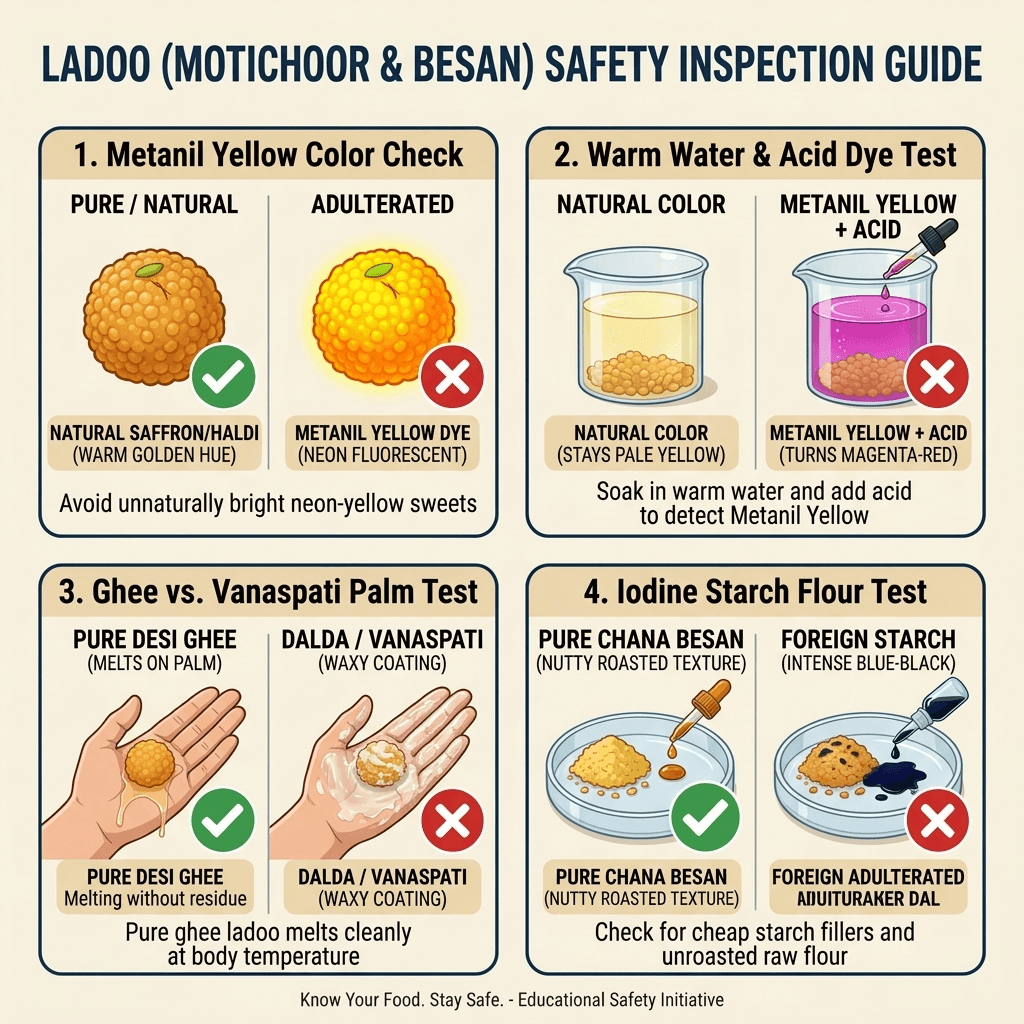
- The Lemon Juice / Vinegar Acid Dye Test: Dissolve 1 teaspoon of crushed yellow or orange Ladoo in 50 ml of warm water, then add 1 teaspoon of lemon juice or white vinegar. Natural color from Pure Saffron or Ground Turmeric stays soft golden-yellow; a dramatic shift to bright magenta-red or violet exposes banned Metanil Yellow dye.
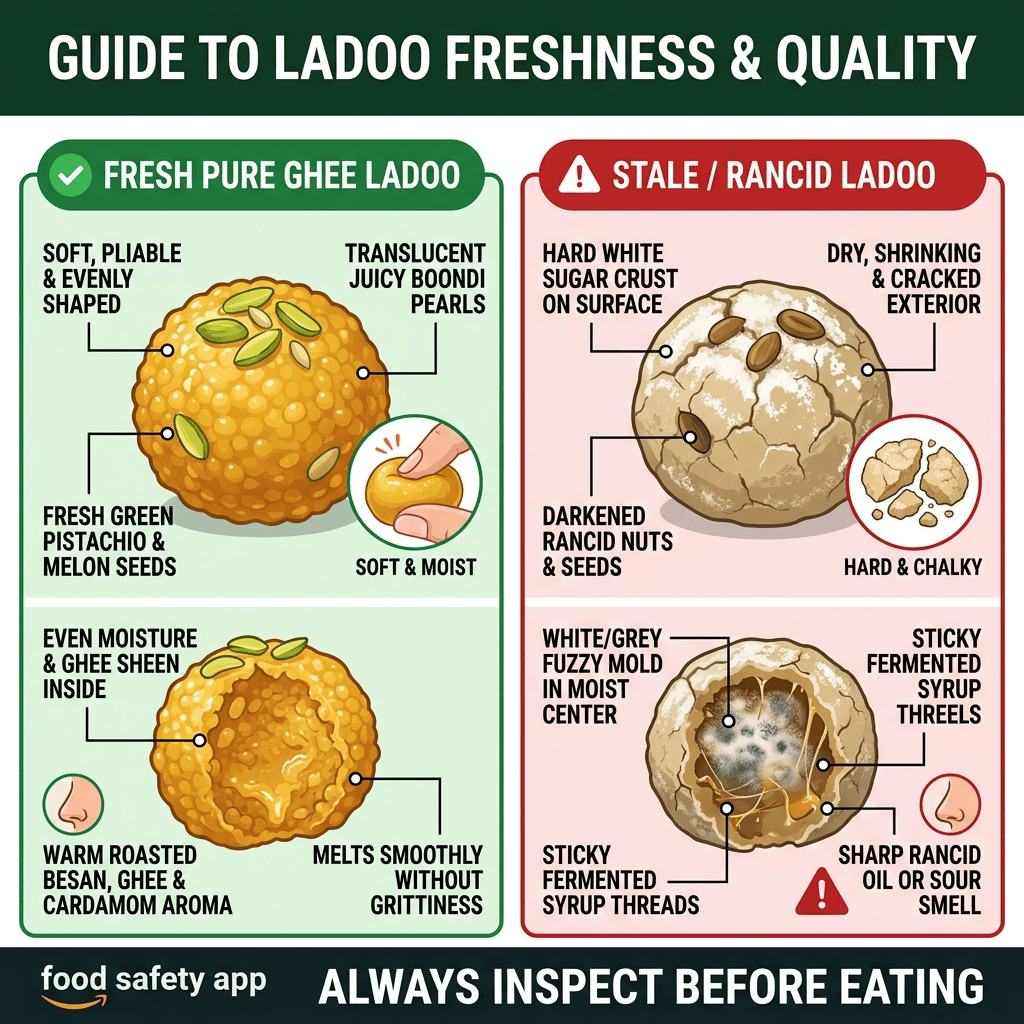
- The Body-Heat Ghee Melt Check: Press a small piece of Ladoo against your palm or the roof of your mouth for 20 seconds. Pure dairy Clarified Butter (Ghee) melts cleanly at body temperature (32–35°C / 90–95°F), whereas partially hydrogenated palm shortening leaves a pasty, waxy film on the palate.
- Legume Flour & Nut Garnish Verification: When roasting homemade Ladoo, test raw Chickpea Flour (Besan) to rule out adulteration with yellow pea flour or neurotoxic grass pea (Lathyrus sativus / Khesari dal), and soak green Pistachio slivers in warm water to ensure they are not dyed peanuts.
- ⚠️ Critical Adulteration & Safety Caution: Strictly discard any bright yellow or orange Ladoo whose warm-water extract turns pink, magenta, or violet when mixed with lemon juice—industrial Metanil Yellow and Lead Chromate are potent neurotoxins that cannot be neutralized by cooking.
Authentic & Pure Benchmarks
Adulteration & Spoilage Red Flags
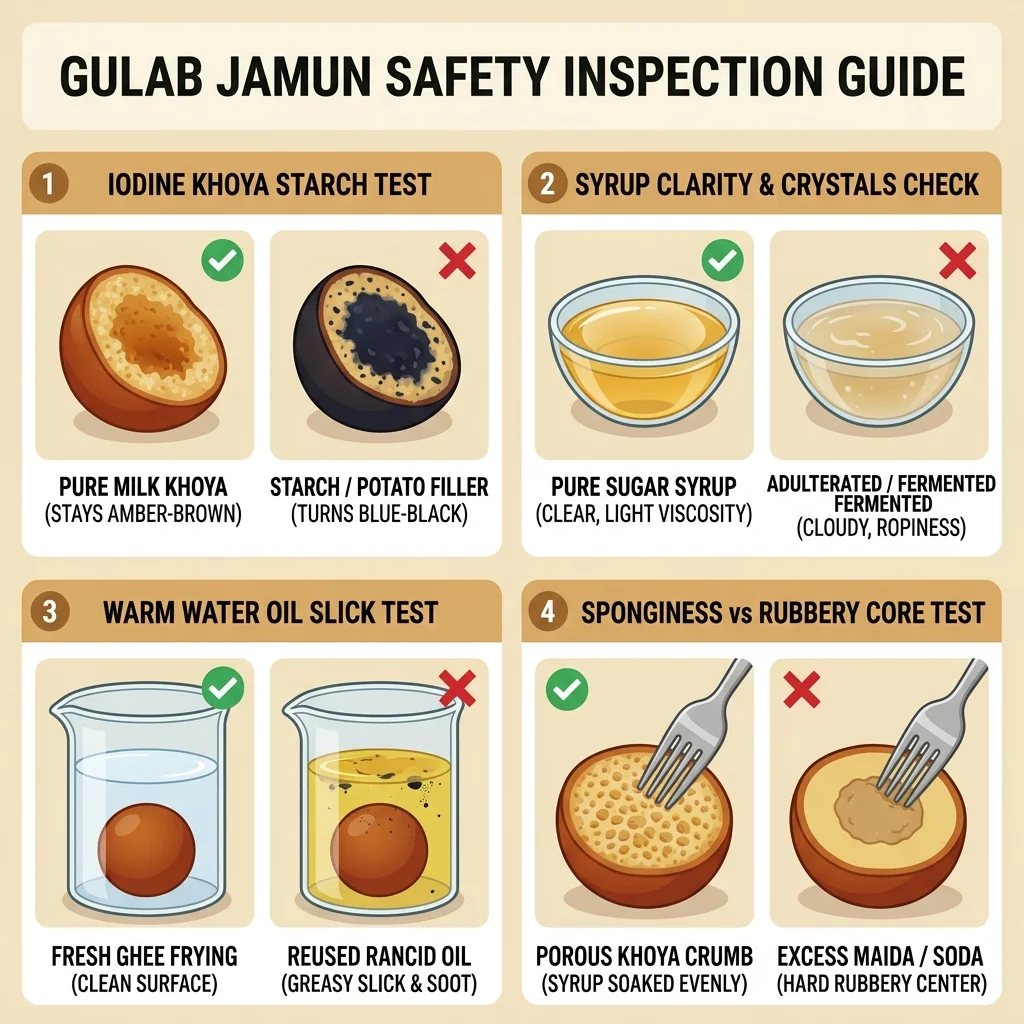
3. Cardamom Milk-Solid Syrup Dumplings (Gulab Jamun): Khoya Integrity, Detergent Foam & Syrup Purity
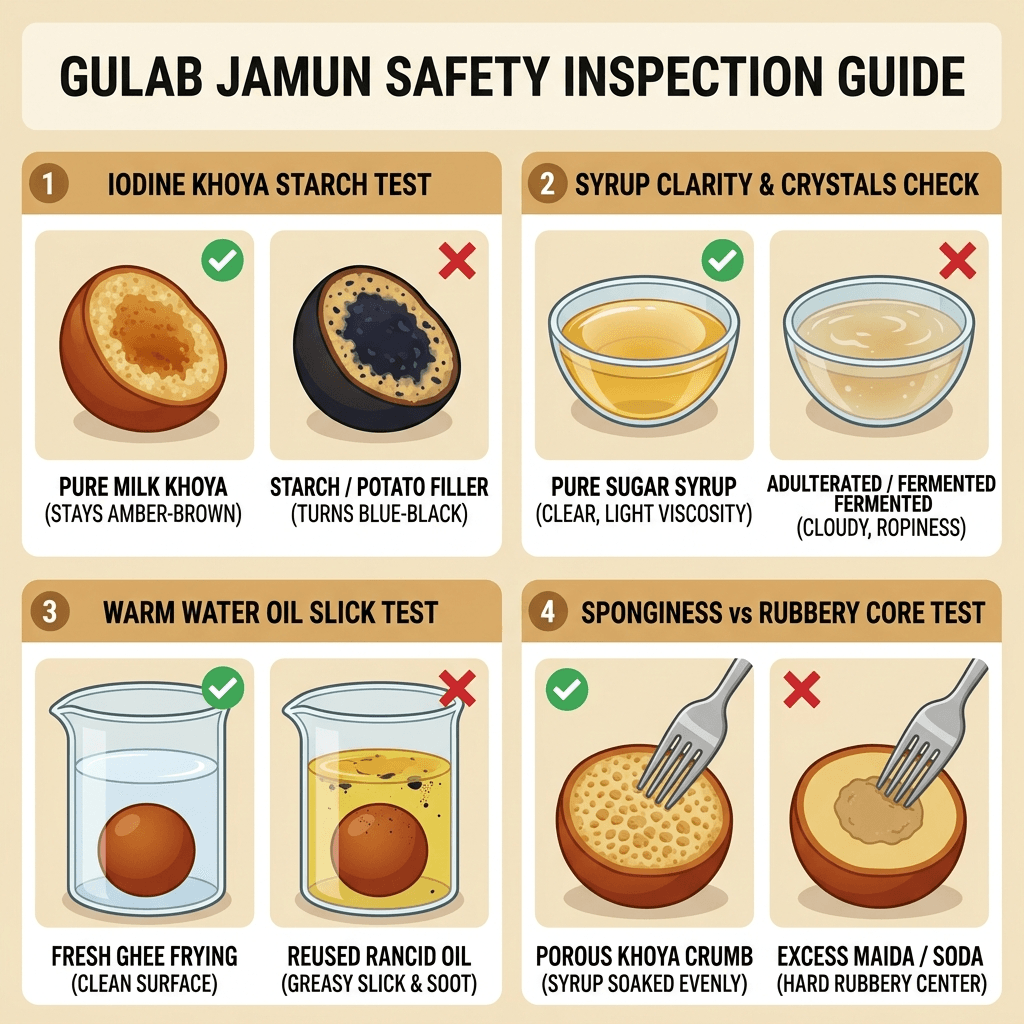
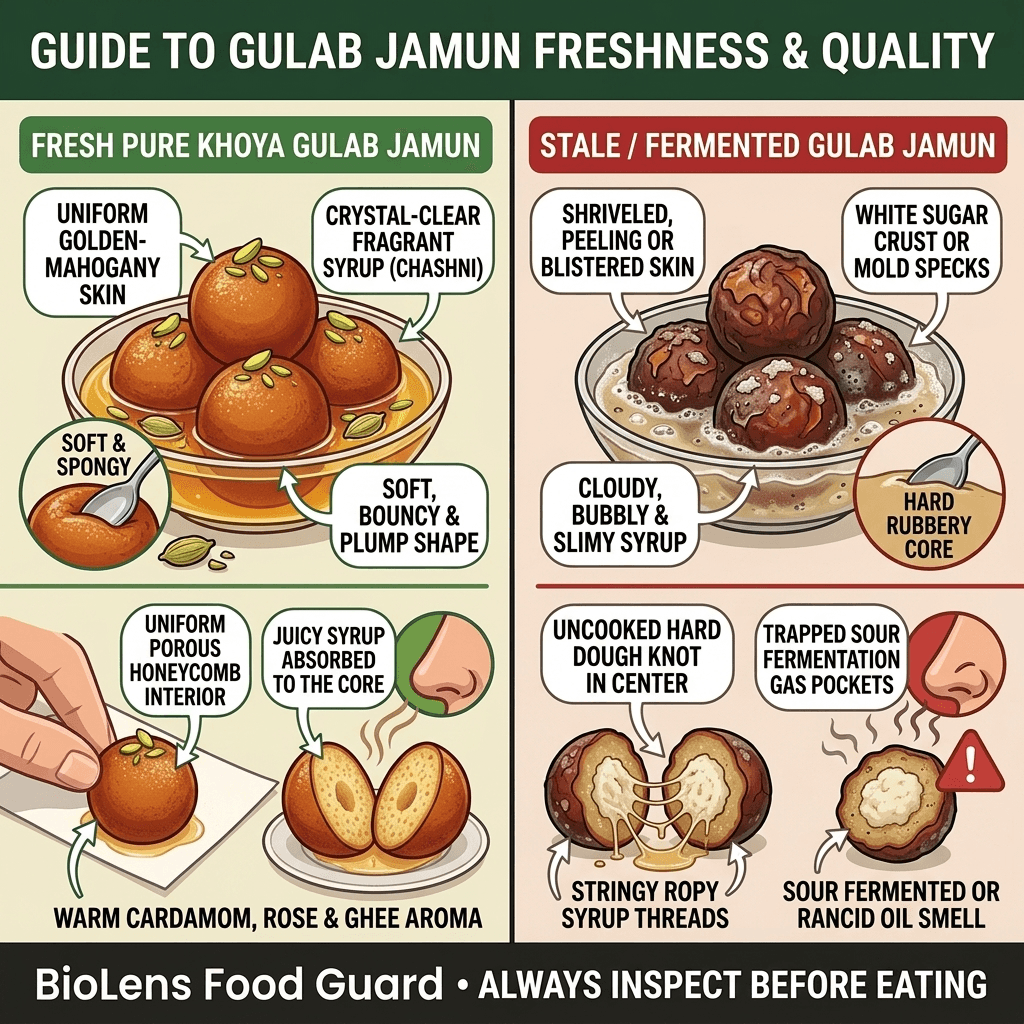
Authentic Gulab Jamun consists of tender dumplings kneaded from Evaporated Whole-Milk Solids (Khoya / Mawa) and Fresh Acid-Set Cheese Curd (Paneer / Chhena) with a small 10–15% binder of All-Purpose Flour or Semolina, slow-fried in Clarified Butter (Ghee) and steeped in warm Cane Sugar, Green Cardamom, and Saffron syrup scented with Rose Water or Kewra Essence. Sister syrup-poached dairy confections—including Rasgulla, Rasmalai, and Pantua—share these exact dairy and syrup risks.
- The Rinsed-Core Iodine Test: Cut a Gulab Jamun in half, rinse a piece of the inner dumpling in warm water to remove surface syrup, mash it in cool water, and add 1 drop of iodine. While a faint bluish tint is normal due to the 10–15% flour binder, an instant, opaque jet-black pudding reaction proves the Khoya was replaced almost entirely by cheap flour and potato starch.
- The Hot Water Detergent Shake Test: Place half a dumpling in a glass of hot water and shake vigorously for 30 seconds. Pure dairy solids form a uniform milky dispersion whose thin froth subsides quickly; persistent, slippery soap-like lather and an alkaline smell indicate synthetic detergent/urea milk solids.
- Frying Oil & Saccharin Syrup Audit: Steep a dumpling in warm water for 5 minutes—dark brown oxidized oil droplets or black soot specks reveal degraded high-TPC frying oil, while a bitter metallic aftertaste in the syrup exposes artificial saccharin.
- ⚠️ Critical Adulteration & Safety Caution: Discard any syrup-soaked milk dumpling if the syrup smells fermented or alcoholic, shows tiny gas bubbles (osmophilic yeast spoilage), or produces persistent soapy foam when shaken in hot water.
Authentic & Pure Benchmarks
Adulteration & Spoilage Red Flags
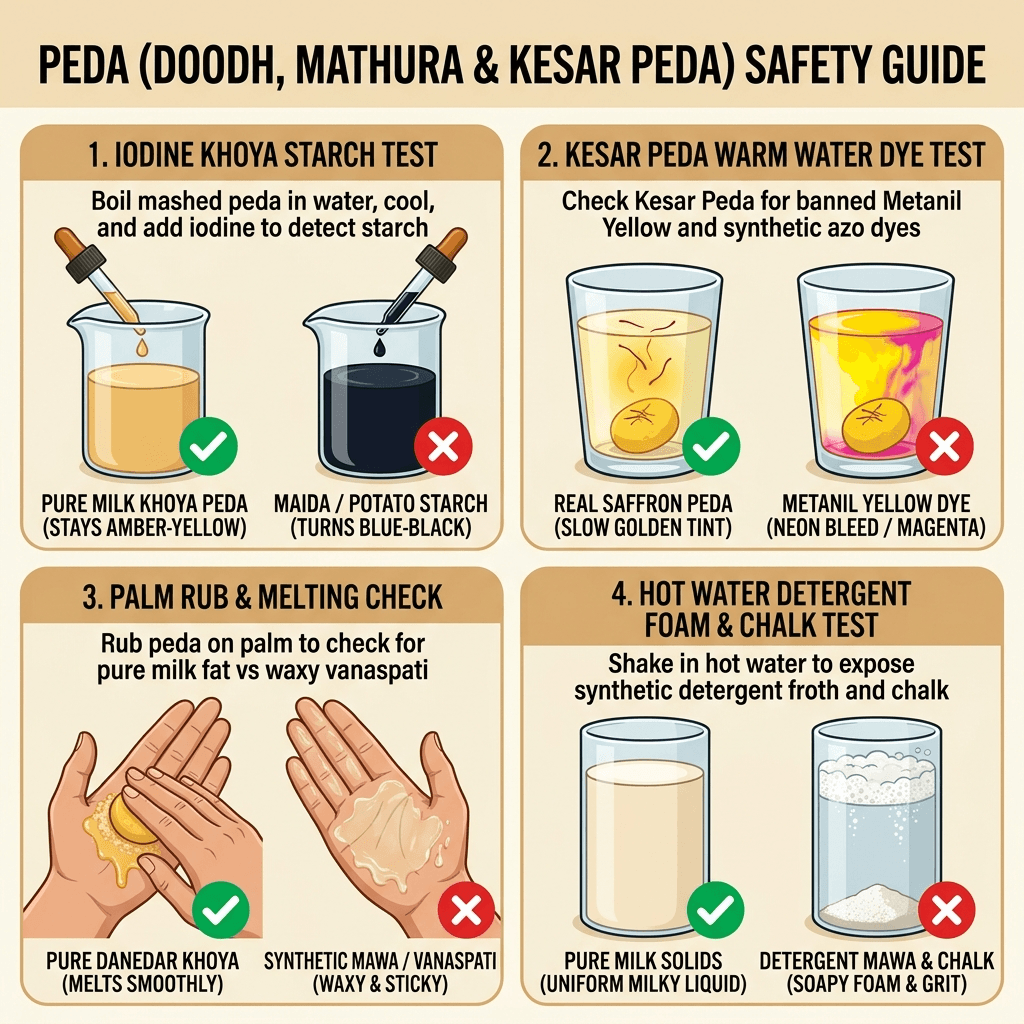
4. Caramelized Milk Fudge Medallions (Peda): Zero-Starch Dairy Verification, Saffron Leach & Microbial Safety
Peda—alongside related milk fudges such as Kalakand, Caramelized Milk Cake, and Sandesh—is composed of nearly 80% Evaporated Whole-Milk Solids (Khoya / Mawa) kneaded with Cane Sugar, Green Cardamom, Whole Nutmeg & Mace, Pure Saffron, and Pistachios.
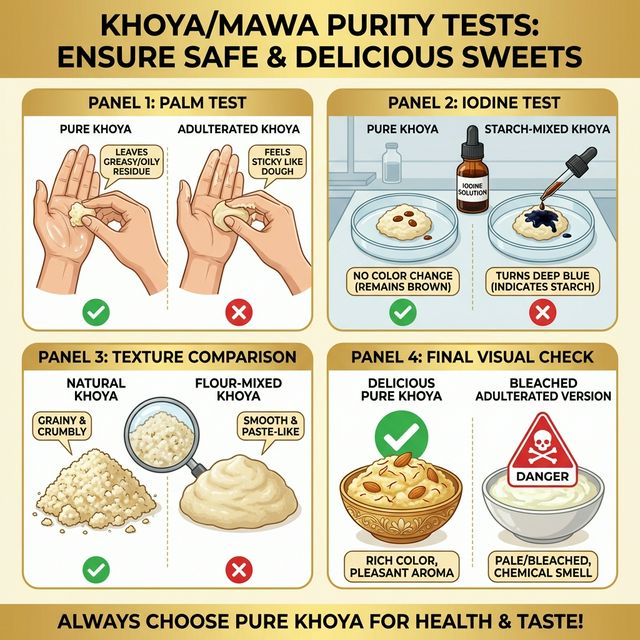
- The Strict Zero-Starch Iodine Test: Unlike fried dumplings, authentic Peda requires zero flour or starch. Boil a mashed piece of Peda in 2 tablespoons of water for 30 seconds, let it cool completely, and add 1 drop of iodine. The liquid must remain pale yellow-amber; any blue, purple, or black color confirms illegal bulking with Refined Wheat Flour or starch.
- The Saffron Peda (Kesar Peda) Warm Water Leach Check: Drop a piece of yellow Peda into warm water without stirring. Real Saffron Threads release a slow, clear golden-yellow halo while the threads stay crimson; instant neon-yellow cloudiness and bleached white garnish strands expose synthetic azo dyes and dyed corn silk.
- Palm Rub & Granular (Danedar) Check: Rub a piece of Peda on your palm—authentic milk fudge feels soft and finely granular (danedar) with a light dairy butterfat sheen, whereas synthetic fudge feels sticky, chalky, or waxy.
- ⚠️ Critical Microbiological & Safety Caution: Because unrefrigerated milk solids have high water activity (aw > 0.80), store-bought Peda, Kalakand, and Rasmalai left at warm room temperatures can accumulate heat-stable Staphylococcus aureus enterotoxins within hours. Refrigerate at 4°C (39°F) and discard if sour or sticky.
Authentic & Pure Benchmarks
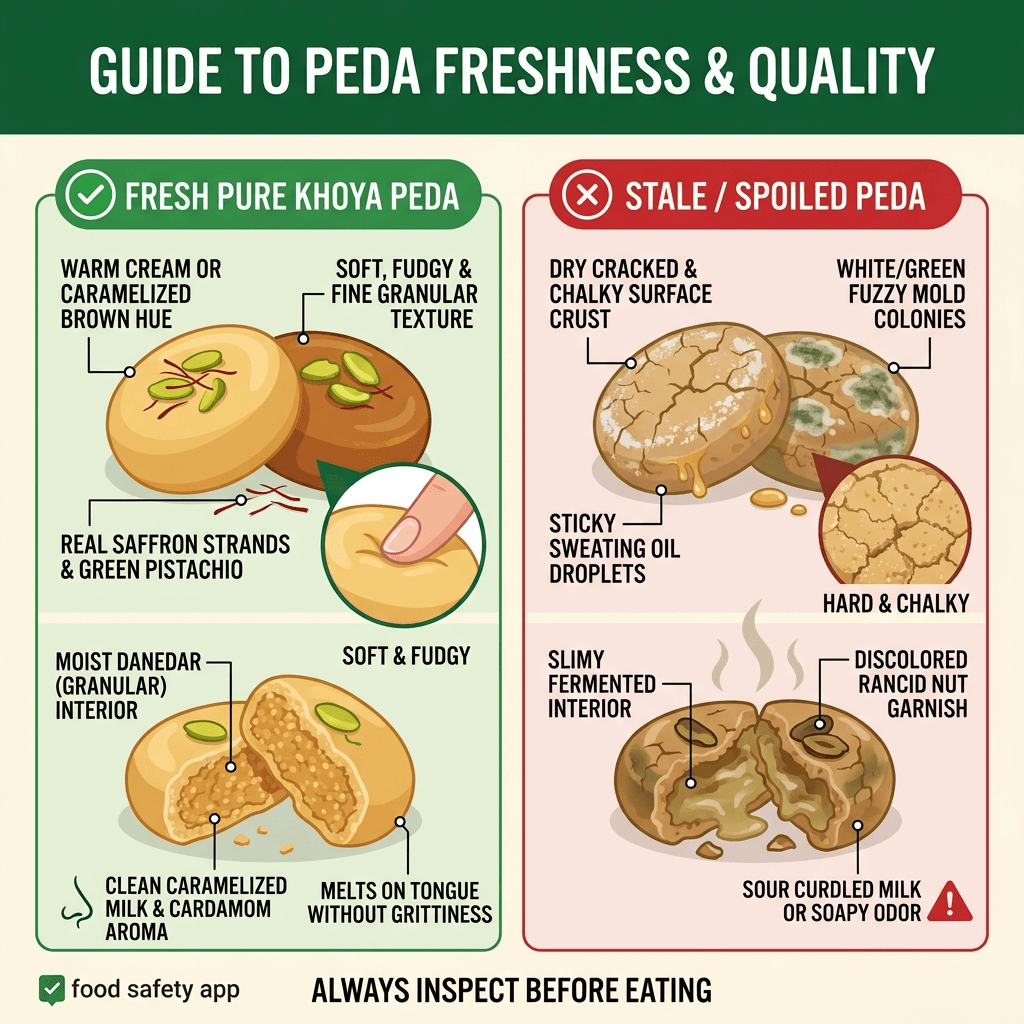
Adulteration & Spoilage Red Flags
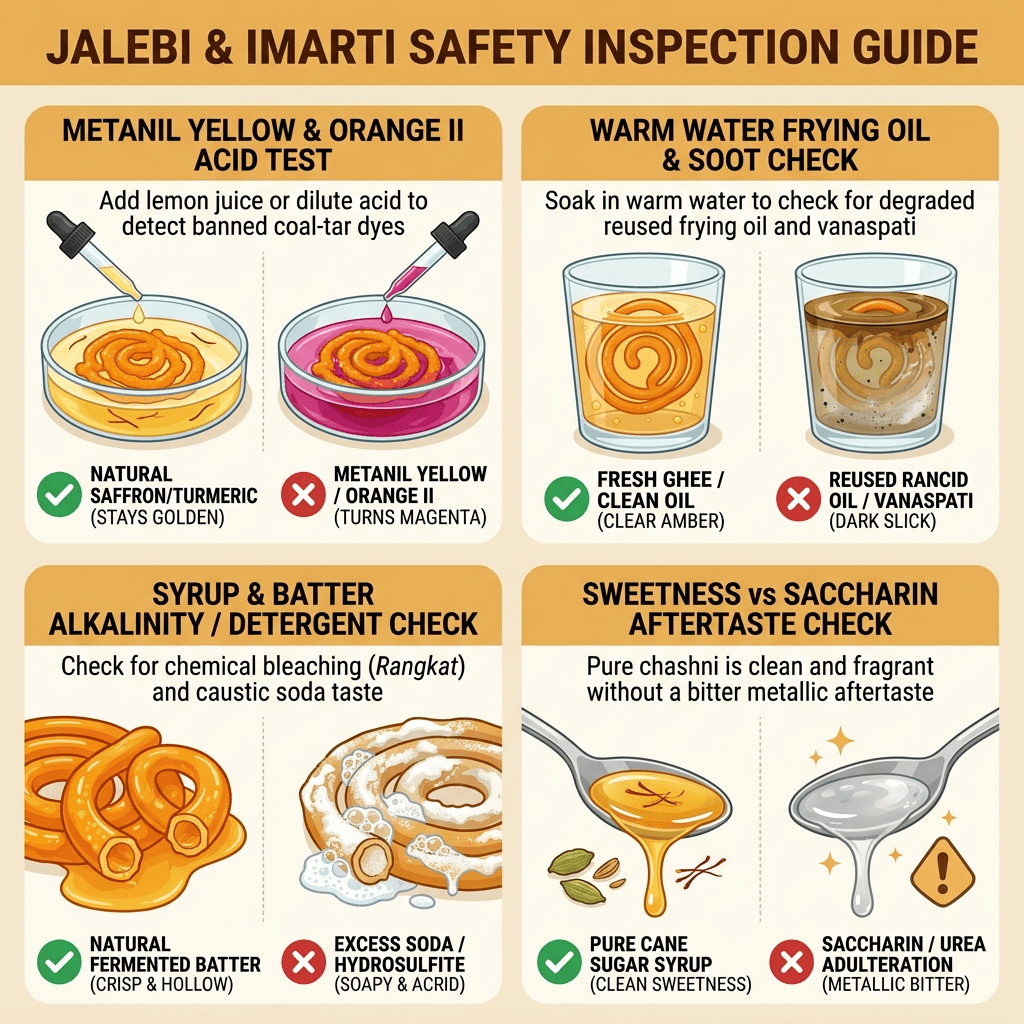
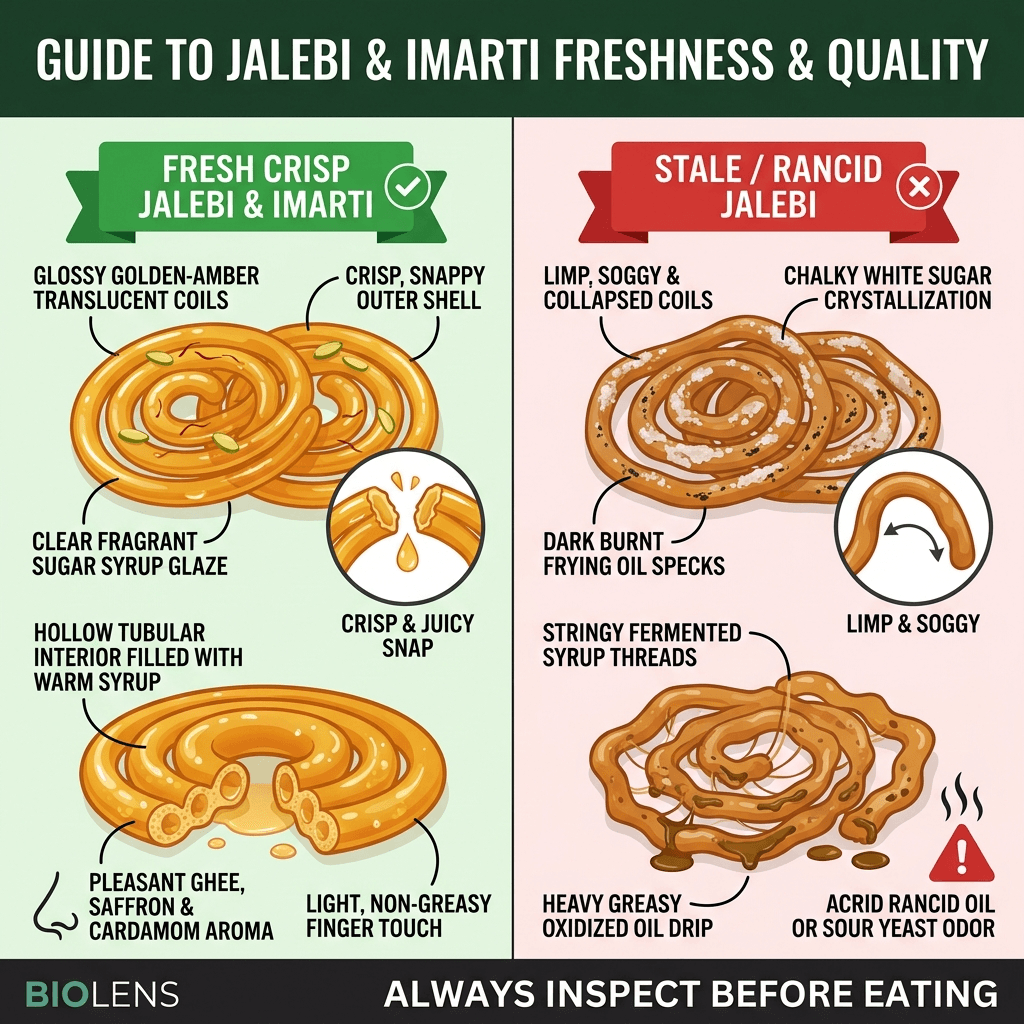
5. Crisp Fermented Saffron-Syrup Coils (Jalebi): Coal-Tar Dyes, Chemical Bleaches & Frying Fat
Piped in concentric spirals from naturally fermented All-Purpose Flour and Chickpea Flour (or stone-ground Black Gram Lentil batter for Imarti), fried crisp in Clarified Butter (Ghee) or vegetable oil, and plunged into warm Saffron and Cane Sugar syrup, Jalebi is prized for its glassy crunch and amber glow.
- The Lemon Juice Acid Test for Metanil Yellow & Orange II: Soak a broken coil of bright yellow, orange, or red Jalebi in 50 ml of warm water for 3 minutes, then add 1 teaspoon of lemon juice. Authentic Saffron or Turmeric remains pale golden-yellow; a shift to bright magenta-red or violet exposes banned coal-tar dyes.
- The Sodium Hydrosulfite Chemical Bleach Check: To bypass 12-hour natural fermentation and produce ultra-crisp, bright coils rapidly, some vendors add industrial sodium hydrosulfite (a textile bleach that releases toxic Sulfur Dioxide (SO2)). Break a warm coil and smell the hollow core: a stinging burnt-matchstick odor or soapy throat burn confirms chemical bleaching.
- Warm Water Frying-Oil Inspection: Steep a piece of Jalebi in hot water—clean golden droplets indicate fresh Ghee or oil, whereas a dark brown sticky film or waxy scum indicates polymerized frying oil or hydrogenated shortening.
- ⚠️ Critical Adulteration & Safety Caution: Never eat neon-orange or fluorescent-red Jalebi or Imarti that turns magenta in lemon juice or leaves a chemical, acrid, soapy burn at the back of your throat.
Authentic & Pure Benchmarks
Adulteration & Spoilage Red Flags
Testing the Raw Pantry Foundations Before You Cook
Whether you are assembling a festive gift hamper or cooking homemade Mysore Pak, Soan Papdi, Carrot Halwa (Gajar Ka Halwa), Modak, or Spiced Rice Pudding (Kheer), screening your raw ingredients takes less than 60 seconds per item:
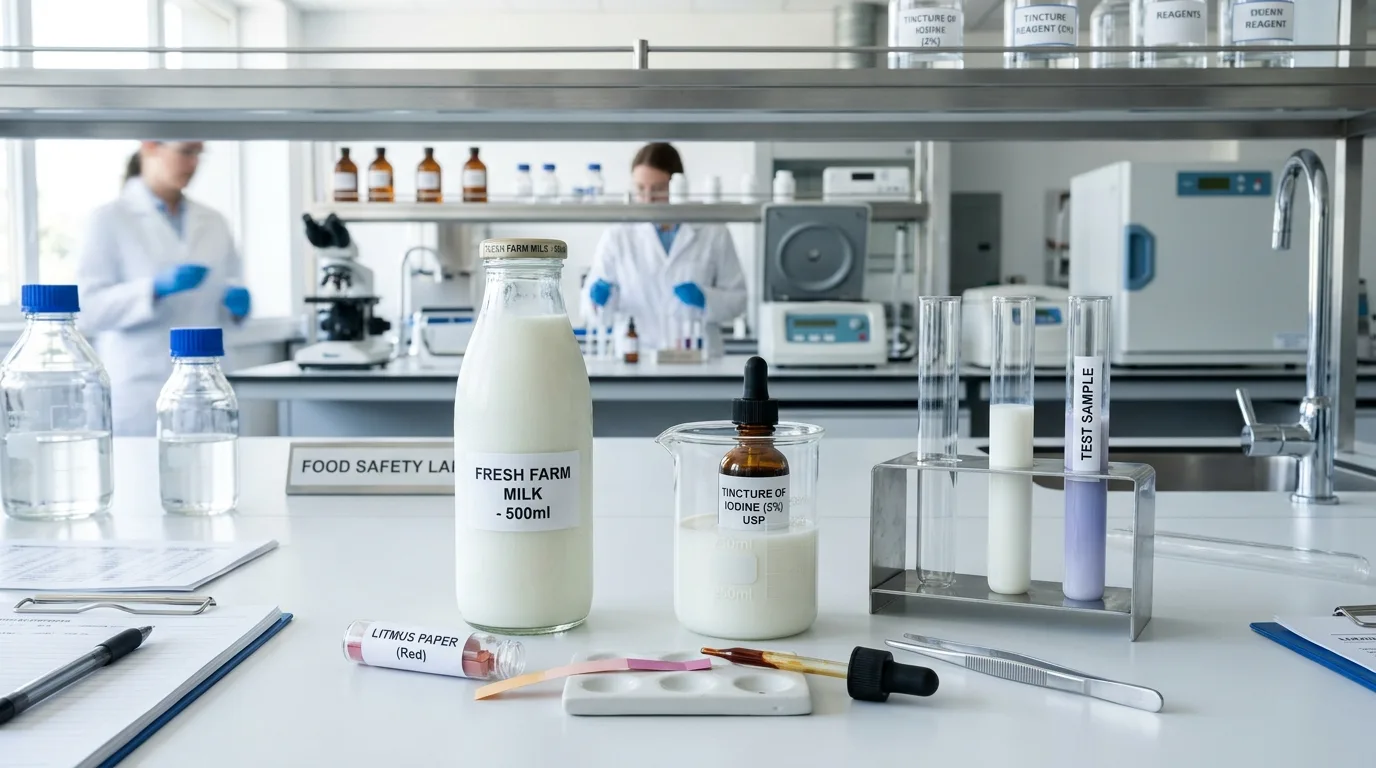
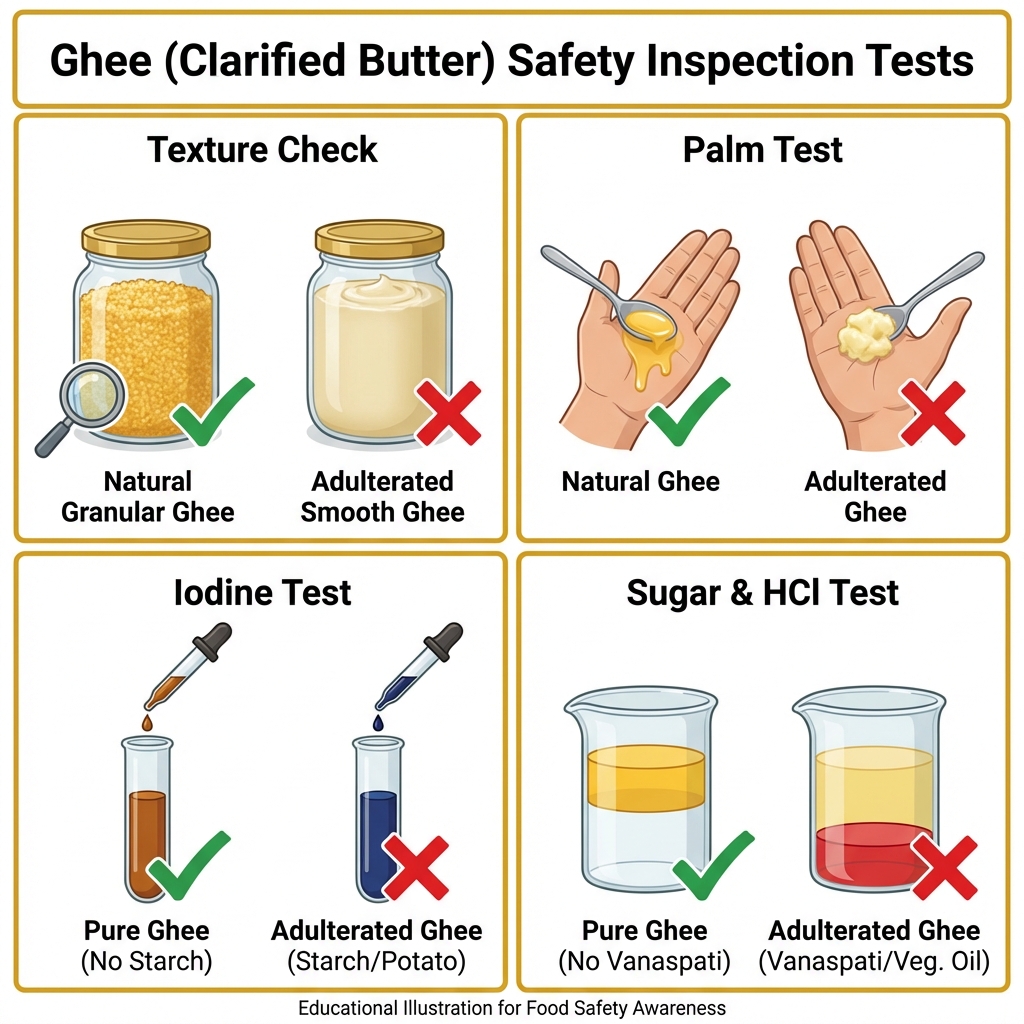
- Dairy Foundations (Milk, Khoya, Paneer, Ghee & Butter): Test store-bought Khoya and Paneer with a drop of iodine on a cooled water slurry before cooking. Melt 1 teaspoon of Clarified Butter (Ghee) in a glass jar and chill in the refrigerator for 2 hours—pure ghee solidifies into a uniform, granular golden layer, whereas palm oil or animal fat separates into distinct stratified bands. When using canned Sweetened Condensed Milk (Upcoming Guide), check that the ingredient list contains only Whole Milk and Sugar rather than palm-oil "Filled Milk."
- Cooking & Frying Oils: If frying festive confections or savory snacks in liquid oils, verify the purity of your Peanut / Groundnut Oil, Coconut Oil, Sesame Oil, or Mustard Oil using our refrigerator turbidity and home screening guides.
- Tree Nuts & Dried Fruits (Cashews, Almonds, Pistachios, Walnuts, Raisins, Figs & Dates): Slice nut kernels, Dried Figs, and Dates open before grinding to check for internal black Aspergillus niger mold dust, yellow rancidity rings, or insect webbing, and rub Raisins on white paper to check for mineral-oil gloss.
- Flours, Pulses, Spices & Sweeteners: Rinse Mung Beans (Moong Dal), Black Gram (Urad Dal), Split Chickpeas (Chana Dal), and Rice in warm water to check for talc or yellow dye bleed. Steep Pure Saffron Threads, Green Cardamom, Whole Nutmeg & Mace, Whole Cloves, and True Ceylon Cinnamon in warm water to confirm essential-oil richness, and dissolve Cane Sugar, Unrefined Cane Sugar (Jaggery), and Pure Honey in clear water to screen out insoluble chalk (CaCO3) or sand sediment.
Global Festive Sweets Cheat Sheet: Master Reference Matrix
Use this quick-reference diagnostic matrix before serving or gifting traditional confections:
| Sweet / Ingredient | Authentic Base | Primary Adulterant / Fraud | 60-Second Kitchen Test | Storage Life (Fridge 4°C) | ⚠️ Absolute Red Flag / Discard |
|---|---|---|---|---|---|
| Cashew Fudge (Kaju Katli) | Whole Cashews, Sugar, Silver Leaf (E174) | Aluminum Foil (Al), Wheat Flour, Peanuts | Thumb Foil Rub & Iodine Drop | 2 to 3 weeks (airtight) | Foil rolls into grey ball; jet-black iodine |
| Gram-Flour & Nut Spheres (Ladoo) | Chickpea Flour, Ghee, Jaggery, Saffron | Metanil Yellow Dye, Grass-Pea Flour, Palm Shortening | Warm Water + Lemon Juice Acid Test | 2 to 4 weeks (3–5d Motichoor) | Water turns magenta with lemon juice |
| Milk-Solid Dumplings (Gulab Jamun) | Khoya, Paneer, Cardamom, Ghee | Detergent/Urea Milk Solids, Excess Starch, Reused Oil | Rinsed Core Iodine & Hot Water Shake | 5 to 7 days in syrup | Soapy foam; fizzy/sour syrup; black oil |
| Caramelized Milk Fudge (Peda) | Evaporated Milk Solids (Khoya), Sugar, Saffron | Cereal Starch, Metanil Yellow / Yellow 5 Dye, Chalk | Boiled Cooled Slurry Iodine Test | 5 to 7 days | Any blue-black iodine stain; sour smell |
| Crisp Saffron-Syrup Coils (Jalebi) | Fermented Flour & Urad Dal, Ghee | Metanil Yellow, Orange II, Sodium Hydrosulfite Bleach | Lemon Acid Dye & Steam Odor Check | Best within 24–48 hours | Magenta acid shift; burnt-match odor |
| Evaporated Milk Solids (Khoya) | Slow-Reduced Whole Dairy Milk | Potato Mash, Flour, Detergent, Urea, Palm Fat | Cooled Slurry Iodine & Palm Rub | 3 to 5 days | Blue-black iodine; soapy froth on boiling |
| Edible Silver Leaf (E174) | 99.9% Elemental Silver (Ag) | Hammered Industrial Aluminum (Al), Lead/Cadmium | Finger Friction Rub & Direct Flame | Indefinite (dry pack) | Metal pellet on rub; black smoke in flame |
| Clarified Butter (Ghee) & Butter | Pure Clarified Dairy Butterfat | Hydrogenated Shortening, Palm Stearin, Mashed Potato | Body-Heat Palm Melt & Fridge Layer | 6 to 12 months (Ghee) | Waxy film on palate; stratified jar layers |
| Rasgulla, Rasmalai & Sandesh (Upcoming) | Fresh Cheese Curd (Chhena), Sugar Syrup | Starch Fillers, Urea, Non-Dairy Creamer, Saccharin | Iodine Drop on Rinsed Curd | 2 to 3 days (Must chill) | Left unrefrigerated > 4h; blue iodine |
| Kalakand & Carrot Halwa (Upcoming) | Reduced Milk, Carrots, Ghee, Nuts | Palm-Oil Condensed Milk, Synthetic Red Dye, Starch | Warm Water Dye Leach & Iodine | 4 to 5 days | Red dye bleed in water; sour dairy tang |
| Mysore Pak & Soan Papdi (Upcoming) | Chickpea Flour (Besan), Ghee, Sugar | Palm Stearin Shortening, Wheat Flour, Azo Dyes | Palate Melt & Lemon Acid Dye Check | 2 to 4 weeks (airtight) | Tallow/waxy coating on roof of mouth |
5 Golden Rules of Thumb for Festive Sweet Safety
When buying, gifting, or preparing celebration sweets for your family, follow these universal guidelines:
- Test Every Foil-Topped Sweet Before Serving: Rub a tiny corner of the metallic leaf on Cashew Fudge (Kaju Katli), Peda, or Ladoo between your fingers. If it does not vanish into fine micro-sparkles, peel off the entire foil layer or discard the batch.
- Beware Neon Yellows and Fluorescent Oranges: Real Saffron and Turmeric impart a warm, muted amber-gold hue. Neon-orange Jalebi or Ladoo should always be screened with a drop of lemon juice in warm water to rule out banned Metanil Yellow and Orange II dyes.
- Keep High-Moisture Dairy Sweets Chilled at 4°C (39°F): Never store Peda, Khoya fudge, Rasgulla, Rasmalai, or Kalakand in unrefrigerated gift boxes for more than 4 to 6 hours. Separate high-moisture milk sweets from dry nut confections using parchment paper.
- Verify Allergen-Free Claims on Unpackaged Boxes: If shopping for someone with celiac disease or a peanut allergy, remember that bulk Cashew Fudge, Marzipan, and Peda are frequently extended with undeclared Wheat Flour or Peanuts. Run the 30-second iodine starch check and buy from certified allergen-safe kitchens.
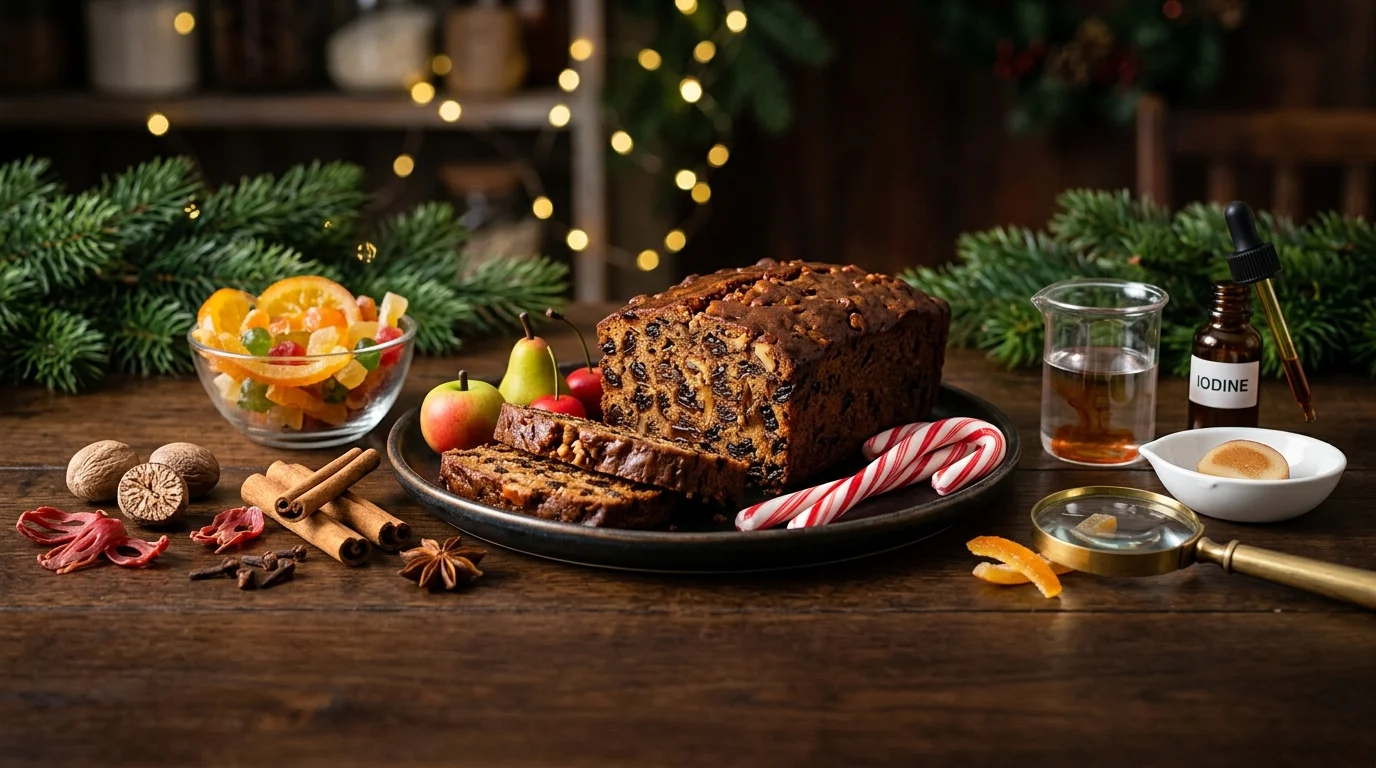
- Cross-Check Holiday Baking Staples Too: If your seasonal celebrations also include fruitcakes, almond paste, candied citrus peel, or peppermint sweets, consult our companion Christmas & Holiday Baking Food Safety Guide for 60-second purity tests on Christmas Plum Cake, Festive Marzipan, Peppermint Candy Canes, and Candied Citrus Peel & Tutti-Frutti.
Want to inspect any festive sweet, spice, dairy product, or dry fruit in your kitchen right now? Open the BioLens Food Guard Hub below to access interactive purity checklists, 60-second kitchen chemistry tests, and freshness guides!
Test 157+ Foods, Spices & Festive Sweets at Home
Explore interactive purity checklists, 60-second kitchen chemistry tests, freshness comparison guides, and multilingual safety profiles across 15+ languages.