How to Test Jaggery Purity: Detect Chalk Powder, Washing Soda & Chemical Bleaching
⚡ Quick 60-Second Jaggery Purity & Chemical Bleach Verdict
Sodium Hydrosulfite Bleach & Metanil Yellow Dye: Naturally pure jaggery is dark brown to deep amber. Commercial vendors use toxic Sodium Hydrosulfite (hydrose bleach) and carcinogenic Metanil Yellow dye to create artificially bright golden-yellow blocks, while chalk powder adds dead weight.
Dissolve 10g jaggery in warm water and add 5 drops dilute HCl or strong vinegar. Immediate fizzing or gas bubbles confirms chalk powder or sodium carbonate adulteration.
Dissolve 1 tbsp crushed jaggery in a glass of water. Pure gur dissolves completely with minimal natural sugarcane fiber. Heavy white chalky sediment at the bottom confirms mineral adulterants.
Pure chemical-free jaggery has a rich dark brown to blackish hue and deep caramel sweetness. Bright yellow, powdery jaggery that tastes slightly salty or chemical contains synthetic bleach and soda.
To learn more about natural sweetener safety, read our guides on Honey and Maple Syrup.
Drop Jaggery (Gur) photo here to test purity
or click to browse • Supports JPG, PNG, WEBP • Paste with Ctrl+V
Inspection Guide
Click to enlarge
Jaggery (Gur) Purity & Adulteration Audit
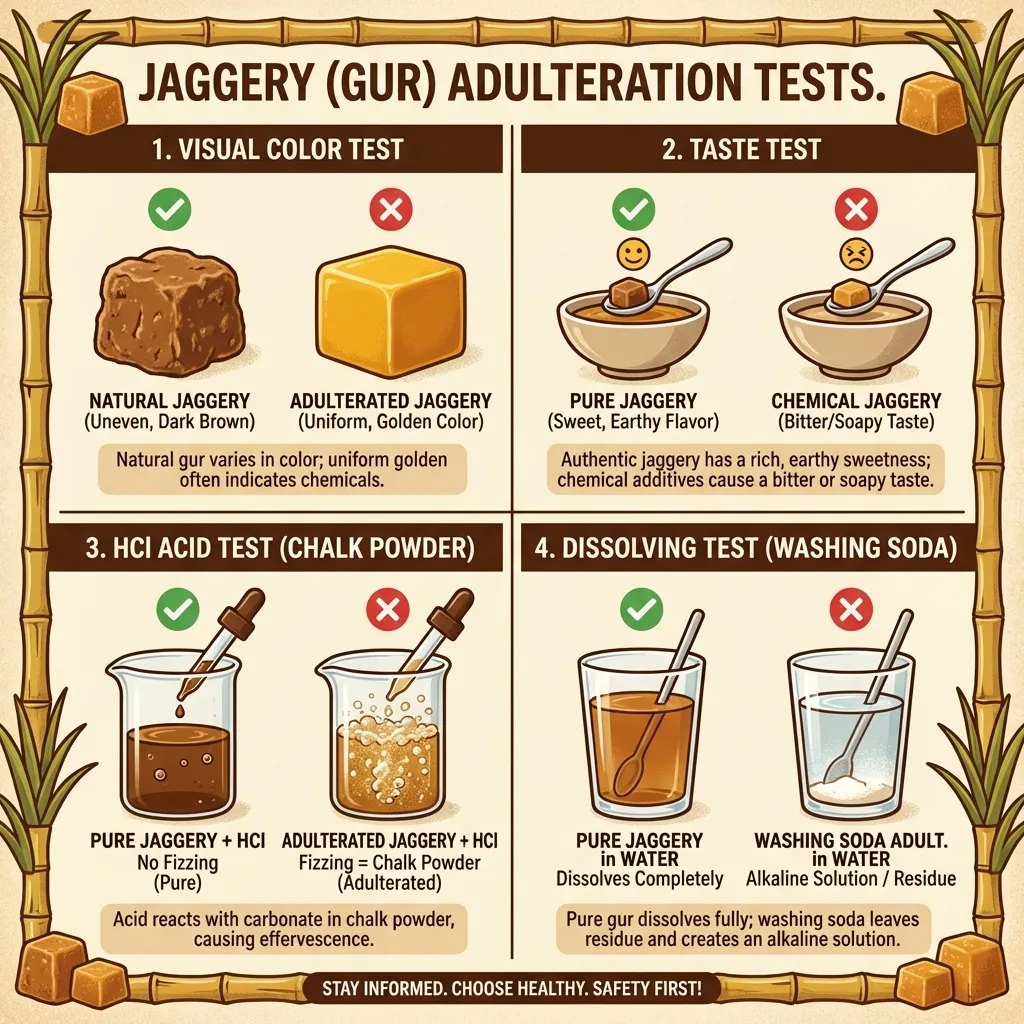
Traditional jaggery (gur) is one of nature's richest unrefined sweeteners, packed with natural iron, magnesium, and sugarcane antioxidants. However, intense commercial demand incentivizes illegal chemical bleaching and dead-weight adulteration. Here is how to verify pure gur at home:
1. The Natural Color & Darkness Audit:
Pure authentic jaggery ranges from dark golden-brown to deep caramel or dark mahogany. Naturally boiled cane juice darkens progressively as natural sugars caramelize. ❌ Beware of glowing, bright canary-yellow or neon golden blocks. These have been heavily bleached using toxic Sodium Hydrosulfite (Safed Hydrose / Rangkat) and artificially colored with non-permitted Metanil Yellow dye.
2. The Taste & Palate Check (Primary Indicator):
Taste a small pea-sized piece. ✅ Pure jaggery: Delivers a rich, earthy, deep caramel sweetness with subtle sugarcane notes and leaves a clean, warm aftertaste. ❌ Adulterated jaggery: Leaves a stinging, salty, soapy, or metallic aftertaste on the back of the tongue. A salty taste indicates excessive sodium carbonate (washing soda) or calcium salts used to neutralize sour fermented cane juice.
3. The Vinegar / Dilute Acid Effervescence Test (Chalk Detection):
Crush 10g of jaggery and dissolve it in half a glass of warm water. Add 1 teaspoon of white vinegar or a few drops of dilute hydrochloric acid (HCl). ✅ Pure jaggery: The solution remains calm with zero bubbling. ❌ Chalk-adulterated jaggery: Instantly produces brisk effervescence (fizzing gas bubbles) as calcium carbonate reacts with acid to release carbon dioxide gas.
4. The Water Dissolution & Sediment Test:
Drop a solid cube of jaggery into a clear glass of water without stirring. ✅ Pure jaggery: Settles and dissolves gradually, turning the liquid translucent golden-brown with zero powdery sludge. ❌ Chalk or washing soda jaggery: Dissolves into a cloudy, milky liquid, leaving a thick layer of insoluble white chalk sediment at the bottom.
5. The Texture & Granular Snap Test:
Break a jaggery block in half. ✅ Pure jaggery: Breaks with a crisp, crystalline snap and exhibits a rich, moist, granular internal structure. ❌ Adulterated jaggery: Feels unnaturally hard, chalky, brittle, or powdery on the fingers.
Click to enlarge
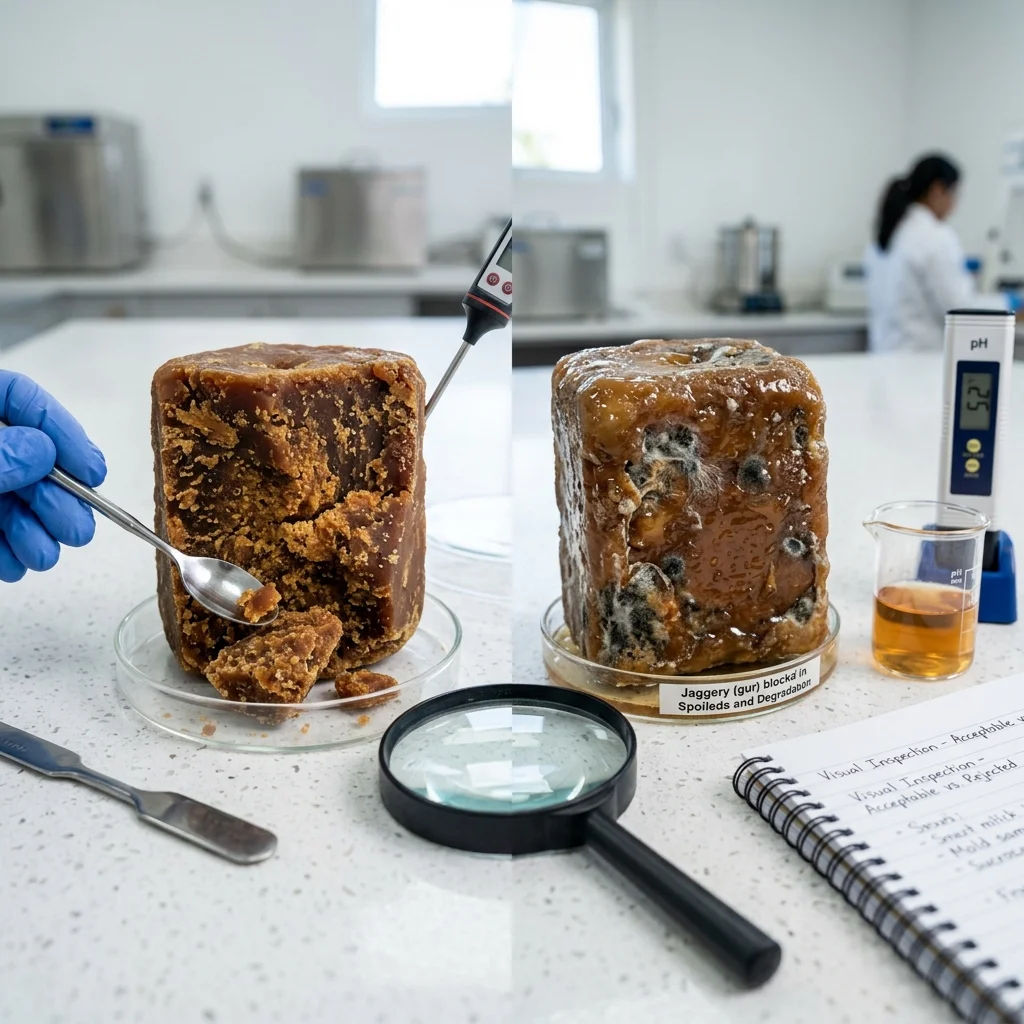
Jaggery (Gur) Freshness, Moisture & Mold Audit
Because jaggery is unrefined and retains natural moisture and molasses, it is highly sensitive to humidity and microbial spoilage. Here is how to audit freshness and shelf-life:
1. Moisture Content & Sticky Weeping Check:
✅ Fresh high-grade jaggery: Dry, firm, and solid to touch, maintaining its structural shape cleanly. ❌ Stale or damp jaggery: Absorbs ambient moisture, turning soft, pasty, and sweating sticky, dark droplets on the surface. Wet jaggery rapidly becomes a breeding ground for yeasts and fungal spores.
2. Alcoholic Fermentation & Sour Odor Audit:
Raw sugarcane juice contains wild yeasts. When jaggery is stored in warm, humid conditions, these yeasts ferment residual sucrose into alcohol and acetic acid. ✅ Fresh jaggery: Emits a warm, sweet, pleasant molasses aroma. ❌ Fermented jaggery: Emits a sharp, sour, vinegar-like or beer-like alcoholic stench and forms frothy bubbles.
3. White Crevice Mold & Spore Colonies:
Inspect the cracks, crevices, and underside of stored jaggery blocks. ❌ Look for powdery white, bluish-green, or grey fuzzy mold patches (Penicillium and Aspergillus species). Moldy jaggery contains toxic fungal mycotoxins and must be discarded entirely—never simply scrape off surface mold or boil it into tea.
4. Airtight Storage & Moisture Control:
Always store jaggery in airtight food-grade glass or stainless steel containers in a cool, dry, dark pantry away from steam. In hot, humid climates, storing blocks in sealed zip-lock bags inside the refrigerator prevents weeping and preserves pristine freshness for up to 12 months.
Quick Safety Tips
- CRITICAL: Avoid unnaturally bright yellow, glowing, or chalky white jaggery blocks
- Taste test: Spit out and reject any jaggery that tastes salty, soapy, or chemical
- Perform the vinegar test: Brisk bubbling confirms chalk powder (calcium carbonate)
- Water test: Pure jaggery leaves zero white chalky sediment at the bottom of the glass
Primary Chemical Concerns
Health Risks & Impacts
Multilingual Local Names
Regulatory Corner: FSSAI (Food Safety and Standards Authority of India) / BIS (IS 12923) / Codex Alimentarius
Regulation: Food Safety and Standards (Food Products Standards and Food Additives) Regulations 2011, Clause 2.8.4: Cane Jaggery (Gur)
Legal Limit:Total sugars (sucrose): Min 70.0% by weight; Reducing sugars: Max 20.0%; Moisture: Max 7.0%; Water insoluble matter: Max 1.5%; Sodium hydrosulphite / synthetic bleach dyes: 0.0% (Strict zero tolerance)
Report Adulteration to FSSAI (Food Safety and Standards Authority of India) / BIS (IS 12923) / Codex Alimentarius