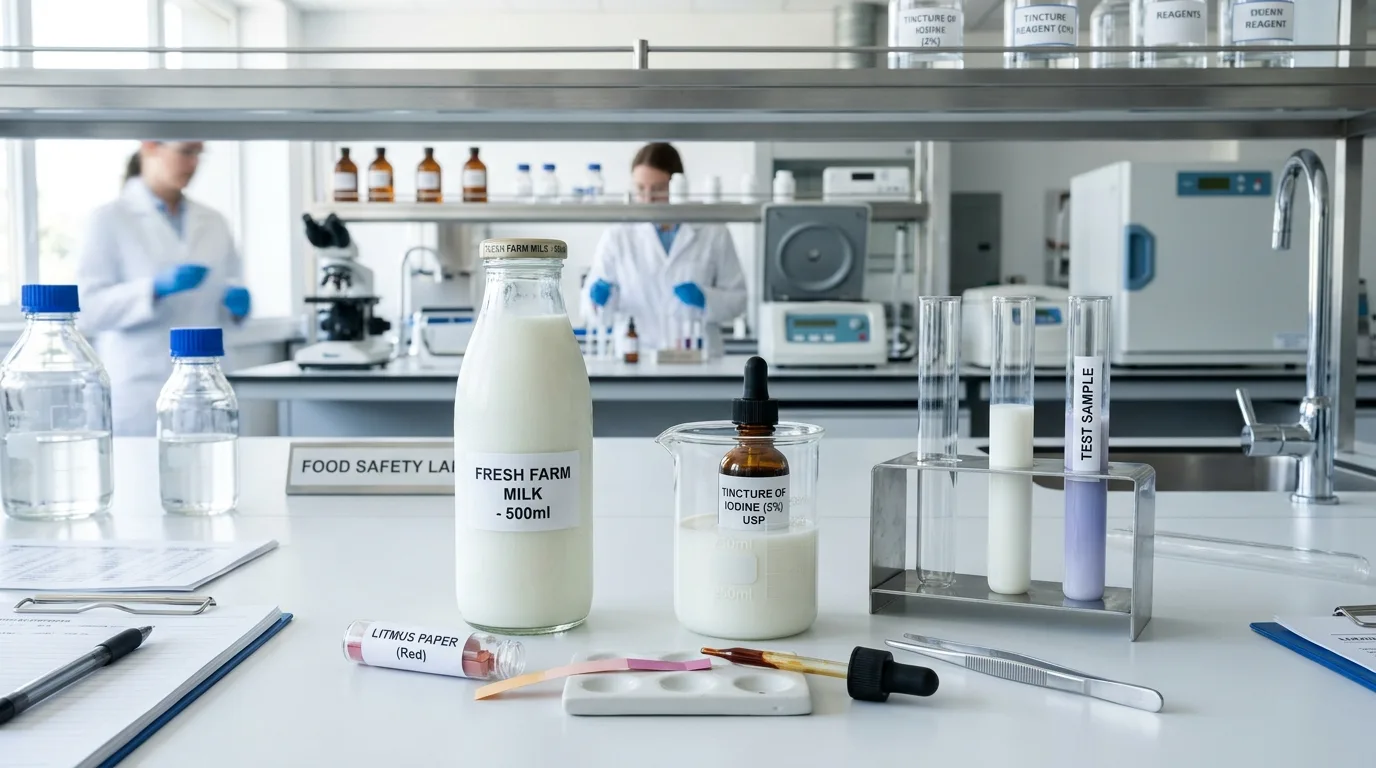
How to Test Khoya for Adulteration (Starch, Urea, Detergent)
⚡ Quick 60-Second Khoya (Mawa) Purity Verdict
Synthetic Milk, Starch & Detergent (Festive Alert): During festival season, up to 50% of commercial khoya is synthetic—made from vegetable oil, detergent, shampoo, starch, and urea.
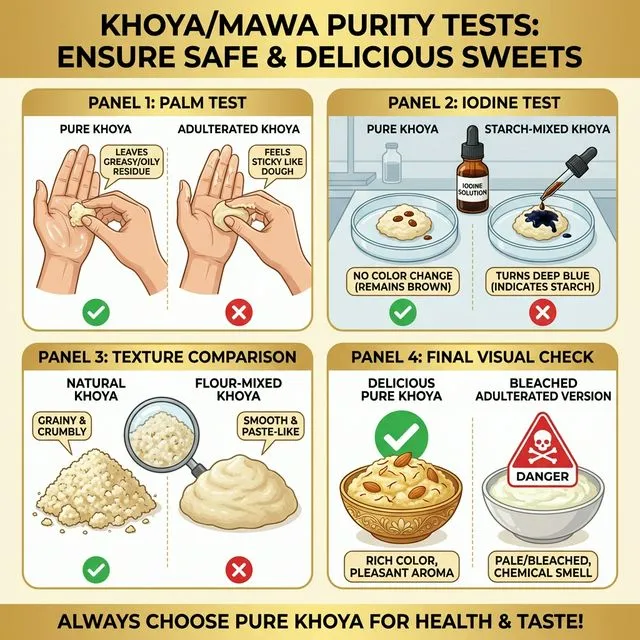
Boil 5g khoya in 15ml water, cool to room temperature, and add 2–3 drops iodine. Pure khoya stays creamy yellow. Adulterated khoya turns intense blue-black.
Rub a piece vigorously between your palms for 20s. Pure khoya melts with body heat, smells like rich ghee, and leaves hands oily. Spurious khoya feels gritty, sticky, or smells chemical.
Boil 1 tsp khoya with 1 tsp sugar in water. If thick, unnatural soap lather forms on the surface, toxic industrial detergent is confirmed.
To learn more about food safety tests and home adulteration detection, read our guides on Paneer (Cottage Cheese) and Ice Cream.
Drop Khoya (Mawa) photo here to test purity
or click to browse • Supports JPG, PNG, WEBP • Paste with Ctrl+V
Inspection Guide
Click to enlarge
Khoya (Mawa) Purity & Adulteration Audit
Khoya (condensed milk solids) is high-risk during festival seasons, often adulterated with starch to increase weight and urea or detergents to give it a creamy, high-fat appearance.
1. The Iodine Test (Starch Detection):
Take a small sample of khoya and boil it in water. Let it cool. Add 2-3 drops of iodine solution. If the sample turns blue or black, it contains starch (from potatoes, flour, or rice). Pure khoya will not change color.
2. The Palm Rub Test (Fat Check):
Rub a small piece of khoya on your palm for 30 seconds. If your palm feels oily and the khoya smells of fresh milk fat (ghee), it is pure. If it feels "gritty," "sticky," or smells slightly chemical, suspect adulteration with starch and urea.
3. The Sugar Solubility Test:
Pure khoya has a natural, mild sweetness. If you boil a sample in water with a bit of sugar and it becomes unnaturally "frothy" or leaves a white residue, it may contain detergents.
4. The Tartaric Acid Test (Urea):
To a small sample in a test tube, add a few drops of tartaric acid and shake. If it develops a deep yellow color, it indicates the presence of added urea.
Quick Safety Tips
- Perform the iodine test - blue/black color is a red flag for starch
- Rub on palm - pure khoya should release natural ghee
- Avoid khoya that feels "sticky" or lacks a fresh milky aroma
- Prefer making khoya at home or buying from certified organic dairies
Primary Chemical Concerns
Health Risks & Impacts
Multilingual Local Names
Common Storage Pests
Not Applicable
high riskDairy products don't host traditional pests but are highly susceptible to bacterial and fungal growth.
Detection
- Green/black mold spots
- Sour or "vomit-like" smell
Prevention
- Store in a cool, dry, airtight container
- Refrigeration is mandatory
Corrective Action: What to do?
Discard moldy or sour khoya immediately; do not consume even if boiled.
Regulatory Corner: FSSAI (Food Safety and Standards Authority of India)
Regulation: Food Safety and Standards (Food Products Standards and Food Additives) Regulations 2011, Clause 2.1.13: Evaporated Milk Solids (Khoya)
Legal Limit:Milk fat: Min 30.0% on dry matter basis; Moisture: Max 30.0%; Total ash: Max 6.0%; Added starch, maida, vegetable oil, detergent, or urea: 0.0% (Strictly Prohibited)
Report Adulteration to FSSAI (Food Safety and Standards Authority of India)