How to Test Cardamom for Adulteration (Malachite Green, Extracted Essential Oils, Talcum Powder)
⚡ Quick 60-Second Green Cardamom (Elaichi) Purity Verdict
Malachite Green Dye & Talc Coating: Faded or spent cardamom pods are chemically soaked in toxic Malachite Green dye to simulate 'export quality', or coated in talc/soapstone.
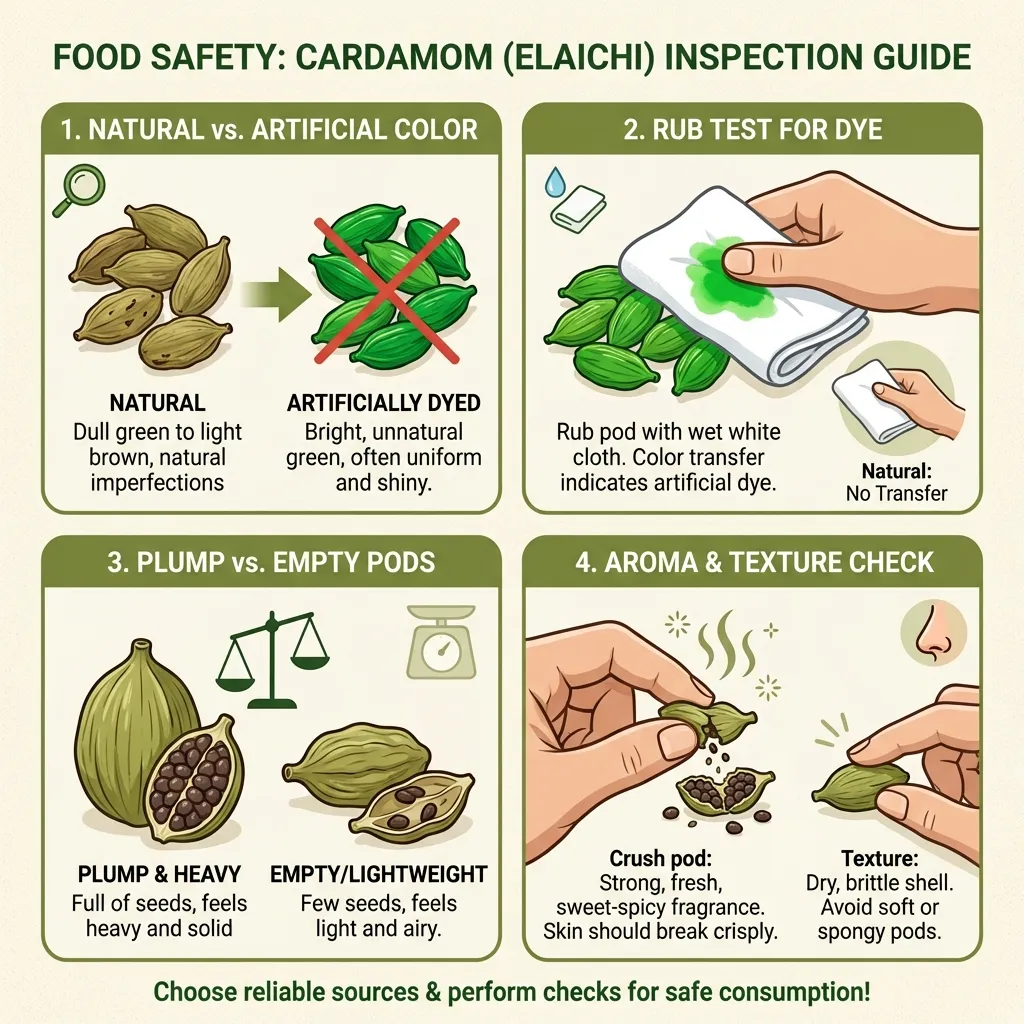
Moisten a clean cotton swab or white cloth with water and rub the pod surface. If the cotton stains emerald green, non-permitted synthetic dye is confirmed.
Drop 5 pods into lukewarm water. Naturally green pods keep the water clear. Artificially dyed pods rapidly turn the water neon green.
Gently crack open a pod. Pure high-grade cardamom contains 15–20 dark brown/black oily aromatic seeds. Spent pods contain shriveled, pale grey, odorless seeds.
To learn more about food safety tests and home adulteration detection, read our guides on Black Cumin (Kalonji) and Tamarind.
Drop Cardamom (Elaichi) photo here to test purity
or click to browse • Supports JPG, PNG, WEBP • Paste with Ctrl+V
Inspection Guide
Click to enlarge
Cardamom (Elaichi) Purity Audit
Green cardamom is highly valuable, making it a prime target for "exhausted" seeds (oil already removed) or dyeing with toxic Malachite Green to hide age.
1. The Color Test:
Naturally dried cardamom has a light, dusty green color. If the pods are unnaturally vibrant, uniform, or "neon" green, they have likely been treated with Malachite Green dye.
2. The Texture Rub Test:
Rub the pod between your palms vigorously. If your palms turn green or feel unusually slippery (talc), it is adulterated.
3. The Aroma and Weight:
Exhausted cardamom (oil removed) feels lighter and has a very faint aroma. Squeeze a pod - if it feels "hollow" or lacks the characteristic pungent, sweet smell when crushed, the essential oils have been extracted.
4. The Water Soak:
Drop a few pods in warm water. If the water turns green within seconds, artificial coloring is confirmed.
5. Shared Premium Spice Risks:
High-value spices are the most frequent targets of synthetic dyeing and oil extraction. Protect yourself by reviewing our guides on Saffron and Cinnamon.
Click to enlarge
Cardamom Freshness, Storage & Desiccation Audit
Green cardamom is a volatile spice prized for its essential oils (terpinyl acetate, 1,8-cineole, linalool). Once exposed to heat, humidity, or sunlight, it degrades rapidly.
1. The Squeeze & Pod Crack Audit (Exhausted Pod Check):
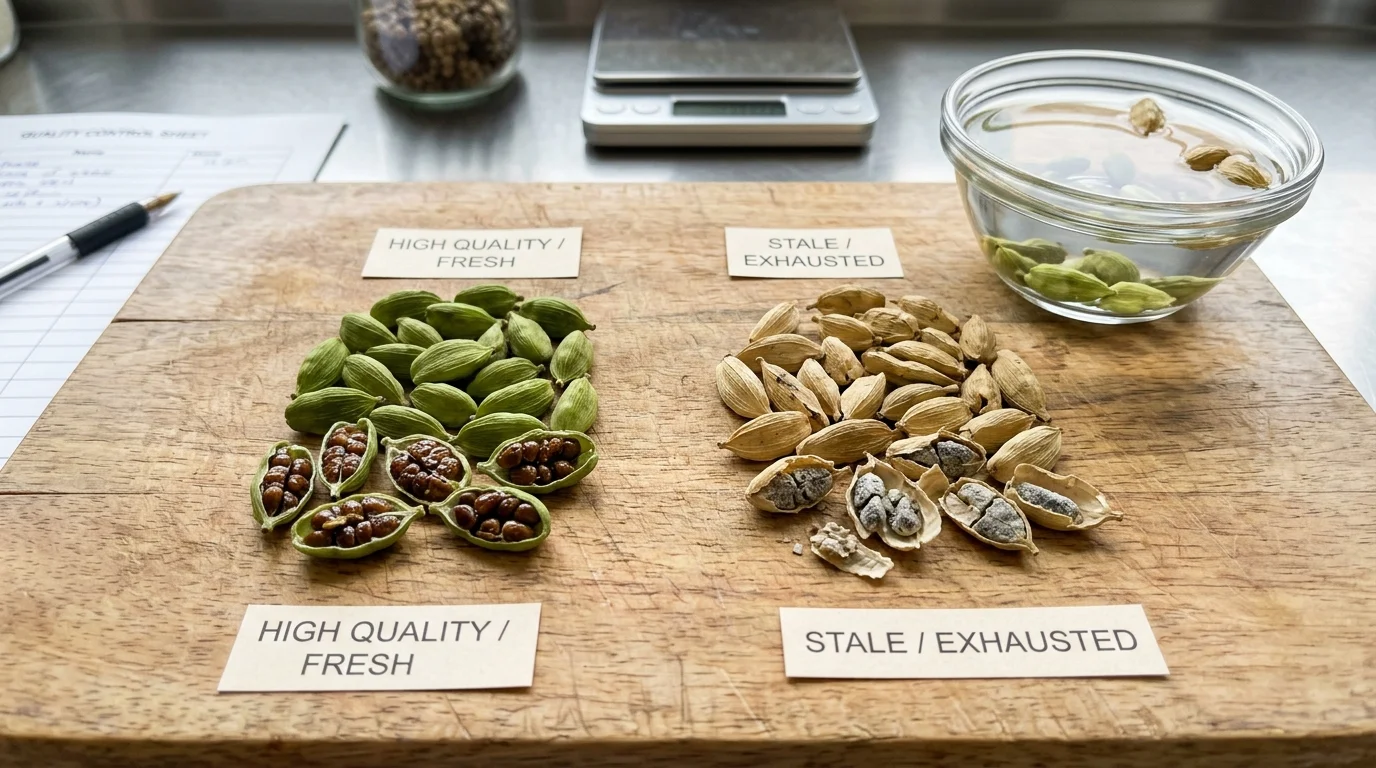
Take a green pod and pinch it firmly between your thumb and index finger. A fresh, oil-rich pod is firm, crisp, and slightly springy. If the pod crushes flat like paper or crumbles into dry powder, the volatile essential oils have evaporated or were industrially steam-distilled.
2. Seed Color & Oil Sheen Inspection:
Crack open the pod. Inside, high-quality cardamom holds 15–20 dark brown-to-black, sticky, oily seeds that cling together. If the seeds are pale tan, chalky grey, or loose and dry like dust, the cardamom is stale, exhausted, or harvested immaturely.
3. Capsule Rot (Azhukal) & Humidity Mold:
Inspect the pod casing closely. Discard pods showing water-soaked brownish-black discolorations or white powdery fuzz at the neck. Storing cardamom in humid pantries or unsealed bags invites Aspergillus mold growth and aflatoxin contamination.
4. Color Fading vs. Bleached Pods:
Naturally aged cardamom slowly oxidizes to a dull pale-straw hue over 12–18 months. Never buy pods bleached bright chalky-white with sulfur dioxide fumes unless specifically labeled as traditional bleached white cardamom.
5. Storage Protocol:
Store whole uncracked pods in airtight dark amber glass jars in a cool, dark, dry pantry (<20°C). Never grind until ready to use; ground cardamom loses 80% of its essential oils within days.
Quick Safety Tips
- Avoid "vibrant green" pods - natural cardamom is duller
- Check for heavy aroma; weak scent indicates oil extraction
- Rub test for talc or dye transfer to skin
- Soak in water - color bleed is a sign of chemicals
Primary Chemical Concerns
Health Risks & Impacts
Multilingual Local Names
Common Storage Pests
Cigarette Beetle (Lasioderma serricorne)
medium riskCommon pests that infest stored spices, including cardamom pods.
Detection
- Small pin-sized holes in the pods
- Fine powder at the bottom of the container
Prevention
- Store in airtight glass jars
- Keep in a cool, dry, dark place
Corrective Action: What to do?
Discard infested pods; clean the container with vinegar and dry thoroughly.
Regulatory Corner: FSSAI (Food Safety and Standards Authority of India) / ISO 882-1
Regulation: Food Safety and Standards (Food Products Standards) Regulations 2011, Clause 2.9.4: Small Cardamom (Elaichi) Whole and Seeds
Legal Limit:Volatile oil: Min 3.5% (v/w); Empty, shriveled or spent pods: Max 5.0%; Malachite Green / non-permitted synthetic colorants: 0.0% (Zero tolerance); Talc / soapstone coating: 0.0%
Report Adulteration to FSSAI (Food Safety and Standards Authority of India) / ISO 882-1