How to Test Butter for Adulteration (Vanaspati, Mashed Potatoes, Starch)
⚡ Quick 60-Second Butter Purity & Starch Verdict
Hydrogenated Fat & Starch Adulteration: Commercial butter is adulterated with cheap Vanaspati (trans fats), mashed starches, animal tallow, and synthetic azo food dyes.
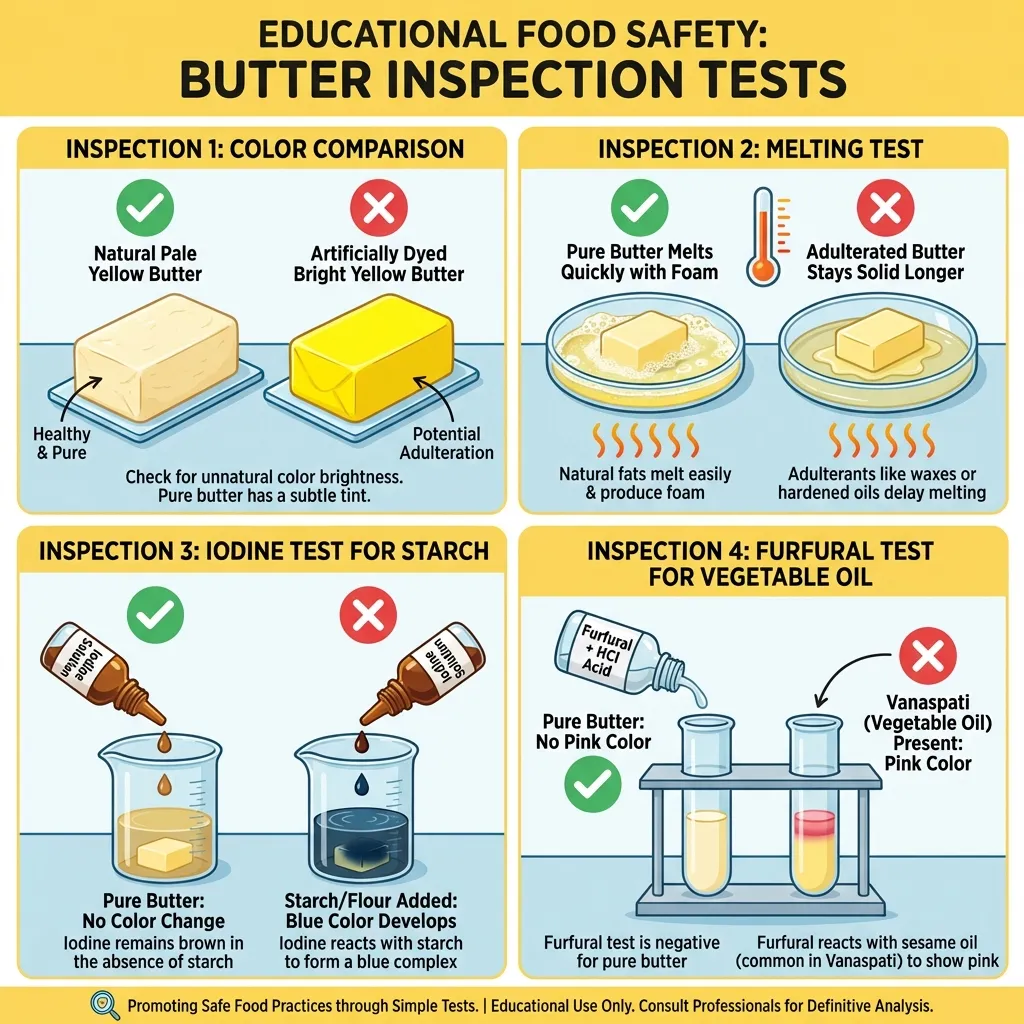
Melt 1 tsp butter on a heated pan. Pure butter melts immediately, turns golden brown, and creates natural aromatic foam. Fake butter takes longer and stays pale yellow.
Melt 1 tsp butter in a spoon, let cool, and add 1 drop tincture iodine. If it turns blue, purple, or black, starch or mashed potato filler is confirmed.
Add 1 tsp butter to boiling water. Pure butter melts completely into a uniform liquid oil layer on top. Adulterated butter forms curdled white flakes or lumps.
To learn more about food safety tests and home adulteration detection, read our guides on Cheese, Ghee (Clarified Butter), and Yogurt (Dahi).
Drop Butter (Makkhan) photo here to test purity
or click to browse • Supports JPG, PNG, WEBP • Paste with Ctrl+V
Inspection Guide
Click to enlarge
Butter Purity & Fat Test
Butter is often adulterated with cheaper Vanaspati (vegetable fat) or fillers like Mashed Potatoes and Starch to increase bulk.
1. The Melt Test (Fat Check):
Heat a spoonful of butter in a vessel.
- Pure Butter: Melts instantly and turns light brown (caramelizes) quickly.
- Adulterated: If it takes a long time to melt and leaves a white residue or stays pale yellow, it likely contains Vanaspati or vegetable oils.
2. The Iodine Test (Starch):
Add a few drops of Iodine solution to a small amount of melted butter.
- Pure: No color change (remains reddish-brown).
- Adulterated: If it turns blue or purple, it confirms the presence of Starch or Mashed Potatoes.
3. The Palm Rub Test:
Rub a small amount of butter on your palm. Pure butter will melt completely and be absorbed, leaving a clean, milky aroma. Vanaspati will feel "waxy" or "grainy" and leave a sticky residue.
4. Shared Dairy Fat Risks:
Dairy fats are frequently adulterated with cheap vegetable fats. Learn how to run a purity check on clarification by reading our guide for Ghee (Clarified Butter).
Quick Safety Tips
- Melt test - pure butter melts quickly and turns brown
- Iodine test - blue color indicates starch/potatoes
- Avoid butter that feels "waxy" or sticky at room temperature
- Store in a cool, dark place to prevent rancidity
Primary Chemical Concerns
Health Risks & Impacts
Multilingual Local Names
Common Storage Pests
Dairy Mold (Penicillium spp.)
high riskFungal growth that occurs when butter is exposed to moisture and air.
Detection
- Green, black, or white fuzzy spots on the surface
- Musty, "cheesy" odor
- Discoloration
Prevention
- Always use a clean, dry spoon
- Keep refrigerated in an airtight container
Corrective Action: What to do?
If you see any mold spots, **discard the entire block**. Mold roots can penetrate deep into soft fats like butter even if not visible.
Regulatory Corner: FSSAI (Food Safety and Standards Authority of India) / US FDA
Regulation: Food Safety and Standards (Food Products Standards) Regulations 2011, Clause 2.1.7: Butter Standards & FDA 21 CFR 131.120
Legal Limit:Milk fat: Min 80.0% m/m; Moisture: Max 16.0% m/m; Curd & milk solids-not-fat: Max 1.5%; Common salt: Max 3.0%; Non-dairy vegetable oils, animal fats & starches: 0.0% (Zero tolerance)
Report Adulteration to FSSAI (Food Safety and Standards Authority of India) / US FDA