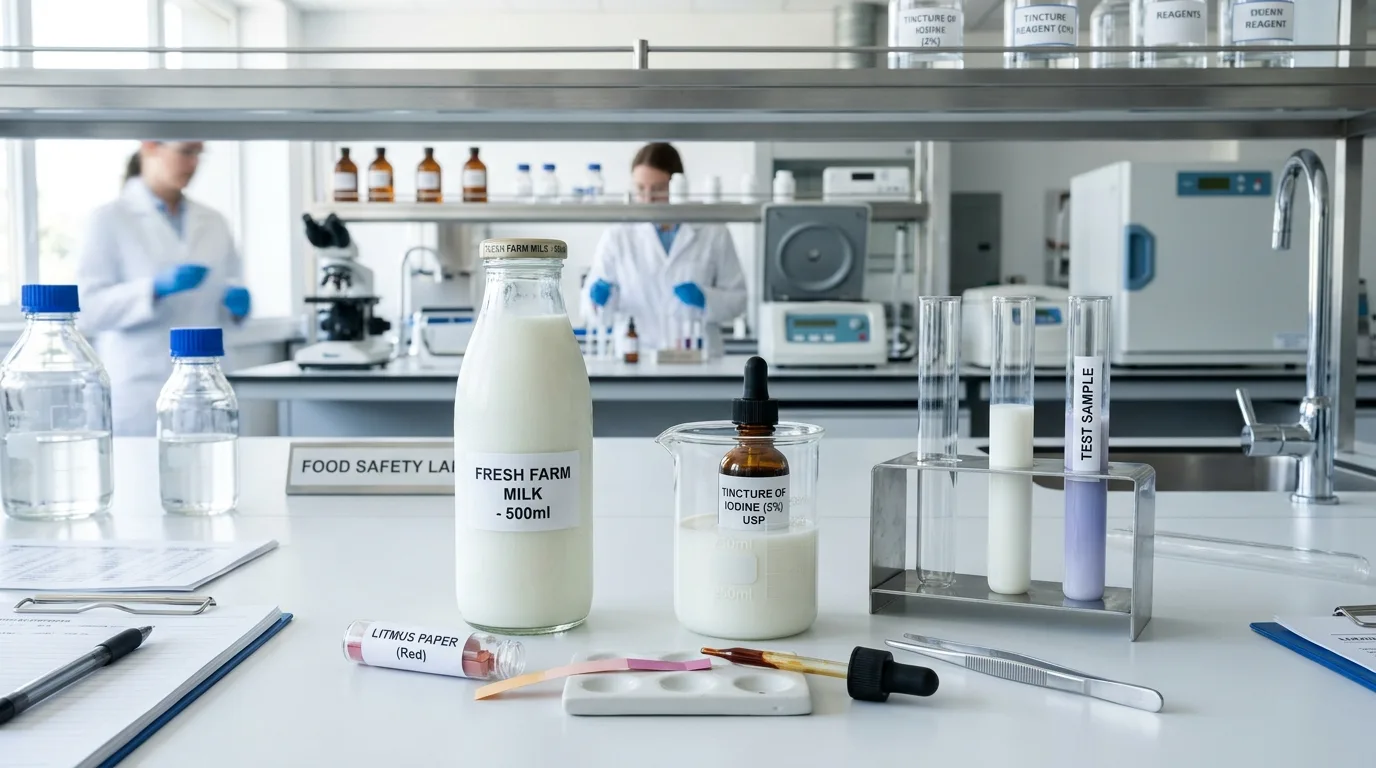
How to Test Paneer for Adulteration (Starch, Flour, Detergent)
⚡ Quick 60-Second Paneer Purity Verdict (Synthetic vs Real)
Synthetic Milk & Starch Alert: Fraudulent 'analogue' paneer is concocted from palm oil, urea, detergent, and maida/cornstarch instead of whole milk, posing severe gastrointestinal and kidney risks.
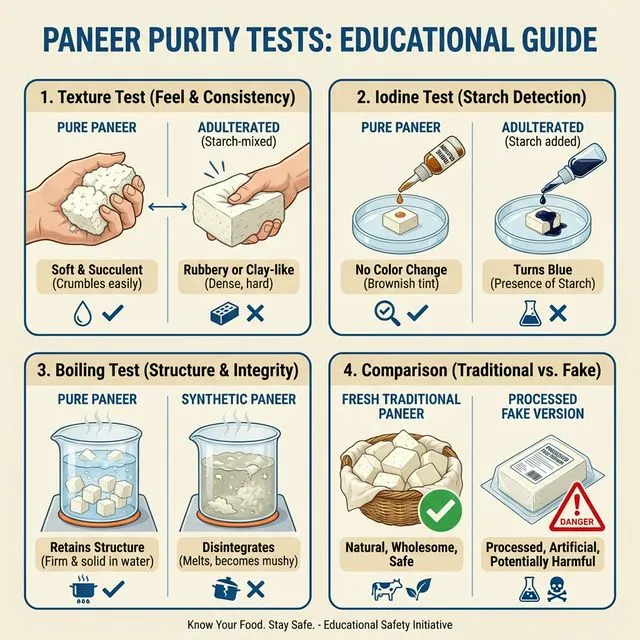
Boil a small cube of paneer in water, let it cool, and add 2–3 drops of iodine tincture. Turns blue-black or violet = starch/flour added. Remains light yellow/brown = pure milk fat.
Crush a piece between your thumb and index finger. Pure paneer crumbles softly and feels moist/creamy. Synthetic paneer feels rubbery, springy, or breaks into hard rubbery chunks.
Lightly fry a cube. Pure paneer turns golden and stays melt-in-mouth tender. Starch/synthetic paneer turns dense, chewy like rubber, or disintegrates into oily slime.
Drop Paneer (Cottage Cheese) photo here to test purity
or click to browse • Supports JPG, PNG, WEBP • Paste with Ctrl+V
Inspection Guide
Click to enlarge
Paneer (Cottage Cheese) Purity Check
Paneer is often adulterated with starch and synthetic milk to increase weight and white appearance.
1. The Iodine Test (Starch Detection):
Add a drop of iodine to a piece of paneer. If it turns blue-black, it indicates the presence of starch or flour.
2. The Boiling Test (Texture Check):
Boil paneer in water for 5 minutes, let it cool, and then touch. Natural paneer stays soft and moist. Adulterated paneer with starch becomes very hard, rubbery, or leathery when boiled.
3. The Texture Rub Test:
Rub a small piece of paneer between your fingers. Natural paneer turns into fine crumbles. Synthetic paneer feels rubbery, chewy, or turns into a sticky paste.
Quick Safety Tips
- Natural paneer crumbles between fingers
- Boiling makes adulterated paneer very hard or rubbery
- Iodine test for starch/flour detection
- Pure paneer has a fresh, milky smell
Primary Chemical Concerns
Health Risks & Impacts
Multilingual Local Names
Common Storage Pests
Coliform Bacteria Spoilage
high riskRapid bacterial growth that causes paneer to turn slimy and sour.
Detection
- Slimy surface texture
- Sour or "rotten" smell
- Yellowish discoloration
Prevention
- Store in clean water in the refrigerator
- Change water every 24 hours
- Keep in airtight containers
Corrective Action: What to do?
If paneer feels slimy or smells sour, **discard it immediately**. Consuming spoiled paneer can lead to severe food poisoning.
Regulatory Corner: FSSAI (Food Safety and Standards Authority of India)
Regulation: Food Safety and Standards (Food Products Standards and Food Additives) Regulations, Clause 2.1.16: Chhana and Paneer
Legal Limit:Moisture: Max 60.0% (Normal Paneer) / 70.0% (Medium Fat); Milk Fat: Min 50.0% of dry matter; Starch/Maida/Flour: 0.0% (Strictly Prohibited); Urea/Detergent: 0.0%
Report Adulteration to FSSAI (Food Safety and Standards Authority of India)