How to Test Groundnut Oil for Adulteration (Argemone Oil, Cotton Seed Oil, Rice Bran Oil)
⚡ Quick 60-Second Groundnut (Peanut) Oil Purity Verdict
Adulteration & Aflatoxin Hazard: Cold-pressed peanut oil is frequently adulterated with cheap cottonseed oil, mineral oil, or toxic Argemone oil, and may carry carcinogenic Aflatoxin B1 from moldy peanuts.
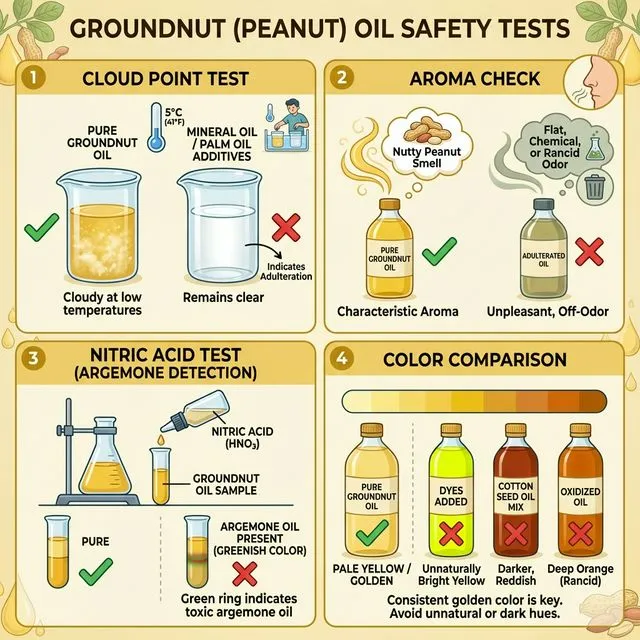
Place 50ml oil in a glass in the fridge (3–5°C) for 3 hours. Pure groundnut oil solidifies into a dense, creamy mass. Adulterated cottonseed or light seed oil blends remain liquid.
In a glass test tube, add 5ml oil + 5ml concentrated Nitric Acid (HNO3). Shake gently. A red/crimson or brown ring at the junction indicates toxic Argemone oil adulteration.
Rub 2 drops on your palm until warm. Pure cold-pressed oil releases a distinct, pleasant nutty peanut fragrance. Mineral oil adulteration smells flat, solvent-like, or chemical.
Drop Groundnut Oil (Peanut Oil) photo here to test purity
or click to browse • Supports JPG, PNG, WEBP • Paste with Ctrl+V
Inspection Guide
Click to enlarge
Groundnut Oil Purity & Argemone Audit
Groundnut oil is often adulterated with toxic Argemone oil or cheaper oils like cotton seed and rice bran oil to increase profit margins.
1. The Nitric Acid Test (Argemone Detection):
In a test tube, take 5ml of groundnut oil and add a few drops of concentrated nitric acid. Shake gently and warm the mixture for 2-3 minutes. If the oil layer turns reddish-brown or orange, it is contaminated with Argemone oil. Pure groundnut oil will not change color.
2. The Refrigeration Test:
Place a small bottle of groundnut oil in the refrigerator for 3-4 hours. Pure groundnut oil has a very low freezing point and remains liquid. If you see significant white solidification or "clouding" at the bottom, it indicates adulteration with palm oil or cotton seed oil.
3. The Rub and Smell Test:
Rub a few drops of oil on your palms for 30 seconds until they get warm. Pure groundnut oil has a distinct, nutty, and pleasant aroma. If the smell is neutral or feels "fatty" like vegetable ghee, it is adulterated.
4. The Transparency Check:
Pure groundnut oil is light golden-yellow and crystal clear. If the oil looks murky, "fluorescent," or has a chemical, sharp smell, suspect industrial dyes or mineral oil treatment.
5. Adulteration in Mustard Oil:
Similar adulteration with toxic Argemone oil is heavily reported in mustard oil. See our guide to test Mustard Oil.
Quick Safety Tips
- Perform the nitric acid test for Argemone oil - reddish color is a danger sign
- Check for solidification in the fridge - indicates cheap oil fillers
- Avoid oils that lack the characteristic pleasant nutty aroma
- Select "Cold Pressed" (Kacchi Ghani) oils for maximum purity and nutrition
Primary Chemical Concerns
Health Risks & Impacts
Multilingual Local Names
Common Storage Pests
Not Applicable
low riskPure oil does not typically host pests, but moisture can lead to fungal growth.
Detection
- Cloudy white strands
- Rancid smell
Prevention
- Store in a dry, dark, airtight container
- Avoid using wet spoons
Corrective Action: What to do?
Discard rancid or fungus-contaminated oil immediately.
Regulatory Corner: FSSAI / Codex Alimentarius Standard 210-1999 (Named Vegetable Oils)
Regulation: Food Safety and Standards (Food Products Standards) Regulations 2011, Clause 2.2.1(1): Groundnut Oil
Legal Limit:Acid Value: Max 0.5 (Refined) / 6.0 (Virgin); Saponification Value: 188–196; Argemone Oil: 0.0% (Zero tolerance); Aflatoxin B1: Max 15 ppb
Report Adulteration to FSSAI / Codex Alimentarius Standard 210-1999 (Named Vegetable Oils)