Coconut Oil Adulteration: Detect Mineral Oil at Home
⚡ Quick 60-Second Coconut Oil Purity & Mineral Oil Verdict
Palm Kernel & Mineral Liquid Paraffin Adulteration: Pure coconut oil is adulterated with cheap refined palm olein, palm kernel oil, or carcinogenic mineral liquid paraffin, which remain liquid at refrigerator temperatures.
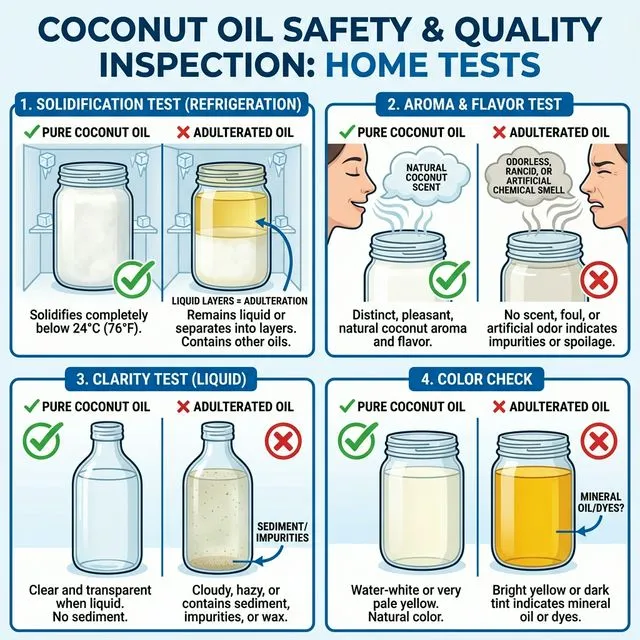
Place 50ml coconut oil in a small glass jar in the refrigerator (at 5°C to 10°C) for 30 minutes. Pure coconut oil solidifies completely into a uniform, snow-white solid block. Any liquid layer on top confirms adulterant oils.
Inspect the solidified oil under light. Pure coconut oil is uniform milk-white. Distinct yellow or clear stratified bands indicate blended vegetable or mineral oils.
Dip a cotton wick in the oil and light it with a match. Pure coconut oil burns silently with a clean flame and sweet coconut scent. Crackling, sputtering, or chemical petroleum fumes indicate added water or mineral oil.
To learn more about food safety tests and home adulteration detection, read our guides on Walnuts (Akhrot) and Sesame (Gingelly) Oil.
Drop Coconut Oil photo here to test purity
or click to browse • Supports JPG, PNG, WEBP • Paste with Ctrl+V
Inspection Guide
Click to enlarge
Coconut Oil Purity & Freezer Test
Pure coconut oil is unique because it solidifies completely at low temperatures, unlike most common adulterants like mineral oil or liquid paraffin.
1. The Freezer Test (Primary Test):
Pour a small sample of coconut oil into a transparent glass jar and place it in the refrigerator (not freezer) for 30-45 minutes.
- Pure Coconut Oil: Will solidify into a hard, milky-white mass.
- Adulterated: If a layer of liquid remains on top or at the bottom, it confirms the presence of Mineral Oil or other non-solidifying oils.
2. The Scent Friction Test:
Rub a drop of oil on your palm until it gets warm. Pure coconut oil has a distinct, fresh, and nutty aroma. If it smells like "petroleum" or has no smell at all, it likely contains mineral oil.
3. The Color Check:
Pure virgin coconut oil is crystal clear like water when liquid. If it has a yellowish tint or looks "cloudy" at room temperature (above 25°C), it may be mixed with cheaper vegetable oils.
4. Freezer Tests for Oils:
Refrigerator testing is a simple way to detect cheap fillers in coconut oil and other cooking oils. Check out our guides for Mustard Oil.
Quick Safety Tips
- Refrigeration test - pure oil solidifies completely
- Check for clear, water-like appearance when liquid
- Avoid oil with a faint petroleum or chemical smell
- Select "Cold Pressed" or "Virgin" for highest purity
Primary Chemical Concerns
Health Risks & Impacts
Multilingual Local Names
Regulatory Corner: FSSAI (Food Safety and Standards Authority of India) / Codex Stan 210-1999 / BIS (IS 542)
Regulation: Food Safety and Standards (Food Products Standards) Regulations 2011, Clause 2.2.1.1: Coconut Oil
Legal Limit:Free Fatty Acids (as lauric): Max 0.5% (Virgin) / 3.0% (Refined); Moisture: Max 0.1% (Virgin) / 0.25% (Refined); Iodine value: 7.5–10.0; Polenske value: Min 13.0; Mineral oil: 0.0% (Zero tolerance)
Report Adulteration to FSSAI (Food Safety and Standards Authority of India) / Codex Stan 210-1999 / BIS (IS 542)