How to Test Maida for Adulteration (Alloxan, Benzoyl Peroxide, Chalk Powder)
⚡ Quick 60-Second Maida Bleaching & Purity Verdict
Harmful Chemical Bleaching Agents & Mineral Fillers: Maida is artificially whitened using industrial Benzoyl Peroxide or banned Potassium Bromate/Alloxan, and bulked with chalk or soapstone powder.
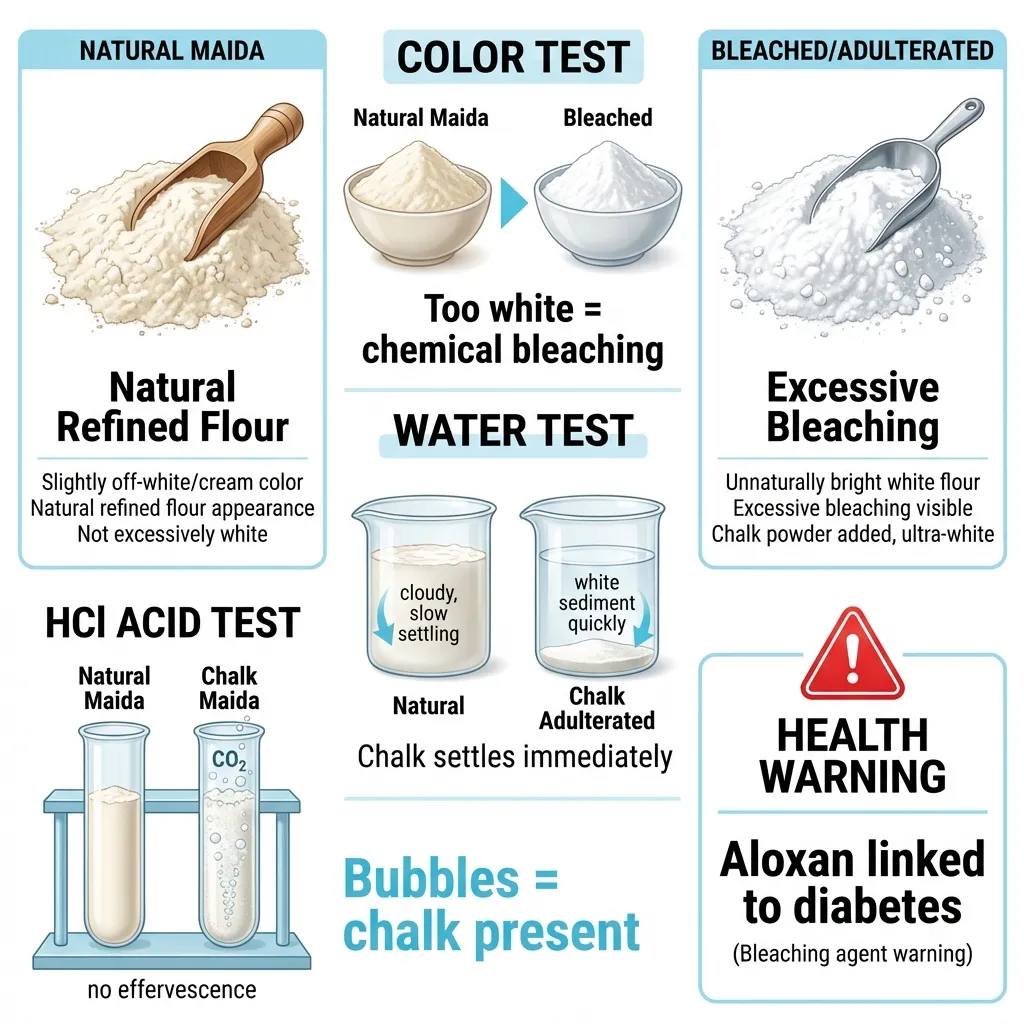
Mix 1 tsp maida with 2 tbsp water and squeeze 5 drops of fresh lemon juice or vinegar. If you observe fizzing or tiny effervescent bubbles, chalk (CaCO3) or washing soda has been added.
Knead 2 tbsp maida into dough, place under a gentle cold water tap, and rinse until all starch washes away. Pure maida leaves behind a firm, elastic, rubbery gluten ball. Adulterated flour breaks into mush.
Heat 1/2 tsp maida on a dry spoon over a low flame. Pure flour turns golden then black emitting a bread-like toasted aroma. Heavy mineral fillers leave an insoluble white ash residue.
To learn more about food safety tests and home adulteration detection, read our guides on Wheat Flour (Atta) and Besan (Gram Flour).
Drop Maida (Refined Flour) photo here to test purity
or click to browse • Supports JPG, PNG, WEBP • Paste with Ctrl+V
Inspection Guide
Click to enlarge
Maida Purity & Bleaching Audit
Maida is highly refined wheat flour that is often bleached with chemicals like Benzoyl Peroxide or Chlorine gas, which can produce byproducts like Alloxan.
1. The Acid Fizz Test (Chalk Detection):
Take 1 tsp of Maida in a small bowl. Add a few drops of lemon juice or vinegar. If the mixture fizzes or bubbles, it contains chalk powder (calcium carbonate). Pure Maida will not react.
2. The Texture and Color Check:
Maida should be stark white and have an extremely fine, "slippery" texture. If it has a yellowish tint, it is less bleached (which is better). If it feels "gritty" or "sandy," it likely contains mineral fillers like stone dust or chalk.
3. The Water Solubility:
Dissolve a spoonful of Maida in a glass of water. Pure Maida creates a smooth, milky suspension. If a white, non-starchy sediment settles at the bottom, suspect mineral fillers.
4. The Gluten Stretch:
Knead a small amount of Maida with water. Pure Maida has very high gluten content and should be extremely stretchy and elastic. If the dough is brittle or "short," it contains non-wheat fillers like maize starch or rice flour.
Quick Safety Tips
- Perform the acid fizz test for chalk powder detection
- Avoid Maida that feels "gritty" or "sandy"
- Check for white sediment in the water solubility test
- Prefer "Unbleached" Maida if available to avoid chemical byproducts like Alloxan
Primary Chemical Concerns
Health Risks & Impacts
Multilingual Local Names
Common Storage Pests
Flour Beetle
medium riskSmall reddish-brown beetles that can infest stored refined flour.
Detection
- Small insects crawling in the flour
- Clumping or a musty smell
Prevention
- Store in an airtight container
- Keep in a cool, dry place
Corrective Action: What to do?
Discard infested flour immediately; sifting can help detect early infestations.
Regulatory Corner: FSSAI (Food Safety and Standards Authority of India) / US FDA
Regulation: Food Safety and Standards (Food Products Standards) Regulations 2011, Clause 2.4.2: Maida & FDA 21 CFR 137.105
Legal Limit:Total ash: Max 1.0% on dry basis; Acid insoluble ash: Max 0.1%; Gluten: Min 7.5% on dry basis; Benzoyl peroxide (bleach): Max 50 ppm; Potassium bromate & Potassium iodate: 0.0% (Banned carcinogenic improvers)
Report Adulteration to FSSAI (Food Safety and Standards Authority of India) / US FDA