How to Test Walnuts for Adulteration (Chlorine Bleaching, Sulfur Dioxide, Mineral Oil Polish)
⚡ Quick 60-Second Walnut Purity & Chemical Shell Wash Verdict
Hydrogen Peroxide Shell Bleach & Rancid Peroxide Ingestion: Shells are bleached with industrial caustic soda and hydrogen peroxide to look golden-bright, which leaches into kernels, causing rapid oxidation, rancidity, and high peroxide toxicity.
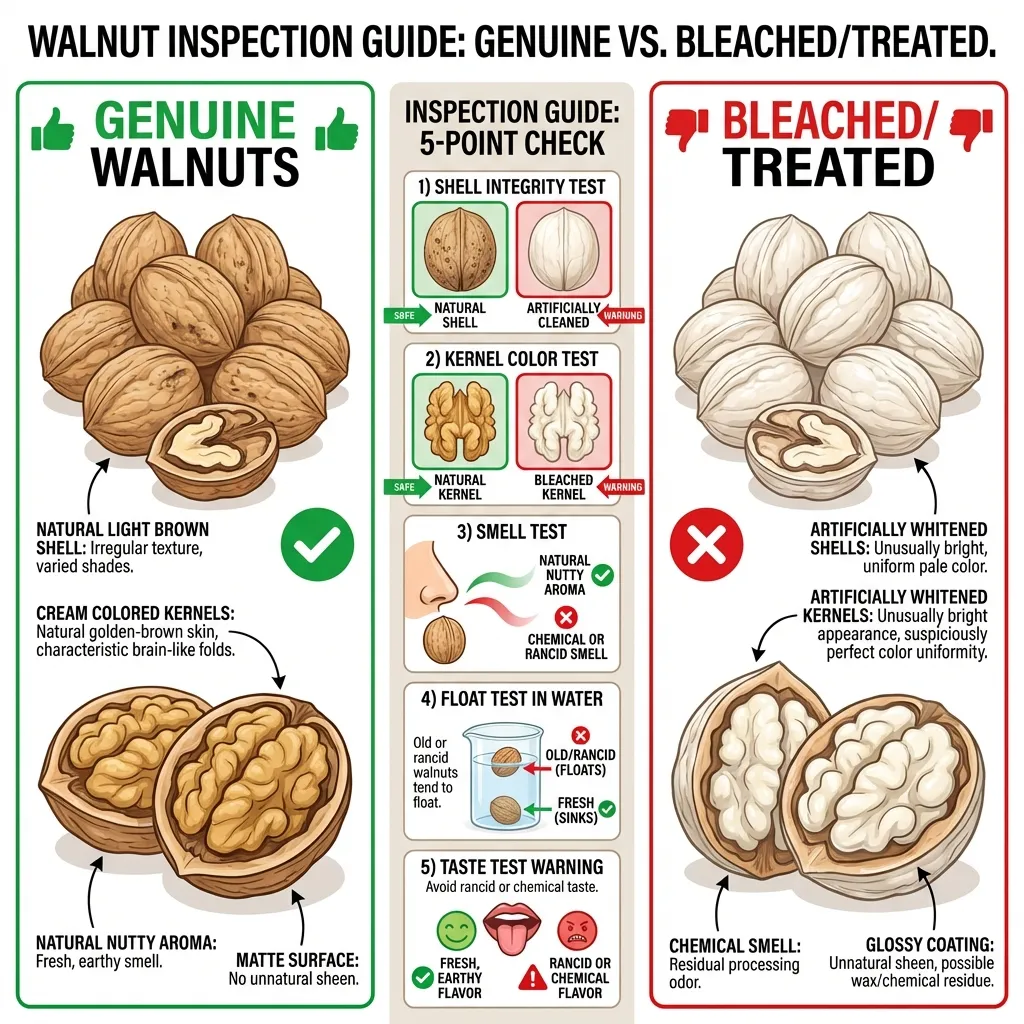
Crush a walnut kernel and inhale deeply. Fresh walnuts smell sweet and nutty. A sour, stale paint, varnish, or old cardboard odor indicates toxic lipid peroxidation (rancidity).
Soak 2 shelled whole walnuts in 50ml warm water for 10 minutes. If the water develops a strong chemical smell or froths slightly, residual hydrogen peroxide or hypochlorite wash is present.
Inspect the kernel skin. Natural kernels range from light amber to walnut brown. Dark black, shriveled, rubbery meats indicate mold or severe oxidative decay.
To learn more about food safety tests and home adulteration detection, read our guides on Raisins (Kishmish) and Coconut Oil.
Drop Walnuts (Akhrot) photo here to test purity
or click to browse • Supports JPG, PNG, WEBP • Paste with Ctrl+V
Inspection Guide
Click to enlarge
Walnut (Akhrot) Purity & Freshness Guide
Walnuts are high-value nuts often subjected to chemical bleaching to make old, dark shells look light and premium.
1. The Shell Color & Friction Test:
Naturally dried walnuts have a matte, light-brown, slightly irregular color. If the shell is unnaturally "clean," bright, or almost white, it has been bleached with chlorine. Rub the shell with a damp white cloth; if a chemical smell or white residue appears, it confirms bleaching.
2. The Sound (Weight) Test:
Shake the walnut near your ear. If you hear a loud "rattle," the kernel inside has shriveled significantly (old stock) or is missing. A fresh, high-quality walnut should feel heavy for its size and have minimal rattle.
3. The Kernel Color Check:
Crack open a sample. The kernel should be light tan to amber. If the kernel is very dark brown, blackish, or has "oily" spots, it is rancid. Consuming rancid walnuts can cause stomach upset and has an unpleasant bitter, soapy taste.
4. The Aroma Test:
Fresh walnuts have a mild, nutty, and slightly sweet scent. If you detect a sharp "paint-thinner" or "fishy" odor, the oils in the nut have oxidized (gone rancid). Discard these immediately.
5. Mold Inspection:
Check the crevices of the kernel for any fuzzy white, green, or black growth. Walnuts are prone to Aspergillus mold, which produces toxic aflatoxins.
Quick Safety Tips
- Avoid unnaturally white or "clean" shells (bleached)
- Kernel should be light-colored, not dark or black
- Discard if it smells like paint thinner or has a soapy taste
- Store in the refrigerator to prevent rancidity
Primary Chemical Concerns
Health Risks & Impacts
Multilingual Local Names
Common Storage Pests
Walnut Husk Fly
low riskA pest that can lay eggs on the nuts, though less common in processed dry walnuts.
Detection
- Small entry holes
- Internal rot
Prevention
- Store in a cool, dry place
- Ensure airtight storage
Corrective Action: What to do?
Discard infested nuts; the rot can lead to fungal growth.
Regulatory Corner: FSSAI (Food Safety and Standards Authority of India) / Codex Alimentarius / US FDA (21 CFR 164.110)
Regulation: Food Safety and Standards (Food Products Standards) Regulations 2011, Clause 2.3.47: Walnut Kernels & UNECE DDP-02
Legal Limit:Moisture: Max 8.0% (in-shell) / 5.0% (kernels); Peroxide value: Max 3.0 meq O2/kg fat; Free fatty acids: Max 1.0%; Aflatoxin B1: Max 5.0 ppb; Industrial chemical bleaches (H2O2): 0.0%
Report Adulteration to FSSAI (Food Safety and Standards Authority of India) / Codex Alimentarius / US FDA (21 CFR 164.110)