How to Test Besan for Adulteration (Metanil Yellow, Khesari Dal Flour, Maize Flour)
⚡ Quick 60-Second Besan Purity & Metanil Yellow Verdict
Toxic Metanil Yellow Dye & Khesari Dal Bulking: Gram flour is heavily adulterated with cheap Khesari dal (containing neurotoxic ODAP that causes permanent lower-limb paralysis) and carcinogenic Metanil Yellow dye.
Mix 1 tsp besan in 5ml warm water and add 4 drops concentrated HCl (or strong lemon juice). Pure besan stays pale yellow. If the paste instantly flashes magenta-pink and stays pink when water is added, Metanil Yellow is confirmed.
Sprinkle 1 tsp besan on water. Pure finely milled chana dal flour disperses or slowly sinks. Coarse sawdust or chalk fillers create a milky surface or heavy gritty residue.
Knead 1 tbsp with a few drops of water into a paste. Pure besan has an earthy, nutty chickpea fragrance and feels slightly tacky. Khesari dal blends feel slimy and smell bitter.
To learn more about food safety tests and home adulteration detection, read our guides on Maida (Refined Flour) and Coffee Powder.
Drop Besan (Gram Flour) photo here to test purity
or click to browse • Supports JPG, PNG, WEBP • Paste with Ctrl+V
Inspection Guide
Click to enlarge
Besan Purity & Dye Audit
Besan (gram flour) is high-risk for adulteration with Metanil Yellow (toxic dye) to look more yellow and Khesari flour (toxic filler) to increase weight at a lower cost.
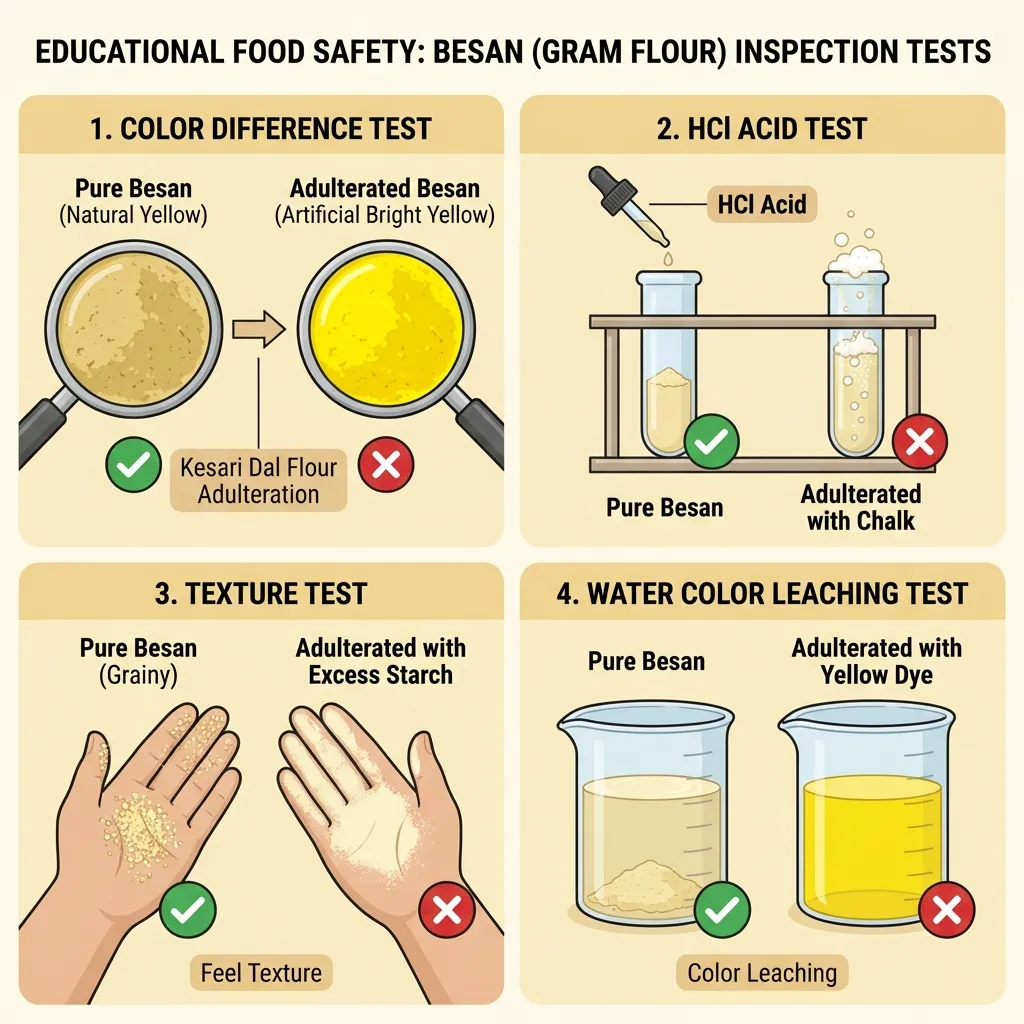
1. The Hydrochloric Acid Test (Dye Detection):
In a test tube, take 1 tsp of Besan and add 5ml of water. Shake well. Add a few drops of concentrated HCl. If the solution turns pink or magenta, Metanil Yellow is present. Pure Besan remains yellow.
2. The Clump and Texture Test:
Take a small amount of Besan and rub it between your fingers. Pure Besan is slightly grainy and feels soft. If it feels "powdery" or "chalky" like Maida, it likely contains maize flour or chalk powder.
3. The Water Solubility:
Dissolve a spoonful of Besan in a glass of water. Pure Besan settles slowly and the water remains relatively clear. If a significant white sediment (chalk/starch) settles at the bottom, it is adulterated.
4. The Taste Profile:
Pure Besan has a distinct, nutty, and slightly sweet flavor. If it tastes bitter, "floury," or leaves a dry feeling in the mouth, suspect maize flour or Khesari dal flour.
Quick Safety Tips
- Perform the HCl test for Metanil Yellow - pink color is a red flag
- Avoid Besan that feels unnaturally fine or chalky
- Check for white sediment in the water solubility test
- Prefer buying whole Chana Dal and grinding it at home for 100% purity
Primary Chemical Concerns
Health Risks & Impacts
Multilingual Local Names
Common Storage Pests
Flour Beetle
medium riskSmall reddish-brown beetles that can infest stored flour.
Detection
- Small insects crawling in the flour
- Clumping or a musty smell
Prevention
- Store in an airtight container
- Keep in a cool, dry place
Corrective Action: What to do?
Discard infested flour immediately; sieve before use if infestation is suspected.
Regulatory Corner: FSSAI (Food Safety and Standards Authority of India) / BIS (IS 2400)
Regulation: Food Safety and Standards (Food Products Standards) Regulations 2011, Clause 2.4.4: Besan (Gram Flour)
Legal Limit:Moisture: Max 11.0% by weight; Total ash: Max 3.0%; Acid insoluble ash: Max 0.5%; Protein: Min 21.0% on dry basis; Khesari dal (Lathyrus sativus) & Metanil Yellow dye: 0.0% (Strict zero tolerance)
Report Adulteration to FSSAI (Food Safety and Standards Authority of India) / BIS (IS 2400)