Jalebi & Imarti Adulteration & Freshness Guide: Detect Metanil Yellow, Reused Frying Oil, Hydrosulfite Bleach & Saccharin
You can test Jalebi and Imarti at home for banned carcinogenic Metanil Yellow and Orange II coal-tar dyes, oxidized high-TPC reused frying oil or hydrogenated vanaspati, toxic sodium hydrosulfite (rangkat) batter bleach, and saccharin-adulterated sugar syrup using the Lemon-Acid Dye Test, the Warm Water Oil-Slick Check, and the Palate Aftertaste Audit. Total Polar Compounds (TPC %) and acrylamide levels require digital oil-tester or laboratory GC-MS verification.
Drop Jalebi & Imarti photo here to test purity
or click to browse • Supports JPG, PNG, WEBP • Paste with Ctrl+V
Inspection Guide
Click to enlarge
How to Test Jalebi & Imarti for Toxic Dyes, Reused Oil & Chemical Syrup at Home
🔬 Scientific Home Adulteration Tests
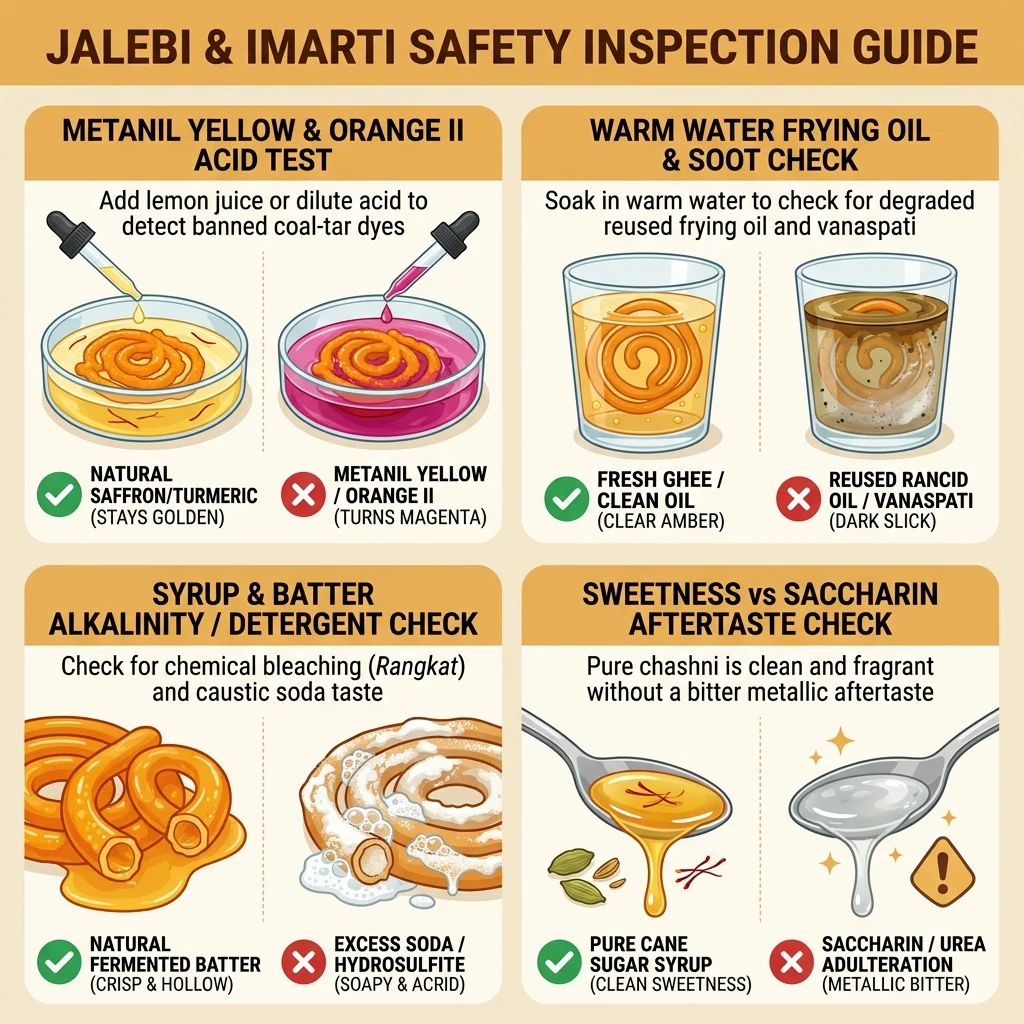
1. Acid Color-Shift Test for Metanil Yellow & Orange II Dyes
Crush a 10g piece of bright orange or yellow jalebi/imarti in 3 tablespoons of warm water to extract the surface color into the liquid, transfer 2 teaspoons of the colored water to a white saucer, and add 5–6 drops of strong lemon juice, white vinegar, or dilute HCl.
- Natural Saffron / Turmeric or Permitted Food Color (Within Limit): Solution remains pale golden-yellow or mild orange without turning purple-red.
- Banned Metanil Yellow / Non-Permitted Coal-Tar Dye: Immediately shifts to a vivid magenta-red, violet, or deep crimson-purple, confirming illegal industrial dye adulteration.
2. Warm Water Frying Oil & Vanaspati Slick Test
Place 2 broken coils of jalebi in a clear glass of warm water (55°C), stir gently for 45 seconds, and observe the top water surface and bottom sediment.
- Fried in Pure Desi Ghee or Fresh Clean Oil: Releases clear amber sugar syrup and clean, fragrant golden fat droplets.
- Reused Rancid Frying Oil / Vanaspati: Forms a viscous, brownish-yellow greasy slick with tiny black carbonized soot specks on the water surface, or solidifies into a white waxy tallow/vanaspati crust as the water cools—accompanied by an acrid, paint-like oxidized oil odor.
3. Hot Water Vapor & Batter Fracture Check for Rangkat (Sodium Hydrosulfite)
Break open a fresh hot jalebi coil (or steep a crushed piece in hot water) and smell the escaping steam closely while inspecting the inner tube structure.
- Naturally Fermented Maida/Urad Batter: Shows a uniform, crisp outer wall with a clean, hollow tubular channel and a pleasant tangy-sweet aroma of fermented curd and cardamom.
- Chemically Bleached (Rangkat / Hydrose) Batter: Emits a sharp, pungent burnt-matchstick (sulfur dioxide) or ammonia odor when hot, and leaves a harsh, metallic, slightly soapy burn at the back of the throat.
4. Palate Melt & Syrup Saccharin Audit
Press a drop of the syrup from inside the jalebi coil between your fingers and taste a small piece.
- Pure Cane Sugar Chashni: Single-thread viscosity that tastes cleanly sweet and melts without coating the palate.
- Saccharin & Vanaspati Adulterated: Leaves a lingering bitter, metallic aftertaste on the tongue (saccharin) and a thick, waxy grease film on the roof of the mouth (hydrogenated vanaspati).
Click to enlarge
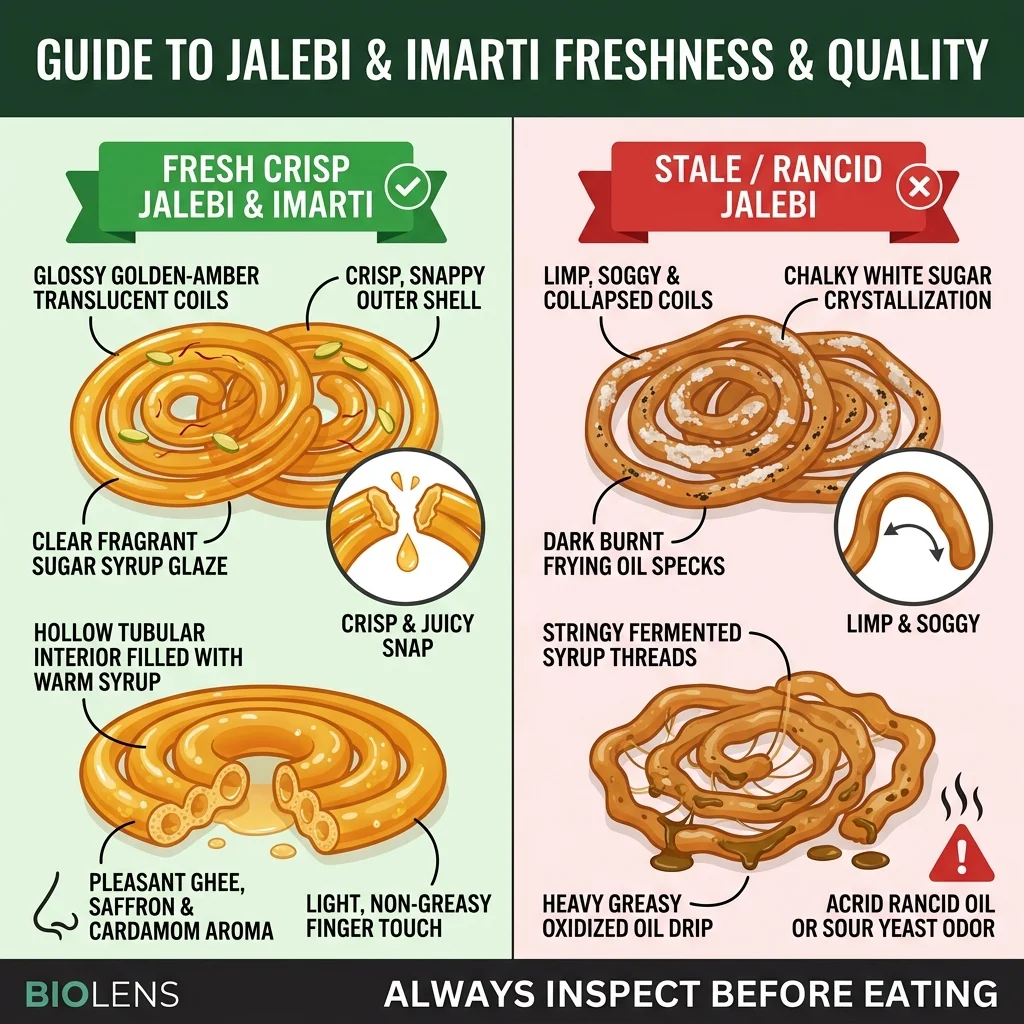
Jalebi & Imarti Freshness, Crispness & Storage Guide
📊 Fresh Crisp vs. Stale / Rancid Jalebi & Imarti Comparison
| Quality Marker | ✅ Fresh Crisp Jalebi / Imarti | ❌ Stale / Re-Fried / Rancid Jalebi |
|---|---|---|
| Coil Structure & Snap | Plump, hollow, crisp tubular coils that snap cleanly with a juicy syrup burst | Limp, soggy, collapsed, or overly hard re-fried coils that bend like rubber |
| Surface Glaze & Color | Warm, translucent golden-amber or saffron-orange sheen with clear syrup | Chalky white sugar crystallization crust, neon chemical stain, or dark burnt specks |
| Aroma Profile | Fragrant aroma of fresh ghee, saffron, cardamom, and mild fermented tang | Sharp paint-like rancid oil smell, sour alcoholic yeast odor, or burnt soot scent |
| Syrup Consistency | Clear, light single-thread syrup locked inside the hollow coil | Sticky, stringy ("ropy") fermented syrup pooling at the bottom of the box |
🏠 Storage & Shelf-Life Best Practices
- Best Eaten Fresh: Jalebi is a dual-texture confection (crisp fried shell + warm liquid syrup) that loses its signature crispness within 6–12 hours as syrup moisture migrates into the crust. Consume within 24–36 hours if kept at cool room temperature.
- Avoid Airtight Plastic Trapping While Hot: Packing piping-hot jalebis into sealed plastic bags traps steam, turning them instantly soggy and accelerating osmophilic yeast fermentation.
- Imarti Stability: Because Imarti is made from dense protein-rich urad dal batter rather than maida, it holds its shape and texture slightly longer (2–3 days in a cool dry container or 5 days refrigerated).
Quick Safety Tips
- Reject jalebis and imartis that glow with a fluorescent neon-orange, neon-red, or intense yellow hue—authentic saffron-colored jalebi is a warm, translucent golden-amber.
- Look at the vendor's frying kadhai before buying: if the oil is dark brown, frothing persistently, or smoking heavily, its Total Polar Compounds (TPC) exceed safe limits.
- Prefer naturally golden jalebis fried in pure desi ghee and sweetened with jaggery (gud jalebi) or unbleached cane sugar.
- Check if your fingers are stained bright orange/red after holding a jalebi and washing with plain water—heavy skin staining indicates excessive synthetic azo dye.
- Consume jalebi fresh and crisp within 24 hours; syrupy coils left in humid room-temperature boxes rapidly ferment and absorb rancid oil odors.
Primary Chemical Concerns
Health Risks & Impacts
Test Individual Raw Ingredients in Jalebi & Imarti
Unlike single raw commodities, prepared sweets and bakery items can harbor adulteration across multiple base ingredients. Click any raw ingredient below to run its dedicated kitchen purity test:
Multilingual Local Names
Common Storage Pests
Osmophilic Yeasts (Zygosaccharomyces rouxii) & Bacillus Rope Spoilage
high riskSugar-tolerant yeasts and bacterial spores that ferment high-sugar syrup inside humid jalebi boxes.
Detection
- Fine sticky mucilaginous threads ("ropiness") stretching between jalebi coils when lifted
- Sour, alcoholic, or vinegary odor replacing the sweet cardamom-saffron scent
Prevention
- Allow fresh jalebis to cool completely on a wire rack before boxing so steam does not dilute the surface syrup
- Consume within 24 hours in warm weather or refrigerate in a dry container
Corrective Action: What to do?
Discard the entire batch immediately if syrup turns cloudy, bubbly, or stringy.
Ants, Domestic Flies (Musca domestica) & Foraging Wasps
high riskDisease-carrying insects attracted to open, uncovered jalebi and chashni vats at roadside sweet stalls.
Detection
- Insect legs, wings, or dark specks trapped in the sticky sugar glaze on the jalebi surface
- Uncovered syrup kadhais exposed to street dust and flies at the point of sale
Prevention
- Only buy from sweet shops that prepare and store jalebis behind glass or fine mesh screens
- Keep home sweet platters covered with a breathable mesh dome
Corrective Action: What to do?
Do not consume sweets from open vats containing drowned insects, as flies transmit Salmonella, Shigella, and E. coli.
Regulatory Corner: FSSAI / Codex Alimentarius
Regulation: FSS (Food Products Standards and Food Additives) Regulations — Indian Sweets & Used Cooking Oil TPC Norms
Legal Limit:Permitted synthetic food colors (Sunset Yellow FCF / Tartrazine) max 100 mg/kg; Zero Metanil Yellow, Orange II, Rhodamine B, or Sodium Hydrosulfite (Rangkat); Frying oil Total Polar Compounds (TPC) max 25%.
Report Adulteration to FSSAI / Codex AlimentariusWhat CANNOT be Verified (Lab-Only)
- Total Polar Compounds (TPC) & Peroxide Value / p-Anisidine Assay (FSSAI Used Cooking Oil Standard): Measures thermal oxidation products in extracted frying fat; FSSAI mandates discarding cooking oil once TPC exceeds 25%.
- HPLC-DAD / TLC Synthetic Food Color Profiling: Separates and quantifies non-permitted oil-soluble and water-soluble dyes (Metanil Yellow, Orange II, Rhodamine B, Sudan dyes) and checks permitted Sunset Yellow FCF/Tartrazine against the 100 mg/kg maximum limit.
- Monier-Williams Distillation / Ion Chromatography for Sulfites: Quantifies residual sulfur dioxide (SO2) from illegal sodium hydrosulfite (rangkat) bleaching.
- HPLC-RI / UV Sweetener & Acrylamide Analysis: Detects undeclared sodium saccharin, acesulfame-K, and high-temperature Maillard acrylamide in over-fried coils.