Almond Freshness & Quality Tests: Detect Chemical Coatings
⚡ Quick 60-Second Almond Purity & Bitter Almond Verdict
Bitter Almond Cyanide Toxicity & Mineral Oil Polish: Sweet almonds are adulterated with poisonous bitter almonds (containing deadly amygdalin that hydrolyzes into hydrogen cyanide) and coated with mineral oil to mask rancidity.
Soak 10 almonds in warm water for 5 minutes. An iridescent oily film or chemical petrol smell on the water surface indicates toxic liquid paraffin polishing.
Crush one kernel. Sweet almonds have a mild, nutty aroma. An intense marzipan/benzaldehyde scent and harsh bitter taste reveals toxic bitter almonds.
After warm water soaking, peel skin. Genuine fresh almonds reveal a creamy-white, firm interior. Yellowed, brittle kernels indicate stale, oxidized, or chemically bleached stock.
To learn more about food safety tests and home adulteration detection, read our guides on Peanuts, Cashew Nuts, and Dates (Khajoor).
Drop Almonds photo here to test purity
or click to browse • Supports JPG, PNG, WEBP • Paste with Ctrl+V
Inspection Guide
Click to enlarge
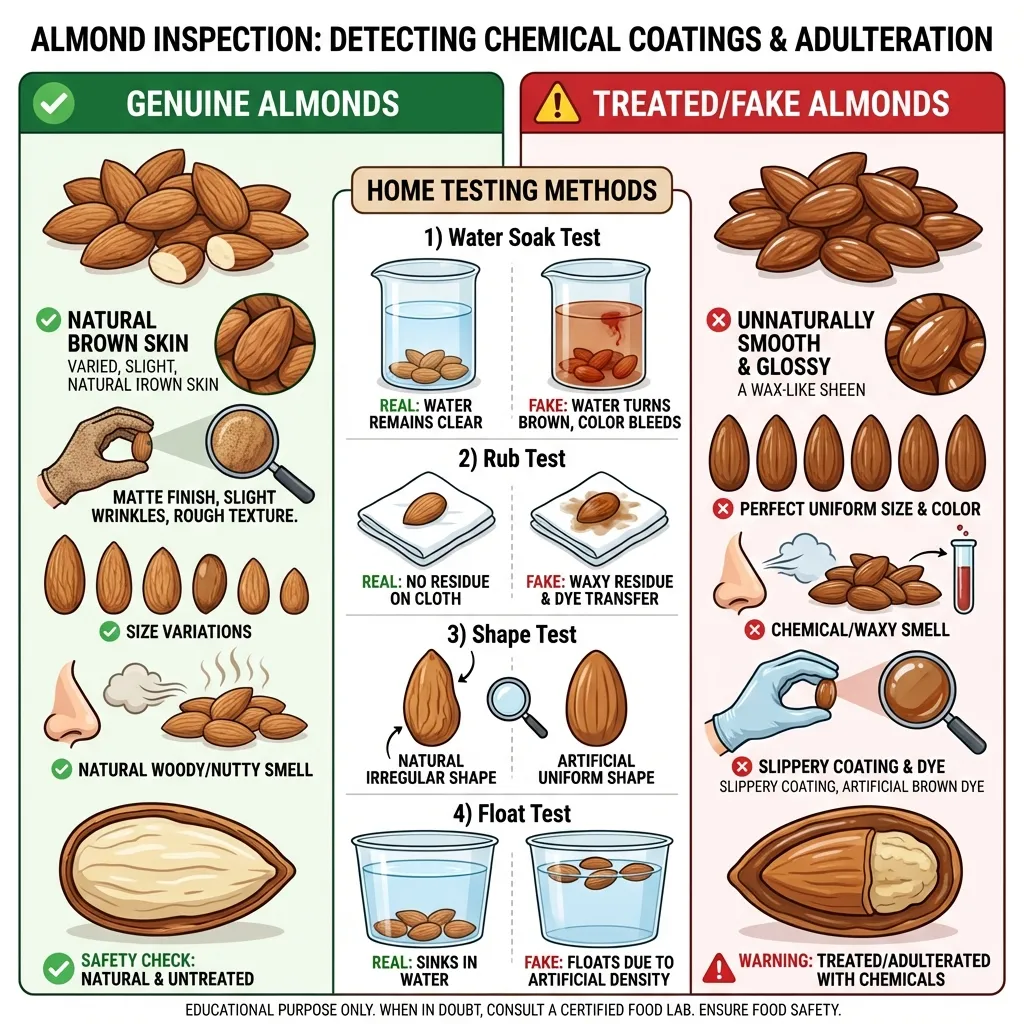
Almond Inspection - Detect Coating & Adulteration
Almonds are treated with chemicals for appearance enhancement and mixed with fake almonds to increase profits.
1. The Water Soak Test:
Soak almonds in water for 3-4 hours. Genuine natural almonds will slightly swell and the brown skin will wrinkle but remain intact. If the water turns brown/muddy with color bleeding, it indicates artificial brown dye. Real almonds release minimal color.
2. The Rub Test (Dry & Wet):
Dry test: Rub almond skin with dry tissue. Minimal residue = natural.
Wet test: Rub with wet white cloth. If brown color transfers heavily or you feel waxy residue, it's treated with dye or coating.
3. The Shape & Size Test:
Natural almonds have slight size variations and natural irregular oval shapes. If all almonds are perfectly uniform in size and shape, suspect adulteration or artificial processing. Fake almonds made from cheaper materials have unnaturally perfect shapes.
4. The Float Test:
Put almonds in water. All genuine almonds should sink due to their density. If some float (hollow inside), they may be:
- Old/rancid almonds
- Fake almonds made with fillers
- Treated with excessive oil
5. The Surface Texture Check:
Natural almond skin has a matte finish with slight wrinkles and rough texture. Treated almonds have:
- Unnaturally smooth, glossy surface
- Slippery feeling from chemical coating
- Perfect appearance without natural wrinkles
Click to enlarge
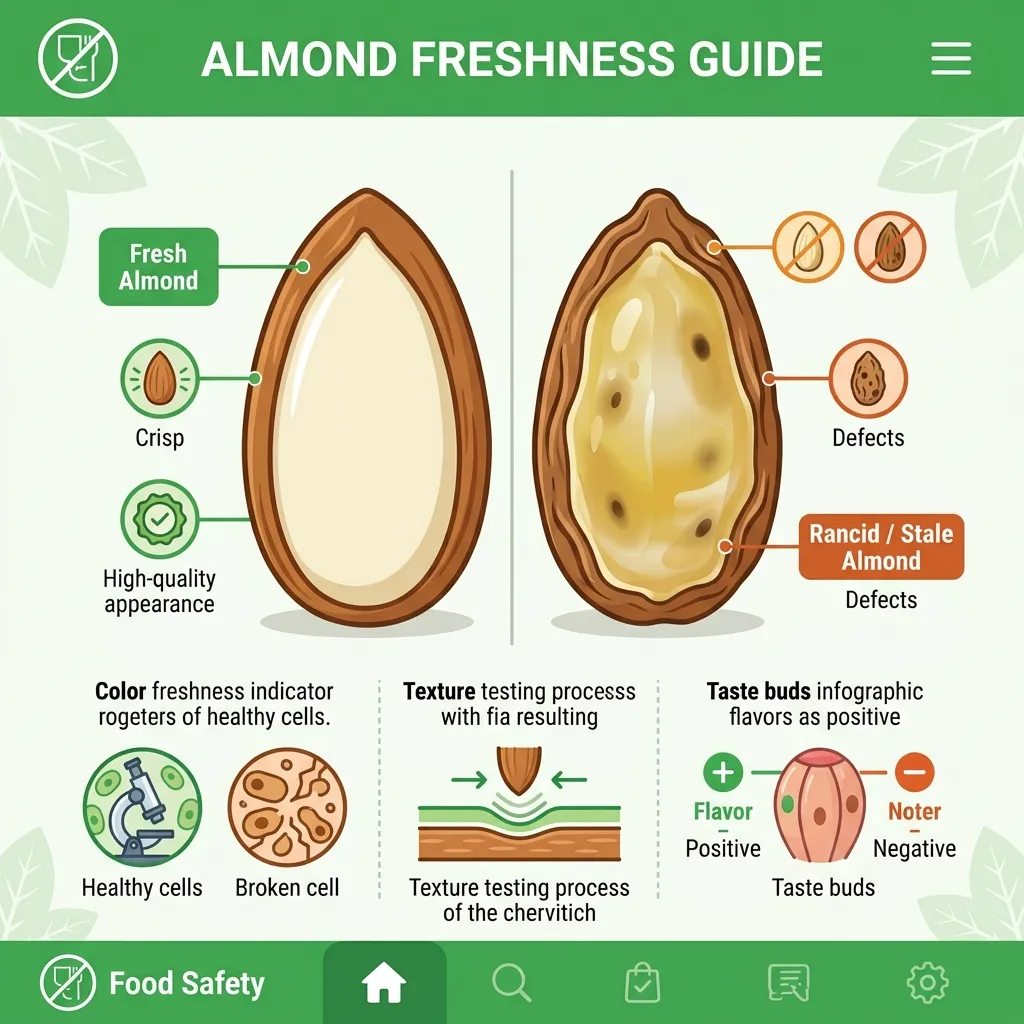
Almond Freshness & Quality Test
Freshness is key to safety, as old or poorly stored almonds can develop toxic aflatoxins and rancid fats.
1. The Cut Test (Internal Flesh Check):
Cut an almond in half to check the inner kernel. Fresh almonds should have a solid, creamy ivory-white interior. A yellow, translucent, or brown-spotted interior indicates stale, rancid, or moldy nuts.
2. The Texture & Snap Check:
Press or break the almond. A fresh almond has a distinct, firm snap when broken. Stale almonds feel rubbery, soft, or pliable instead of crisp.
3. Aroma & Taste Audit:
Smell and taste a small piece. Fresh almonds have a mild, sweet, nutty aroma and taste. Stale or rancid almonds have a sharp, bitter, paint-like, or musty smell/taste due to fat oxidation.
4. Sound / Shake Test:
Shake a handful of shelled almonds. Fresh almonds will sound solid and heavy. Stale, dried-out almonds sound hollow and light, indicating significant moisture loss and shrinkage.
Quick Safety Tips
- Water soak test - color bleeding indicates dye
- Natural almonds have rough matte texture
- Check for size variations (natural characteristic)
- Wash thoroughly before consumption
Primary Chemical Concerns
Health Risks & Impacts
Multilingual Local Names
Common Storage Pests
Indian Meal Moth
medium riskSmall moths whose larvae feed on stored nuts and dried fruits.
Detection
- Fine webbing inside the container
- Small white larvae or cocoons
Prevention
- Store in an airtight glass jar
- Keep in the refrigerator
Corrective Action: What to do?
Discard infested nuts immediately; clean the storage container with vinegar.
Regulatory Corner: FSSAI (Food Safety and Standards Authority of India) / US FDA (21 CFR 164.110) / UNECE DDP-06
Regulation: Food Safety and Standards (Food Products Standards) Regulations 2011, Clause 2.3.47: Almond Kernels & FDA Compliance Policy Guide Sec. 570.250
Legal Limit:Hydrocyanic acid (HCN in bitter almonds): Max 5.0 ppm (Bitter almonds prohibited in sweet almond lots); Moisture: Max 6.0%; Aflatoxin B1: Max 10 ppb; Mineral oil / paraffin wax: 0.0% (Zero tolerance)
Report Adulteration to FSSAI (Food Safety and Standards Authority of India) / US FDA (21 CFR 164.110) / UNECE DDP-06