How to Tell if Peanuts Are Bad: Detect Aflatoxin Mold & Chemical Bleaching
⚡ Quick 60-Second Peanut Purity & Aflatoxin B1 Verdict
Deadly Aflatoxin B1 Mold & Red Dye Polishing: Improperly stored peanuts develop Aspergillus flavus mold producing potent hepatocarcinogenic Aflatoxin B1, while stale kernels are polished with toxic red azo dyes to mimic fresh harvest.
Wrap a handful of raw peanuts in a damp white paper towel and rub vigorously for 20 seconds. Any synthetic reddish-orange color transfer confirms artificial surface dyeing.
Drop 20 kernels into a glass of water. Healthy, dense peanuts sink to the bottom. Discolored, hollow, shriveled, or moldy kernels float to the surface (discard all floaters).
Split several kernels down the middle. Pure peanuts are pristine white to pale cream inside. Black, greenish-grey, or powdery mold around the inner embryo reveals deadly Aflatoxin contamination.
To learn more about nut safety, read our guides on Peanut Butter, Almonds, and Dates (Khajoor).
Drop Peanuts photo here to test purity
or click to browse • Supports JPG, PNG, WEBP • Paste with Ctrl+V
Inspection Guide
Click to enlarge
Peanut Purity & Toxin Audit
Peanuts (cacahuates) are a highly popular snack and ingredient, but they represent a unique food safety hazard. Due to their underground growth, peanuts are highly susceptible to aflatoxins—potent, carcinogenic chemical toxins produced by the mold Aspergillus flavus during humid storage. Furthermore, commercial producers frequently treat in-shell peanuts with harsh chemical bleaching agents like chlorine gas or sulfur dioxide to remove dirt stains and make the shells appear uniformly bright and attractive for retail.
1. The UV Black Light Aflatoxin Check:
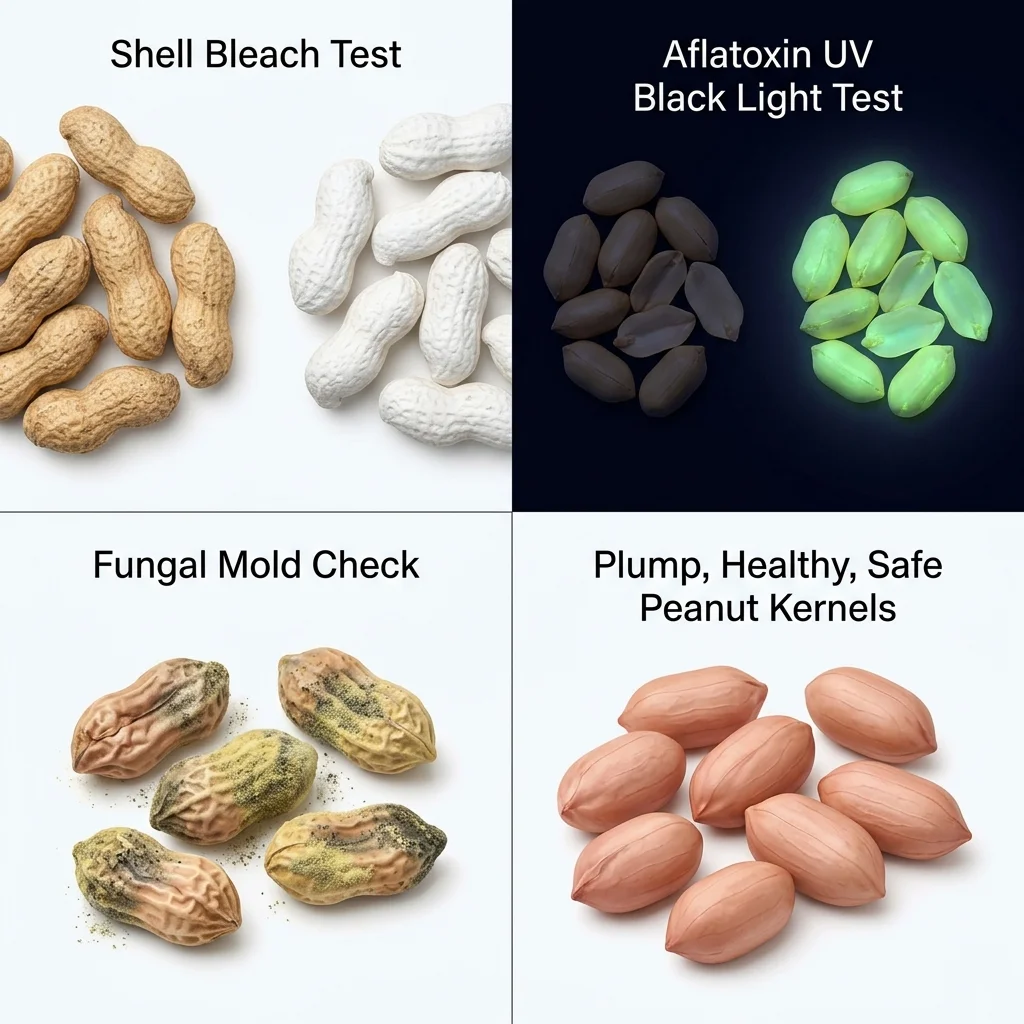
Aflatoxins and the fungal metabolic byproducts of Aspergillus mold exhibit distinct fluorescence. In a dark room, shine a 365nm UV black light directly onto shelled peanut kernels. Contaminated kernels or active mold spots will glow with a bright, greenish-yellow, or bright blue-green fluorescence. Clean, safe peanuts will not fluoresce under UV light. Discard any glowing kernels immediately.
2. Shell Bleaching & Chemical Audit (Visual & Odor Check):
Inspect in-shell peanuts closely. Natural, untreated peanut shells have a slightly dusty, rustic, tan or light beige color with visible, dark, wood-like veins and fibers. If the shells are unnaturally bright, chalky white, or uniform, they have been bleached with chlorine. Sniff the shells; if you detect a faint swimming pool chlorine smell or a sharp chemical odor (sulfur dioxide), the peanuts have been heavily treated. These chemicals can penetrate the porous shells, leaving residues on the kernels.
3. Shrivel and Crevice Mold Inspection:
Crack open the shell and examine the kernels. Healthy peanuts are plump, firm, and have a smooth, pinkish-brown skin. Reject peanuts that are heavily shriveled, discolored, or show a visible, powdery, yellowish-green or grey dust in the crevices between the two halves. This powder consists of millions of toxic fungal spores.
4. The Bitter or Soapy Taste Audit:
Taste a single peanut. If it tastes bitter, sour, soapy, or has a flat, chemical-like flavor, spit it out immediately and rinse your mouth with water. Bitterness is a primary warning indicator of high aflatoxin concentrations or lipid rancidity. Never consume a bitter peanut.
Click to enlarge
Peanut Freshness & Allergen Audit
Freshness ensures you avoid eating oxidized fats, which cause cellular damage.
1. Texture Crispness Check:
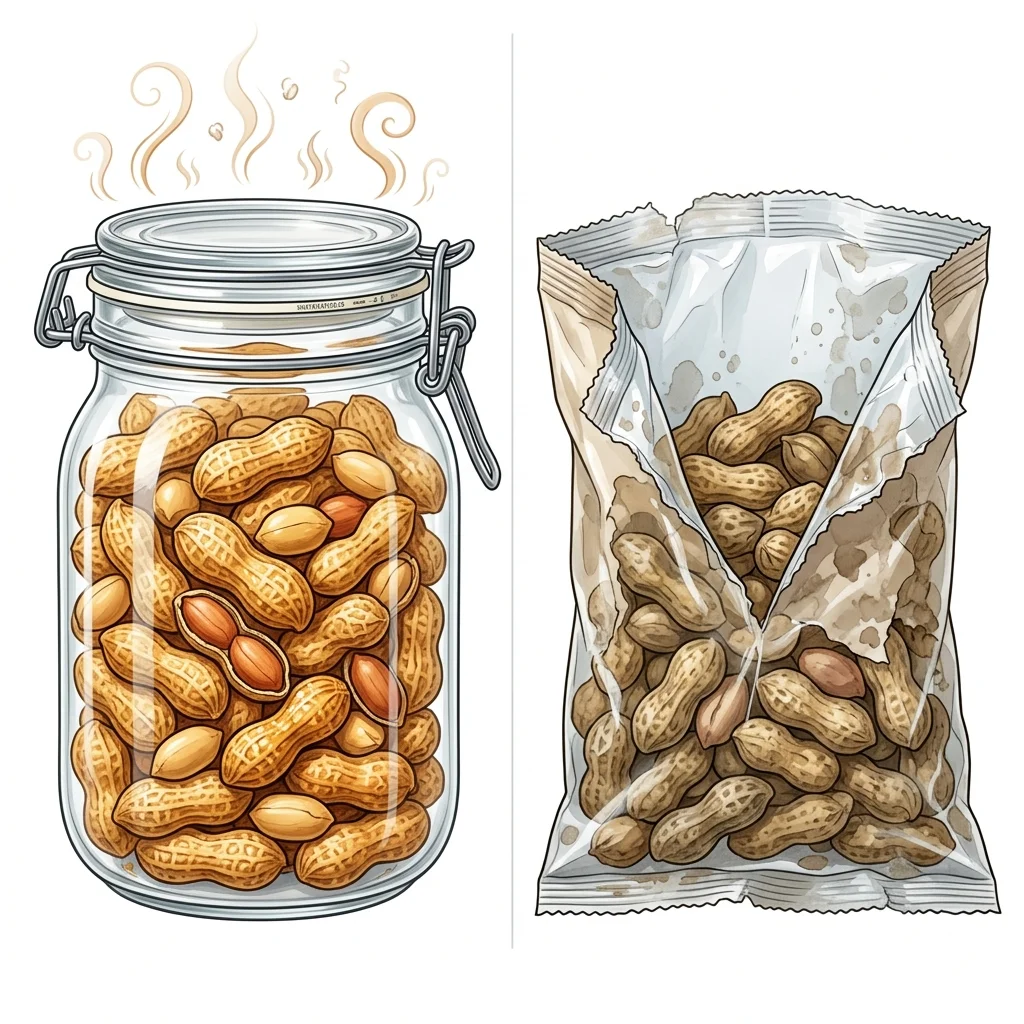
Freshly roasted peanuts are highly crisp, brittle, and crunchy, snapping easily. Stale peanuts absorb ambient moisture, becoming soft, leathery, and chewy.
2. Cardboard-Like Odor:
Sniff the peanuts. Fresh peanuts have a rich, warm, roasted aroma. Oxidized peanuts lose their smell and emit a flat, stale, cardboard-like or painty odor.
3. Allergen Cross-Contamination Warning:
Peanuts are a major allergen. Ensure the packaging is hermetically sealed and shows clear labeling regarding processing facility allergen audits to avoid trace contamination.
Quick Safety Tips
- CRITICAL: Spit out and discard any peanut that tastes bitter, soapy, or rancid
- Use a 365nm UV black light in a dark room to check for bright greenish-yellow fluorescence on kernels
- Avoid in-shell peanuts that are unnaturally bright white or smell faintly of chlorine, indicating bleaching
- Discard any kernels that are shriveled, dark brown, or have a powdery greenish-yellow dust in the crevices
Primary Chemical Concerns
Health Risks & Impacts
Multilingual Local Names
Regulatory Corner: FSSAI (Food Safety and Standards Authority of India) / US FDA (CPG Sec. 570.250) / Codex Stan 200-1995
Regulation: Food Safety and Standards (Contaminants, Toxins and Residues) Regulations 2011, Clause 2.2.1: Mycotoxins in Peanuts
Legal Limit:Aflatoxin B1: Max 15.0 ppb; Total Aflatoxins (B1+B2+G1+G2): Max 30.0 ppb (FSSAI) / 20.0 ppb (FDA); Moisture: Max 7.0%; Non-permitted azo dyes (Rhodamine B): 0.0% (Strict zero tolerance)
Report Adulteration to FSSAI (Food Safety and Standards Authority of India) / US FDA (CPG Sec. 570.250) / Codex Stan 200-1995