How to Inspect Standard Rice for Mineral Oil, Urea, and Talc Adulteration
⚡ Quick 60-Second Rice Purity & Polish Verdict
Mineral Oil Polish, Talc & Synthetic Contamination: Commercial white rice is polished with carcinogenic mineral oil or talc powder to simulate premium grade and conceal old, aged, or insect-damaged grains.
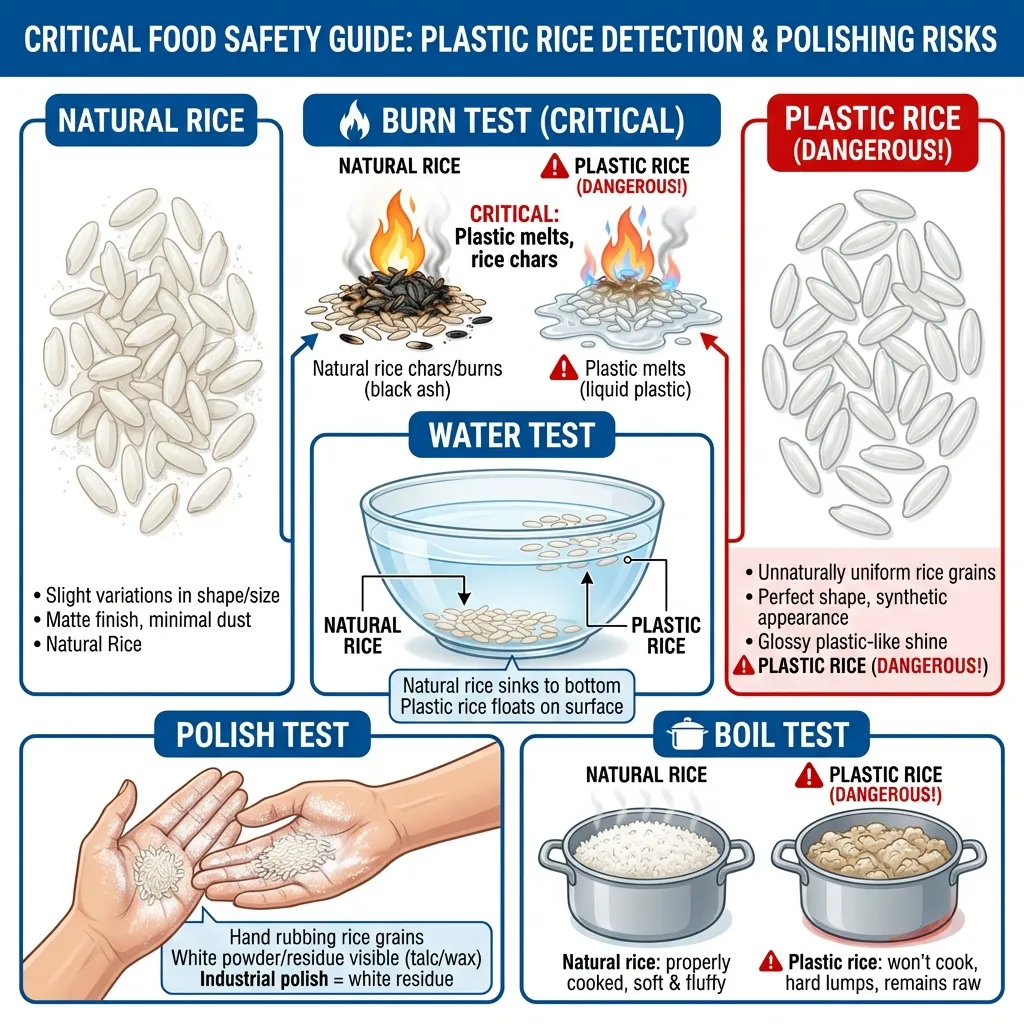
Light 10 grains on a clean fork over a flame. Pure rice chars, blackens, and smells like toasted popcorn. Synthetic plastic rice melts, curls into dark sticky droplets, and emits a toxic plastic smell.
Drop 1 tbsp rice into a glass of water. Pure genuine rice is dense (density ~1.4 g/cm³) and sinks to the bottom. Synthetic or hollow spoiled grains float on the surface.
Drop a few grains in smoking hot cooking oil. Pure rice puffs up into crispy murmura. Plastic or adulterated grains melt or form a sticky layer at the bottom of the pan.
Looking for premium aromatic varieties? Basmati rice has entirely different purity concerns (such as fragrance forgery and grain blending). Read the specialized Basmati Rice Safety Guide to verify authentic premium grains. For general crop protection info, see our guide on Rice Blast Disease.
Drop Rice photo here to test purity
or click to browse • Supports JPG, PNG, WEBP • Paste with Ctrl+V
Inspection Guide
Click to enlarge
Rice Purity & Safety Audit
Rice is often polished with mineral oil to look shiny or treated with Urea to increase shelf life and prevent pest infestation.
1. The "Rub" and Shine Check:
Rub a handful of rice grains vigorously between your palms. If they leave a greasy, translucent residue on your hands that doesn't wash off with plain water, they have been polished with mineral oil. Pure rice should be dry and leave a slightly white starchy powder.
2. The Water Float Test:
Drop a spoonful of rice into a glass of water. Pure rice grains are dense and will sink. Adulterants like "plastic rice" (rare but possible) or heavily treated hollow grains will float or stay suspended.
3. The Smell Test (Urea):
Take a deep sniff of the rice bag. Pure rice has a mild, earthy, or floral aroma. If you detect a faint "ammonia" or sharp chemical smell, it has likely been treated with Urea.
4. The Burning Test:
Burn a few grains of rice. Pure rice should turn into black charcoal and smell like burnt starch. If it melts, produces a plastic-like smell, or leaves behind a hard, glassy residue, it contains industrial fillers or synthetic components.
Quick Safety Tips
- Avoid rice that looks unnaturally glossy or feels "slippery"
- Check for an ammonia-like smell (indicates Urea treatment)
- Wash at least 3-4 times and soak for 30 minutes to reduce surface contaminants and Arsenic
- Select "Unpolished" or "Hand-pounded" rice for maximum nutritional value
Primary Chemical Concerns
Health Risks & Impacts
Multilingual Local Names
Common Storage Pests
Rice Weevil
medium riskSmall beetles that bore holes into the rice grains.
Detection
- Small round holes in the grains
- Presence of tiny dark beetles
Prevention
- Store in an airtight container
- Add a few dried neem leaves or cloves
Corrective Action: What to do?
Discard heavily infested rice; lightly affected rice can be sieved and sun-dried.
Regulatory Corner: FSSAI (Food Safety and Standards Authority of India) / Codex Stan 198-1995
Regulation: Food Safety and Standards (Food Products Standards) Regulations 2011, Clause 2.4.6: Food Grains (Rice)
Legal Limit:Moisture: Max 14.0% by weight; Total ash: Max 1.0%; Mineral oil, talc, and artificial paraffin polish: 0.0% (Strictly Prohibited); Inorganic Arsenic: Max 0.2 ppm (polished rice)
Report Adulteration to FSSAI (Food Safety and Standards Authority of India) / Codex Stan 198-1995