How to Test Sesame for Adulteration (Soybean Oil, Cottonseed Oil, Artificial Color)
⚡ Quick 60-Second Sesame Oil Purity & Baudouin Verdict
Cottonseed & Cheaper Seed Oil Dilution: High-value cold-pressed gingelly oil is blended with cheap neutralized cottonseed oil, palm oil, or argemone-contaminated vegetable oils to undercut market costs.
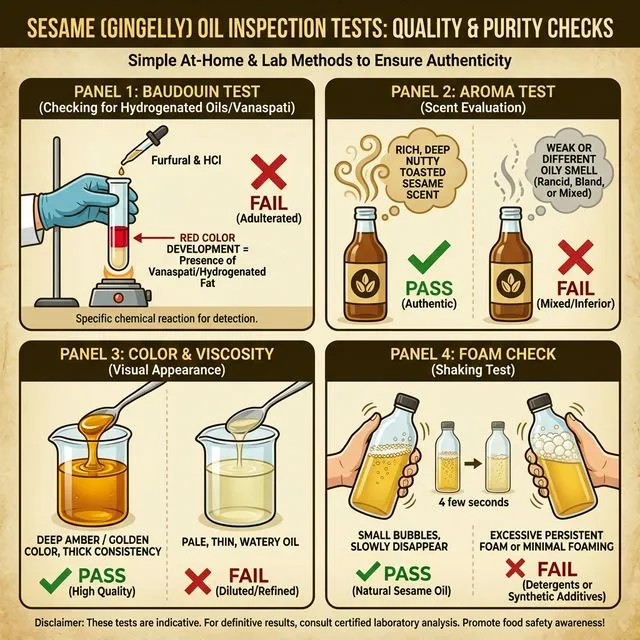
Mix 5ml sesame oil with 5ml concentrated HCl and 0.4ml 2% furfural solution in alcohol; shake for 1 minute. Pure sesame oil naturally develops an intense crimson/rose red color in the acid layer due to sesamol (absence of reaction indicates fake sesame oil).
Shake 5ml oil with 5ml concentrated nitric acid. Development of a reddish-brown color in the acid layer confirms dangerous toxic Argemone mexicana oil adulteration (pure sesame shows no red tint).
Warm a few drops between your palms. Pure gingelly oil emits a rich, nutty, toasted sesame aroma and absorbs readily. A flat, bland, or greasy vegetable oil smell indicates heavy dilution with refined seed oils.
To learn more about food safety tests and home adulteration detection, read our guides on Coconut Oil and Olive Oil.
Drop Sesame (Gingelly) Oil photo here to test purity
or click to browse • Supports JPG, PNG, WEBP • Paste with Ctrl+V
Inspection Guide
Click to enlarge
Sesame (Gingelly) Oil Purity Guide
Pure sesame oil is rich in antioxidants but is often blended with cheaper soybean or sunflower oils to increase profit margins.
1. The Aroma Test:
Sesame oil has an unmistakable, deep, toasted nutty aroma. If the scent is weak or resembles regular cooking oil, it's definitely blended.
2. The Color & Viscosity Check:
Pure sesame oil is deep amber to golden brown and is slightly thicker (more viscous) than sunflower or soybean oil. If the oil is pale yellow or feels thin/watery, it is likely adulterated.
3. The Persistence of Foam:
Shake the oil bottle. Pure sesame oil produces fine bubbles that persist for some time. Bubbles that disappear instantly or forming large soapy suds indicate adulteration or chemical processing.
4. The Clarity Scan:
Check for any fine particles or sediment. While some natural sediment is okay in cold-pressed oil, cloudiness throughout indicates mixing with crude oils.
Quick Safety Tips
- Check for deep amber color and thick consistency
- Must have strong toasted nutty aroma
- Look for "Gingelly" or "Cold Pressed" labels
- Perform the shake test for foam persistence
Primary Chemical Concerns
Health Risks & Impacts
Multilingual Local Names
Common Storage Pests
Oxidative Rancidity
medium riskChemical breakdown of fats due to light and heat exposure.
Detection
- Sharp, paint-thinner-like smell
- Bitter taste
- Sticky residue on the bottle neck
Prevention
- Store in dark glass bottles
- Keep away from direct sunlight and stove heat
Corrective Action: What to do?
Discard rancid oil immediately as it contains harmful free radicals.
Regulatory Corner: FSSAI (Food Safety and Standards Authority of India) / Codex Stan 210-1999 / BIS (IS 547)
Regulation: Food Safety and Standards (Food Products Standards) Regulations 2011, Clause 2.2.1.8: Til (Sesame) Oil
Legal Limit:Free Fatty Acids (as oleic): Max 3.0% (Virgin) / 0.5% (Refined); Moisture: Max 0.25%; Baudouin test: Positive (due to natural sesamin/sesamol); Argemone oil: Negative (0.0% absolute zero tolerance); Mineral oil: 0.0%
Report Adulteration to FSSAI (Food Safety and Standards Authority of India) / Codex Stan 210-1999 / BIS (IS 547)