How to Test Dried Figs for Adulteration (Sulfites, Mold, Insects)
⚡ Quick 60-Second Fig (Fresh & Dried Anjeer) Mold & Sulfur Verdict
Internal Aflatoxin Mold & Excessive Sulfur Bleaching: Dried figs (anjeer) can conceal carcinogenic Aspergillus mold colonies in the ostiole cavity, and are over-fumigated with sulfur dioxide to fake golden color.
Split the dried fig completely open through the ostiole eye under bright light. Discard immediately if you observe powdery black dust, grey mold webbing, or insect frass; cooking does NOT destroy heat-stable mycotoxins.
Immerse 2 dried figs in a cup of boiling water for 2 minutes. Sniff the vapor. A harsh, stinging, matchstick sulfur odor confirms excessive sulfur dioxide fumigation exceeding safety limits.
Touch and taste the white powder on the dried fig skin. Authentic sugar bloom consists of crystallized glucose that melts instantly and tastes sweet. Insoluble, gritty, tasteless powder is talc or gypsum.
To learn more about food safety tests and home adulteration detection, read our guides on Dates (Khajoor), Raisins, and Peaches.
Drop Fig (Anjeer) photo here to test purity
or click to browse • Supports JPG, PNG, WEBP • Paste with Ctrl+V
Inspection Guide
Click to enlarge
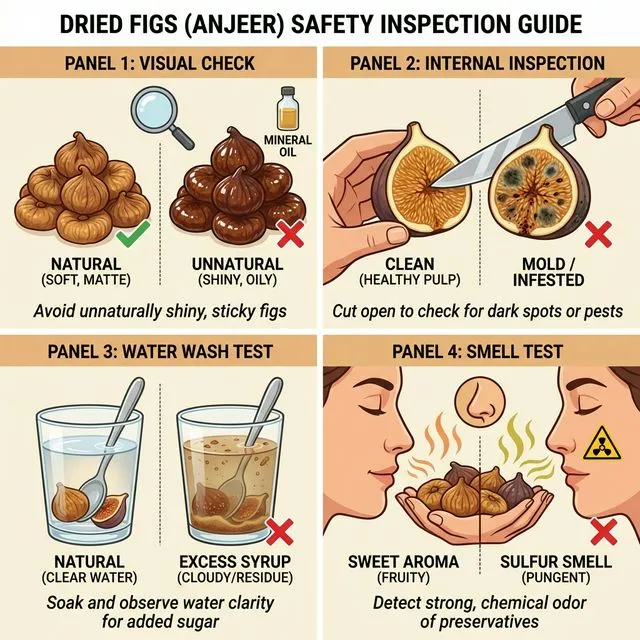
Dried Fig (Anjeer) Safety Audit
Dried figs are highly susceptible to mold and insect infestation, often hidden behind heavy sulfur treatments to preserve color and prevent spoilage during long transit.
1. The Internal Inspection (Critical):
Always break open a dried fig before eating. Look for white, fuzzy mold growth or tiny insects/mites deep inside the fruit near the seeds. Natural, safe figs should be clean, moist, and free of any powdery or fuzzy residue.
2. The Sulfite Warning (Color Check):
If a dried fig looks exceptionally bright orange, vibrant red, or golden-yellow, it has likely been treated with high levels of Sulfur Dioxide. Natural dried figs turn dark brown, deep mahogany, or even blackish as the natural sugars oxidize over time.
3. The Smell Profile:
Natural dried figs have a sweet, fruity, honey-like aroma. If they smell sharp, acidic, or like "burnt matches," it indicates excessive sulfur preservatives used to mask old or moldy stock.
4. The Water Test (Dye Detection):
Soak a piece of fig in warm water. If the water turns bright yellow or orange immediately, it indicates artificial colorants like lead chromate or synthetic dyes. Natural fig color leaches very slowly and turns the water a pale brownish-pink.
5. The Texture Test:
Pure figs should be soft, pliable, and slightly sticky. If the skin is extremely tough, leathery, or has a suspicious "chemical" gloss, avoid it as it may have been treated with industrial paraffin or preservatives.
Click to enlarge
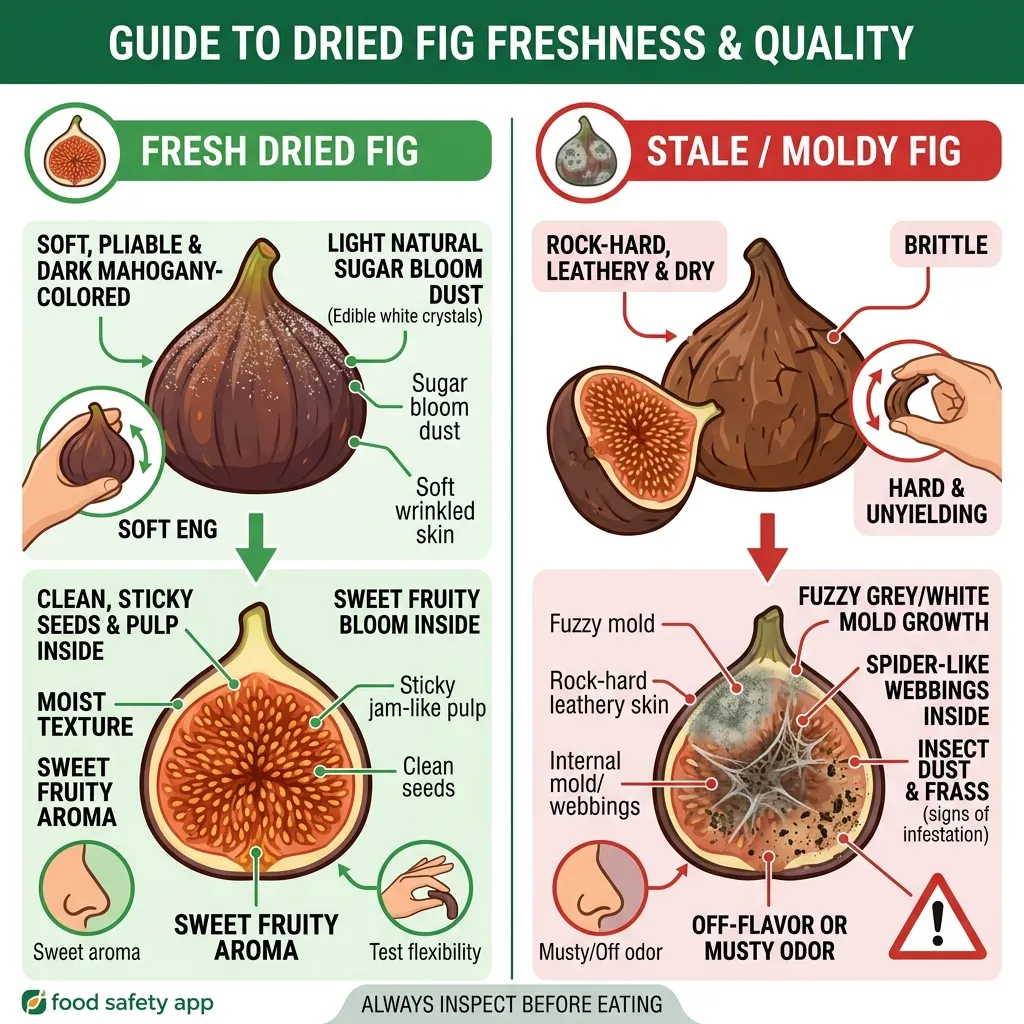
Dried Fig Freshness & Quality Test
Freshness is crucial, as old or poorly dried figs are highly prone to internal mold (producing carcinogenic aflatoxins) and insect infestation.
1. Mold vs. Sugar Bloom Check:
Examine the outer skin. A white, powdery residue that is gritty and dissolves easily in water is natural sugar bloom (safe). A fuzzy, hairy white, grey, or green growth that smells musty is mold. Discard moldy figs immediately.
2. Scent & Aroma Check:
Smell the fig. Fresh dried figs have a sweet, rich, honey-like or fruity smell. Stale, fermented, or spoiled figs smell sour, vinegary, or alcoholic.
3. The Internal Webbing & Mites Check:
Always break the fig in half and inspect the center. Fresh dried figs have clean, sticky golden seeds and pulp. Stale or insect-infested figs show fine webbing, black dust (frass), or tiny crawling mites.
4. Texture & Hardness Test:
Press the fig. Fresh dried figs are soft, pliable, and slightly sticky. Stale, old stock becomes rock-hard, dry, or leathery, indicating loss of essential moisture.
Quick Safety Tips
- CRITICAL: Always rip open and check for internal mold/insects
- Natural dried figs are dark brown, not bright yellow or orange
- Avoid figs with a sharp, matchstick-like sulfur smell
- Soak in warm water for 10 minutes to remove surface sulfites before use
Primary Chemical Concerns
Health Risks & Impacts
Multilingual Local Names
Common Storage Pests
Fig Moths / Dried Fruit Beetles
medium riskSmall moths and beetles that lay eggs in the crevices of dried fruits.
Detection
- Tiny circular holes in the skin
- Fine webbing or "frass" (dust) inside the fruit cavity
Prevention
- Store in airtight glass containers
- Refrigeration prevents egg hatching
Regulatory Corner: FSSAI (Food Safety and Standards Authority of India) / Codex Alimentarius (Codex Stan 152-1985) / EU Reg. 2023/915
Regulation: Food Safety and Standards (Food Products Standards) Regulations 2011, Clause 2.3.47 & Codex Stan 152
Legal Limit:Total Aflatoxins (B1+B2+G1+G2): Max 10.0 ppb; Aflatoxin B1: Max 6.0 ppb; Ochratoxin A: Max 8.0 ppb; Sulfur Dioxide (SO2): Max 2000 ppm (Mandatory allergen warning for SO2 > 10 ppm)
Report Adulteration to FSSAI (Food Safety and Standards Authority of India) / Codex Alimentarius (Codex Stan 152-1985) / EU Reg. 2023/915