How to Test Cashew Nuts for Adulteration (Chemical Bleaching Agents, Sulfur Dioxide, Excessive Oil Coating)
⚡ Quick 60-Second Cashew Purity & Sulfur Bleach Verdict
Toxic Sulfur Dioxide Bleaching & Cashew Nut Shell Liquid (CNSL): Damaged or fungal-stained cashew kernels are chemically bleached with industrial hydrogen peroxide or sulfur dioxide (SO2) fumes to pass them off as premium W-180/W-240 grades.
Inspect under bright daylight. Pure unbleached cashews have a natural ivory/pale cream hue. Chalky, fluorescent stark-white kernels indicate heavy chemical bleaching with sulfur dioxide.
Dry toast 2 cashews in a clean pan for 30 seconds. A sharp, stinging sulfurous or chemical vapor confirms sulfur dioxide fumigation. Pure cashews release rich, sweet nutty butter aroma.
Break a cashew in half. Pure cashews have a crisp, audible snap and solid center. Rubbery, pliable kernels indicate high moisture (>5%) and mold vulnerability.
To learn more about food safety tests and home adulteration detection, read our guides on Almonds, Raisins (Kishmish), and Dates (Khajoor).
Drop Cashew Nuts photo here to test purity
or click to browse • Supports JPG, PNG, WEBP • Paste with Ctrl+V
Inspection Guide
Click to enlarge
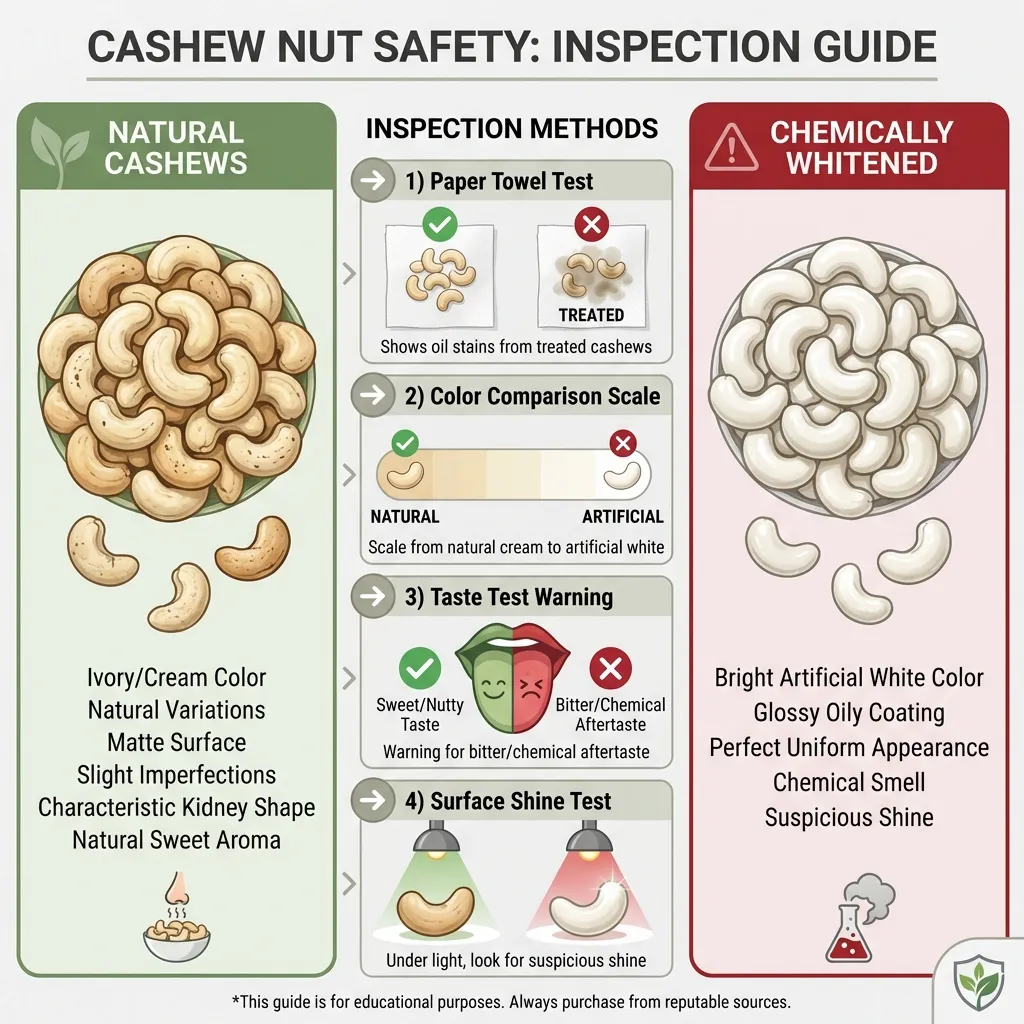
Cashew Chemical Whitening Detection
Cashews are bleached with chemicals to appear whiter and oiled excessively for glossy appearance.
1. The Paper Towel Test:
Place cashews on a white paper towel or tissue for 5 minutes. Natural cashews release minimal oil. If you see:
- Large oil stains spreading on paper
- Translucent marks
- Excessive oil absorption
It indicates heavy oil treatment to mask oldness or improve appearance.
2. The Color Comparison Scale:
Natural cashews are ivory/cream colored with natural variations - some lighter, some slightly darker. Chemically whitened cashews are:
- Bright artificial white (like chalk)
- Uniform color across all nuts
- Lack natural cream undertones
Very white cashews = bleached with chemicals.
3. The Taste Test:
Natural cashews have a mild, natural sweet flavor. Chemically treated cashews may taste:
- Bitter or chemical aftertaste
- Metallic flavor
- Rancid if old and oil-coated to hide age
- Lack of natural sweetness
4. The Surface Shine Test:
Hold cashew under light. Natural cashews have a slight natural sheen but mostly matte finish. Chemically treated cashews look:
- Unnaturally glossy and shiny
- Wet appearance from excessive oil
- Mirror-like reflection
5. The Smell Test:
Natural cashews have a mild, pleasant, nutty aroma. Chemical-treated cashews may smell:
- Chemical or like sulfur
- Rancid (if old and oil-coated)
- Lack natural aroma
Quick Safety Tips
- Natural cashews are ivory/cream, not bright white
- Paper towel test for excessive oil
- Check for chemical or sulfur smell
- Taste test for bitter/chemical aftertaste
Primary Chemical Concerns
Health Risks & Impacts
Multilingual Local Names
Common Storage Pests
Saw-toothed Grain Beetle
low riskSmall beetles that can infest stored nuts and cereals.
Detection
- Small insects crawling in the container
- Fine dust at the bottom
Prevention
- Store in an airtight glass jar
- Keep in a cool, dry place
Corrective Action: What to do?
Discard infested nuts; clean the storage area with vinegar.
Regulatory Corner: FSSAI (Food Safety and Standards Authority of India) / BIS (IS 4020) / UNECE DDP-17
Regulation: Food Safety and Standards (Food Products Standards) Regulations 2011, Clause 2.3.47: Cashew Kernels
Legal Limit:Moisture: Max 5.0% by weight; Free fatty acids (as oleic): Max 1.0%; Sulfur dioxide (SO2) residue: Max 10.0 ppm; Toxic Cashew Nut Shell Liquid (CNSL): 0.0%; Damaged / insect-bored kernels: Max 1.0%
Report Adulteration to FSSAI (Food Safety and Standards Authority of India) / BIS (IS 4020) / UNECE DDP-17