How to Test Raisins for Adulteration (Sulphur Dioxide, Mineral Oil, Artificial Dyes)
⚡ Quick 60-Second Raisin Purity & Sulfur Dioxide Verdict
Excessive Sulfur Dioxide Fumigation & Mineral Oil Coating: Green and golden raisins are heavily treated with toxic sulfur dioxide (SO2) gas to stop browning and coated with non-food mineral oil to impart artificial gloss and prevent clumping.
Place 10 raisins in a cup of boiling water and cover for 2 minutes. Lift lid and sniff vapor. A pungent, choking, matchstick sulfur smell indicates illegal sulfur dioxide levels.
Press 5 raisins firmly between layers of brown paper towel or tissue paper for 30 seconds. A persistent translucent grease ring indicates petroleum liquid paraffin or mineral oil glazing.
Natural sun-dried raisins develop a delicate sugar bloom and soft wrinkling. Chemically treated raisins feel unnaturally waxy, stiff, and taste intensely acidic or chemical.
To learn more about food safety tests and home adulteration detection, read our guides on Cashew Nuts, Walnuts (Akhrot), and Dates (Khajoor).
Drop Raisins (Kishmish) photo here to test purity
or click to browse • Supports JPG, PNG, WEBP • Paste with Ctrl+V
Inspection Guide
Click to enlarge
Raisins (Kishmish) Quality & Purity
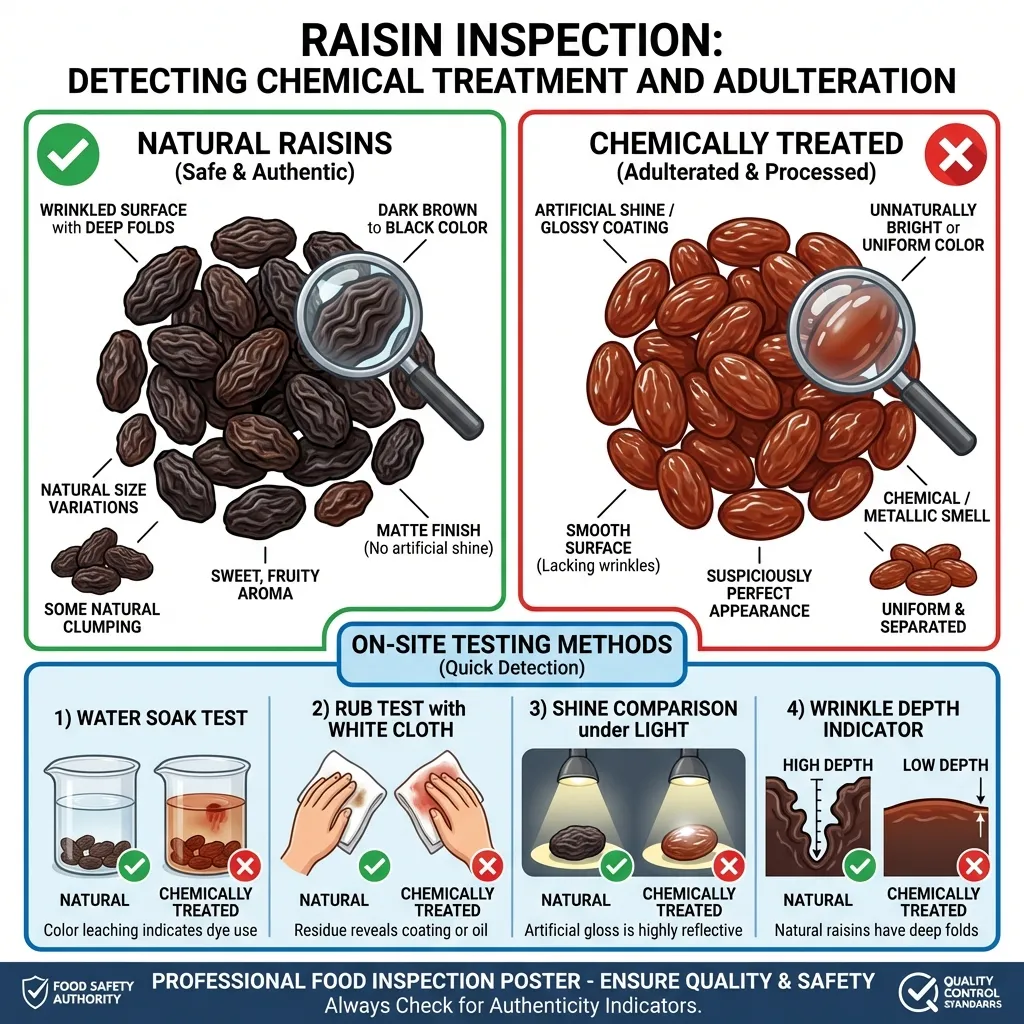
Raisins are often treated with Sulphur Dioxide to give them a bright golden color and coated with mineral oil for a glossy shine.
1. The Scent Test (Sulphur):
Smell a handful of raisins. Pure raisins have a sweet, fruity, and slightly caramel-like aroma. A sharp, suffocating, or 'matchstick' smell indicates excessive Sulphur Dioxide bleaching.
2. The Sticky Oil Test:
Rub a few raisins between your fingers. If they feel extremely oily, greasy, or leave a waxy film on your skin, they have been coated with non-food grade mineral oil or paraffin wax.
3. The Water Color Test:
Soak golden raisins in clear water for 10 minutes. If the water turns bright yellow or orange, artificial dyes have been used. Pure raisins will only slightly cloud the water.
4. The Taste Check:
Authentic raisins should be sweet and slightly tangy. If you detect a chemical or metallic aftertaste, they are likely heavily chemically treated.
Click to enlarge
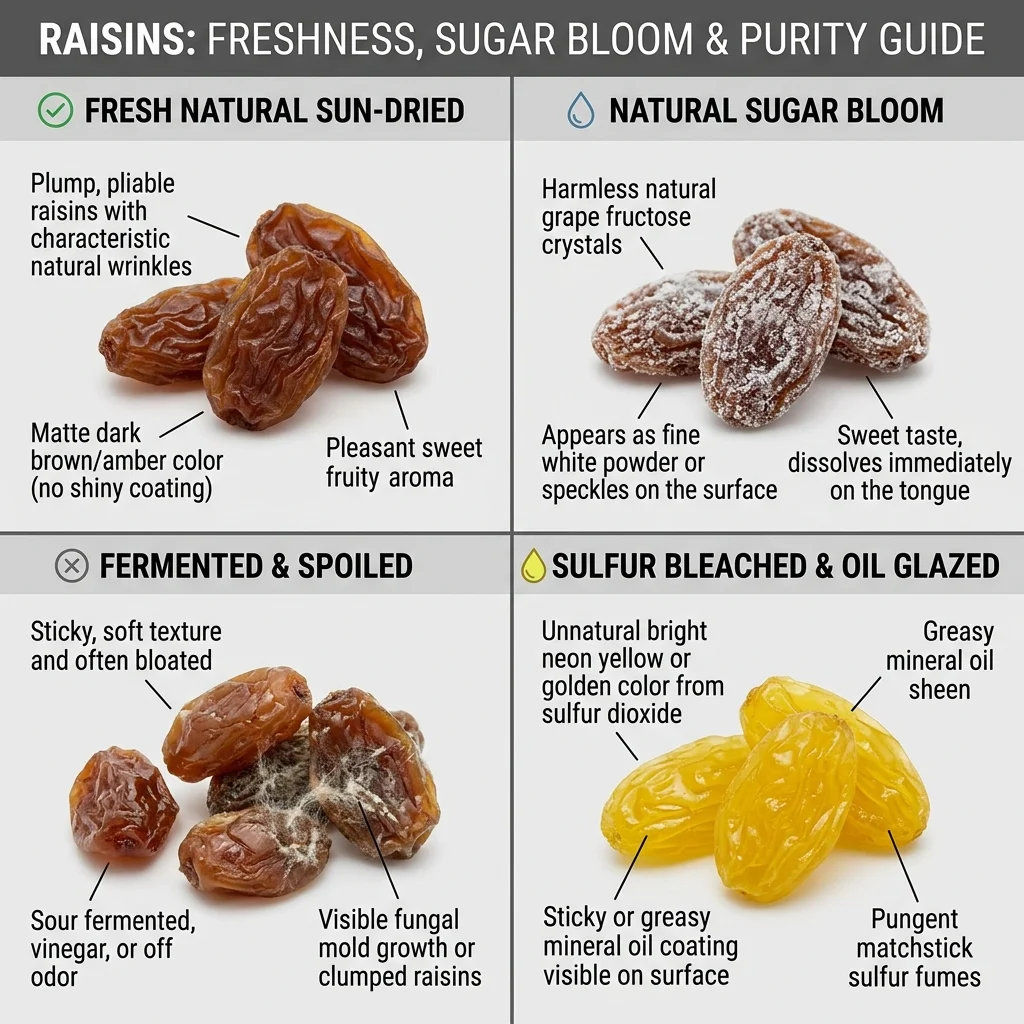
Raisins Freshness, Sugar Bloom & Spoilage Guide
Distinguishing natural grape glucose crystallization (sugar blooming) from toxic mold or spoilage is critical for safe raisin consumption.
| Quality Grade / Stage | Visual Appearance & Wrinkling | Scent & Mouthfeel | Safety & Action |
|---|---|---|---|
| 1. Fresh Premium (Sun-Dried) | Natural dark brown/black (or amber), supple uniform wrinkles | Sweet caramel-raisin aroma, soft chewy bite | ✅ Best Quality — Eat Freely |
| 2. Sugar Bloom (Glucose Crystals) | Superficial white sugary spots on skin, dry surface | Crisp sugary texture, dissolves immediately in warm water | ✅ 100% Safe — Natural Desiccation |
| 3. Mold & Fermentation Spoilage | Gray-white fuzzy webbing, bloated tacky berries | Sour wine, acidic vinegar, or damp musty odor | ❌ Discard Immediately — Mycotoxin Risk |
| 4. Chemically Bleached & Glazed | Unnatural neon golden-yellow, greasy artificial slickness | Acrid burning match smell, sharp chemical aftertaste | ⚠️ Caution — High Sulfite / Mineral Oil Residue |
Quick Safety Tips
- Smell for sharp matchstick-like odors (Sulphur)
- Check for greasy/oily film on fingers
- Soak in water to check for color leaching
- Golden raisins are usually more sulphured than dark ones
Primary Chemical Concerns
Health Risks & Impacts
Multilingual Local Names
Common Storage Pests
Indian Meal Moth (Plodia interpunctella)
medium riskSmall moths whose larvae feed on stored dried fruits, leaving silken webs and frass.
Detection
- Fine webbing inside the container
- Small white cocoons in folds of dried fruit
Prevention
- Store in an airtight glass jar
- Keep in the refrigerator
Corrective Action: What to do?
Discard infested raisins immediately; clean the storage container with hot vinegar water.
Saw-Toothed Grain Beetle (Oryzaephilus surinamensis)
medium riskFlat, slender brown beetles that bore into dry fruit flesh and produce powdery frass.
Detection
- Fine brown powder at bottom of jar
- Tiny holes in dried grape skins
Prevention
- Maintain storage moisture below 14%
- Inspect dried fruit upon purchase
Corrective Action: What to do?
Freeze unopened jars for 48 hours to eliminate hidden insect eggs.
Warehouse Beetle (Trogoderma variable)
high riskDermestid beetle whose larval shed hairs (setae) can trigger allergic gastrointestinal reactions.
Detection
- Cast larval skins clinging to fruit skin
- Clustered larvae in container crevices
Prevention
- Purchase recent batches from sealed containers
- Avoid open unsealed bulk sacks
Corrective Action: What to do?
Discard contaminated stock immediately due to allergenic setae risk.
Regulatory Corner: FSSAI (Food Safety and Standards Authority of India) / Codex Stan 67-1981 / US FDA
Regulation: Food Safety and Standards (Food Products Standards) Regulations 2011, Clause 2.3.47: Raisins
Legal Limit:Sulfur dioxide (SO2): Max 1500 ppm (Bleached raisins) / Max 50 ppm (Natural untreated); Mineral oil / paraffin glaze: Max 0.5% (Food-grade only); Moisture: Max 18.0%; Ochratoxin A: Max 10.0 ppb
Report Adulteration to FSSAI (Food Safety and Standards Authority of India) / Codex Stan 67-1981 / US FDA