
Tuberose (Rajnigandha) vs Arabian Jasmine (Mogra)
Confused between Tuberose (Rajnigandha) and Arabian Jasmine (Mogra)? Compare Polianthes tuberosa vs Jasminum sambac by flower spikes, petal layers, fragrance, and care.
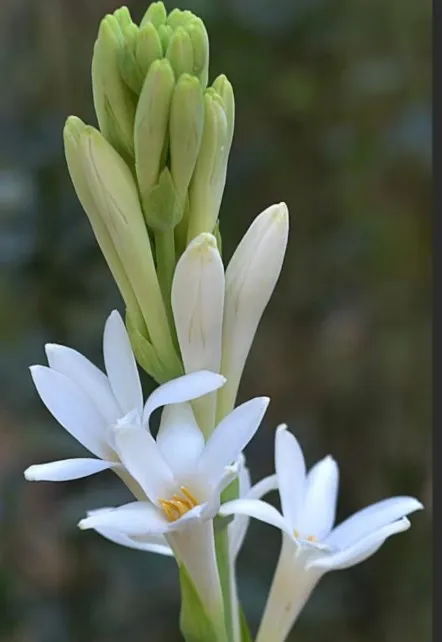
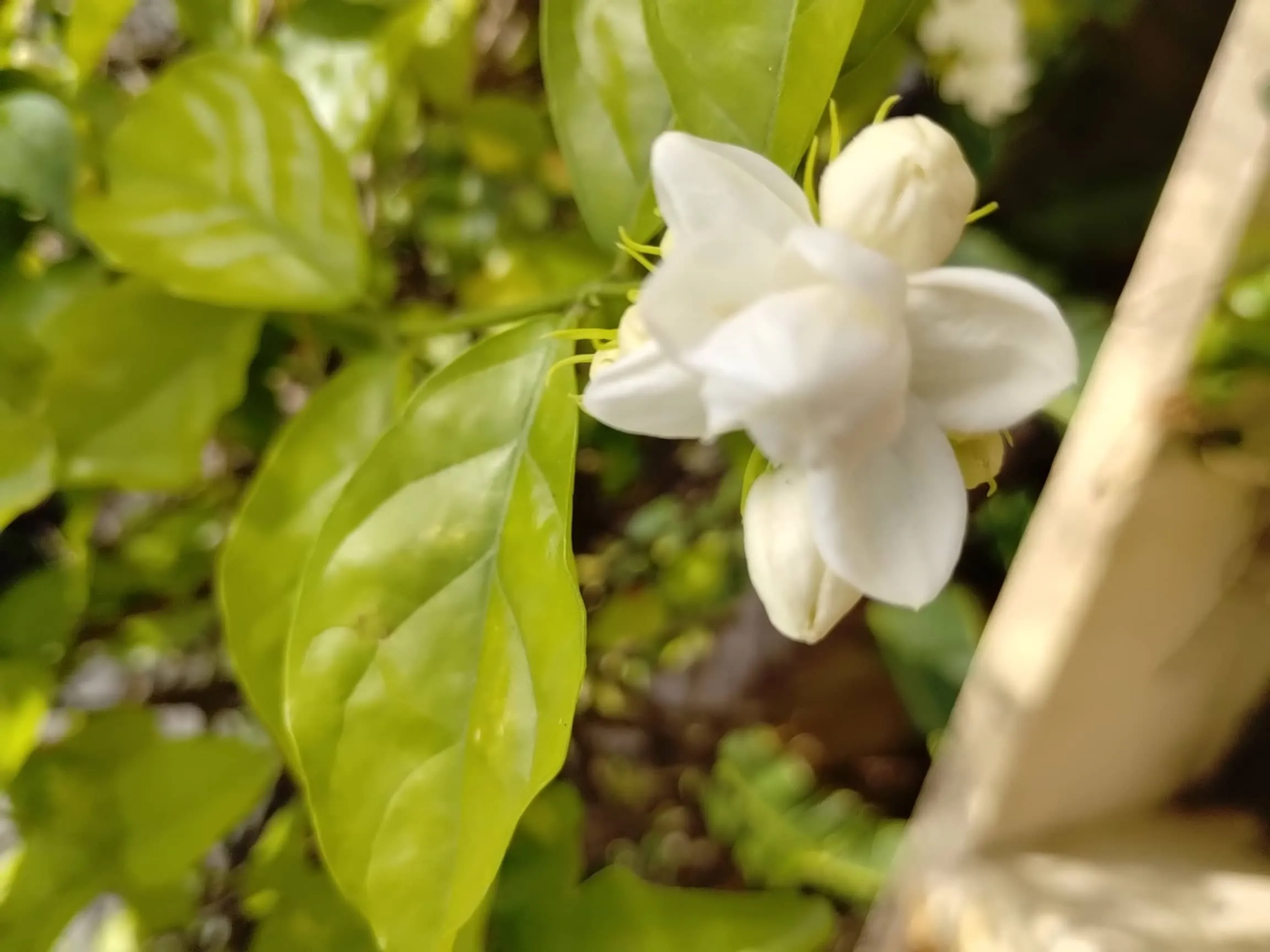
Key Differences: Tuberose (Rajnigandha) vs Arabian Jasmine (Mogra)
Tuberose (Polianthes tuberosa, recently reclassified as Agave amica and revered across South Asia as Rajnigandha) and Arabian Jasmine (Jasminum sambac, celebrated as Mogra, Mallige, or Sampaguita) are the two supreme night-scented white flowers of tropical gardens, traditional weddings, and luxury perfumery. Because their waxy ivory buds are frequently woven together in South Asian bridal garlands and temple offerings, many gardeners and flower lovers wonder how the two plants differ in the garden.
Botanically, they belong to completely different plant divisions and families. Tuberose is a monocotyledonous herbaceous bulb in the Asparagaceae (agave and asparagus) family that grows from fleshy underground tubers, forming a basal rosette of long, grass-like strap leaves and sending up tall, rigid, unbranched spikes (2.5 to 3.5 feet high) lined with opposite pairs of curved, trumpet-shaped waxy blossoms (with 6 tepals and 6 hidden stamens). In contrast, Arabian Jasmine (Mogra) is a dicotyledonous woody evergreen shrub or scrambling vine in the Oleaceae (olive) family with opposite, glossy oval leaves along branching woody stems, bearing terminal clusters of 1-inch star-like or rose-like double blossoms that contain only 2 stamens and blush purplish-pink as they age.
Botanical & Care Comparison Table
| Feature | Tuberose Rajinigandha | Arabian jasmine |
|---|---|---|
| Family | Asparagaceae | Oleaceae |
| Colors Available | Pure porcelain white to creamy ivory (outer buds occasionally tinged faint pink) | Pure glistening white, aging to soft rose-pink or purplish-violet as blossoms fade |
| Bloom Season | Mid-summer through autumn (July to October; year-round in frost-free tropics) J F M A M J J A S O N D | Late spring through autumn (March to October in warm climates, in repeated flushes) J F M A M J J A S O N D |
| Maintenance Level | Moderate (requires warm soil, staking for tall spikes, and lifting tubers in Zones 3–7) | Moderate (requires post-flush tip pruning, regular summer feeding, and frost protection) |
| Sunlight Needs | Full Direct Sun (requires 6 to 8+ hours of intense sunlight for spike initiation) | Full Sun to Light Afternoon Shade (6+ hours of sun maximizes flower bud production) |
| Watering Needs | Moderate during active growth; keep dry when tubers are dormant (rotted easily by wet cold soil) | Consistent moisture during spring/summer blooming; slightly reduced watering in winter |
| Pet Toxicity | ✅ 100% Non-toxic to cats, dogs, and horses (pet-safe Asparagaceae bulb, not a true Lilium) | ✅ 100% Non-toxic to cats, dogs, and horses (pet-safe true Jasminum species) |
| Fragrance | Opulent, heavy, creamy-floral and honeyed-spicy nocturnal perfume (rich in methyl benzoate) | Heady, sweet, warm-fruity and exotic nocturnal jasmine perfume (rich in linalool and cis-jasmone) |
| Pests & Diseases | Susceptible to Root-Knot Nematodes, Sclerotium Stem & Root Rot, Botrytis Blight, and Thrips. | Susceptible to Spider Mites, Mealybugs, Whiteflies, Rust Disease, and Sooty Mold. |
| Typical Uses | Long-stemmed cut flower arrangements, wedding stage decor, varmala garlands, high-end French perfumery & attar | Bridal hair gajras (venis), temple puja offerings, jasmine tea scenting, patio container shrubs, and mogra attar |
How to Spot the Differences (Visual Identification)
Spot the features below to easily distinguish between the two plants in the wild or garden:
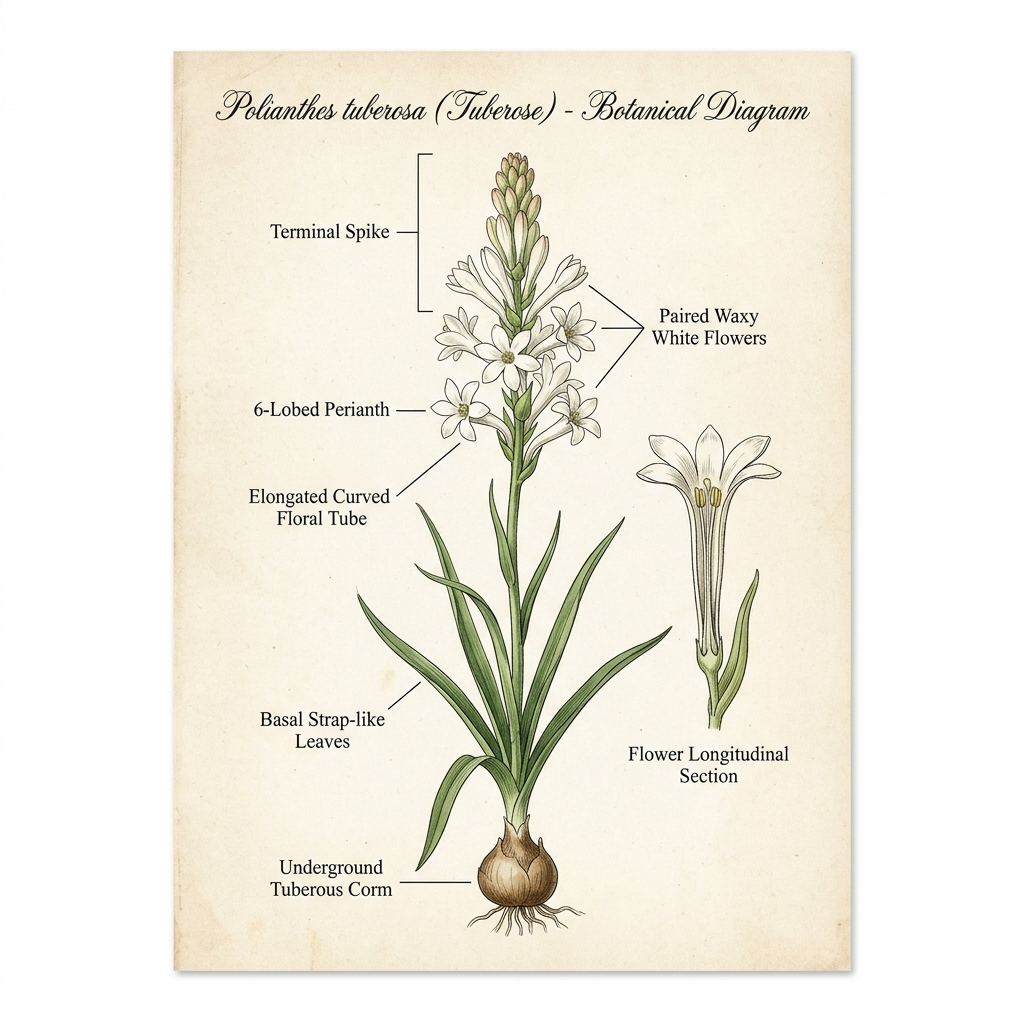
- Tall unbranched floral spikes (2.5–3.5 ft): Waxy white blossoms emerge in distinct opposite pairs along a stately, leafless vertical flower stalk.
- Curved tubular-funnel flowers with 6 tepals & 6 stamens: Each 1.5–2.5 inch blossom has an elongated curved tube flaring into 6 spreading lobes (single) or dense ruffled layers ('The Pearl' double).
- Grass-like basal strap leaves & underground tubers: Narrow, channeled, arching green leaves (12–24 inches long) sprout directly from a subterranean bulb-like tuberous rhizome.
- Creamy, honeyed-balsamic perfume & long vase life: Cut spikes open sequentially from bottom to top and perfume rooms for 7 to 14 days in water.
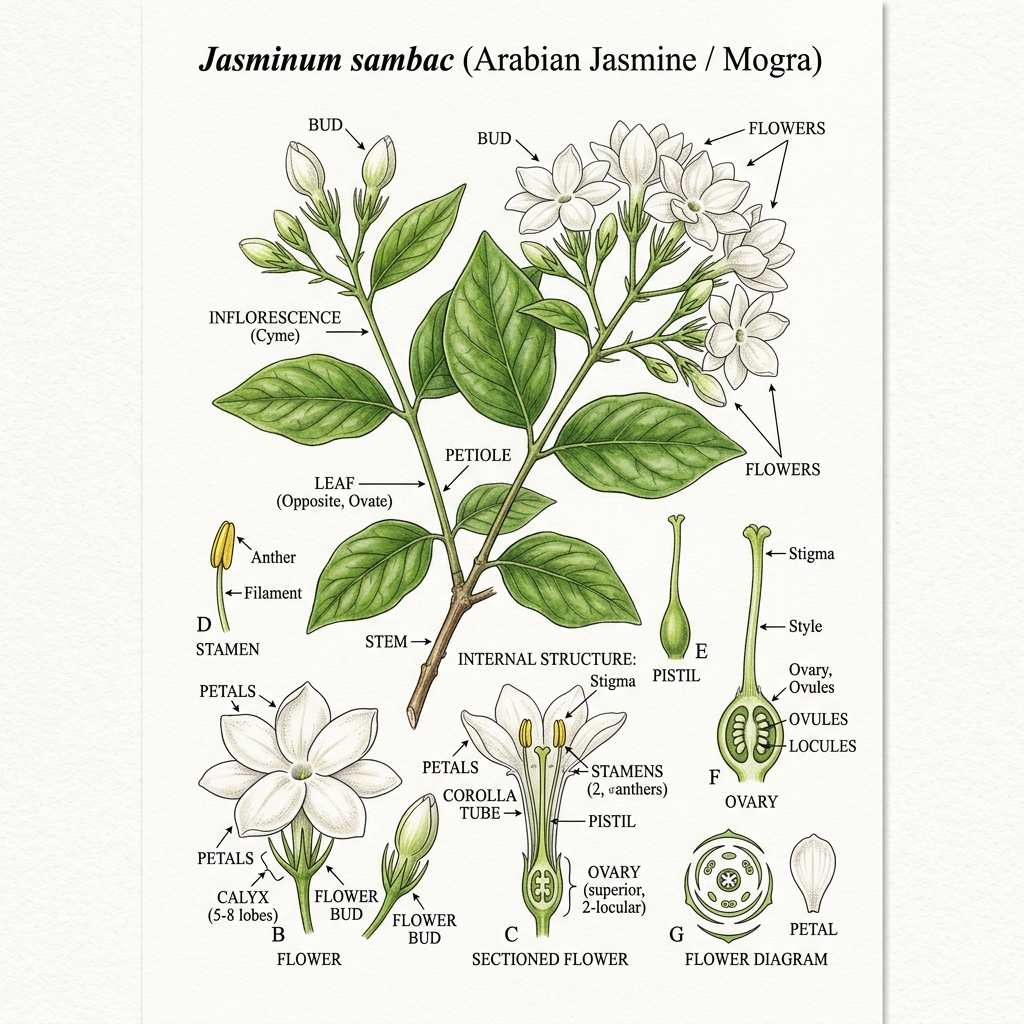
- Woody branching shrub or scrambling vine (3–8 ft): Flowers are borne in small terminal clusters (cymes) of 3 to 12 blooms at the tips of leafy woody shoots.
- Compact 1-inch rosettes with 2 stamens: Pearl-like buds open into flat 5–9-lobed stars ('Maid of Orleans') or miniature camellia-like double rosettes ('Grand Duke of Tuscany') that turn pinkish-purple as they fade.
- Opposite glossy ovate leaves with prominent veins: Broad, leathery, deep green oval leaves grow in opposite pairs or whorls of three along woody stems.
- Intense sweet-fruity night perfume for hair gajras: Plump individual buds are harvested stemless at dusk to string into fragrant hair venis, garlands, and jasmine green tea.
Which Should You Choose?
- Choose Tuberose (Rajnigandha) if you want dramatic, long-lasting 3-foot cut flower spikes that can perfume an entire living room for over a week, or a seasonal summer bulb that can be lifted and stored over winter in colder climates.
- Choose Arabian Jasmine (Mogra) if you want a permanent, multi-year woody patio shrub or trellis plant that produces daily handfuls of fragrant white buds from spring through autumn for hair gajras, temple offerings, and evening garden scent.