
Mexican Petunia vs Petunia
Compare Mexican Petunia (Ruellia simplex) and True Petunia (Petunia × atkinsiana). Learn how to distinguish stems, foliage, seed pods, and invasiveness.
Key Differences: Mexican Petunia vs Petunia
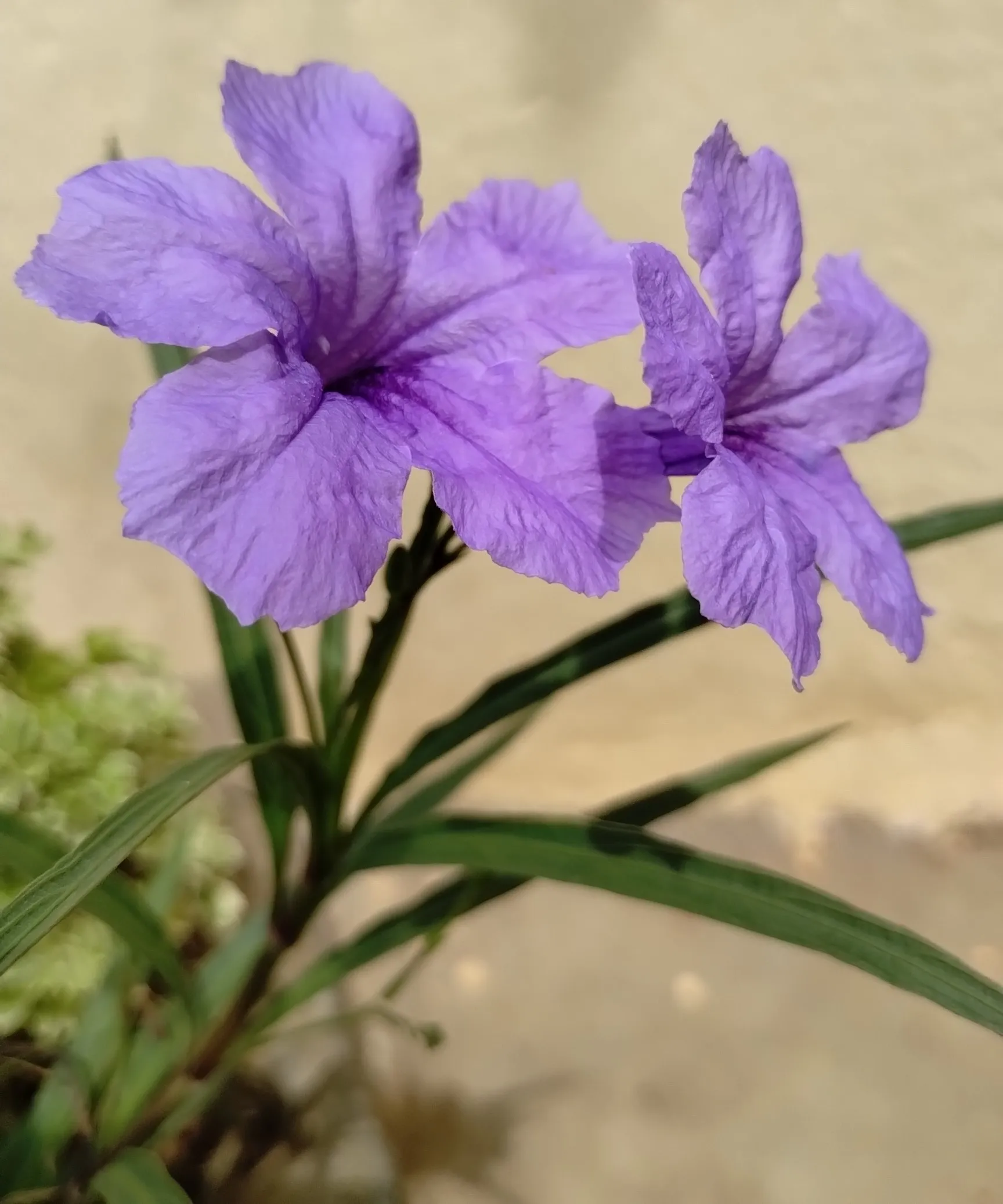
Despite sharing the common name 'petunia' and producing superficially similar 5-lobed, trumpet-shaped blossoms, Mexican Petunia (Ruellia simplex) and True Garden Petunia (Petunia × atkinsiana) belong to two completely unrelated plant families. Mexican Petunia is an upright, woody-based perennial in the Acanthaceae (acanthus) family that grows 3 to 4 feet tall on rigid, square, purple-tinged stems with smooth, narrow willow-like leaves. Each individual Ruellia blossom opens at dawn and drops cleanly by sunset, followed by explosive, moisture-activated seed capsules and aggressive underground rhizomes that allow it to thrive in both standing water and baking heat.
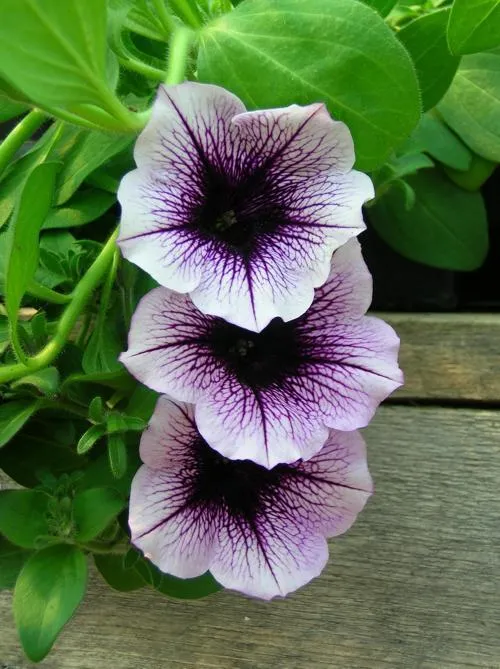
In contrast, True Petunia is a low-growing, mounding or cascading plant in the Solanaceae (nightshade) family—closely related to tomatoes and tobacco—typically cultivated as a summer bedding and hanging-basket annual. True Petunias grow 6 to 18 inches tall (or trail 2 to 4 feet) on soft, round green stems covered in microscopic glandular hairs that feel distinctly sticky and clammy to the touch, paired with broad, oval leaves. Their funnel-shaped blossoms last several days on the stem, come in almost every color and bi-color pattern imaginable, and require well-drained soil that never sits waterlogged.
Botanical & Care Comparison Table
| Feature | Mexican Petunia | Petunia |
|---|---|---|
| Family | Acanthaceae | Solanaceae |
| Colors Available | Royal Purple, Violet-Blue, Rose-Pink, Pure White | Purple, Pink, Red, White, Yellow, Coral, Black-Velvet, Starry Bi-colors |
| Bloom Season | Late spring through autumn frost (year-round in frost-free Zones 10–11) J F M A M J J A S O N D | Spring through first autumn frost (May–October as summer annual) J F M A M J J A S O N D |
| Maintenance Level | Very Low (self-cleaning daily blooms; requires root barrier or dwarf cultivars to contain spread) | Moderate (requires regular fertilizing every 2 weeks, mid-summer trim, and deadheading on grandifloras) |
| Sunlight Needs | Full Sun to Partial Shade (blooms heaviest in hot direct sun) | Full Sun (requires 6 to 8 hours of direct sunlight daily to prevent legginess) |
| Watering Needs | Highly adaptable (tolerates standing bog water, wet clay, and established drought) | Moderate (needs consistent moisture in well-drained soil; rots in soggy conditions) |
| Pet Toxicity | ✅ Non-toxic to cats, dogs, and horses (ASPCA verified) | ✅ Non-toxic to cats, dogs, and horses (safe nightshade member) |
| Fragrance | Virtually scentless (nectar-rich for hummingbirds and butterflies) | Mildly herbaceous to sweet, spicy evening perfume (strongest in white and purple cultivars) |
| Pests & Diseases | Exceptionally disease-resistant; occasionally visited by Aphids, Whiteflies, and Spider Mites. | Susceptible to Botrytis Blight, Root Rot, Mosaic Virus, and Aphids. |
| Typical Uses | Rain gardens, pond margins, hot sunny borders, hummingbird gardens (choose sterile dwarf cultivars) | Hanging baskets, window boxes, patio containers, colorful front-of-border annual bedding |
How to Spot the Differences (Visual Identification)
Spot the features below to easily distinguish between the two plants in the wild or garden:
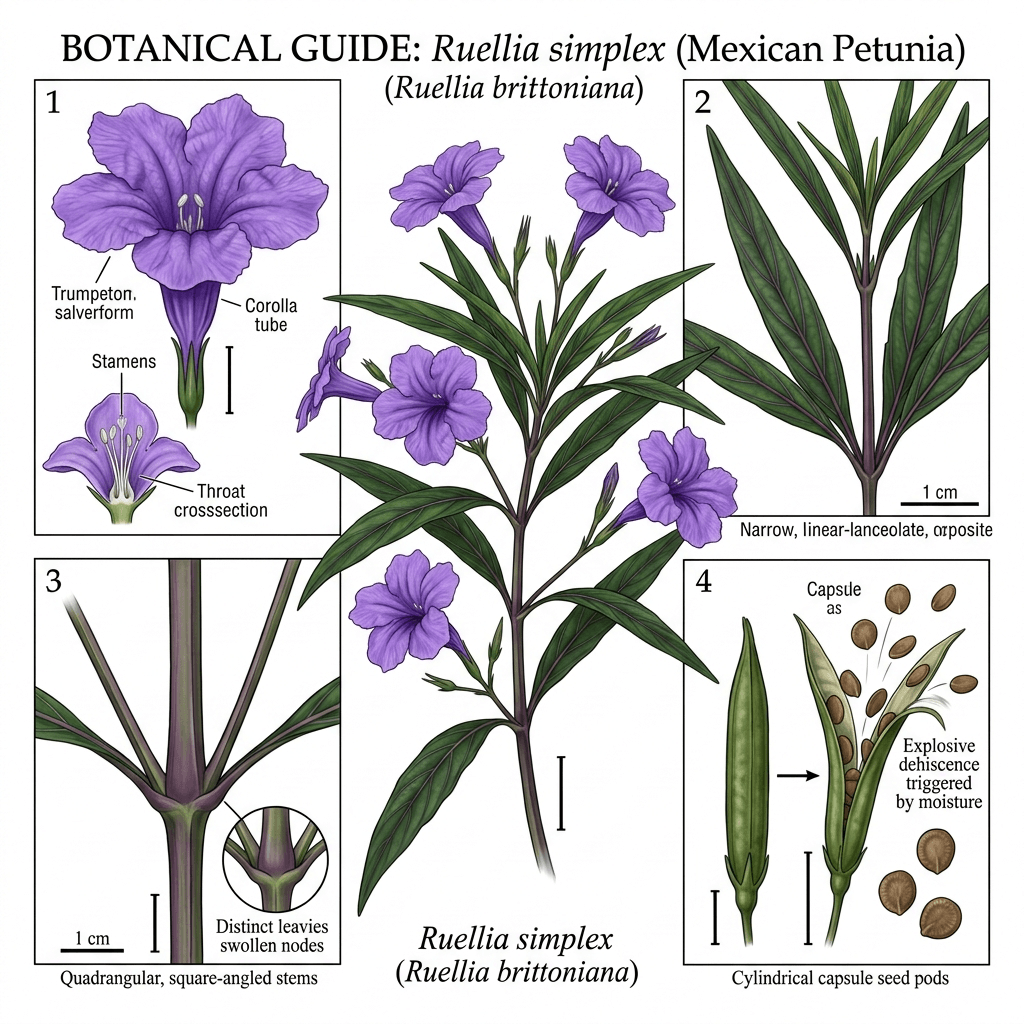
- Tall, rigid square stems: Grows upright (3 to 4 feet tall) on stiff, smooth, 4-angled dark green or purple-flushed cane-like stems.
- Narrow, willow-like leaves: Opposite, smooth, lance-shaped leaves (6 to 12 inches long) with prominent veins and zero stickiness.
- Single-day crinkly trumpets: 5-lobed papery flowers (mostly violet-purple, pink, or white) open in the morning and drop off by evening.
- Explosive seed pods: Produces slender cylindrical dry capsules that snap open audibly when wet to fling seeds several feet.
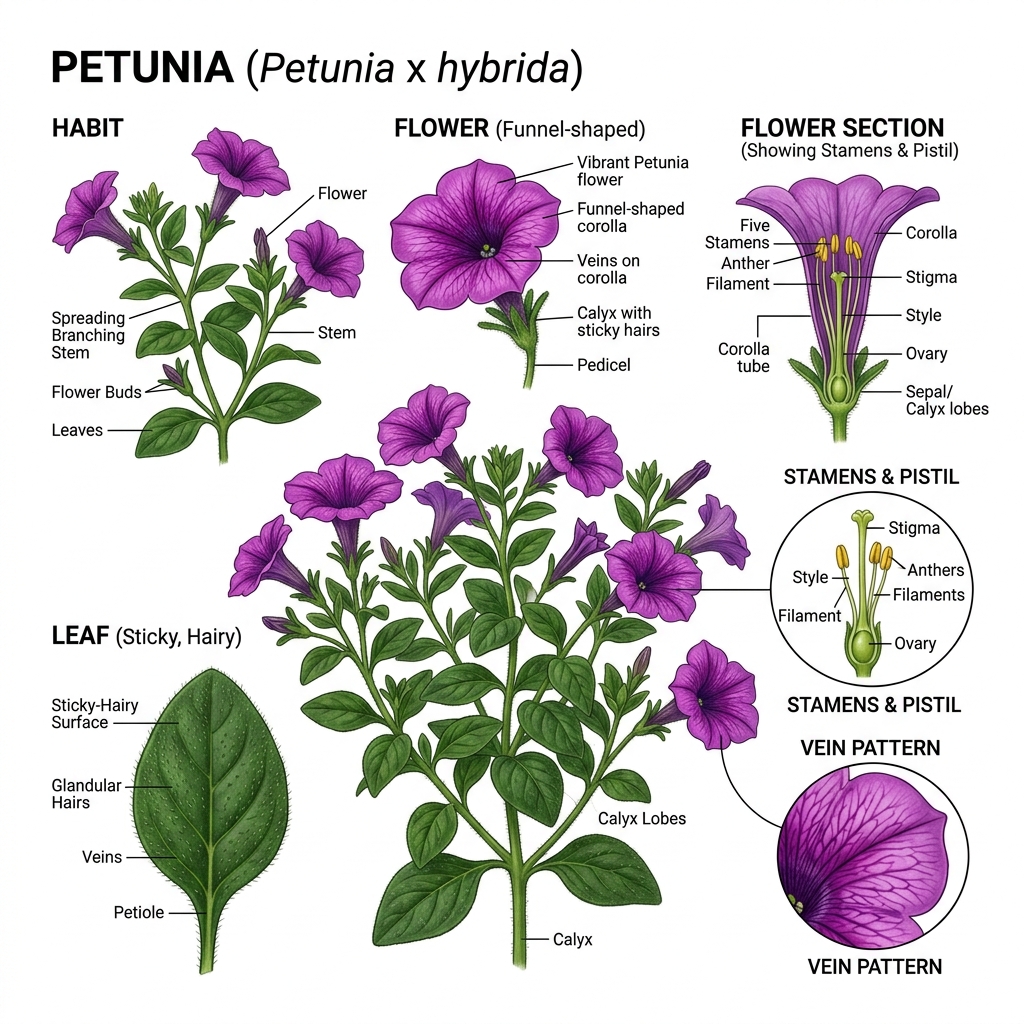
- Sticky, clammy stems and leaves: Soft, flexible stems and broad oval leaves are coated in fine glandular hairs that feel tacky when touched.
- Low mounding or trailing habit: Forms compact 6 to 18 inch mounds or cascading trails (up to 4 feet) ideal for hanging baskets and window boxes.
- Multi-day funnel blooms in all colors: Fused funnel trumpets last 3 to 5 days and span red, yellow, black, speckled ('Night Sky'), and picotee bi-colors.
- Tiny dust-like seeds in non-explosive capsules: Flowers bear 5 stamens (vs 4 in Ruellia) and form small two-valved capsules packed with microscopic seeds.
Which Should You Choose?
- Choose Mexican Petunia (Ruellia simplex)—specifically non-invasive sterile dwarf varieties like 'Purple Showers' or 'Katie'—if you need an indestructible, upright perennial for scorching heat, heavy clay, or wet rain-garden soils.
- Choose True Petunia if you want lush, cascading mounds of multi-colored, bi-colored, or fragrant trumpet blooms for hanging baskets, window boxes, and well-drained summer beds.