
Plumeria vs Magnolia
Compare Plumeria (Frangipani / Gulchin) and Magnolia (Sonchafa / Southern Magnolia). Learn how to distinguish milky sap, pinwheel petals, and tepal anatomy.
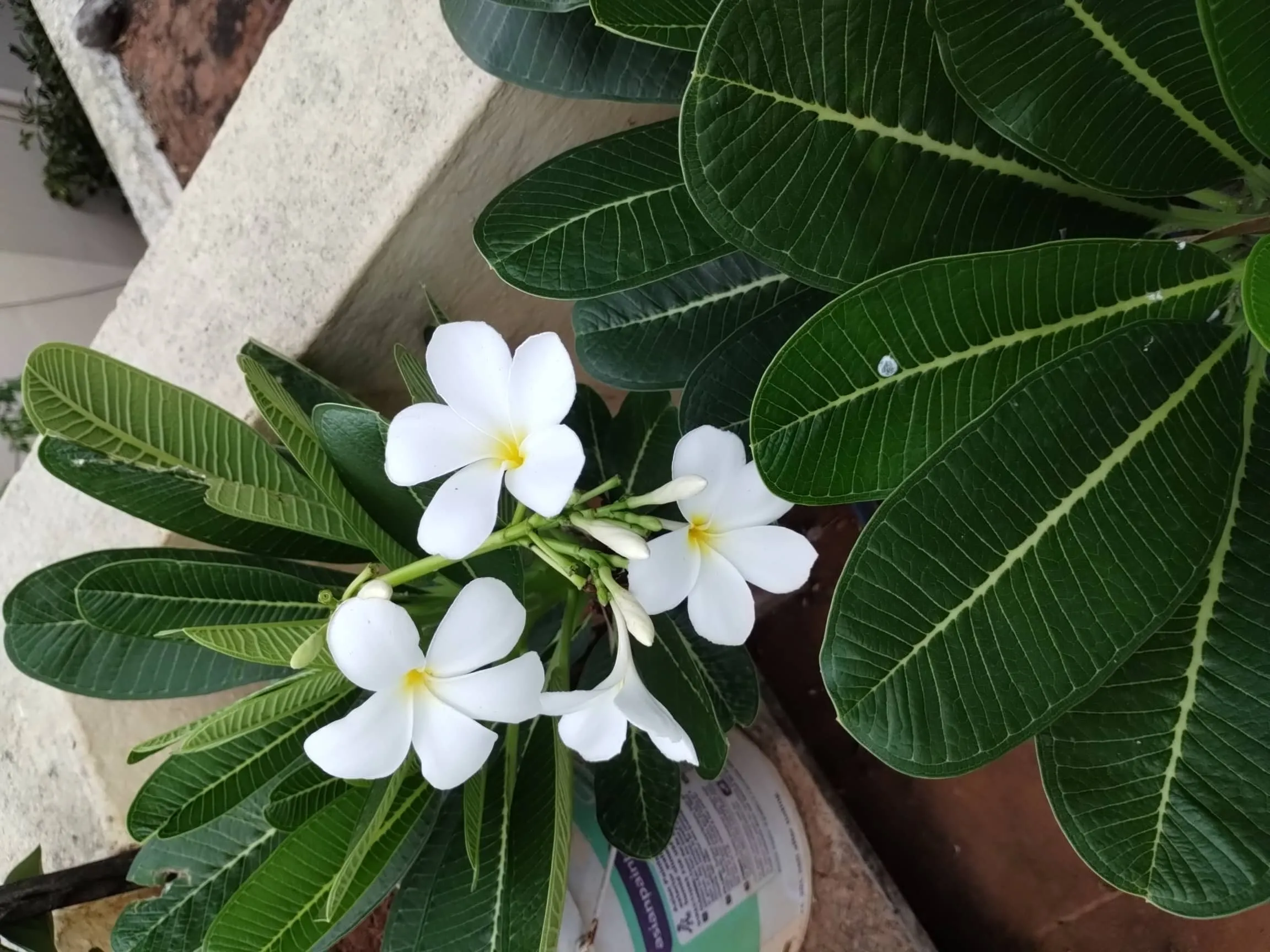
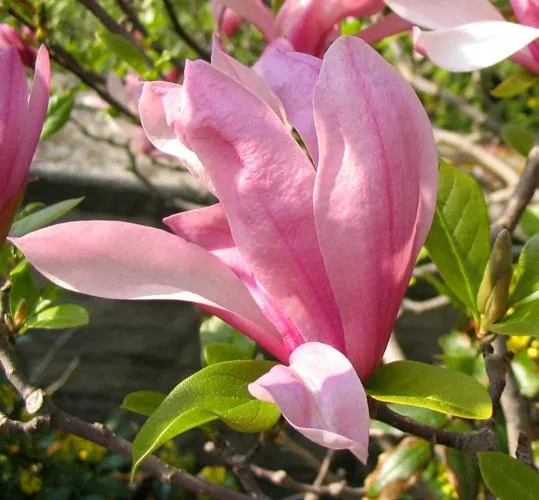
Key Differences: Plumeria vs Magnolia
Plumeria (Plumeria rubra / Plumeria alba, widely known as Frangipani or White Champa / Gulchin) and Magnolia (Magnolia grandiflora and Magnolia champaca, revered across South Asia as Golden Champa or Sonchafa) are frequently confused because both are fragrant ornamental trees sharing the traditional regional name 'Champa.' Botanically, however, they represent two vastly different evolutionary lineages: Plumeria belongs to the dogbane family (Apocynaceae) and grows as a tropical, deciduous small tree with thick, swollen, sausage-like grey-green succulent branches that exude a bitter, milky white latex sap whenever a leaf or stem is broken.
In contrast, Magnolia belongs to the ancient family Magnoliaceae—one of the earliest flowering plant families on Earth, predating bees and pollinated primarily by beetles—and forms a woody, hard-barked evergreen or deciduous forest tree with clear, non-milky sap. Florally, Plumeria produces terminal clusters (cymes) of 5 waxy petals twisted into a smooth, pinwheel-like funnel tube that hides its stamens deep inside, whereas Magnolia produces solitary flowers composed of 6 to 15 undifferentiated petal-like tepals surrounding a prominent, cone-like central column covered in spirally arranged stamens and pistils.
Botanical & Care Comparison Table
| Feature | Plumeria | Magnolia |
|---|---|---|
| Family | Apocynaceae | Magnoliaceae |
| Colors Available | White with Yellow Center, Coral Pink, Rose Red, Sunset Rainbow Bi-colors | Creamy Porcelain White, Pale Ivory, Saffron Yellow-Orange (Champak), Magenta-Pink |
| Bloom Season | Late spring through autumn in subtropics; near year-round in frost-free tropics J F M A M J J A S O N D | Spring to mid-summer (April–July; intermittent blooms into autumn in warm zones) J F M A M J J A S O N D |
| Maintenance Level | Low (requires sharp drainage, full heat, and dry winter dormancy; frost-tender below 40°F) | Low (hardy woody tree; requires ample root space, organic mulch, and minimal pruning) |
| Sunlight Needs | Full Direct Sun (requires at least 6 to 8 hours of intense sunlight to bloom heavily) | Full Sun to Partial Shade (thrives in sunny lawns and moist woodland margins) |
| Watering Needs | Moderate in summer; withhold water almost completely during winter leaf-drop dormancy | Moderate (prefers deep, regular watering during establishment in rich, moist loam) |
| Pet Toxicity | ⚠️ Mildly to Moderately Toxic to cats and dogs (milky sap irritates skin, mouth, and stomach) | ✅ Non-toxic to cats, dogs, and horses (safe shade tree for family yards) |
| Fragrance | Intoxicating, sweet tropical coconut-jasmine-citrus perfume (strongest in evening and morning) | Rich, lemony-citronella floral fragrance (Grandiflora) or heady, exotic Champaca spice perfume |
| Pests & Diseases | Susceptible to Plumeria Rust, Mealybugs, Whiteflies, and Sooty Mold. | Susceptible to Magnolia Scale, Sooty Mold, Powdery Mildew, and Anthracnose. |
| Typical Uses | Hawaiian leis, temple offerings, sunny pool patios, large container specimens | Majestic shade trees, sacred temple groves, luxury perfumery, evergreen privacy screens |
How to Spot the Differences (Visual Identification)
Spot the features below to easily distinguish between the two plants in the wild or garden:
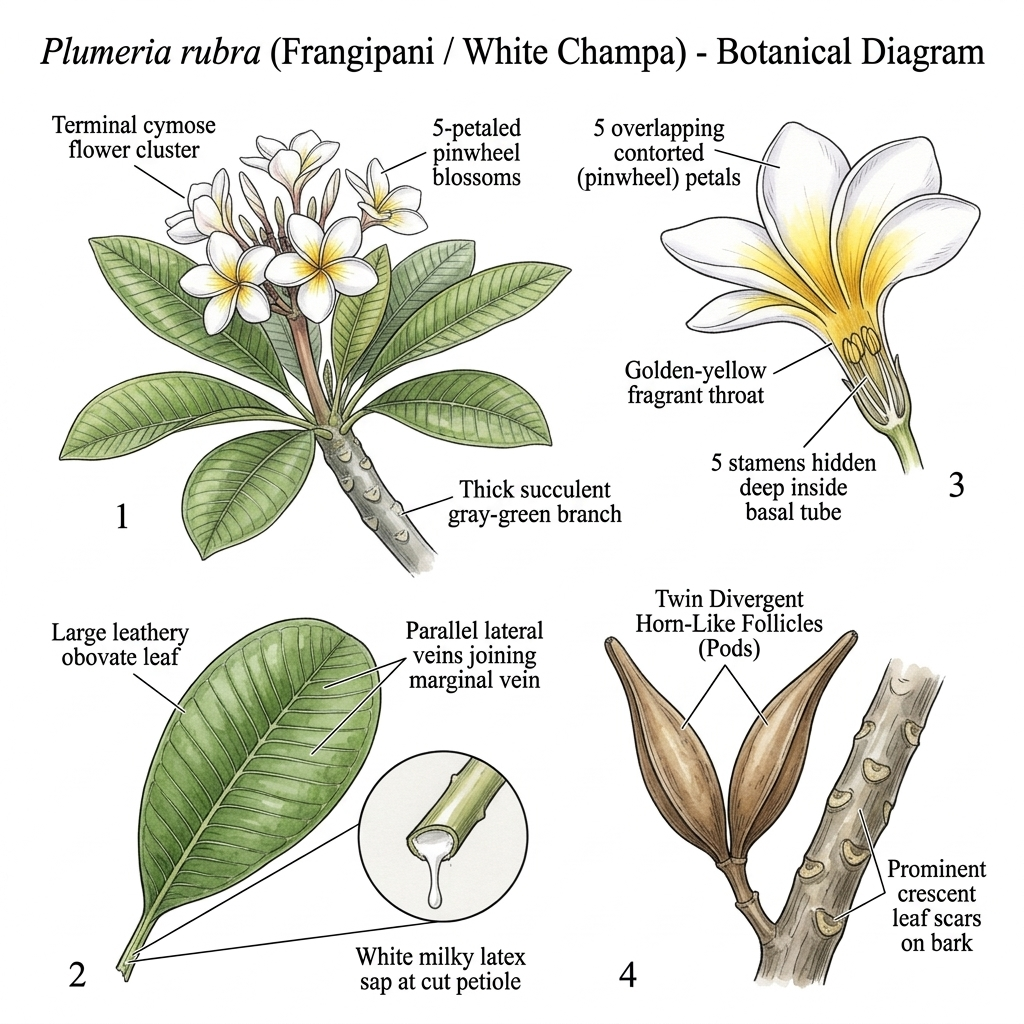
- 5-petaled pinwheel flowers in clusters: Blossoms have 5 broad, waxy petals overlapping in a spiral pinwheel with a yellow throat and hidden stamens.
- Swollen, sausage-like succulent branches: Thick, stubby, grey-green branches marked with crescent-shaped leaf scars; bare of leaves in winter.
- Milky white toxic latex sap: Snapping a leaf stalk or twig immediately releases sticky, irritating white milky sap characteristic of Apocynaceae.
- Leaves clustered only at branch tips: Large obovate leaves with a distinct marginal vein connecting parallel side veins grow in terminal rosettes.
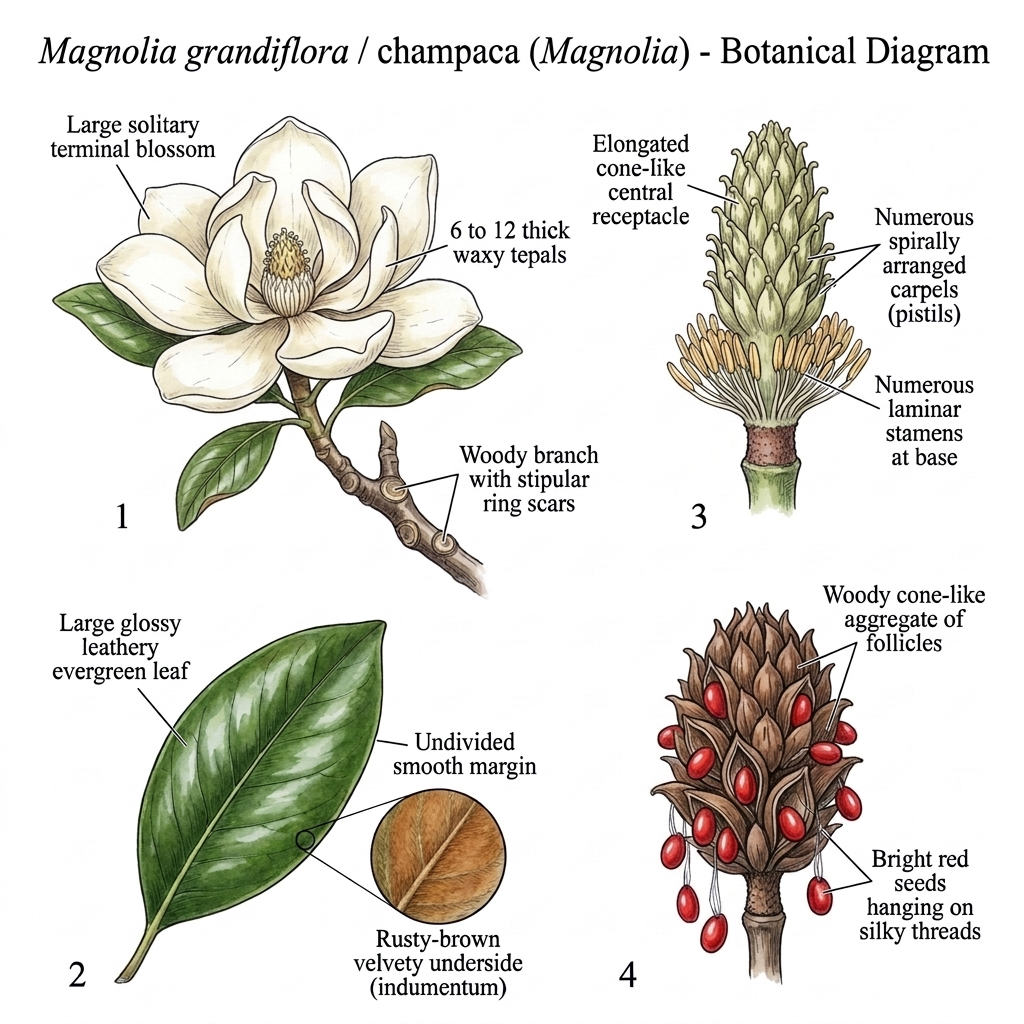
- Solitary blooms with 6 to 15 tepals: Flowers lack distinct sepals and petals, displaying 6 to 15 creamy-white or golden-orange tepals around a cone-like core.
- Hard, woody bark with clear sap: True woody tree trunks and twigs with ring-like stipular scars around each node and zero milky latex.
- Glossy evergreen leaves with rusty undersides: Stiff, leathery dark-green leaves distributed evenly along branches, often velvety reddish-brown beneath.
- Woody cone-like fruit with red seeds: Flowers mature into an aggregate woody cone that splits open in autumn to dangle bright red seeds on silky threads.
Which Should You Choose?
- Choose Plumeria (Frangipani) if you garden in a hot, frost-free climate—or want a drought-tolerant patio container plant that can be overwintered indoors—and crave clusters of tropical, lei-worthy pinwheel blossoms.
- Choose Magnolia if you want a cold-hardy, long-lived, pet-safe evergreen or deciduous shade tree with architectural leathery foliage and massive, lemon-scented or golden-spiced solitary blossoms.