
Passion Flower vs Clematis
Passion Flower or Clematis? Compare exotic flower structure, climbing tendrils vs leaf petioles, cold hardiness, and fruit production. Side-by-side vine guide.
Key Differences: Passion Flower vs Clematis
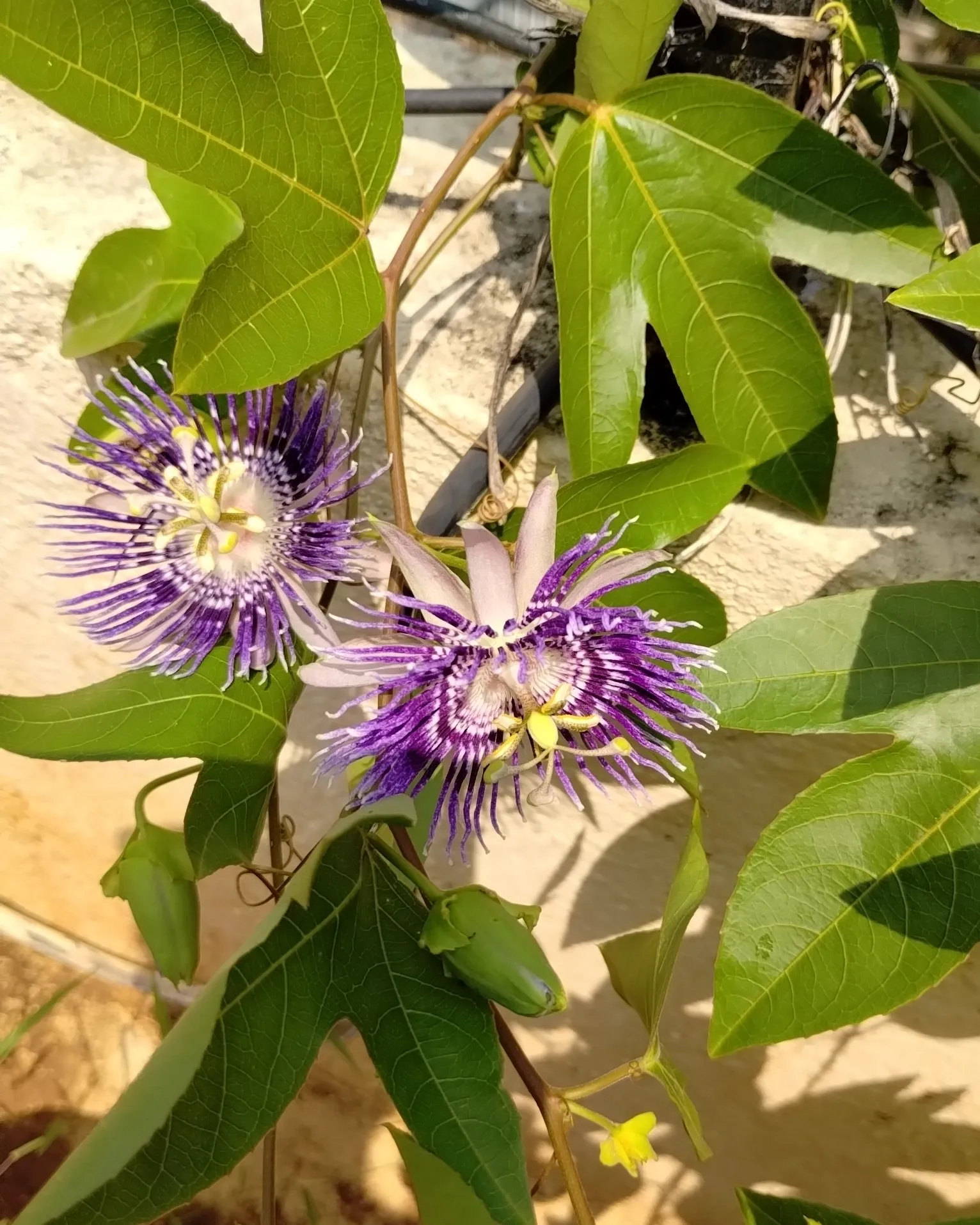
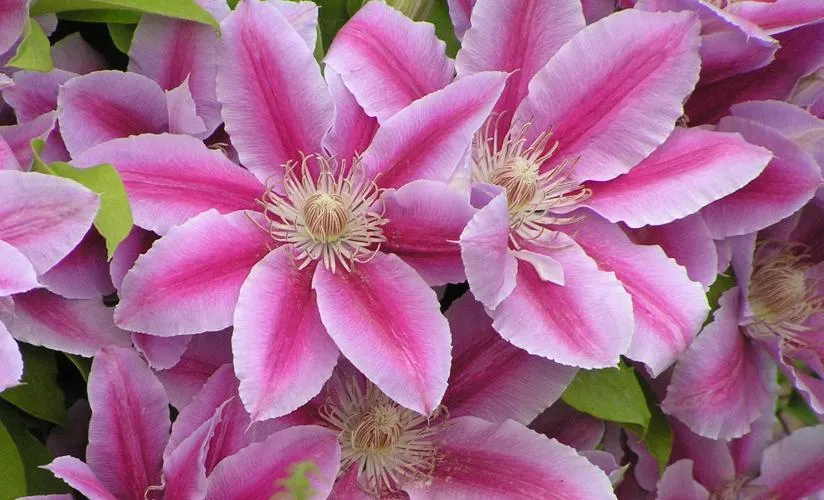
Passion Flower (Passiflora incarnata) and Clematis (Clematis spp.) are two of the most breathtaking climbing flowering vines available to gardeners, but they belong to different plant families and display completely distinct floral architecture and climbing mechanisms. Passion Flower (Passifloraceae) is famous for its intricate, alien-like flower design featuring 10 white sepals/petals, a central fringe corona of purple filament threads, and an elevated central column (androgynophore) bearing 5 yellow anthers and 3 purple stigmas, followed by edible passion fruit (maypops). Clematis (Ranunculaceae) features flat, star- or bell-shaped blossoms with 4 to 8 petaloid sepals in a vast color range. Passion Flower climbs using coiled tendrils; Clematis climbs by twisting its leaf stalks (petioles) around supports.
Botanical & Care Comparison Table
| Feature | Passion Flower | Clematis |
|---|---|---|
| Family | Passifloraceae | Ranunculaceae |
| Colors Available | Purple, Blue, White, Pink, Red | Purple, Blue, Pink, Red, White, Yellow |
| Bloom Season | Mid-summer to autumn (July–October) J F M A M J J A S O N D | Spring through autumn (May–October) depending on cultivar J F M A M J J A S O N D |
| Maintenance Level | Low — prune in spring; root-suckers can spread in warm climates | Moderate — pruning group depends on cultivar (Group 1, 2, or 3) |
| Sunlight Needs | Full Sun (6+ hours daily for heavy bloom) | Full Sun to Part Shade (head in sun, roots shaded) |
| Watering Needs | Moderate — deep watering during summer heat; drought-tolerant once established | Regular watering; prefers cool moist root zone |
| Pet Toxicity | ✅ Non-toxic / Safe (Passiflora incarnata is non-toxic; produces edible fruit) | ⚠️ Toxic to dogs & cats (contains protoanemonin oral irritant) |
| Fragrance | Sweet fruity/clove fragrance | Minimal to none in most cultivars |
| Pests & Diseases | Susceptible to passion vine caterpillars (gulf fritillary larvae). | Susceptible to Clematis wilt and powdery mildew. |
| Typical Uses | Tropical arbors, butterfly larval host plant, fruit production, herbal tea | Trellises, garden arches, growing through shrubs, classic cottage garden walls |
How to Spot the Differences (Visual Identification)
Spot the features below to easily distinguish between the two plants in the wild or garden:
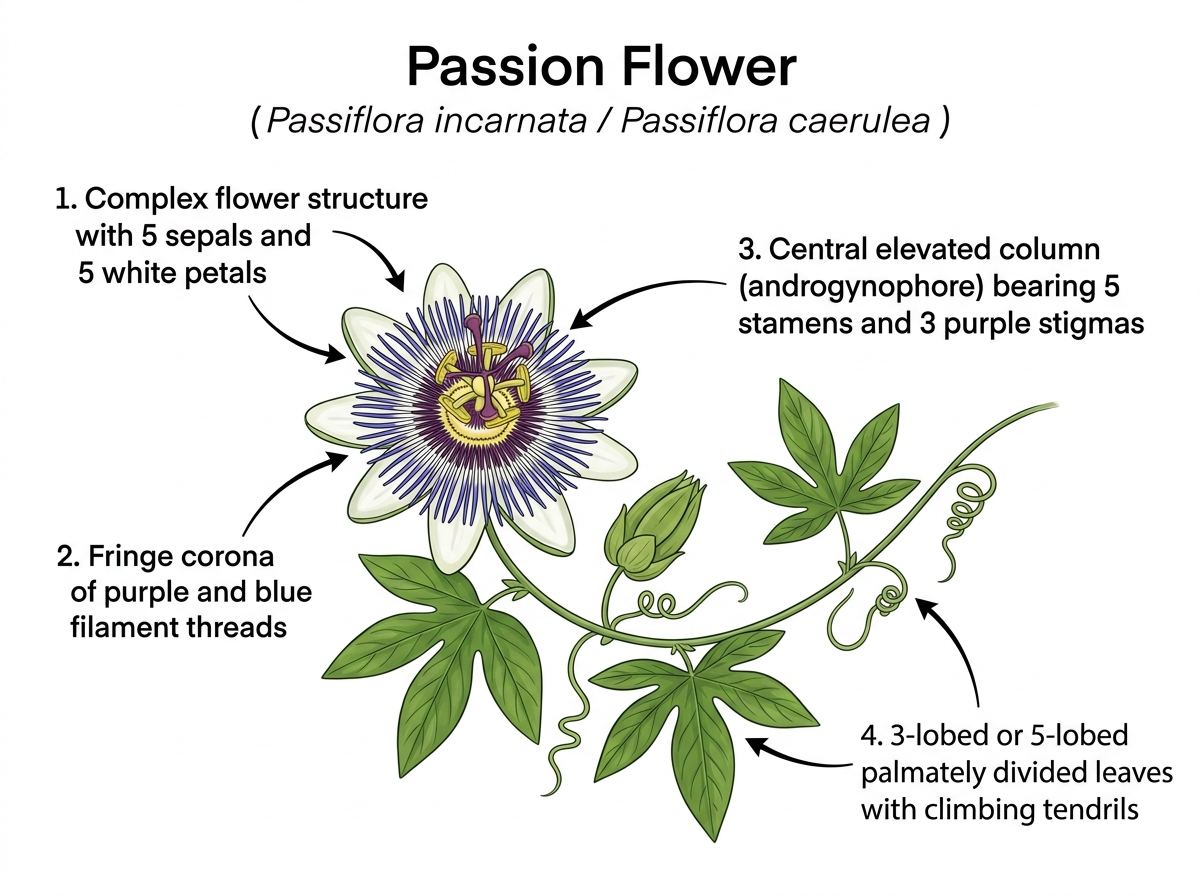
- Intricate corona & elevated column: Exotic blossom with a fringe of purple filament threads (corona) and elevated central stamens/pistil.
- Coiling stem tendrils: Climbs by sending out thin spring-like tendrils from leaf axils to wrap around supports.
- Palmately lobed leaves: Leaves are deeply divided into 3 to 5 finger-like lobes with glands on leaf stalks.
- Edible fruit (Maypop / Passion fruit): Flowers are followed by round or oval fruit that turns yellow-orange when ripe.
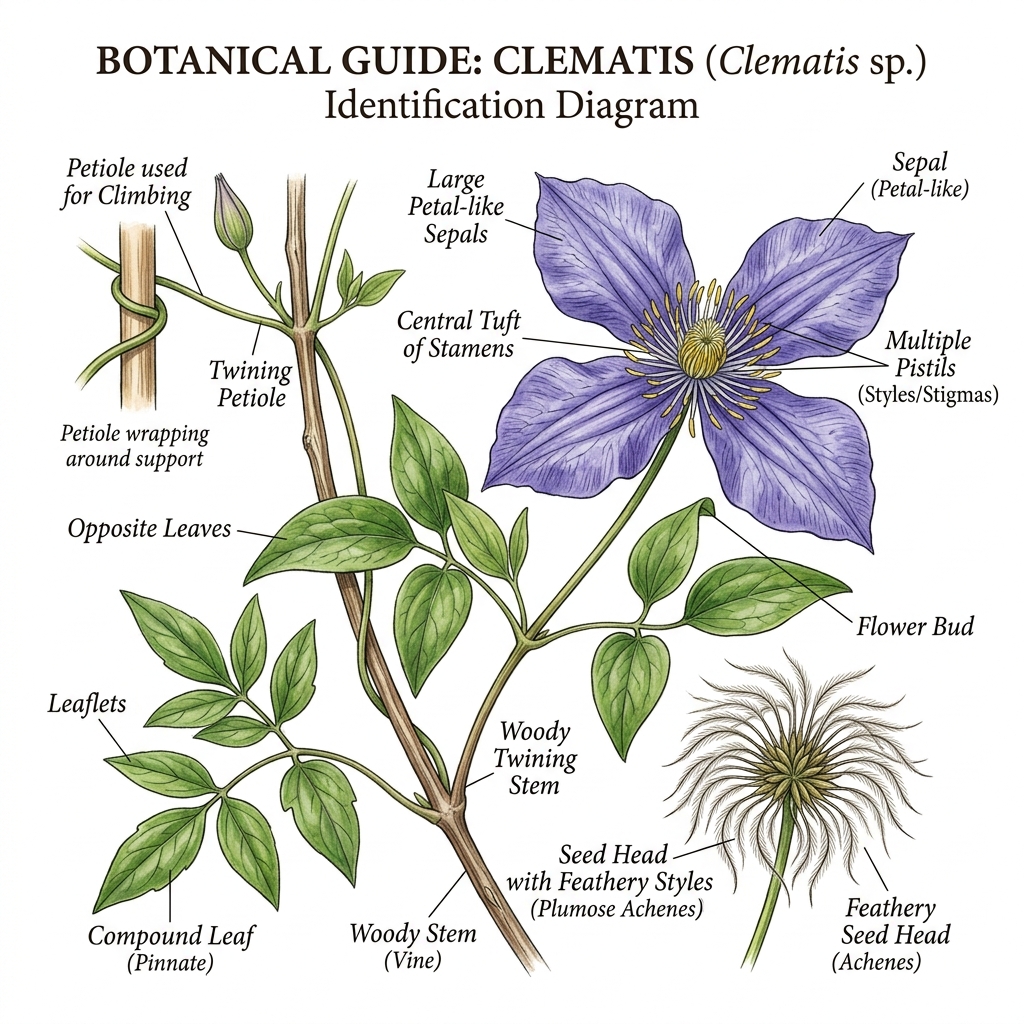
- Star or bell-shaped sepals: Flowers are flat star or saucer forms with 4–8 petaloid sepals (no fringe corona column).
- Twisting leaf petioles: Climbs by wrapping its flexible leaf stalks directly around trellises and wires.
- Compound leaflets: Leaves are divided into 3–5 oval leaflets with twisting leaf stems.
- Fluffy silver seed heads: Spent flowers form decorative silky, feathery seed heads in autumn.
Which Should You Choose?
- Choose Passion Flower if you want an exotic, non-toxic vine with complex alien-like flowers that attracts Gulf Fritillary butterflies and produces edible fruit in warm sunny spots.
- Choose Clematis if you want classic garden elegance, a wider color palette, cold-hardy performance in northern gardens, and fluffy decorative seed heads in autumn.