
Whitefly Pest
Bemisia tabaci, Trialeurodes vaporariorum
About Whitefly Pest
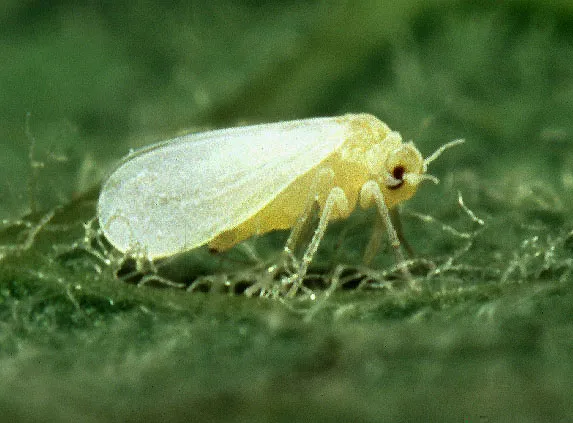
Whiteflies are tiny, sap-sucking insects belonging to the family *Aleyrodidae* under the order *Hemiptera*. Despite their name, they are not true flies, but are closely related to aphids, scales, and mealybugs. The Silverleaf Whitefly (*Bemisia tabaci*) and Greenhouse Whitefly (*Trialeurodes vaporariorum*) are notorious greenhouse and field pests. They congregate in massive numbers on leaf undersides, draining phloem sap and weakening plants.
Identifying whiteflies is straightforward due to their cloud-like swarming behavior. The adults are minuscule (1–2 mm long) with powdery-white wings and pale yellow bodies. When a branch is shaken, they flutter upward in a distinct cloud of white before settling back down. Foliage symptoms include leaf yellowing, drying, premature leaf drop, and sticky honeydew residues that attract black sooty mold.
Whiteflies infest high-value vegetables, greenhouse crops, and flowers.
| Crop/Plant Type | Severity Rating | Impact Description |
|---|---|---|
| Tomatoes, Peppers, Cucurbits | Extreme (⭐⭐⭐) | Vectors Tomato Yellow Leaf Curl virus, causing stunted growth, leaf curl, and total fruit yield loss |
| Greenhouse Poinsettias & Hibiscus | High (⭐⭐) | Severe foliar yellowing, sticky leaves, and thick black sooty mold ruins commercial value |
| Cotton & Sweet Potatoes | High (⭐⭐) | Fiber quality degradation from honeydew sticking, chlorosis, and stunted plant vigor |
Management focuses on early detection using yellow sticky traps. Introducing biological predators like the parasitic wasp *Encarsia formosa* or ladybugs provides effective organic control. Foliar sprays of neem oil, horticultural oils, or insecticidal soaps smother the immobile nymph stage. Chemical control includes systemic neonicotinoids like imidacloprid. For detailed sucking pest control, refer to our Plant Disease Identifier Hub, or see related profiles like Aphid, Scale Insect, and Spider Mite.
Taxonomy & Features
- Cloud-Like Flight: Swarms upward in a fluttering white cloud when host plant leaves are disturbed or shaken.
- Powdery White Wings: Covered in a fine, white, powdery wax coating that protects them from drying out.
- Leaf Underside Congregations: Adults and scale-like nymphs feed almost exclusively on the undersides of leaves.
- Sticky Honeydew & Sooty Mold: Excretes large volumes of sugary waste, attracting black sooty mold that blocks light.
- Scale-Like Nymphs: The young nymphs lose their legs after hatching, looking like small, translucent green scales.
- Lethal Virus Vector: Transmits over 100 plant viruses, including Begomoviruses and Yellow Leaf Curl.
Seasonal Outbreak Calendar
Outbreak risk and activity timeline for Whitefly Pest based on seasonal climate patterns:
Names in Different Languages
Affected Plant Species
Vegetables & Crops
- Tomato
- Pepper
- Eggplant
- Cucumber
- Squash
- Sweet Potato
Flowers & Ornamentals
- Poinsettia
- Hibiscus
- Begonia
- Fuchsia
- Chrysanthemum
Fruits & Berries
- Citrus
- Grape
- Strawberry
- Cotton
Prevention & Cure
Natural & Organic Methods
- Parasitic Wasps: Release Encarsia formosa wasps, which lay eggs inside whitefly nymphs, turning them black.
- Horticultural Oils: Spray lightweight mineral oil or neem oil on leaf undersides to smother eggs and nymphs.
- Yellow Sticky Traps: Hang sticky yellow cards above the plant canopy to trap flying adults.
Chemical & Professional Control
- Systemic Soil Drenches: Apply systemic neonicotinoids like imidacloprid to protect new growth.
- Acetamiprid Sprays: Spray acetamiprid to control adult populations and interrupt the virus transmission.
- Insect Growth Regulators: Apply pyriproxyfen to prevent whitefly nymphs from maturing into reproductive adults.
Frequently Asked Questions
Why do whitefly infestations explode in greenhouses?
Greenhouses provide warm temperatures, low wind, and shelter from natural predators. Combined with their rapid life cycle (21 days), their population can grow exponentially.
How do I tell if whitefly nymphs are present?
Inspect the undersides of leaves. Nymphs are tiny, oval, flat, translucent-green disks that do not move, resembling soft scale insects.
Can I control whiteflies with water sprays?
Yes. Forceful water sprays can knock adult whiteflies off leaves, but they fly back. Using insecticidal soap or oil is much more effective to kill the immobile nymphs.
Recommended diagnostics based on crop family and symptoms:
Remedy Disclaimer & Safety Notice
This disease guide is for educational screening purposes only. Pathogen behavior, severity, and host susceptibility can vary dramatically based on seed variety, weather conditions, and regional microclimates. Chemical pesticides and organic treatments are subject to strict regional environmental regulations and registration mandates. Please verify all chemical registrations and review manufacturer safety labels carefully with local certified agronomists or agricultural extension service offices before applying.