
Wisteria vs Clematis
Wisteria or Clematis? Compare these two popular climbing vines by flower type, vine structure, fragrance, bloom time, toxicity, and garden use. Full botanical comparison.
Key Differences: Wisteria vs Clematis
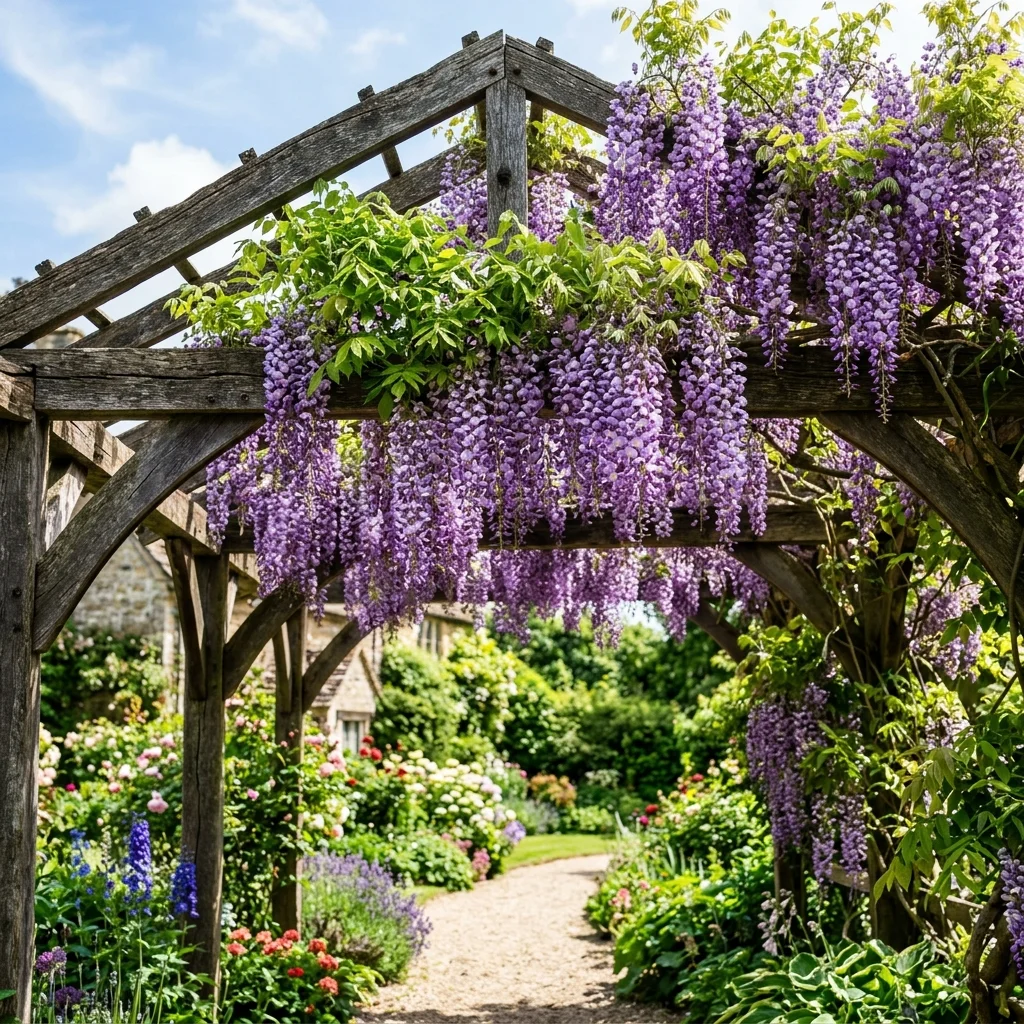
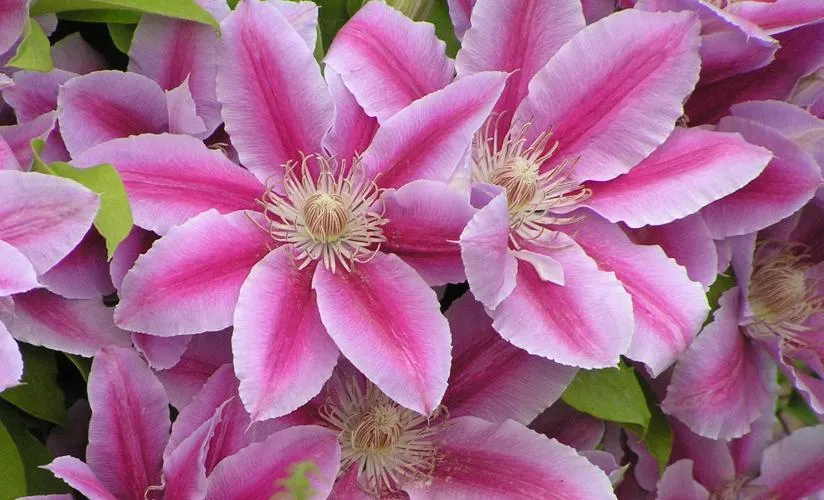
Wisteria and Clematis are both popular flowering climbing vines, but they differ dramatically in flower structure, growth habit, and garden management needs. Wisteria (most commonly Wisteria sinensis or Wisteria floribunda) produces dramatic pendulous clusters (racemes) of small, pea-like purple or white flowers that hang down in fragrant grape-like bunches up to 18 inches long, blooming explosively for 2–3 weeks in spring. Clematis produces large, solitary, star or saucer-shaped flowers throughout the growing season with individual blooms up to 6 inches across in a vast color range. Wisteria is an extremely vigorous, woody vine that can take 5–7 years to bloom and can eventually destroy structures if not pruned twice yearly; Clematis is far more manageable, growing 5–12 feet with far less structural risk.
Botanical & Care Comparison Table
| Feature | Wisteria | Clematis |
|---|---|---|
| Family | Fabaceae | Ranunculaceae |
| Colors Available | Purple-Blue, Lavender, White, Pink (variety-dependent) | Purple, Blue, Pink, Red, White, Bi-color, Yellow (vast range) |
| Bloom Season | Spring (April–May), brief 2–3 week explosion, occasional second flush in late summer J F M A M J J A S O N D | Spring through autumn (May–October) depending on variety and pruning group J F M A M J J A S O N D |
| Maintenance Level | High — requires two hard prunings per year to control growth and manage structure damage | Moderate — pruning method depends on variety group (Group 1/2/3) |
| Sunlight Needs | Full Sun (6+ hours) for best flowering | Full Sun to Part Shade (head in sun, roots shaded) |
| Watering Needs | Moderate — drought-tolerant once established | Regular watering especially in first two years |
| Pet Toxicity | ⚠️ Toxic to cats and dogs (wisterin glycoside — causes vomiting, diarrhea) | ⚠️ Mildly toxic to cats and dogs (irritant glycosides) |
| Fragrance | Powerfully sweet — one of the most fragrant garden plants | Minimal to none (some species have very faint fragrance) |
| Pests & Diseases | Susceptible to Powdery Mildew and Scale Insects. | Susceptible to Powdery Mildew and Clematis Wilt. |
| Typical Uses | Large pergolas, garden arches, mature walls — requires strong permanent support | Trellises, fences, obelisks, through shrubs — versatile scale for most gardens |
How to Spot the Differences (Visual Identification)
Spot the features below to easily distinguish between the two plants in the wild or garden:
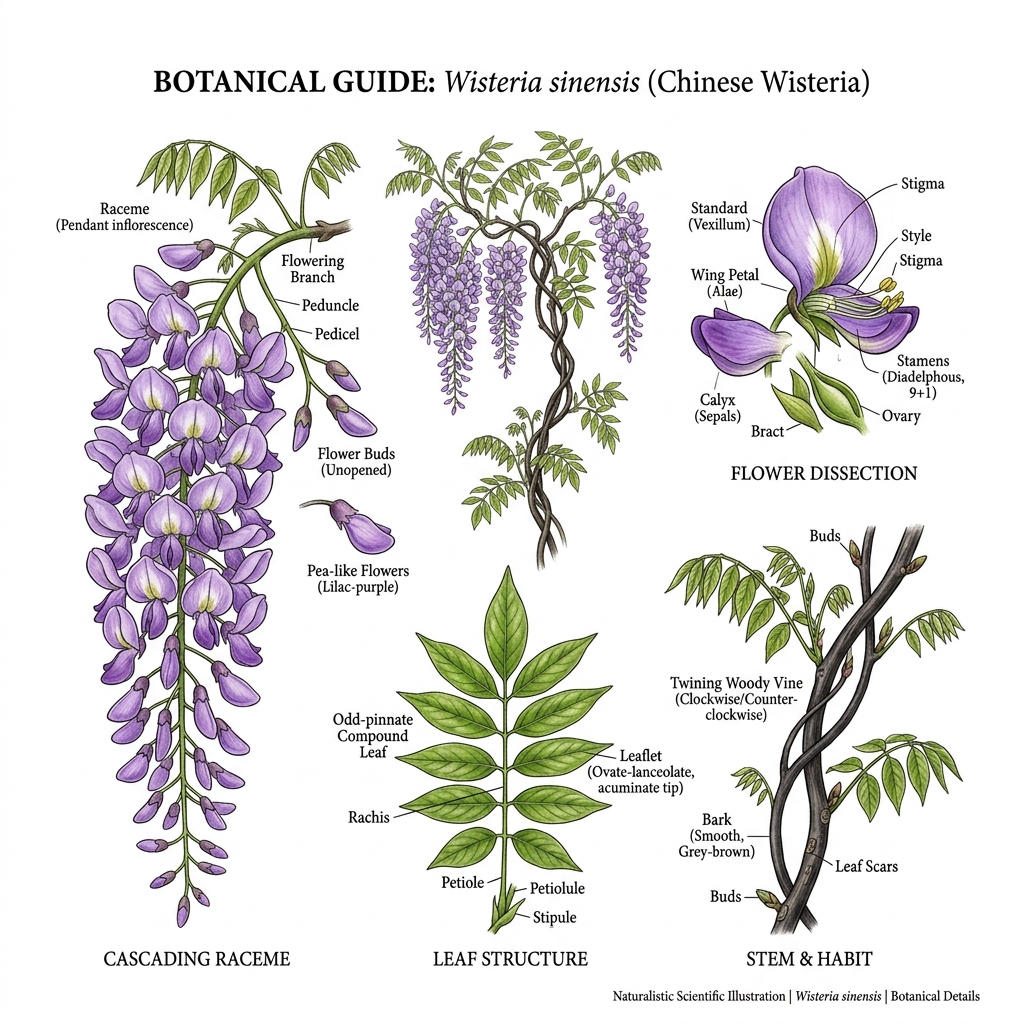
- Pendulous flower racemes: Long, hanging clusters (up to 18 inches) of small pea-like flowers hanging downward — the signature Wisteria look.
- Pinnate compound leaves: Leaves are divided into 9–13 oval leaflets arranged along a central stem — feathery appearance.
- Massive woody trunk: Older plants develop a thick, gnarled, woody main trunk that can be mistaken for a tree trunk. Very strong stems.
- Intense sweet fragrance: One of the most powerfully fragrant garden plants — scent carries 30+ feet on warm spring days.
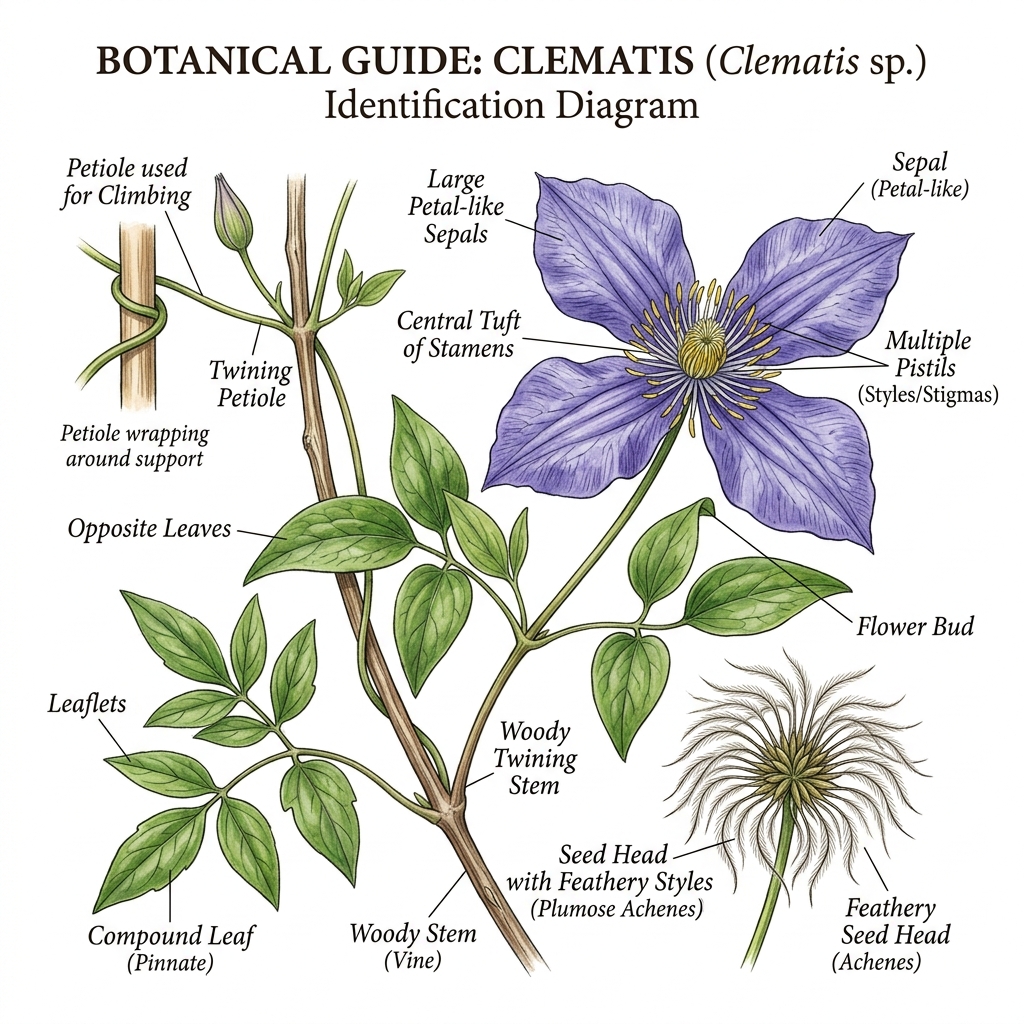
- Large solitary star flowers: Individual flowers 2–6 inches across with 4–8 petaloid sepals in a flat or saucer-shape — no hanging clusters.
- Compound leaves with clinging petioles: Leaves are divided into 3–5 leaflets with leaf stalks that twist and coil around supports for climbing.
- Slender flexible stems: Stems remain relatively thin and flexible. No thick woody trunk develops — much easier to manage than Wisteria.
- Feathery seed heads: After flowering, forms distinctive fluffy, silver-grey seed heads like a ball of soft hair — highly decorative in autumn.
Which Should You Choose?
- Choose Wisteria if you have a very large, strong, permanent structure (a heavy pergola or solid masonry wall), patience for 5–7 years before first bloom, and can commit to twice-yearly hard pruning. The reward is an unforgettable spring display with intoxicating fragrance.
- Choose Clematis if you want more manageable growth, a much wider color range, continuous flowering from spring to autumn, and versatility for smaller structures like trellises, fences, or growing through shrubs. Clematis is the better choice for most home gardens.