
Black Eyed Susan vs Coneflower
Compare Rudbeckia (Black Eyed Susan) and Echinacea (Coneflower). Learn to spot the differences in leaves, petals, cones, and growing tips.
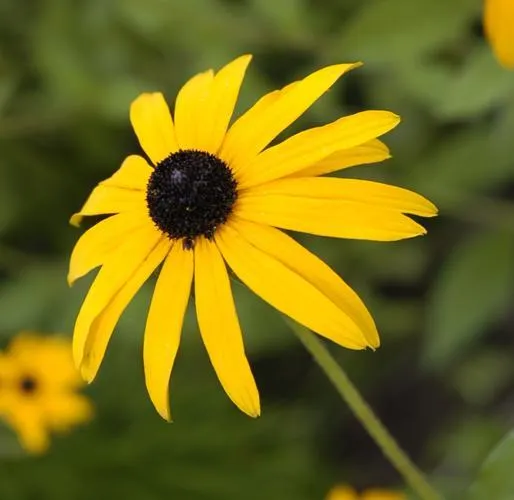
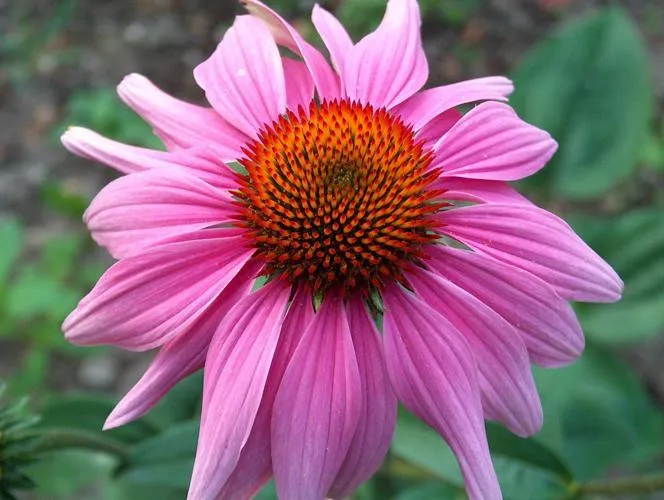
Key Differences: Black Eyed Susan vs Coneflower
The primary difference between Black Eyed Susans (Rudbeckia) and Coneflowers (Echinacea) is their cone structure and longevity. Black Eyed Susans feature bright golden-yellow ray petals around a dark, flat, chocolate-brown button center, behaving as short-lived perennials or biennials that self-seed aggressively. Coneflowers feature downward-sweeping pink, purple, or white petals around a prominent, spiky, copper-orange cone that rises significantly above the petals, growing as exceptionally hardy, long-lived perennials.
Botanical & Care Comparison Table
| Feature | Black eyed Susan | Purple Coneflower (Echinacea) |
|---|---|---|
| Family | Asteraceae | Asteraceae |
| Colors Available | Golden-yellow, bronze, orange-red | Purple, pink, white, yellow, orange |
| Bloom Season | Mid-summer through autumn (prolific) J F M A M J J A S O N D | Early summer until frost J F M A M J J A S O N D |
| Maintenance Level | Low (self-sows easily, requires deadheading) | Very low (drought-resistant, deep taproot) |
| Sunlight Needs | Full Sun (6+ hours direct daily) | Full Sun to very light shade |
| Watering Needs | Moderate (prefers moist, well-draining soil) | Low to average (drought-tolerant once established) |
| Pet Toxicity | Non-toxic (foliage is rough to chew) | ✅ Non-toxic (Echinacea is used medicinally) |
| Fragrance | Faint, earthy or herbal | Sweet and floral (attracts bees and butterflies) |
| Pests & Diseases | Highly susceptible to Septoria Leaf Spot and Rust. | Susceptible to Aster Yellows and Powdery Mildew. |
| Typical Uses | Wildflower meadows, mass plantings, cottage gardens | Prairie restorations, medicinal gardens, pollinator beds |
How to Spot the Differences (Visual Identification)
Spot the features below to easily distinguish between the two plants in the wild or garden:
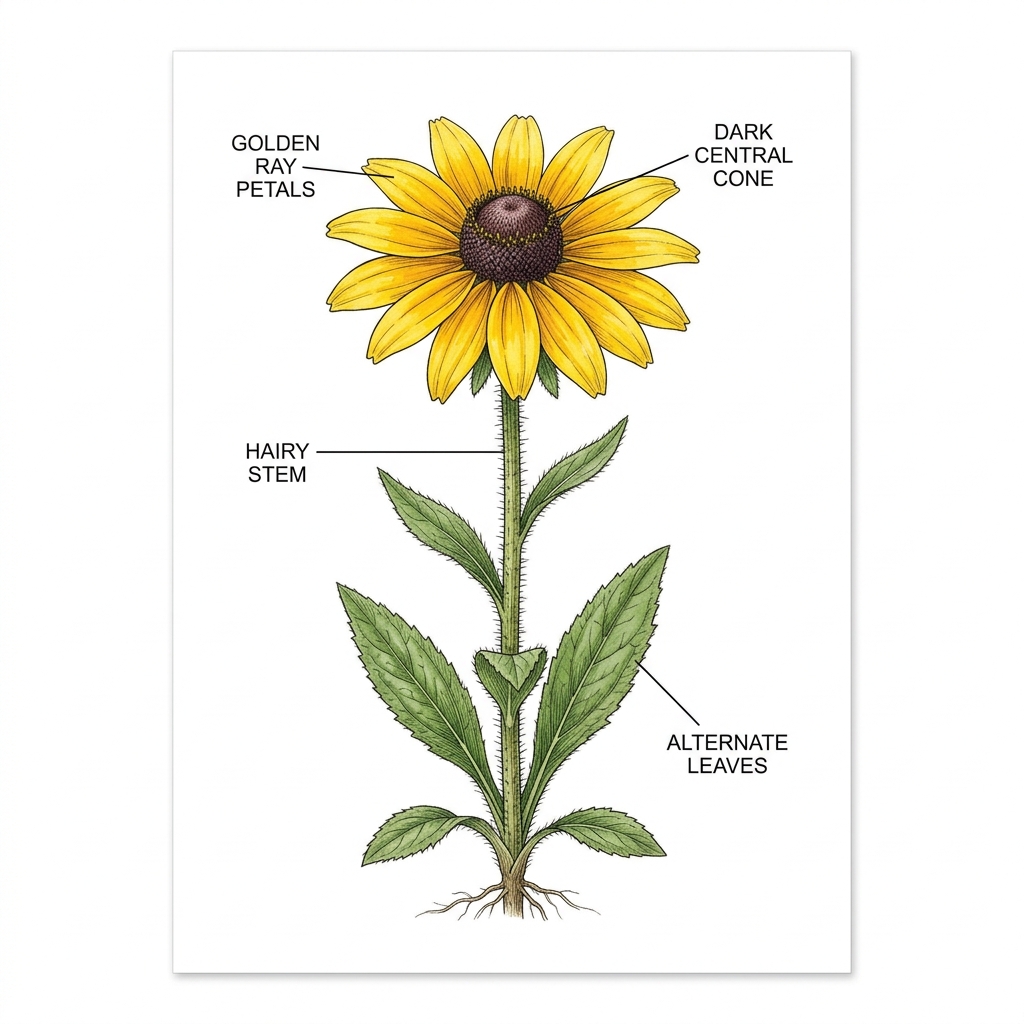
- Flat dark centers: Central disc is a smooth, button-like dark brown to black cone.
- Golden yellow ray petals: Petals are flat, horizontal, and always a solid golden-yellow.
- Rough, hairy stems and leaves: Stems and leaves are covered in coarse, scratchy hairs.
- Short-lived biennial habit: Individual plants last 2-3 years but replenish via seed.
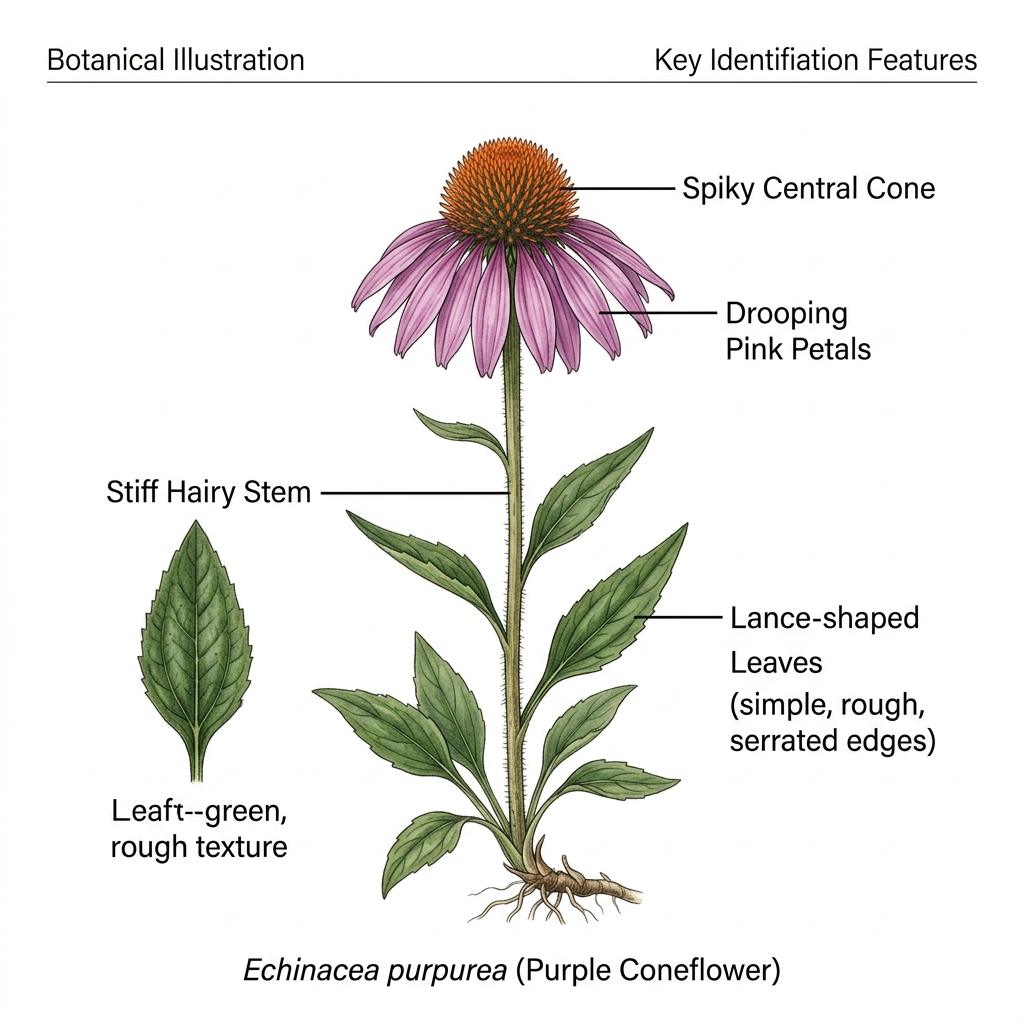
- Spiky raised cones: Center is a large, spiky, dome-shaped copper-orange cone containing stiff bristles.
- Reflexed pink/purple petals: Petals are classically purple, pink, or white, sloping downwards from the center.
- Smooth to slightly rough leaves: Leaves are broader, dark green, and lack the coarse hairs of Rudbeckia.
- Long-lived perennial habit: Extremely deep taproots allow the same plant to return for decades.
Which Should You Choose?
- Choose Black Eyed Susan (Rudbeckia) if you want instant, massive sweeps of bright golden-yellow color and have space where they can self-seed and spread naturally.
- Choose Coneflower (Echinacea) if you want a permanent, drought-tolerant perennial that returns year after year, supports winter birds with seed heads, and has medicinal properties.