
Bleeding Heart Vine vs Dutchman's Breeches
Bleeding Heart Vine or Dutchman's Breeches (Dicentra)? Compare tropical climbing vine vs native woodland wildflower. Botanical differences, toxicity & growing guide.
Key Differences: Bleeding Heart Vine vs Dutchman's Breeches
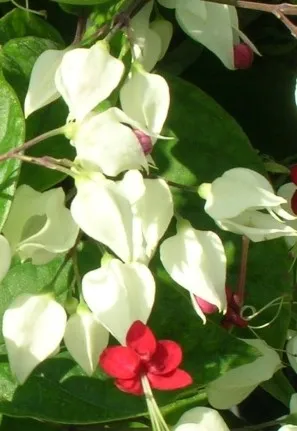
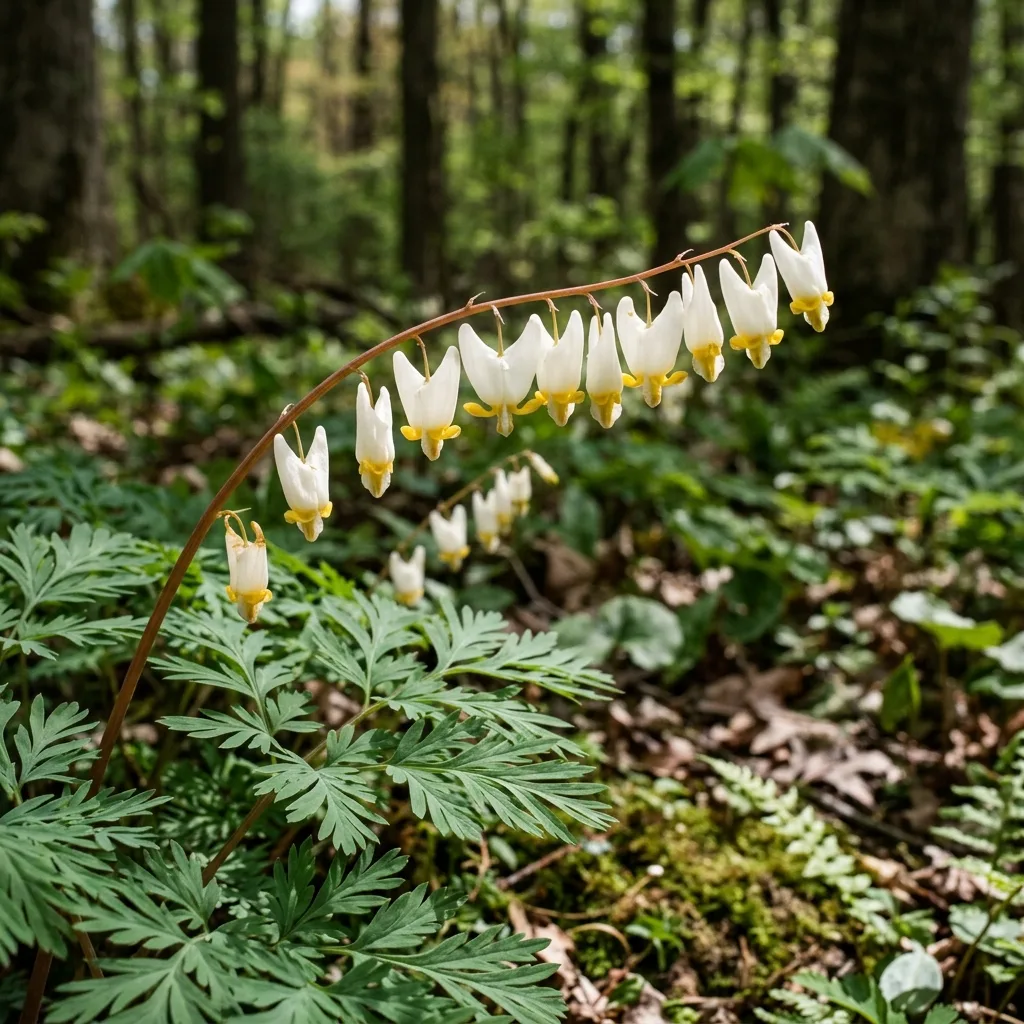
Bleeding Heart Vine (Clerodendrum thomsoniae) and Dutchman's Breeches (Dicentra cucullaria) are frequently confused because of overlapping common names and heart- or pant-shaped flower geometry, but they belong to entirely different plant families and climate zones. Bleeding Heart Vine is a tropical woody climbing vine in the Mint family (Lamiaceae) native to West Africa, featuring puffy white heart-shaped calyces from which crimson-red petals emerge. Dutchman's Breeches is a spring-ephemeral woodland wildflower in the Poppy family (Papaveraceae / Fumariaceae) native to North American hardwood forests, featuring upside-down white flowers shaped like pairs of hanging pantaloons above lacy fern-like foliage. Bleeding Heart Vine is non-toxic to pets, while Dutchman's Breeches contains isoquinoline alkaloids toxic to cattle, dogs, and cats.
Botanical & Care Comparison Table
| Feature | Bleeding Heart Vine | Dutchman's Breeches |
|---|---|---|
| Family | Lamiaceae | Papaveraceae |
| Colors Available | Pure White calyx with Crimson Red corolla | White with yellow-tipped spurs |
| Bloom Season | Late spring through autumn (May–October) J F M A M J J A S O N D | Early spring (April–May), brief 3-week bloom before summer dormancy J F M A M J J A S O N D |
| Maintenance Level | Moderate — prune yearly; protect from winter cold | Very Low — naturalizes in woodland soil; zero maintenance |
| Sunlight Needs | Bright Indirect Light or morning sun | Part Shade to Full Shade (woodland understory) |
| Watering Needs | Regular moist soil; high humidity needed | Moist spring soil; drought-tolerant during summer dormancy |
| Pet Toxicity | ✅ Non-toxic to cats and dogs | ⚠️ Toxic to dogs, cats, and livestock (isoquinoline alkaloids) |
| Fragrance | Faint sweet fragrance | No significant fragrance |
| Pests & Diseases | Susceptible to mealybugs and spider mites in dry indoor air. | Virtually disease-free in native woodland habitat. |
| Typical Uses | Indoor trellises, warm patio containers, tropical greenhouses | Native shade gardens, rock gardens, woodland wildflower beds |
How to Spot the Differences (Visual Identification)
Spot the features below to easily distinguish between the two plants in the wild or garden:
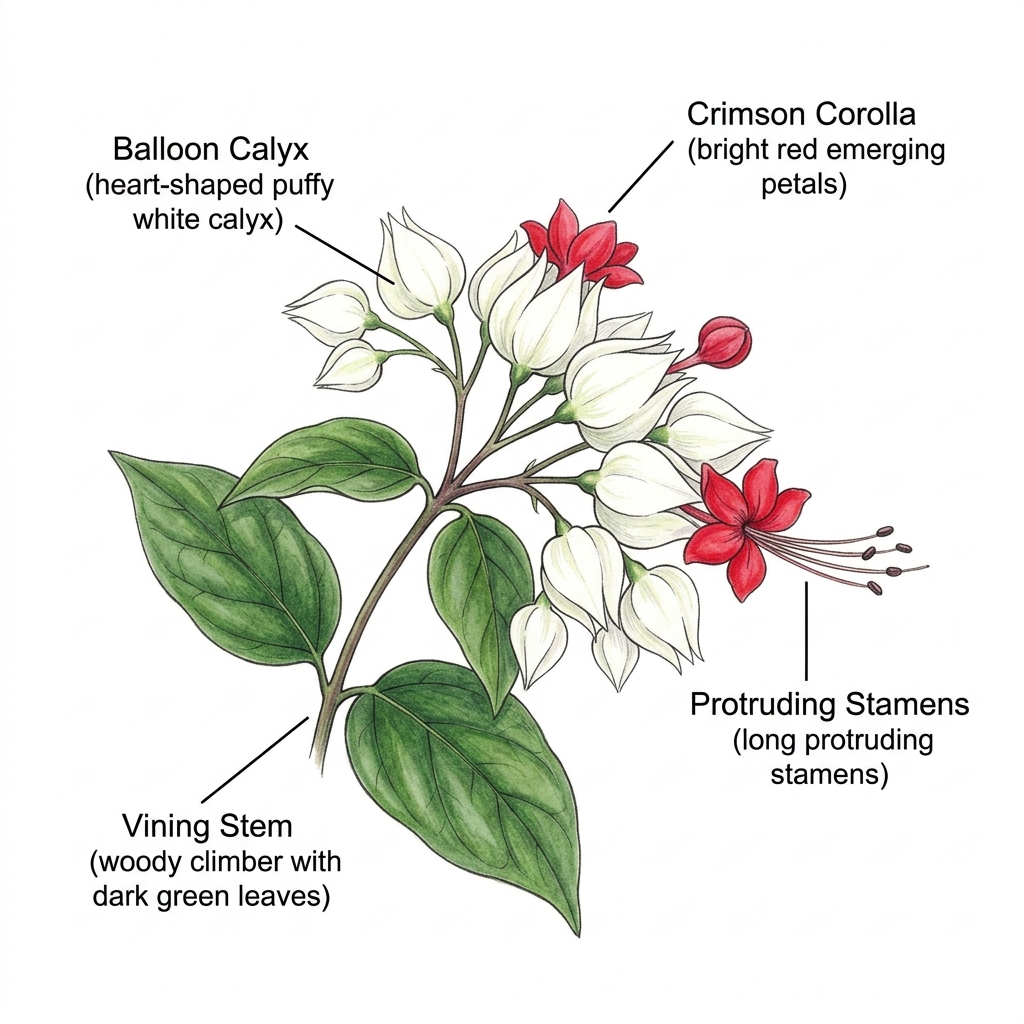
- Tropical climbing vine: Woody vining stem climbing 10–15 feet on trellises with dark green oval leaves.
- White calyx with red corolla: Puffy white heart-shaped calyx balloons with bright red petals emerging from the tip.
- Tropical indoor / container plant: Requires warm temperatures (above 55°F) and high humidity (Zones 9–11).
- ✅ NON-TOXIC TO PETS: Completely safe for dogs and cats.
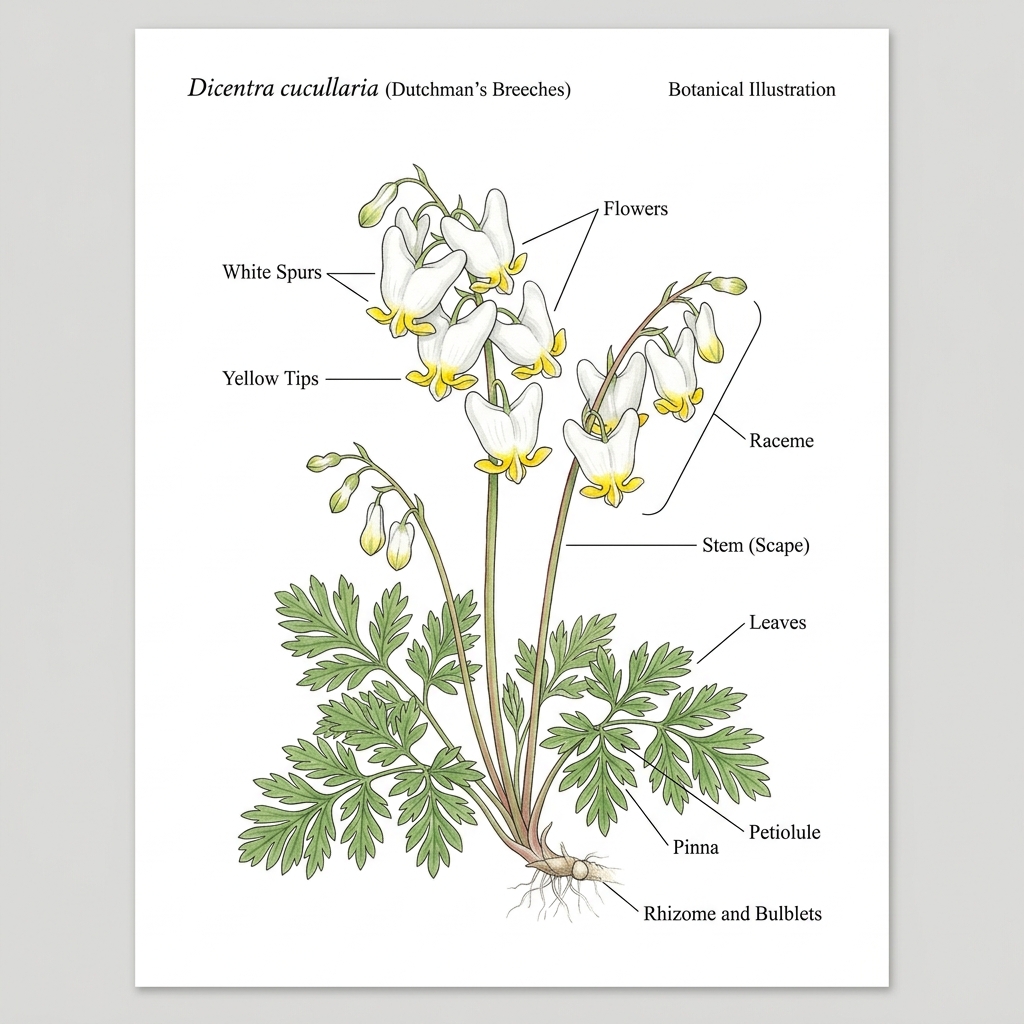
- Spring ephemeral wildflower: Low herbaceous perennial (6–12 inches) that blooms in early spring and goes dormant by summer.
- Dutch pantaloons shape: White double-spurred flowers dangling in rows along leafless stems, resembling upside-down white breeches.
- Lacy fern-like foliage: Fine, delicate, blue-green divided leaves arising from small scaly bulbs.
- ⚠️ TOXIC TO PETS: Contains isoquinoline alkaloids (protopine) that cause trembling and GI distress in pets.
Which Should You Choose?
- Choose Bleeding Heart Vine (Clerodendrum) if you want a non-toxic, long-blooming tropical container vine for bright indoor spots or warm summer patios.
- Choose Dutchman's Breeches (Dicentra) if you want a native, cold-hardy spring wildflower for a shady woodland garden bed.