
Cosmos vs Zinnia
Cosmos or Zinnia for your summer garden? Compare bloom time, leaf shape, flower structure, heat tolerance, and care requirements. Full botanical comparison with growing tips.
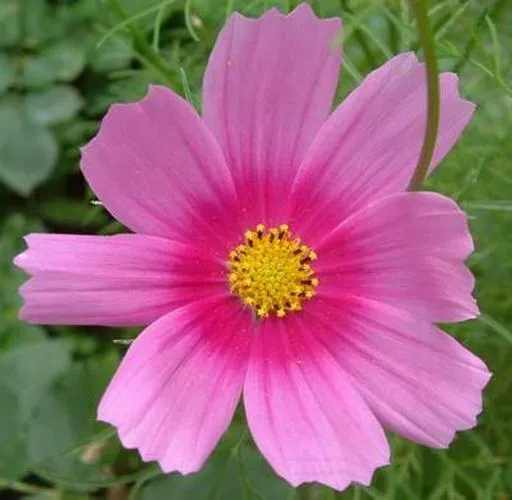
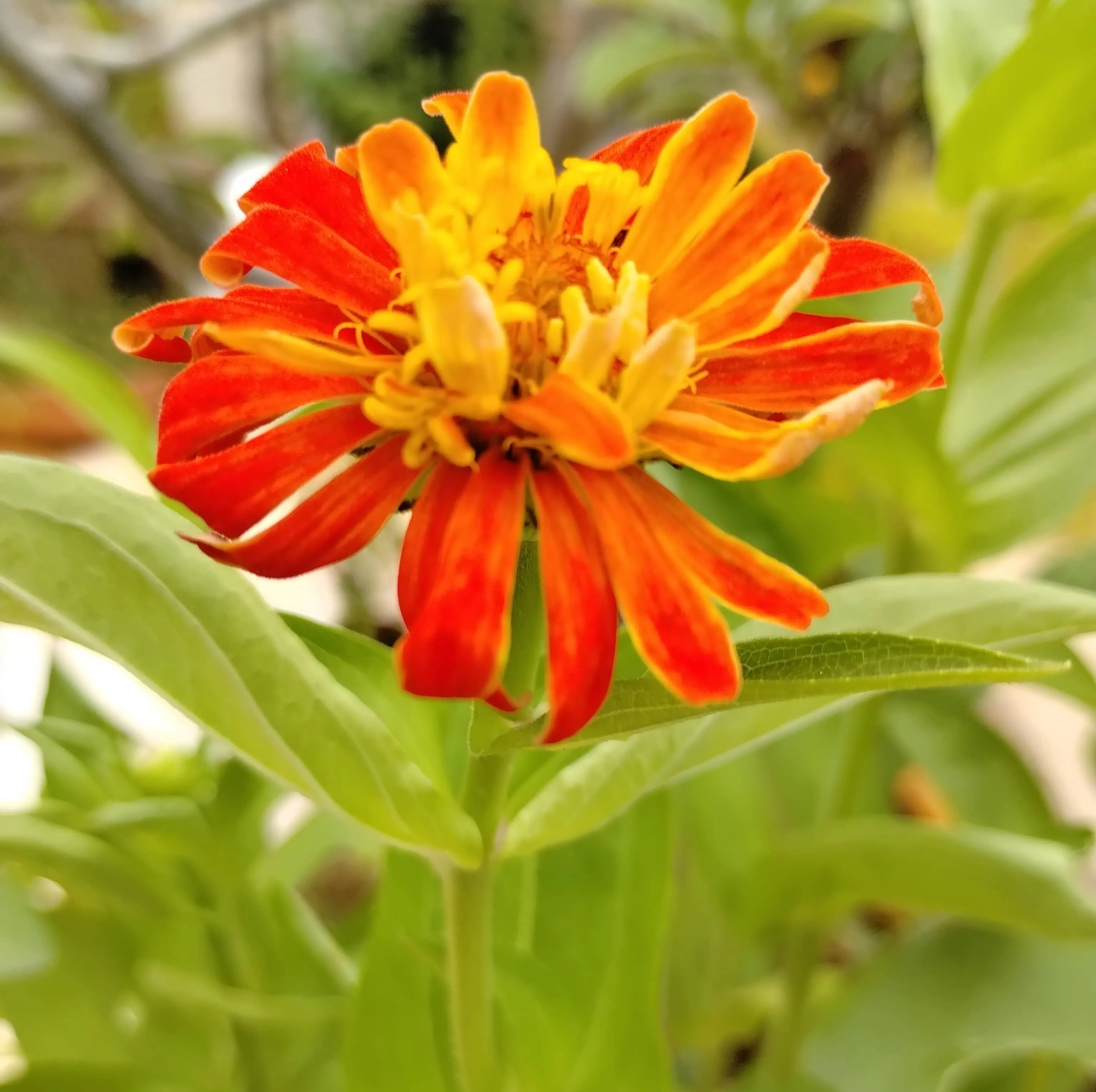
Key Differences: Cosmos vs Zinnia
Cosmos and Zinnia are both beloved summer annuals in the daisy family (Asteraceae) that are easy to grow from seed, but they have distinctly different appearances, growing habits, and best uses. Cosmos (Cosmos bipinnatus) is a tall, airy, open plant with feathery, fern-like foliage and delicate, single-layer daisy flowers in soft pastel pinks, whites, and magentas — creating a wildflower meadow effect. Zinnia (Zinnia elegans) is a denser, more compact plant with broad, opposite leaves and thick, densely-petaled blooms that come in a blazing, saturated range of colors. Cosmos tolerates poor soil and heat without losing its delicate appearance; Zinnia thrives in full summer heat but needs good soil. For pollinators, both are excellent — Cosmos attracts butterflies and bees, while Zinnia is especially attractive to monarch butterflies.
Botanical & Care Comparison Table
| Feature | Mexican Aster | Zinnia |
|---|---|---|
| Family | Asteraceae | Asteraceae |
| Colors Available | Pink, White, Magenta, Crimson | Orange, Red, Yellow, Pink, Purple, White, Bi-color — widest range |
| Bloom Season | Summer through autumn (July–October) — continuous bloom once started J F M A M J J A S O N D | Summer through frost (June–October) — excellent long season J F M A M J J A S O N D |
| Maintenance Level | Very low — thrives in poor soil, minimal fertilizing needed | Low — deadheading extends bloom; benefits from regular feeding |
| Sunlight Needs | Full Sun (becomes floppy in shade) | Full Sun (thrives in heat — the hotter the better) |
| Watering Needs | Low — drought-tolerant once established; overwatering causes excess foliage | Moderate — regular watering but good drainage essential to prevent powdery mildew |
| Pet Toxicity | ✅ Non-toxic to cats, dogs, and humans | ✅ Non-toxic to cats, dogs, and humans |
| Fragrance | Light, sweet, delicate fragrance | Mild, slightly musty/earthy scent |
| Pests & Diseases | Susceptible to Powdery Mildew in dry conditions and Aphids. | Highly susceptible to Powdery Mildew — good air circulation essential. |
| Typical Uses | Wildflower meadows, cottage borders, cutting gardens, naturalized areas | Hot color borders, butterfly gardens, cutting gardens, containers |
How to Spot the Differences (Visual Identification)
Spot the features below to easily distinguish between the two plants in the wild or garden:
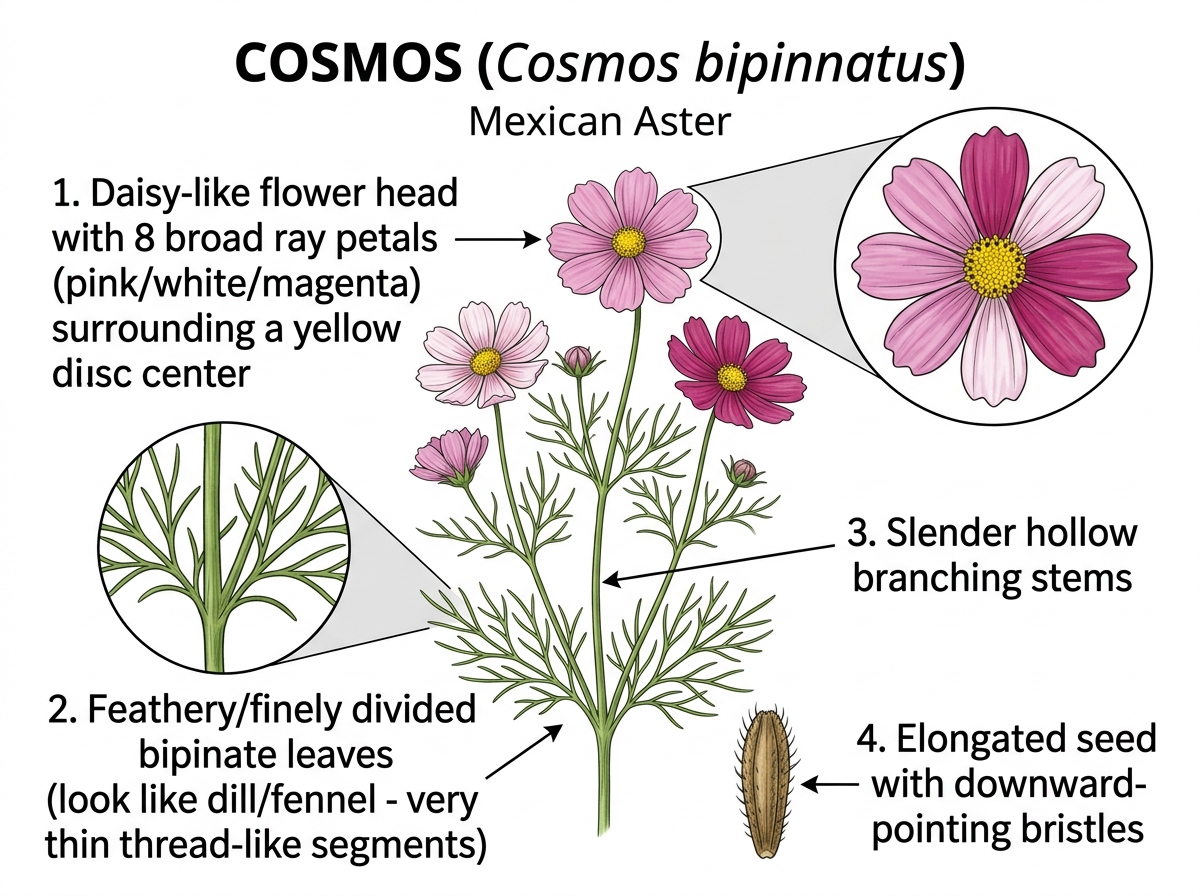
- Feathery bipinnate leaves: Leaves are finely divided into thread-like segments — almost like dill or fennel — creating an airy, delicate texture.
- 8 broad, flat ray petals: Each flower head has exactly 8 broad, flat, single-layer petals surrounding a small central yellow disc. Petals do not overlap heavily.
- Tall, open, airy habit: Grows 3–6 feet tall with thin branching stems that sway in the breeze — light and informal rather than dense.
- Pale pastel colors: Flowers naturally come in soft pink, white, and magenta — not the saturated oranges or reds of Zinnia.
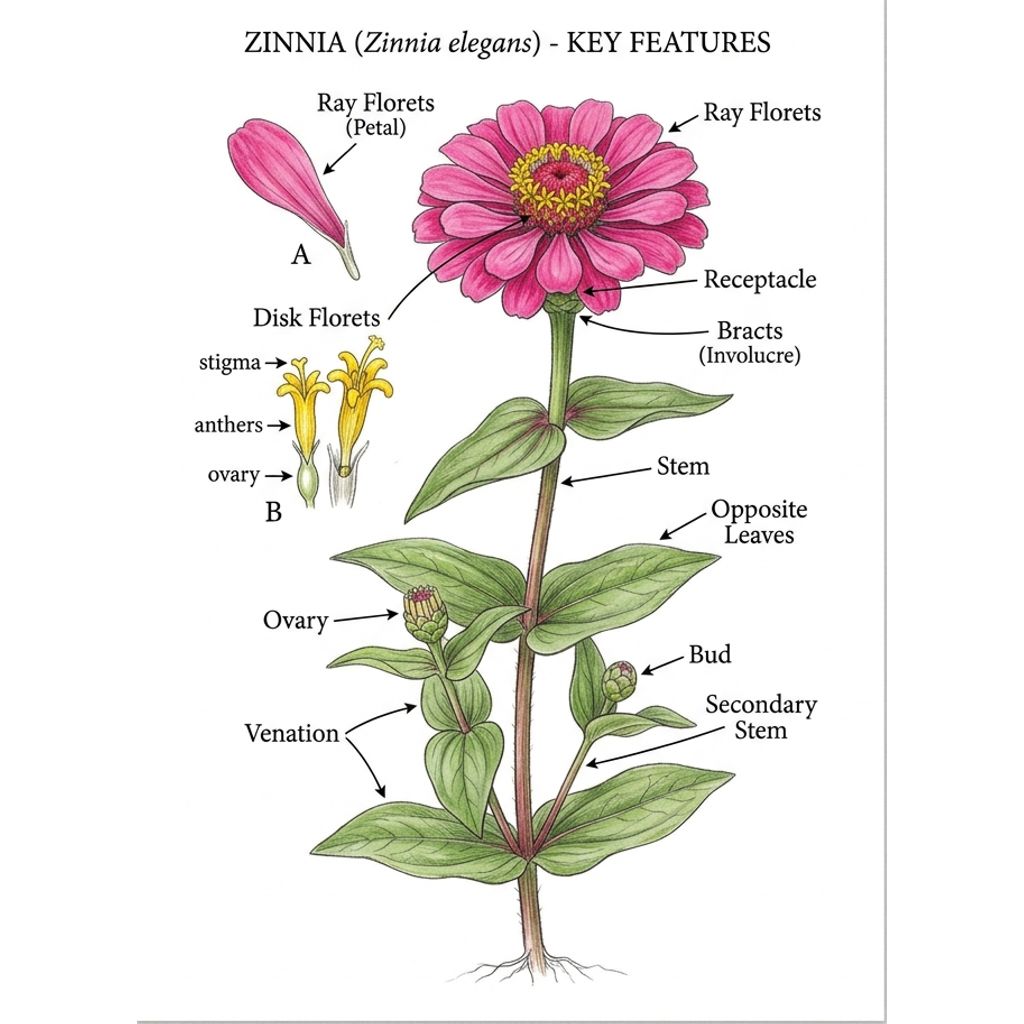
- Broad opposite leaves: Leaves are wide, oval, and rough-textured with a sandpaper feel — arranged in opposite pairs along the stem.
- Densely double or multi-layered flowers: Flowers have multiple rows of petals creating a full, rounded, dahlia-like form in many varieties.
- Compact, bushy, upright habit: Grows 1–3 feet tall with strong, erect stems and a denser, more structured garden appearance.
- Saturated bold colors: Comes in intense, vibrant oranges, reds, yellows, pinks, purples, and bi-colors — far more vivid than Cosmos.
Which Should You Choose?
- Choose Cosmos if you want a relaxed, wildflower-style garden with an airy, natural look. Perfect for poor, dry soils where other annuals struggle, and for attracting a wide range of pollinators with minimal effort.
- Choose Zinnia if you want bold, saturated summer color in a more structured, compact border or cutting garden. Zinnias are heat-champions and monarch butterfly magnets — the single best annual for attracting monarchs during their summer migration.