
Daisy vs Aster
Compare Daisy and Aster. Learn about blooming seasons, flower anatomy, growth habits, fall vs spring timing, and pet safety verdict.
Key Differences: Daisy vs Aster
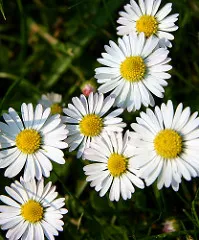
While both daisies and asters belong to the Asteraceae family and share classic composite flower heads—featuring a golden central disc encircled by delicate ray florets—they differ fundamentally in scale, plant architecture, and flowering calendar. Common English daisies (Bellis perennis) are compact, ground-hugging spring perennials (3 to 8 inches tall) that produce solitary white or pink-tipped blossoms on leafless stems rising from a basal rosette.
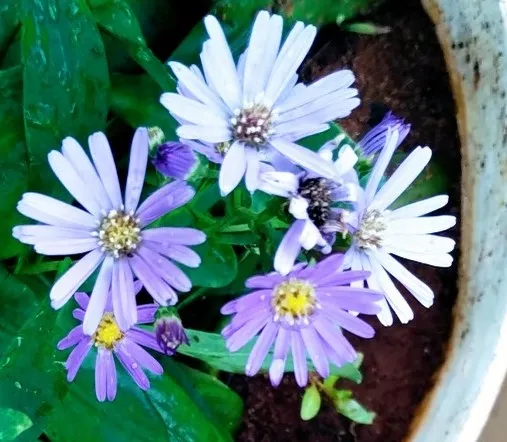
In contrast, asters (Symphyotrichum / Michaelmas Daisies) are tall, bushy autumn-blooming perennials reaching 1 to 5 feet in height with branched, leafy stems that erupt into dense sprays of vibrant purple, lavender, blue, and magenta blossoms. While daisies signal the arrival of spring in cool lawns and rockeries, asters serve as the grand finale of the autumn garden, providing a critical late-season nectar source for migrating butterflies and bees from August until the first hard frost.
Botanical & Care Comparison Table
| Feature | Daisy | Aster (Michaelmas Daisy) |
|---|---|---|
| Family | Asteraceae | Asteraceae |
| Colors Available | White, soft pink, rose-tipped, yellow center | Purple, lavender, violet, blue, pink, white, magenta |
| Bloom Season | Early spring to early summer (cool seasons) J F M A M J J A S O N D | Late summer through late autumn (August–November) J F M A M J J A S O N D |
| Maintenance Level | Low (hardy perennial lawn and rockery flower) | Low to moderate (taller cultivars may require staking and dividing) |
| Sunlight Needs | Full Sun to Partial Shade | Full Sun (needs 6+ hours daily to prevent mildew and flopping) |
| Watering Needs | Moderate (prefers cool, evenly moist soil) | Moderate (drought-tolerant once established, avoid overhead watering) |
| Pet Toxicity | ⚠️ Mildly toxic to cats and dogs (sesquiterpenes) | ✅ Non-toxic to cats and dogs (Pet Guard verified) |
| Fragrance | Faint, fresh herbal scent | Faint earthy, honeyed scent attractive to bees and butterflies |
| Pests & Diseases | Susceptible to Slugs, Powdery Mildew, and leaf spot. | Susceptible to Powdery Mildew, Rust, and Leafhoppers (Aster yellows vector). |
| Typical Uses | Lawn naturalizing, path edging, rock gardens, containers | Autumn borders, pollinator meadows, cut flower arrangements |
How to Spot the Differences (Visual Identification)
Spot the features below to easily distinguish between the two plants in the wild or garden:
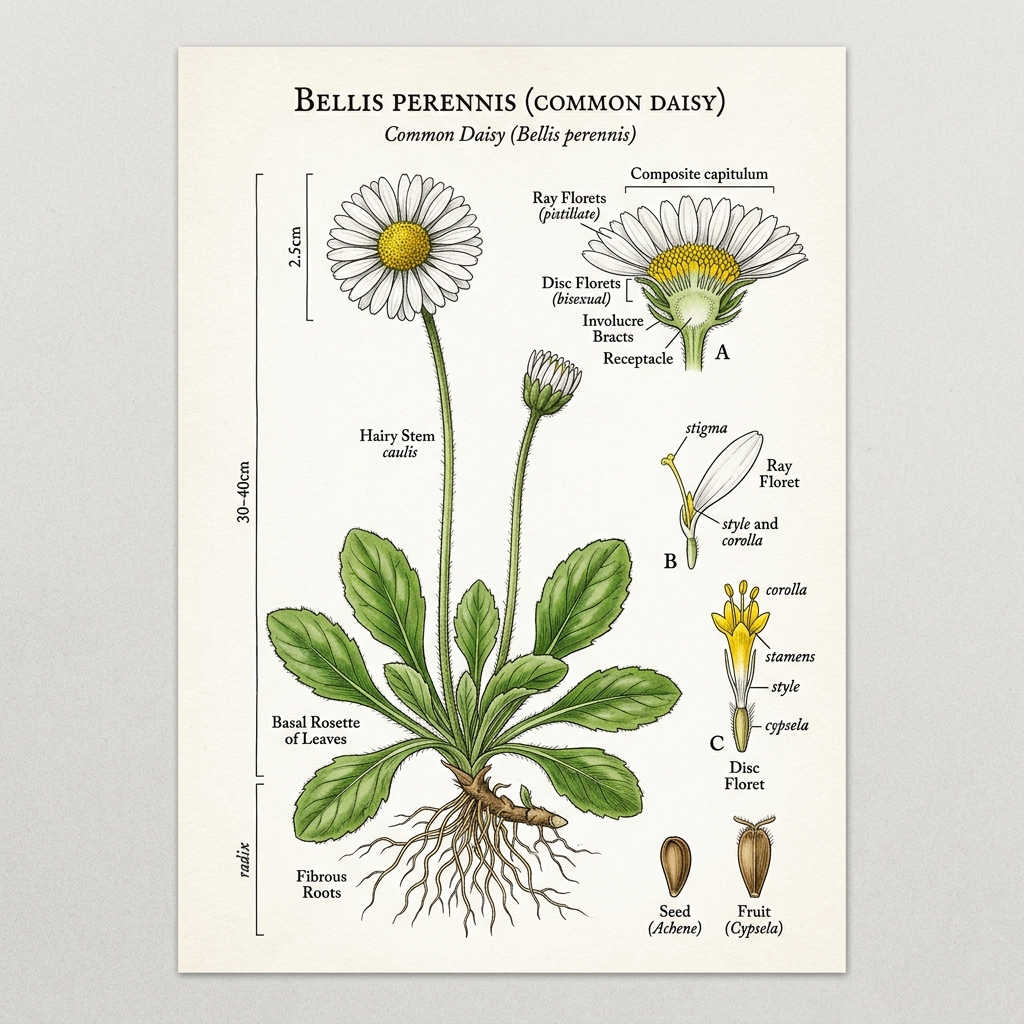
- Low basal rosette: Forms tight, ground-hugging mounds (3 to 8 inches tall) with leafless flowering stems (scapes).
- Spoon-shaped leaves: Leaves are spatulate, soft, slightly scalloped, and concentrated entirely at the base.
- Spring bloom peak: Flushes prolifically from early spring through early summer in cool, moist weather.
- Solitary white blossoms: Single flower head per stalk featuring clean white ray petals around a flat golden disc.
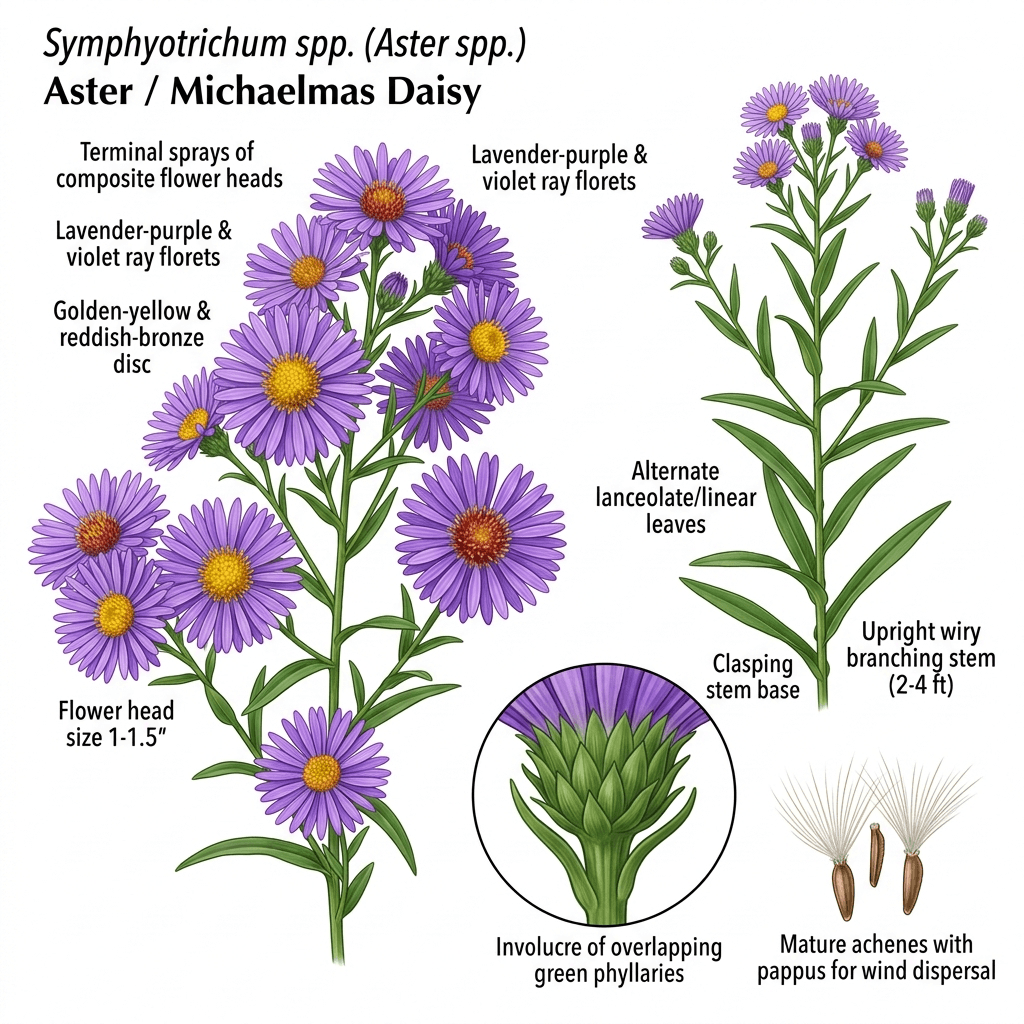
- Tall, branched habit: Upright, sturdy bushy stems (1 to 5 feet tall) branching freely into multi-flowered sprays.
- Lanceolate stem leaves: Narrow, pointed, lance-shaped leaves grow alternately along the entire height of the stem.
- Autumn bloom peak: Late-season bloomer flowering from August through November (Michaelmas season).
- Vibrant cool tones: Flower heads display rich purple, lavender, violet, sky-blue, or magenta ray florets.
Which Should You Choose?
- Choose Daisies if you need a charming, low-maintenance groundcover or lawn border that welcomes early spring with cheerful white blossoms.
- Choose Asters if you want substantial late-season border height, stunning jewel-toned purples and blues, and an invaluable autumn nectar source for migrating butterflies and bees.