
Marigold vs Calendula
What is the difference between Tagetes marigolds and Calendula (pot marigold)? Compare visual identification, toxicity, care, and medicinal properties.
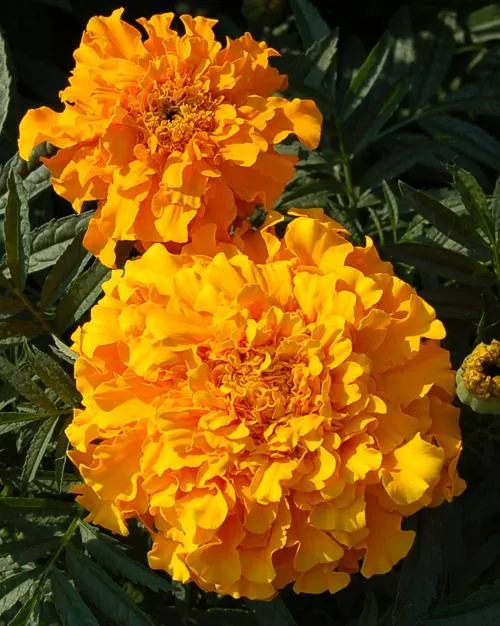
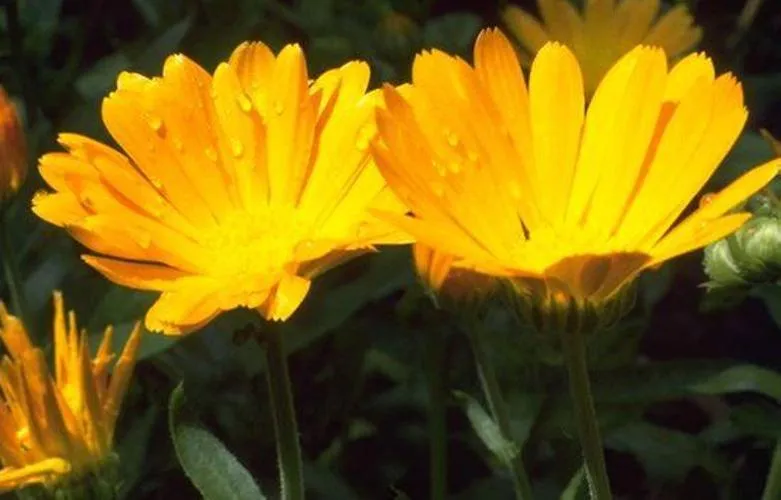
Key Differences: Marigold vs Calendula
The primary difference between marigolds (Tagetes) and calendula (pot marigold) lies in their botanical genus and uses. True marigolds belong to the genus Tagetes, are native to the Americas, have strongly scented leaves that repel garden pests, and can trigger mild skin contact reactions in sensitive pets. Calendula (pot marigold) belongs to the genus Calendula, is native to Southern Europe, has edible petals widely used in soothing medicinal salves, and is 100% safe and non-toxic for cats and dogs.
Botanical & Care Comparison Table
| Feature | Marigold | English Marigold (Calendula) |
|---|---|---|
| Family | Asteraceae | Asteraceae |
| Colors Available | Yellow, orange, deep red, gold, mahogany | Bright orange, yellow, cream |
| Bloom Season | Early summer until frost (continuous) J F M A M J J A S O N D | Cooler spring and autumn months J F M A M J J A S O N D |
| Maintenance Level | Very low (extremely tough and drought-tolerant) | Low (prefers cooler weather, deadhead for rebloom) |
| Sunlight Needs | Full Sun (requires 6+ hours daily) | Full Sun to partial shade (needs protection from summer heat) |
| Watering Needs | Moderate (allow soil to dry between waterings) | Moderate (needs consistent moisture) |
| Pet Toxicity | Non-toxic (sap may cause mild skin redness) | ✅ 100% Non-toxic (highly soothing and edible) |
| Fragrance | Pungent, strong, musky or herbaceous | Subtle, sweet, or slightly resinous |
| Pests & Diseases | Susceptible to Spider Mites and Powdery Mildew. | Susceptible to Slugs and Powdery Mildew. |
| Typical Uses | Companion planting, organic pest control, borders | Medicinal salves, salads, herbal teas, skin care |
How to Spot the Differences (Visual Identification)
Spot the features below to easily distinguish between the two plants in the wild or garden:
Marigold
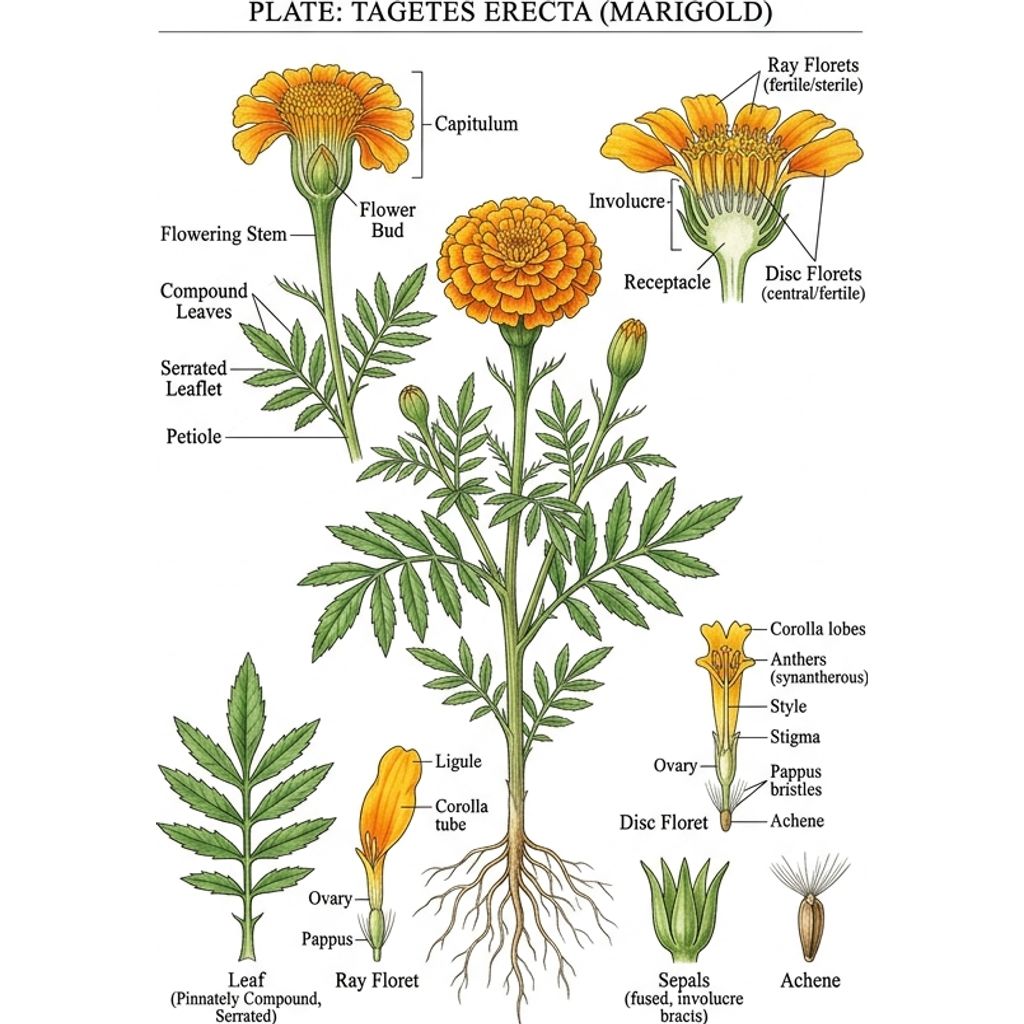
- Pungent, divided leaves: Foliage is dark green, deeply divided (fern-like), and has a strong, pungent scent.
- Symmetrical, multi-petaled heads: Flower heads are dense, dome-shaped pom-poms with tightly packed, ruffled petals.
- Distinct seed heads: Seeds are long, needle-like, black with a straw-colored tip.
- Tubular flower buds: Bud base has a solid, green tube/cup holding the tightly wrapped petals.
English Marigold (Calendula)

- Mildly scented, simple leaves: Leaves are lance-shaped, thick, slightly sticky, and have smooth margins.
- Open daisy-like heads: Flowers are flat, daisy-like cups showing a clear central disc with flat ray petals.
- Curved, worm-like seeds: Seeds are rough, crescent-shaped, resembling small curved worms.
- Flat, scale-covered buds: Bud bases are covered in small, overlapping green bracts/scales.
Which Should You Choose?
- Choose Marigolds (Tagetes) if you want to repel nematodes and pests in your vegetable garden, want continuous bright color through hot summer heat, and love dense pom-pom blooms.
- Choose Calendula if you are interested in making home remedies, teas, or salves, want edible decorative flowers, and prefer daisy-like cool-season blooms.