
Foxglove vs Monkshood
Compare Foxglove and Monkshood. Learn how to distinguish flower hoods from thimbles, leaf shapes, summer bloom calendars, and severe toxicity warnings.
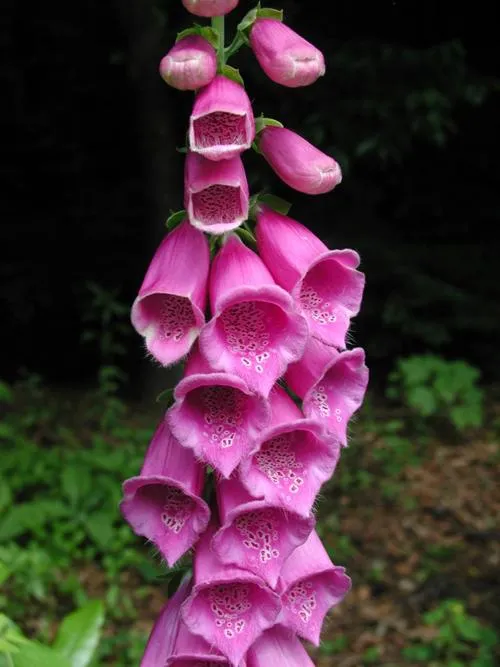
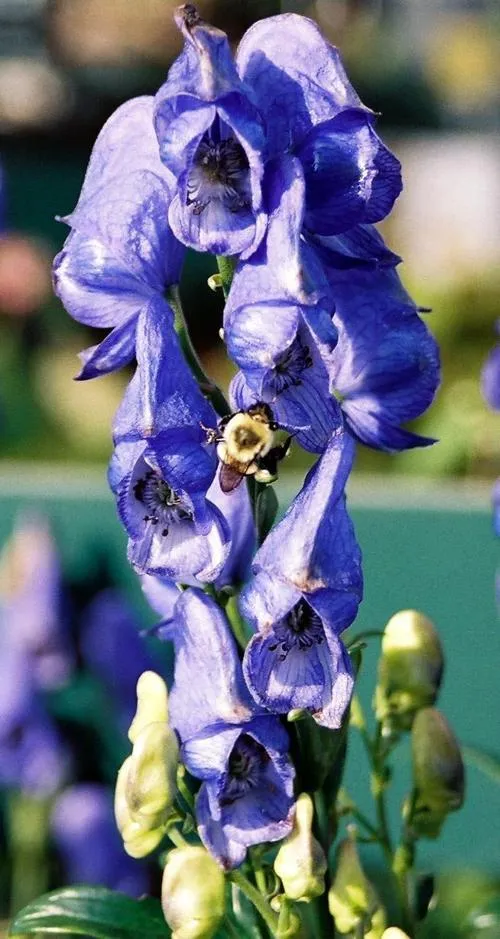
Key Differences: Foxglove vs Monkshood
Foxglove and monkshood are both dramatic, stately cottage perennials bearing tall terminal flowering spires and harboring intense, lethal toxicity, but their floral architectures and botanical families are completely different. Foxglove (Digitalis purpurea, Plantaginaceae family) produces downward-nodding, thimble- or bell-shaped tubular blossoms lined with speckled throats that open sequentially along a fuzzy, unbranched 3-to-6-foot spike, emerging from a basal rosette of soft, hairy ovate leaves.
Monkshood (Aconitum napellus, Ranunculaceae family / Wolfsbane) bears intricate, helmet-shaped royal blue and deep violet flowers where the uppermost petal-like sepal forms an arched hood (galea) that conceals the inner reproductive organs. Furthermore, monkshood foliage is deeply palmately cut into narrow, glossy lobes resembling delphinium, and its roots and tissues contain deadly aconitine neurotoxins, unlike the cardiac glycosides found in foxglove.
Botanical & Care Comparison Table
| Feature | Foxglove | Monkshood |
|---|---|---|
| Family | Plantaginaceae | Ranunculaceae |
| Colors Available | Purple, pink, rose, peach, cream, yellow, white (freckled throat) | Royal blue, deep violet-purple, bi-color blue/white, rarely white |
| Bloom Season | Early summer to mid-summer (June–July) J F M A M J J A S O N D | Mid-summer to early autumn (July–September) J F M A M J J A S O N D |
| Maintenance Level | Low (self-seeds freely; remove spent spikes to encourage side shoots) | Low to moderate (slow to establish, toxic to handle without gloves) |
| Sunlight Needs | Partial Shade to Dappled Sunlight (tolerates full sun in cool climates) | Partial Shade to Cool Full Sun (requires cool root zones and afternoon shade) |
| Watering Needs | Moderate (prefers consistently moist, humus-rich, well-draining soil) | Moderate to High (requires consistently moist soil; cannot tolerate drying out) |
| Pet Toxicity | 💀 Lethal to humans and pets (cardiac glycosides) (Pet Guard verified) | 💀 Lethal to humans and pets (aconitine neurotoxin) (Pet Guard verified) |
| Fragrance | Odorless | Odorless |
| Pests & Diseases | Susceptible to Aphids, Powdery Mildew, and fungal leaf spot. | Susceptible to Verticillium Wilt, Crown Rot, and Powdery Mildew. |
| Typical Uses | Cottage garden backdrops, woodland borders, shaded vertical accents | Late-season blue shade borders, deer- and rabbit-proof perennial plantings |
How to Spot the Differences (Visual Identification)
Spot the features below to easily distinguish between the two plants in the wild or garden:
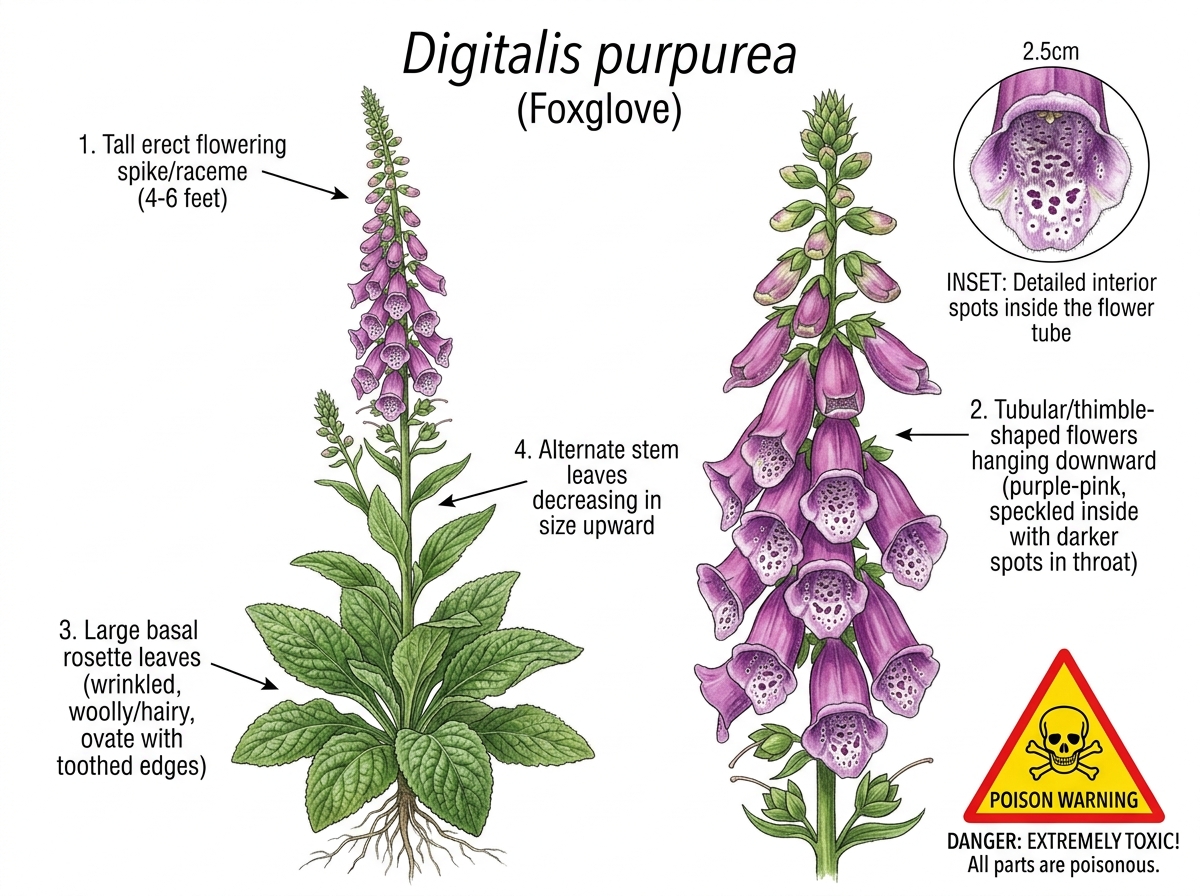
- Tubular thimble flowers: Pendulous, tubular bell-shaped blossoms with distinct freckled or spotted lower throats.
- Large fuzzy leaves: Coarse, hairy, ovate-to-lanceolate leaves form a soft basal rosette in year one before bolting.
- Biennial lifecycle: Typically biennial or short-lived perennial, self-seeding prolifically in woodland gardens.
- Pastel to rose tones: Flowers span pink, purple, lavender, peach, cream, and pure white with spotted interior.
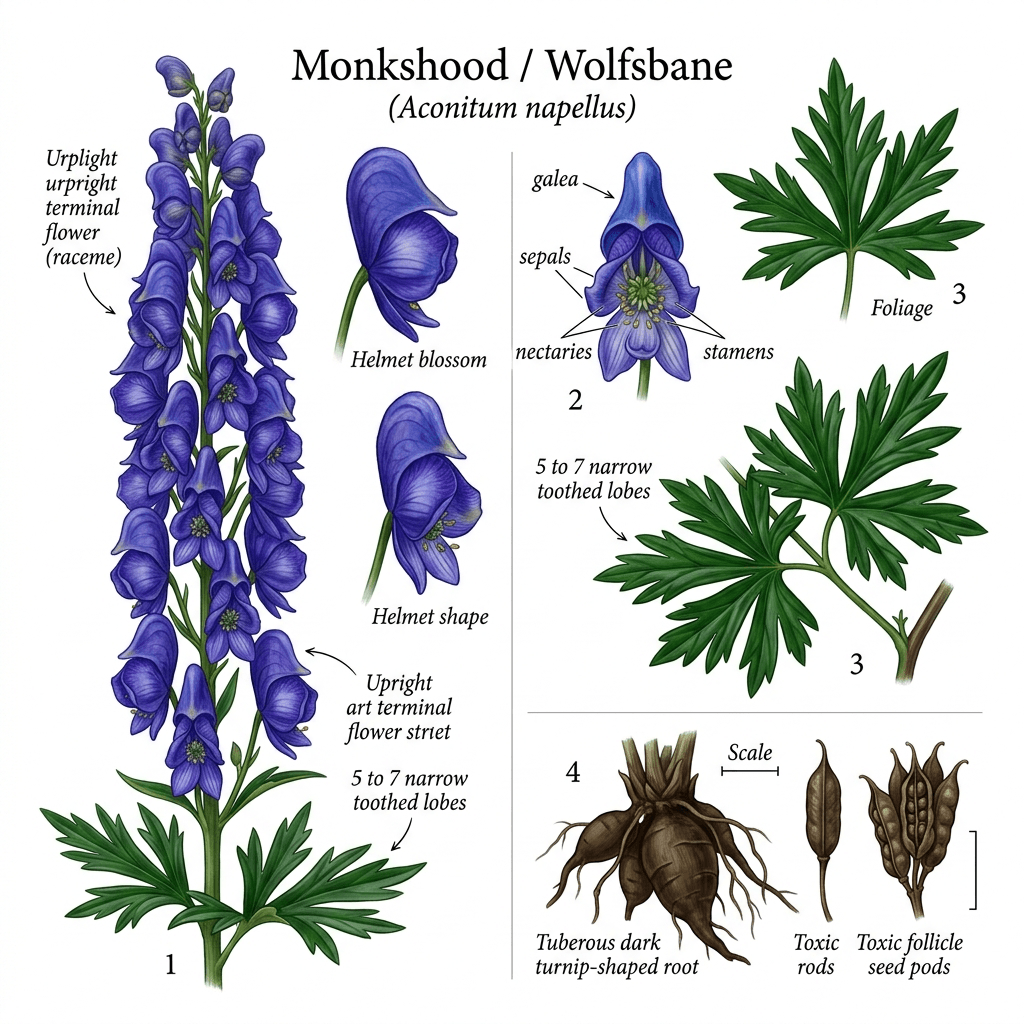
- Helmet-shaped hooded flowers: Flowers feature an arching, helmet-like upper sepal (galea) shaped like a monk's cowl.
- Deeply divided glossy leaves: Palmately cut foliage divided into 5 to 7 narrow, sharply toothed lobes resembling delphinium.
- Long-lived perennial: Hardy perennial growing from thick tuberous roots that returns reliably year after year.
- Intense deep blue-purple: Famous for deep violet-blue, royal indigo, and midnight purple hues rarely found in nature.
Which Should You Choose?
- Choose Foxglove for romantic early-summer cottage spires with speckled bell blossoms that thrive in dappled woodland shade.
- Choose Monkshood if you want late-summer royal blue or violet architectural spires, have a cool-summer garden, and need a completely deer-proof perennial (always plant away from children and pets, and wear gloves when handling).