Arabian jasmine
Jasminum sambac
How to Identify Arabian jasmine
NON-TOXIC. 100% safe for cats and dogs, making it a wonderful, highly fragrant, and worry-free addition to pet-friendly homes.
A detailed guide to identifying Arabian Jasmine / Mogra (Jasminum sambac) by its key features:
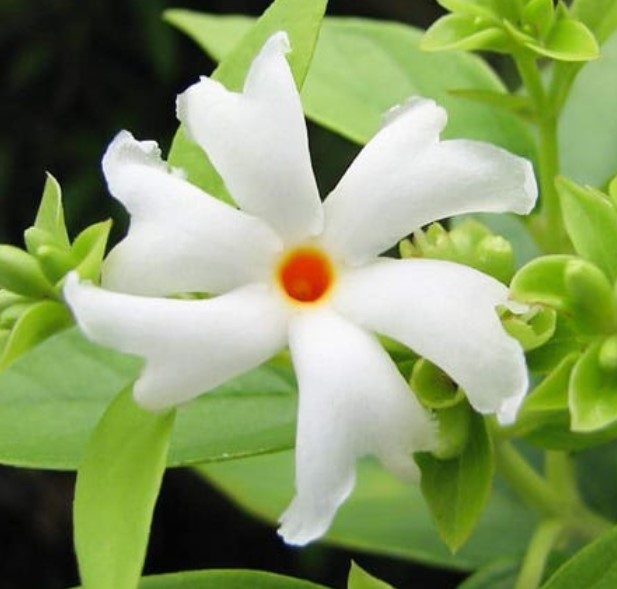
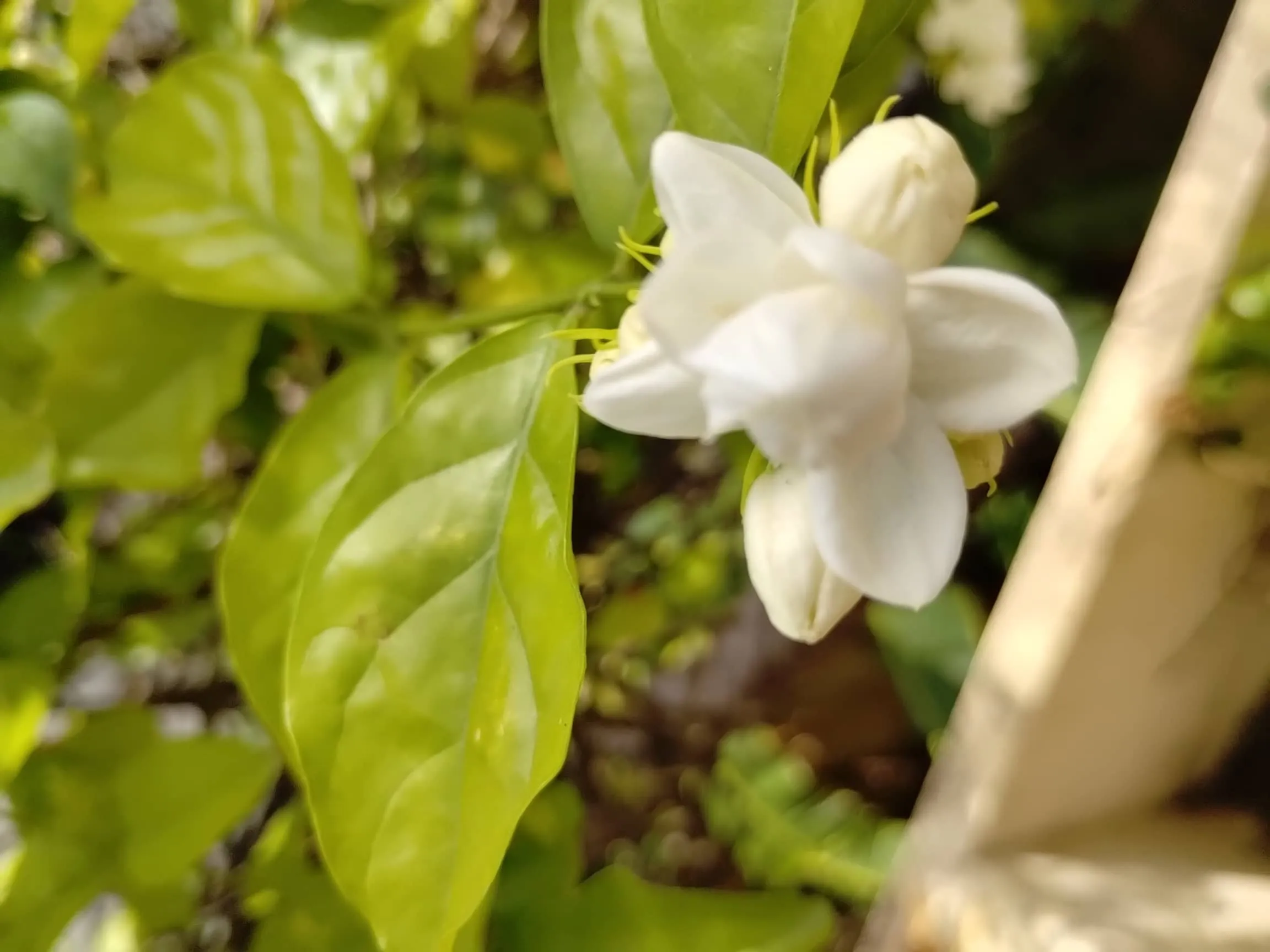
- Waxy, Pure White Blossoms: Small flowers measuring about 1 inch across grow in clusters of 3 to 12. Petals are waxy and age to soft pink.
- Opposite Glossy Leaves: Deep green, oval-shaped leaves grow in opposite pairs along woody, light-brown, sprawling stems.
- Intense Exotic Perfume: Extremely strong, sweet, rich floral fragrance released by the blossoms, especially at night.
- Shrub or Climbing Habit: Versatile, woody growth that can form a rounded shrub or be trained to climb a trellis.
Types & Sub-types of Arabian Jasmine
Arabian Jasmine cultivars are classified into four main groups based on petal layers and flower shape:
- By Petal Structure & Cultivar:
- 'Maid of Orleans': Single-flowered variety with 5-9 flat, oval petals. It is the most heat-tolerant and has a classic, star-like appearance.
- 'Belle of India': Semi-double or double flowers with elongated, narrow petals, displaying a unique starburst shape.
- 'Grand Duke of Tuscany': Densely double flowers containing dozens of tightly packed petals that resemble miniature white roses.
- 'Mysore Mullai': Similar to Grand Duke but with slightly larger, more rounded buds and a highly concentrated fragrance.
Care & Growing Guide
Seasonal Blooming & Hardiness
Seasonal Blooming Calendar:
- Peak Bloom: Summer (typically June through September).
- Planting Time: Sow seeds directly outdoors in early spring after the last frost, or transplant nursery starts in late spring.
Bloom Timeline
About Arabian jasmine
The Arabian Jasmine, botanically named Jasminum sambac and belonging to the Oleaceae (olive) family, is an exceptionally celebrated evergreen climbing shrub. Native to the warm, tropical valleys and humid plains of the Indian subcontinent and Southeast Asia, this legendary plant has been cultivated for thousands of years. It is globally adored for its intensely sweet, exotic fragrance. Commonly referred to as Mogra, Motiya, Pikake, or Sampaguita, it has naturalized in subtropical climates around the world, thriving in landscapes where its perfumes can fill the warm summer air.
This plant displays a versatile, sprawling growth habit, easily trained as a compact, rounded shrub or allowed to climb as a woody vine reaching 3 to 10 feet in height. It features glossy, dark green, oval-shaped leaves that are arranged in opposite pairs along slender, light-brown stems. In warm climates, it blooms continuously, producing small clusters (cymose inflorescences) containing 3 to 12 waxy, pure white flowers. The blossoms measure approximately 1 inch across and age to a delicate soft pink, often exhibiting multiple layers of tightly packed petals in double-flowered cultivars.
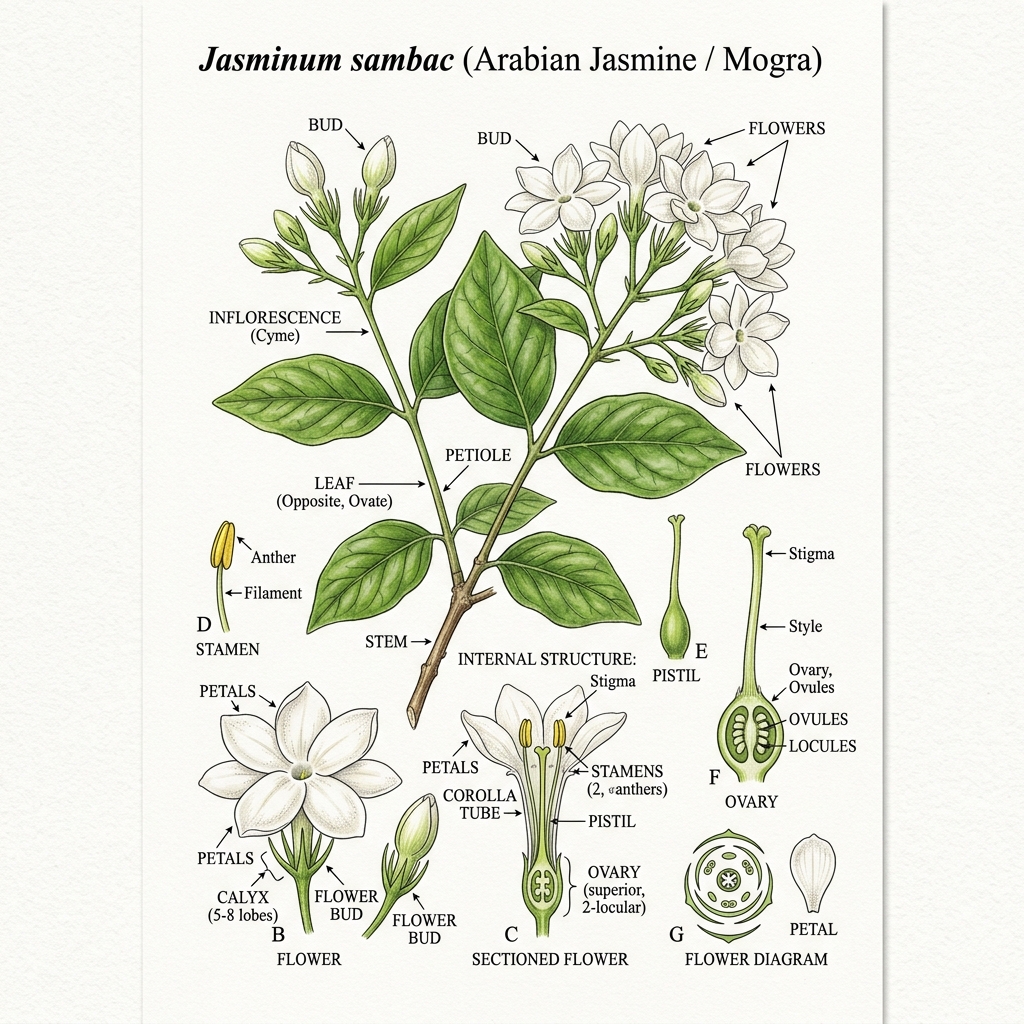
The reproductive morphology of Jasminum sambac is defined by the precise botanical floral formula ⊕ ⚥ K(4-9) C(4-9) A2 G(2). This formula states that the flowers are radially symmetrical (actinomorphic) and bisexual. The calyx is formed of 4 to 9 fused, hair-like sepals, and the corolla comprises 4 to 9 fused, highly waxy petals that open into a spreading tubular shape. The androecium contains exactly 2 fertile stamens inserted on the corolla tube, while the gynoecium is composed of 2 fused carpels forming a superior ovary, which develops into a small, glossy black berry.
Horticulturally, Arabian Jasmine is a heat-loving plant that performs best in tropical and subtropical regions, corresponding to USDA hardiness zones 9 through 11. It requires full, direct sunlight to light shade, needing at least 4 to 6 hours of sun daily to produce a high density of flowers. It thrives in rich, organic, moist, and well-drained soils, requiring regular watering during the active growing season. Pruning is essential; shearing the stems after a flowering flush stimulates vigorous new shoots and encourages the continuous formation of fresh flower buds.
The genus name Jasminum is derived from the ancient Persian word 'Yasmin', which translates to 'fragrant flower,' while the specific epithet 'sambac' comes from the Arabic 'Zambaq', referencing highly aromatic floral oils. It is the national flower of the Philippines (where it is known as Sampaguita) and one of the three national flowers of Indonesia (Melati Putih). Famed in Sanskrit as Mallika (मल्लिका) and in Hindi as Mogra (मोगरा), it is sacred in Hindu rituals, used extensively for garland weaving (gajras), temple offerings, and wedding decorations across Asia.
For pet owners, Arabian Jasmine is an exceptionally safe and highly premium addition to the household. Jasminum sambac is classified as completely NON-TOXIC to cats, dogs, and horses by major global veterinary safety databases, including the ASPCA. If a curious pet plays with or chews on the glossy leaves or fragrant blooms, there is absolutely no risk of toxic poisoning. To discover more safe, fragrant additions and family-safe green choices, visit our general Pet Guard catalog. It pairs beautifully with other safe fragrant flowers like Spanish Jasmine or River Jasmine, and check our guides for Ixora and Four o'Clock; find more in our Flower Identifier.
Floral Formula & Features
Radially symmetrical, bisexual, 4 to 9 fused sepals forming calyx, 4 to 9 fused petals forming spreading tube, exactly 2 stamens, 2 fused carpels with superior ovary typical of Oleaceae
- Scientific Name & Classification: Jasminum sambac (Oleaceae). Known widely as Arabian Jasmine, Mogra, Motiya, and Sampaguita.
- Identification Markers: Sprawling evergreen shrub, glossy oval opposite leaves, and small clusters of waxy white flowers with layered petals and intense sweet fragrance.
- Floral Formula (⊕ ⚥ K(4-9) C(4-9) A2 G(2)): Radially symmetrical, bisexual flowers with 4-9 fused sepals, 4-9 fused petals, exactly 2 stamens, and superior ovary.
- Growing Requirements: Full direct sun to light shade; rich, organic, moist, and well-draining soil. Requires pruning after blooms to encourage fresh buds (Zones 9-11).
- Cultural Significance: National flower of the Philippines and Indonesia. Sanskrit 'Mallika' used extensively in traditional Indian wedding garlands and religious ceremonies.
- Safety & Toxicity: NON-TOXIC. 100% safe for cats and dogs, making it a wonderful, highly fragrant, and worry-free addition to pet-friendly homes.
- Common Look-alikes: Confused with highly toxic star jasmine or Carolina Jessamine, but distinguished by opposite, non-milky leaves and layered waxy blossoms.
- Internal Links: Complements other sweet-scented jasmines beautifully; pair with Spanish Jasmine, River Jasmine, Ixora, or Four o'Clock, and check our Flower Identifier.
- Internal Links: Compare key differences in our Arabian Jasmine vs Star Jasmine or Jasmine vs Gardenia comparison, or try our instant Flower Identifier.
Names in Different Languages
Tip: Need to buy or identify flowers in regional markets? Check our complete South Indian Flower Names Guide mapping 30+ flowers across Tamil, Telugu, Hindi, Kannada, and Malayalam.
Botanical Classification: Arabian jasmine belongs to the Oleaceae family. Learn how to identify its floral symmetry, stamen arrangement, and structural formulas in our Botanical Family Classification Guide.
Toxicity & Safety
Frequently Asked Questions
What is Floral Formula?
A floral formula is a symbolic representation of a flower's structure using letters, numbers, and special symbols. It provides a concise way to describe the arrangement and number of floral parts.
This formula describes the flower's symmetry, sepals, petals, stamens, and carpels in a standardized format.
Formula Sequence
- Bract: Br or Ebr
- Bracteole: Brl or Ebrl
- Symmetry: % (Radial) or ⊕ (Bilateral)
- Sex: ♀ (Female), ♂ (Male), or ⚥ (Bisexual)
- Calyx/Sepal: K<number> (Free or Fused)
- Corolla/Petal: C<number> (Free or Fused)
- Androecium: A<number> (Free or Fused)
- Gynaecium: G<number> (Superior or Inferior Ovary)
Symbol Meanings
- Numbers: Indicate quantity of parts
- Parentheses (): Parts are fused together
- Plus (+): Parts in different whorls
- Underline: Superior ovary position
- Overline: Inferior ovary position
- ∞: Numerous parts (too many to count)
Understanding floral formulas helps botanists quickly identify and classify flowers based on their structural characteristics.
Similar Flowers
Discover flowers that share botanical characteristics
Same Genus
4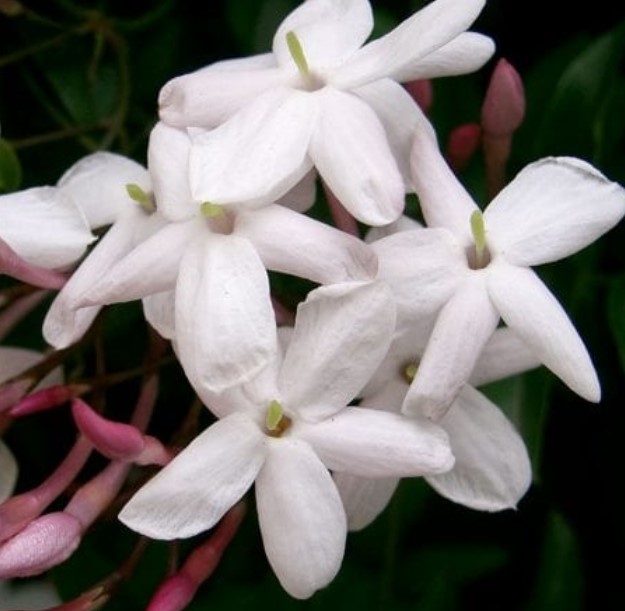
Spanish Jasmine (Royal Jasmine)
Jasminum grandiflorum
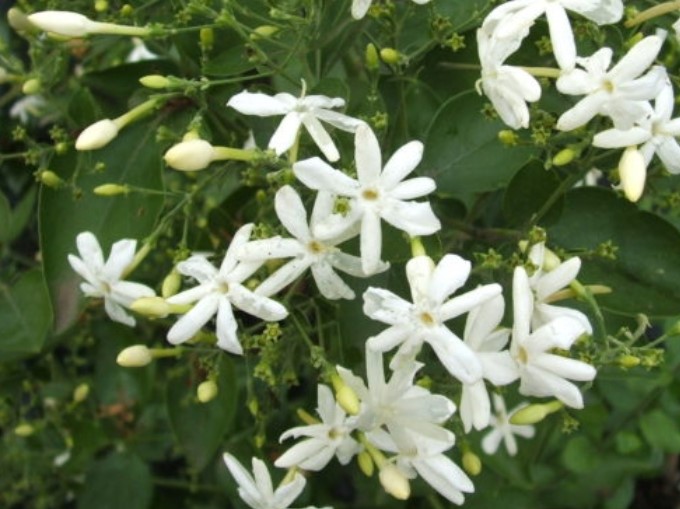
Spanish Jasmine, botanically classified as Jasminum grandiflorum and widely known as Royal Jasmine, Catalan Jasmine, or Scented Jasmine, is an exceptionally fragrant semi-evergreen woody vine belonging to the Oleaceae (olive) family. Believed to have originated in the high valleys of the Himalaya...
Juhi Jasmine
Jasminum auriculatum
Jasminum auriculatum, affectionately known as Juhi Jasmine or Mulla, is a highly aromatic, scrambling evergreen shrub or woody vine belonging to the Oleaceae (Olive) family. Native primarily to the Indian subcontinent and parts of Southeast Asia, it is globally celebrated not for the sheer size o...
AngelWing Jasmine (Star Jasmine)
Jasminum laurifolium, Jasminum nitidum
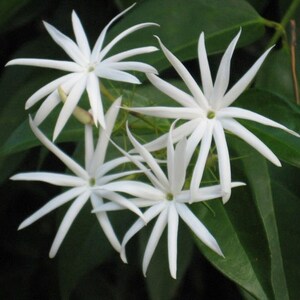
The Angelwing Jasmine, botanically classified as Jasminum nitidum (and often associated with Jasminum laurifolium), is an exceptionally beautiful and intensely fragrant evergreen sprawling shrub. Native to the warm, tropical lowlands, coastal woodlands, and river valleys of the Indian Subcontinen...
River Jasmine (Fluminense)
Jasminum fluminense
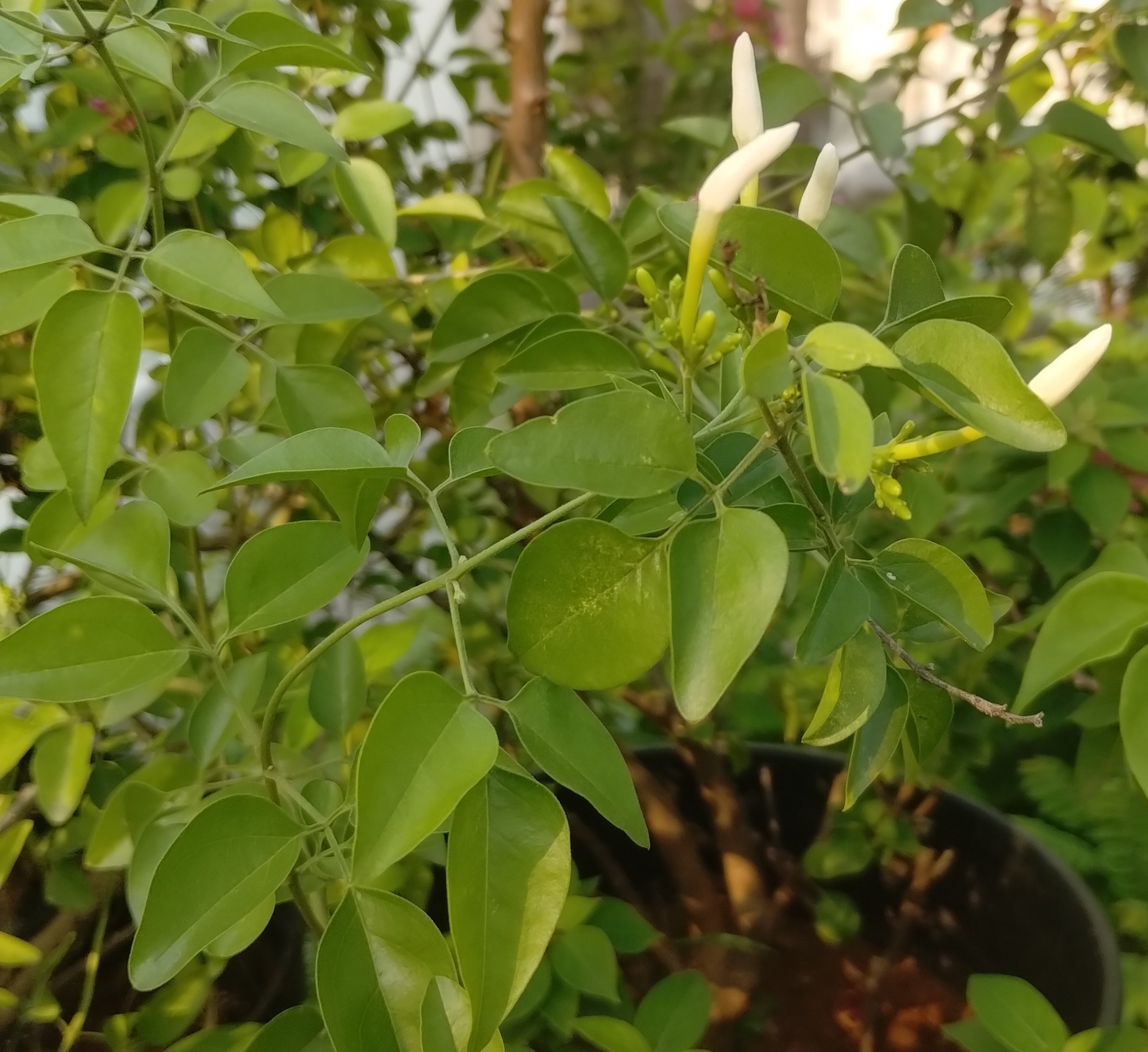
Jasminum fluminense, commonly known as the River Jasmine or Brazilian Jasmine—and widely known across South Asia as Nitya Malli or Nithya Malligai (meaning 'ever-blooming jasmine')—is a vigorous and aromatic evergreen climber that embodies the lush, tropical essence of South America. Native to th...