
Root Nematode
Meloidogyne spp.
About Root Nematode
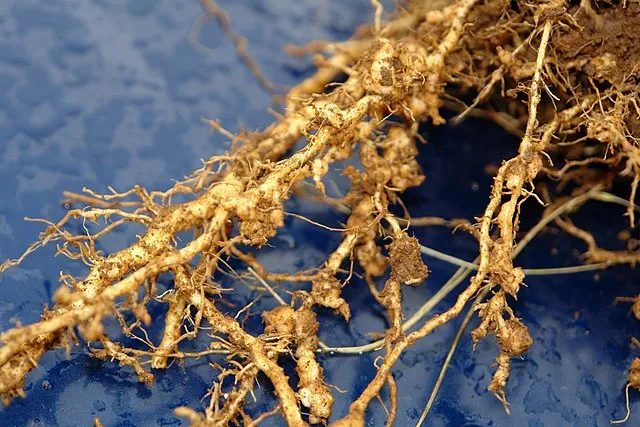
Root-knot nematodes (*Meloidogyne spp.*) are microscopic, soil-dwelling roundworms that represent one of the most significant and difficult-to-manage threats to global agriculture. These obligate endoparasites spend most of their life cycle inside the roots of host plants, where they induce the formation of characteristic galls or "knots." By hijacking the plant's cellular machinery, these nematodes divert essential water and nutrients toward their own feeding sites, effectively starving the rest of the plant and leaving it vulnerable to other environmental stresses and secondary pathogens.
The above-ground symptoms of a nematode infestation are often deceptive and easily confused with nutrient deficiency or water stress. Infected plants typically exhibit stunted growth, generalized yellowing of the foliage (chlorosis), and a tendency to wilt during the hottest part of the day, even when soil moisture is adequate. It is only when the plant is uprooted that the diagnostic "knots" become visible—swollen, knobby growths on the roots that vary in size from small beads to large, distorted masses that completely ruin the root architecture.
Nematodes damage high-value vegetable crops and ornamentals.
| Crop/Plant Type | Severity Rating | Impact Description |
|---|---|---|
| Tomatoes, Potatoes, Eggplants | Extreme (⭐⭐⭐) | Vascular root blockage, heavy galling, severe stunting, and complete crop collapse in sandy soils |
| Carrots & Parsnips | Extreme (⭐⭐⭐) | Forking and splitting of taproots, hairy root development, and 100% loss of commercial value |
| Peaches & Figs | High (⭐⭐) | Vascular dieback, stunted tree canopy, nutrient deficiencies, and early tree decline |
Managing root-knot nematodes requires a multi-year, integrated approach because the pests are nearly impossible to eradicate once established. Success depends on breaking the life cycle through a combination of crop rotation with non-host plants, the use of resistant varieties, and soil solarization. For organic gardeners, the addition of high-quality compost and the planting of specialized "trap crops" like French marigolds can help suppress population levels. For complete garden protection, check our Plant Disease Identifier Hub, or view related soil guides like Root Rot, Damping Off, and Clubroot.
Taxonomy & Features
- Root Galling: The presence of swollen, knobby "knots" or galls on the roots, which are integral parts of the root tissue and cannot be easily detached.
- Midday Wilting: Plants often wilt significantly during high temperatures and sunshine, even in moist soil, due to the compromised root system.
- Generalized Stunting: Infected plants are noticeably smaller and less vigorous than healthy plants in the same field or bed.
- Chlorosis: A gradual yellowing of the leaves that resembles nitrogen deficiency but does not respond to fertilization.
- Reduced Yield: Significant decrease in the size and quantity of fruit, vegetables, or flowers produced by the host plant.
- Forked Roots: In root crops like carrots and parsnips, nematode damage causes the main taproot to fork, twist, and become unmarketable.
Seasonal Outbreak Calendar
Outbreak risk and activity timeline for Root Nematode based on seasonal climate patterns:
Names in Different Languages
Affected Plant Species
Vegetables & Crops
- Tomato
- Okra
- Eggplant
- Potato
- Carrot
- Cucumber
- Melon
- Beans
Flowers & Ornamentals
- Roses
- Hibiscus
- Daylilies
- Impatiens
- Coleus
- Chrysanthemums
Fruits & Berries
- Peach
- Fig
- Grape
- Strawberry
- Papaya
- Mulberry
Prevention & Cure
Natural & Organic Methods
- Soil Solarization: Cover moist soil with clear plastic for 4-6 weeks during the hottest part of summer to kill nematodes with trapped heat.
- Trap Cropping (Marigolds): Plant French Marigolds (Tagetes patula) thickly in infested beds; their roots produce chemicals that are toxic to nematodes.
- Organic Amendments: Incorporate large amounts of compost, Neem cake, or crab shell meal into the soil to promote beneficial microbes that prey on nematodes.
Chemical & Professional Control
- Fluopyram Drenches: Targeted application of specialized nematicides that inhibit mitochondrial respiration in the nematode juveniles.
- Abamectin Treatments: Systemic application that can provide temporary suppression of nematode populations in the root zone.
- Soil Fumigation: Large-scale commercial application of soil fumigants (like Metam Sodium) before planting, though highly regulated and toxic.
Frequently Asked Questions
How can I distinguish nematode galls from nitrogen-fixing nodules on beans?
Nitrogen nodules are beneficial, appear as distinct, rounded bumps, and can be easily rubbed off the root. Nematode galls are irregular, swollen sections of the root itself and cannot be removed without breaking the root.
Can I reuse potting soil if my plant had root-knot nematodes?
No. Potting soil from infested plants should be discarded or solarized. The microscopic nematodes can persist in even small amounts of soil for a long time.
Are there any natural predators of root-knot nematodes?
Yes. Healthy soil contains predatory fungi (like Arthrobotrys), predatory nematodes, and certain bacteria (like Pasteuria penetrans) that naturally hunt and kill root-knot nematodes.
Recommended diagnostics based on crop family and symptoms:
Remedy Disclaimer & Safety Notice
This disease guide is for educational screening purposes only. Pathogen behavior, severity, and host susceptibility can vary dramatically based on seed variety, weather conditions, and regional microclimates. Chemical pesticides and organic treatments are subject to strict regional environmental regulations and registration mandates. Please verify all chemical registrations and review manufacturer safety labels carefully with local certified agronomists or agricultural extension service offices before applying.