
Lavender vs Salvia
Lavender or Salvia? Compare flower spikes, foliage scent, heat tolerance, pruning, and pollinator attraction. Full side-by-side botanical comparison.
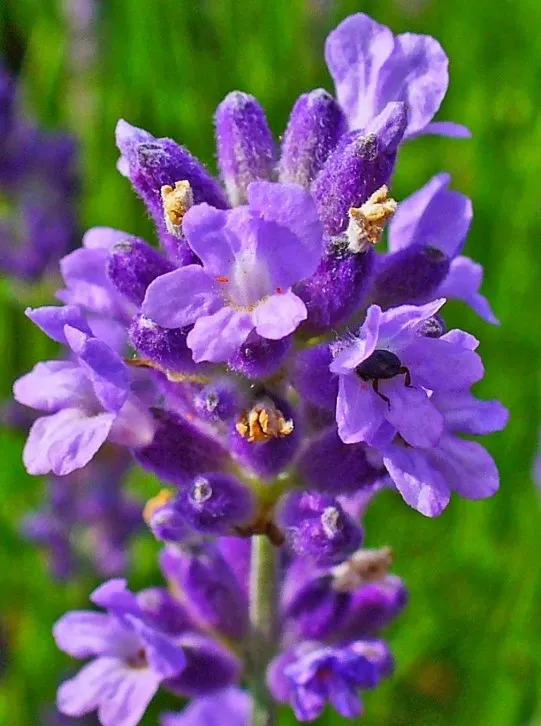
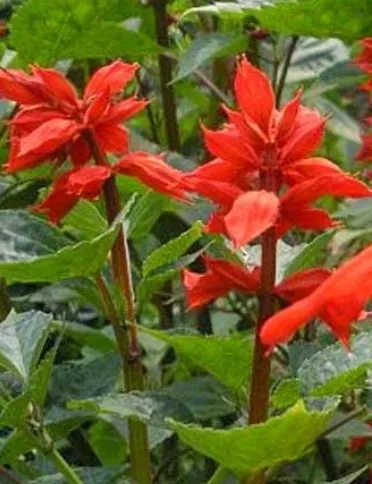
Key Differences: Lavender vs Salvia
Lavender (Lavandula angustifolia) and Ornamental Salvia (Salvia spp.) are both popular purple-spiked perennials in the Mint family (Lamiaceae) that attract bees and butterflies, but they differ significantly in aromatic properties, foliage, and growing requirements. Lavender is a woody Mediterranean subshrub with narrow, needle-like grey-green leaves packed with intensely aromatic essential oils prized for perfume and culinary use. Salvia (Sage) encompasses a broader genus of herbaceous perennials and annuals with broader, wrinkled, green leaves and longer, more densely petaled flower spikes in vivid purples, blues, reds, and pinks. Lavender requires dry, alkaline, lean gravelly soil and declines rapidly in high humidity; Salvia is far more tolerant of average garden soils, summer moisture, and high humidity.
Botanical & Care Comparison Table
| Feature | Lavender | Salvia |
|---|---|---|
| Family | Lamiaceae | Lamiaceae |
| Colors Available | Purple, Violet, Lavender-Blue, Pink, White | Deep Violet-Blue, True Blue, Scarlet, Magenta, Pink, White |
| Bloom Season | Early to mid-summer (June–July), brief 4–6 week bloom window J F M A M J J A S O N D | Late spring through autumn (May–October), continuous repeat bloomer J F M A M J J A S O N D |
| Maintenance Level | Moderate — prune back by one-third after flowering to prevent woodiness | Low — deadhead spent spikes for non-stop reblooming all summer |
| Sunlight Needs | Full Sun (6–8+ hours daily essential) | Full Sun to Part Shade |
| Watering Needs | Low — highly drought-tolerant; demands sharply draining lean soil | Low to Moderate — drought-tolerant once established; accepts average soil |
| Pet Toxicity | ⚠️ Mildly toxic to cats & dogs in large quantities (contains linalool & linalyl acetate) | ✅ Non-toxic to cats and dogs (ornamental salvia is pet-safe) |
| Fragrance | Intensely aromatic sweet lavender scent | Herbal, resinous sage scent from crushed leaves |
| Pests & Diseases | Highly susceptible to root rot and Phytophthora in humid/wet soils. | Highly disease-resistant; occasionally affected by powdery mildew. |
| Typical Uses | Herb gardens, dried floral crafts, essential oil, rock gardens, borders | Perennial borders, hummingbird gardens, pollinator beds, long-season color |
How to Spot the Differences (Visual Identification)
Spot the features below to easily distinguish between the two plants in the wild or garden:
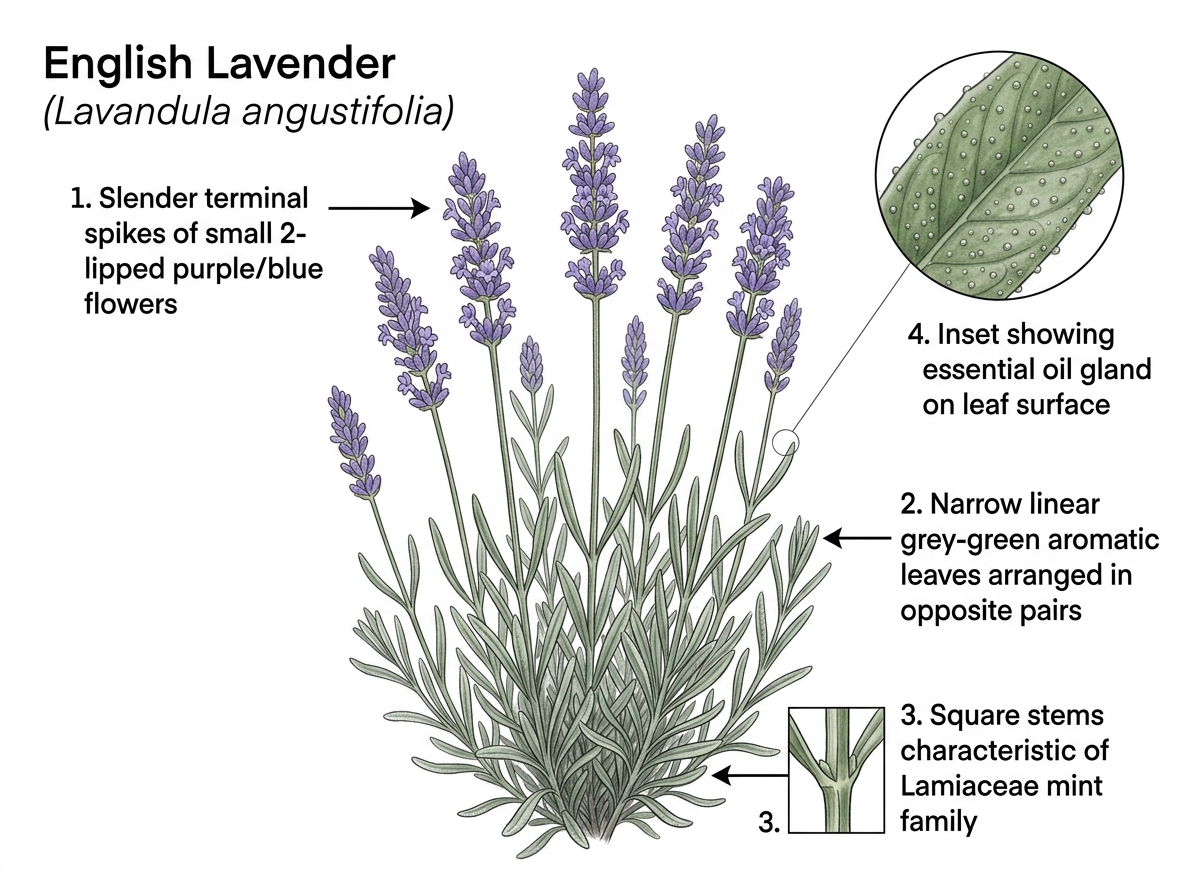
- Woody subshrub base: Develops a gnarled woody base over time. Leaves stay attached year-round in mild winters.
- Needle-like grey-green leaves: Narrow, linear, silvery-grey foliage with smooth edges and intense lavender fragrance when crushed.
- Short compact purple flower spikes: Flower spikes are compact (2–4 inches) carried on thin leafless stalks above the foliage mound.
- Intense essential oil scent: Famous sweet herbal fragrance used in essential oils, soaps, and culinary baking.
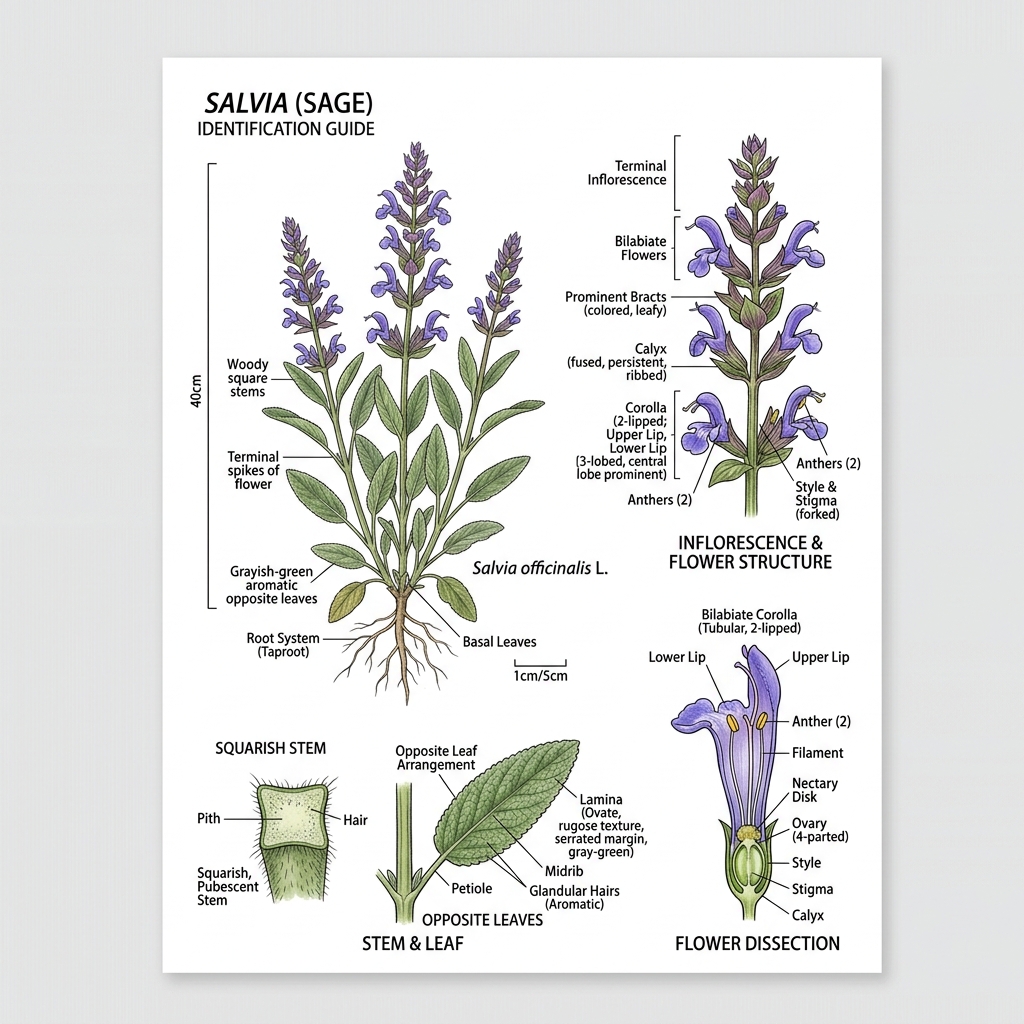
- Herbaceous perennial/annual: Stems die back to ground in winter (in herbaceous species) without developing heavy woody trunks.
- Broader green oval leaves: Leaves are broader, heart- or oval-shaped, dark green, often wrinkled or scalloped with a herbal sage scent.
- Longer, denser flower spikes: Spikes are longer (4–12 inches) with tubular flowers held in colored calyces that retain color after petals fall.
- Wider color spectrum: Available in intense dark violet, true blue, scarlet red, magenta, pink, and white.
Which Should You Choose?
- Choose Lavender if you have dry, sunny, well-draining gravelly soil and want classic sweet fragrance for dried sachets, essential oils, or Mediterranean garden styling.
- Choose Salvia if you want non-stop purple or blue color from spring to autumn, hummingbird attraction, and a tough perennial that thrives in standard garden soils and summer heat.