
Daisy vs Sunflower
Compare Daisy and Sunflower. Learn about flower sizes, growth habits, height, blooming calendar, and pet safety verdict.
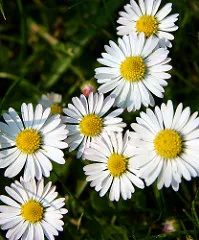
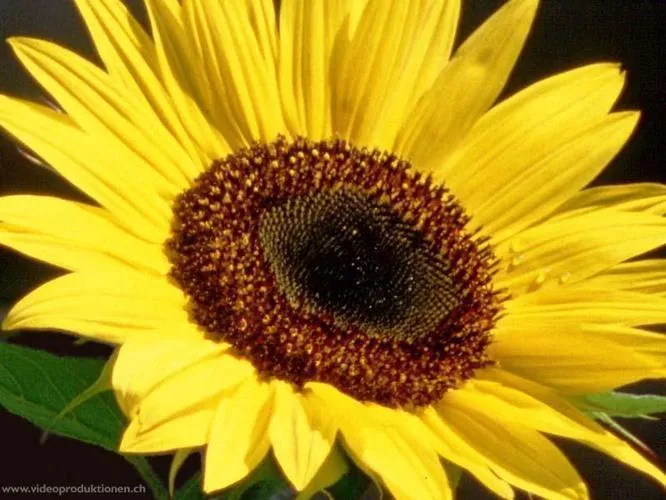
Key Differences: Daisy vs Sunflower
The main difference between daisies and sunflowers is their scale and lifecycle. Common daisies are low-growing, mounding perennials that produce small, white-rayed flowers with yellow centers throughout the spring and summer. Sunflowers (Helianthus annuus) are towering, fast-growing annuals that can reach heights of 10 feet or more, producing massive yellow flower heads that track the sun (heliotropism) and yield edible seeds.
Botanical & Care Comparison Table
| Feature | Daisy | Sunflower |
|---|---|---|
| Family | Asteraceae | Asteraceae |
| Colors Available | White, Yellow, Pink, Purple, Red | Yellow, Gold, Bronze, Red, Mahogany, Bi-colors |
| Bloom Season | Spring through late autumn (continuous) J F M A M J J A S O N D | Mid-summer to late autumn (typically July–October) J F M A M J J A S O N D |
| Maintenance Level | Low (very hardy, easy to grow and divide) | Moderate (fast-growing, needs staking and bird protection) |
| Sunlight Needs | Full Sun to Partial Shade | Full Sun (requires 6-8 hours direct sunlight daily) |
| Watering Needs | Average (drought-tolerant once established) | High (needs regular deep watering during growth spurt) |
| Pet Toxicity | ⚠️ Mildly toxic to cats and dogs (sesquiterpenes) | ✅ Non-toxic to cats and dogs (fully safe) |
| Fragrance | Faint, slightly herbaceous/musty | Neutral to faint earthy smell |
| Pests & Diseases | Susceptible to Powdery Mildew and Leaf Spots. | Susceptible to Downy Mildew, Rust, and Sunflower Moths. |
| Typical Uses | Groundcovers, lawns, borders, containers | Privacy screens, bird feeding, seed production |
How to Spot the Differences (Visual Identification)
Spot the features below to easily distinguish between the two plants in the wild or garden:
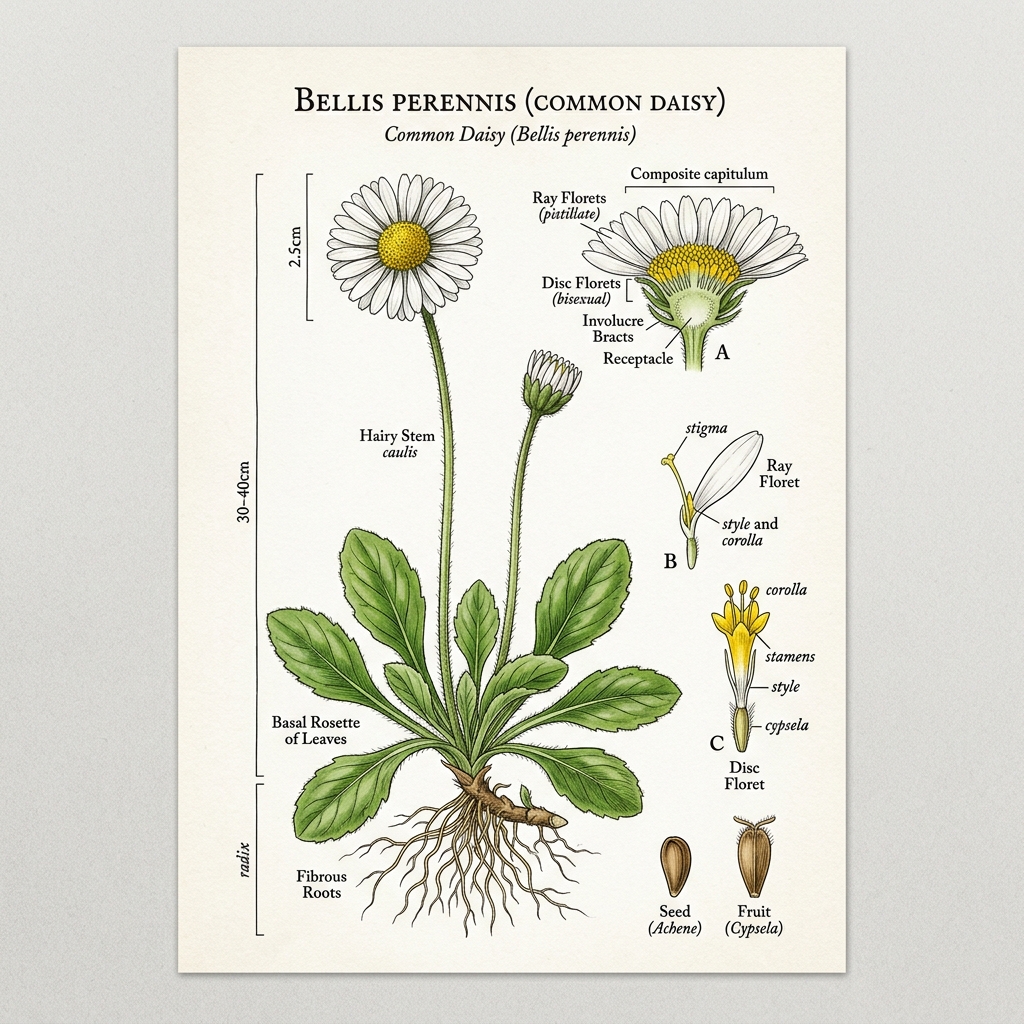
- Small, delicate blooms: Flower heads are small (1 to 3 inches wide) with narrow white ray petals.
- Spoon-shaped leaves: Low-growing leaves form a dense rosette and are scalloped or spoon-shaped.
- Short, perennial habit: Plants form compact mounds (12 to 36 inches tall) that spread year after year.
- Flat yellow disc: Central disc is bright yellow and flat, containing hundreds of tiny disc florets.
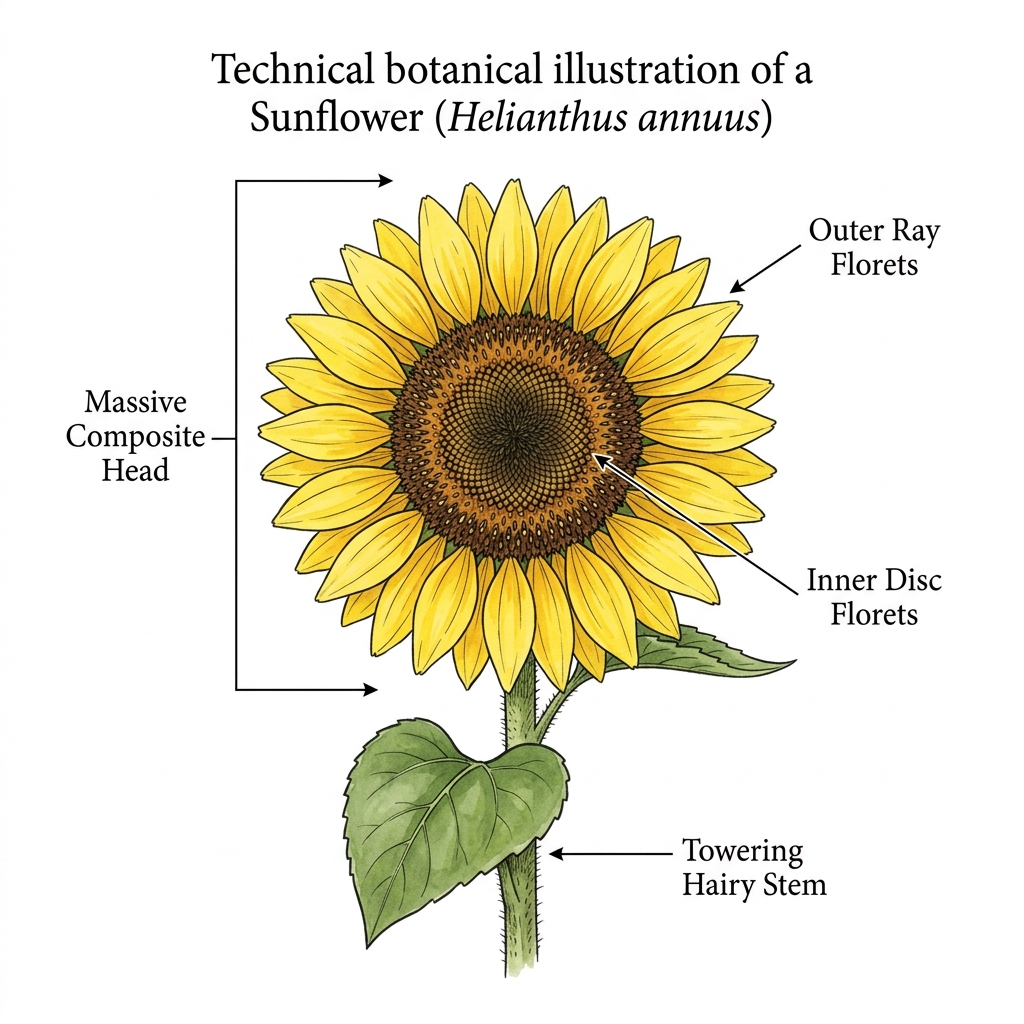
- Massive flower heads: Flower discs are huge (6 to 12 inches wide) surrounded by broad yellow petals.
- Large, heart-shaped leaves: Leaves are coarse, rough-textured, heart-shaped, and grow along a thick stem.
- Towering annual height: Grows rapidly on a single thick stem reaching 6 to 12 feet tall in one season.
- Seed-filled central disc: Central core matures into heavy clusters of edible sunflower seeds.
Which Should You Choose?
- Choose Daisies if you want a low-profile, long-lived perennial border that blooms continuously with minimal effort.
- Choose Sunflowers if you want dramatic height accents, enjoy watching birds and pollinators flock to your garden, and want to harvest edible seeds in the autumn.
Frequently Asked Questions: Daisy vs Sunflower
Q: Is a sunflower a daisy? (Are sunflowers and daisies in the same family?)
While both belong to the Asteraceae (composite) family and share a composite flower head made of outer ray petals and central disc florets, a sunflower is not a true daisy. Common garden daisies belong to genera such as Bellis (Bellis perennis) and Leucanthemum (Oxeye and Shasta daisies), whereas true sunflowers belong to the genus Helianthus (Helianthus annuus). They are botanical cousins within the same family rather than the same plant.
Q: How can you tell a yellow daisy apart from a small or dwarf sunflower?
Check the foliage texture, stem bristles, and central disc scales. Even dwarf or branching sunflowers (Helianthus) have coarse, sandpaper-textured, heart-shaped leaves, stiff bristly stems, and flat chaffy bracts between their central disc florets. Yellow daisies (such as Euryops, Osteospermum, or Coreopsis) have smooth, fleshy, or finely lobed leaves, slender stems, and small 1–3 inch flower heads that never develop striped edible seeds.
Q: Can you plant daisies and sunflowers together in the same garden bed?
Yes! Daisies and sunflowers make excellent companion plants in a sunny border because both thrive in 6–8 hours of direct sunlight and well-draining soil. Plant tall annual sunflowers (Helianthus annuus, 6–12 ft) at the back of the bed as a vertical backdrop, and edge the front with low, mounding perennial daisies (1–3 ft) so neither shades the other out.
Q: Are daisies and sunflowers safe for cats and dogs?
They have opposite pet-safety profiles: Sunflowers (Helianthus annuus) are 100% non-toxic and safe for cats, dogs, and horses according to the ASPCA. Common and Shasta daisies (Bellis perennis / Leucanthemum) are mildly toxic to cats and dogs because they contain sesquiterpene lactones and pyrethrins, which can cause drooling, vomiting, and mild dermatitis if chewed.
Explore Complete Species Profiles & Floral Formulas
Daisy: Varieties, Floral Formula & Care Guide
Bellis perennis
Ray florets - Br % ♀ K0 C∞ A0 G(2), Disk florets - Br ⊕ ⚥ K0 C(5) A(5) G(2)Sunflower (Helianthus annuus): Varieties, Floral Formula & Care Guide
Helianthus annuus
Br ⊕ ⚥ K(2–pappus) C(5) A(5) Ḡ(2)