
Goldenrod vs Ragweed
How to tell Goldenrod from Ragweed? Compare their flowers, leaves, and pollen to see why Goldenrod does NOT cause fall hay fever while Ragweed does.
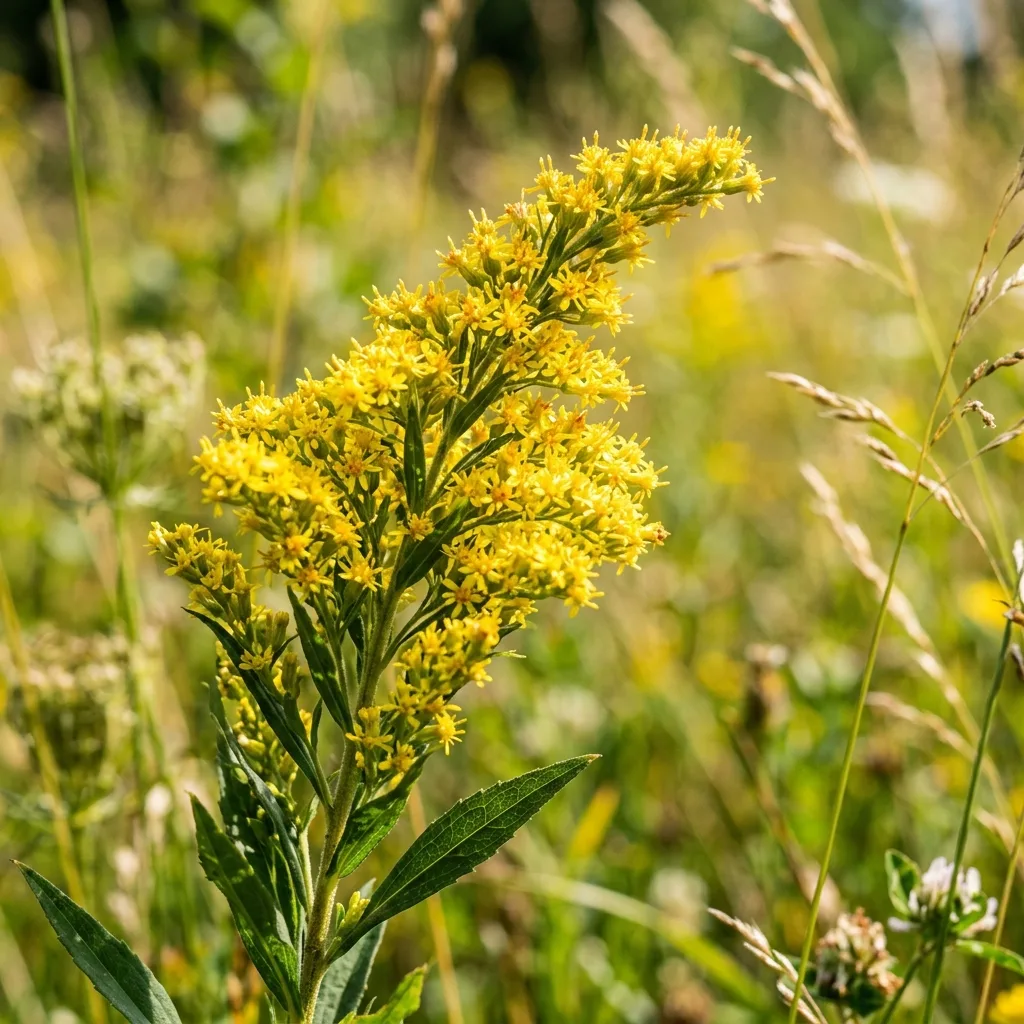
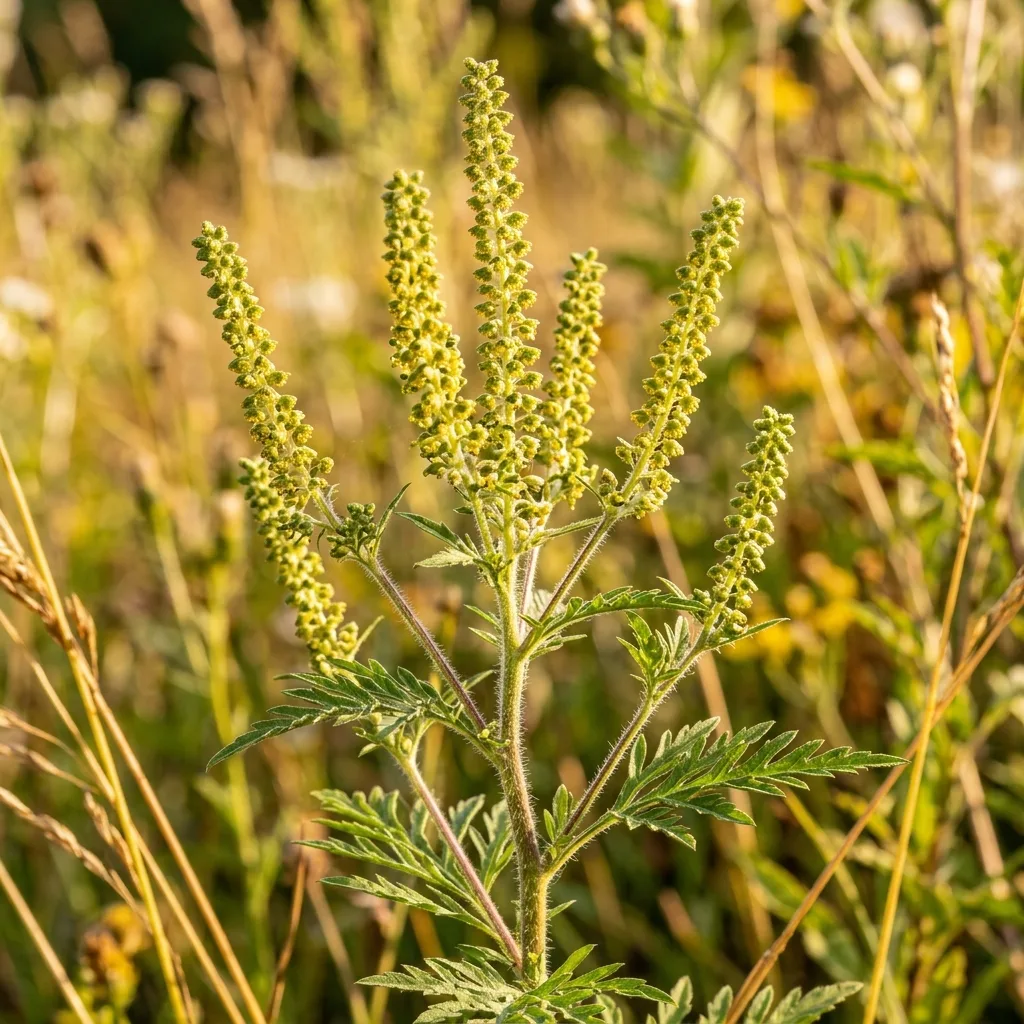
Key Differences: Goldenrod vs Ragweed
The primary difference between Goldenrod (Solidago canadensis) and Common Ragweed (Ambrosia artemisiifolia) lies in their pollination biology, floral visibility, and role in seasonal allergies. Because both North American Asteraceae plants bloom simultaneously from August through October along roadsides and meadows, showy Goldenrod is widely—and falsely—blamed for autumn hay fever. In reality, Goldenrod produces brilliant, cascading golden-yellow flower plumes with heavy, sticky pollen grains engineered to be transported by Monarch butterflies, native bees, and beetles, meaning its pollen cannot become airborne or trigger sneezing.
In contrast, Common Ragweed is strictly wind-pollinated (anemophilous) and hides in plain sight with camouflaged, spire-like racemes of tiny, nodding yellowish-green flower heads that lack showy petals. A single Ragweed plant releases up to 1 billion microscopic, aerodynamic pollen grains carrying the potent Amb a 1 allergen, which travels hundreds of miles on autumn breezes. Morphologically, Goldenrod is a long-lived rhizomatous perennial with narrow, undivided, lance-shaped leaves, whereas Common Ragweed is a fast-growing summer annual with deeply bipinnately dissected, fern-like foliage.
Botanical & Care Comparison Table
| Feature | Goldenrod | Common Ragweed |
|---|---|---|
| Family | Asteraceae | Asteraceae |
| Colors Available | Brilliant Golden-Yellow, Bright Canary Yellow | Camouflaged Yellowish-Green, Muted Chartreuse-Green |
| Bloom Season | Late summer through autumn (August–October) J F M A M J J A S O N D | Late summer through mid-autumn (August–October; peak pollen in September) J F M A M J J A S O N D |
| Maintenance Level | Low (hardy perennial; divide clumps every 3–4 years to manage spread) | Weedy pioneer annual (hand-pull or hoe in early summer before August pollen shed) |
| Sunlight Needs | Full Sun (6+ hours direct sunlight daily) | Full Sun (colonizes open, sunny disturbed ground and unmulched soil) |
| Watering Needs | Low to Average (exceptionally drought-tolerant once established) | Low (thrives in dry, compacted roadsides, vacant lots, and field margins) |
| Pet Toxicity | ✅ Non-toxic to cats, dogs, and humans (allergy-safe insect pollen) | ⚠️ Highly allergenic airborne pollen & contact irritant (triggers pet atopic dermatitis) |
| Fragrance | Faint, warm honey-like herbal scent | Bitter, mildly resinous weedy odor when leaves are crushed |
| Pests & Diseases | Susceptible to Powdery Mildew, Rust Disease, and Aphids. | Visited by Flea Beetles and susceptible to Powdery Mildew and Cercospora Leaf Spot. |
| Typical Uses | Pollinator gardens, Monarch migration forage, cut flowers, traditional herbal tea | Wild winter songbird/quail seed forage (generally eradicated from home gardens) |
How to Spot the Differences (Visual Identification)
Spot the features below to easily distinguish between the two plants in the wild or garden:
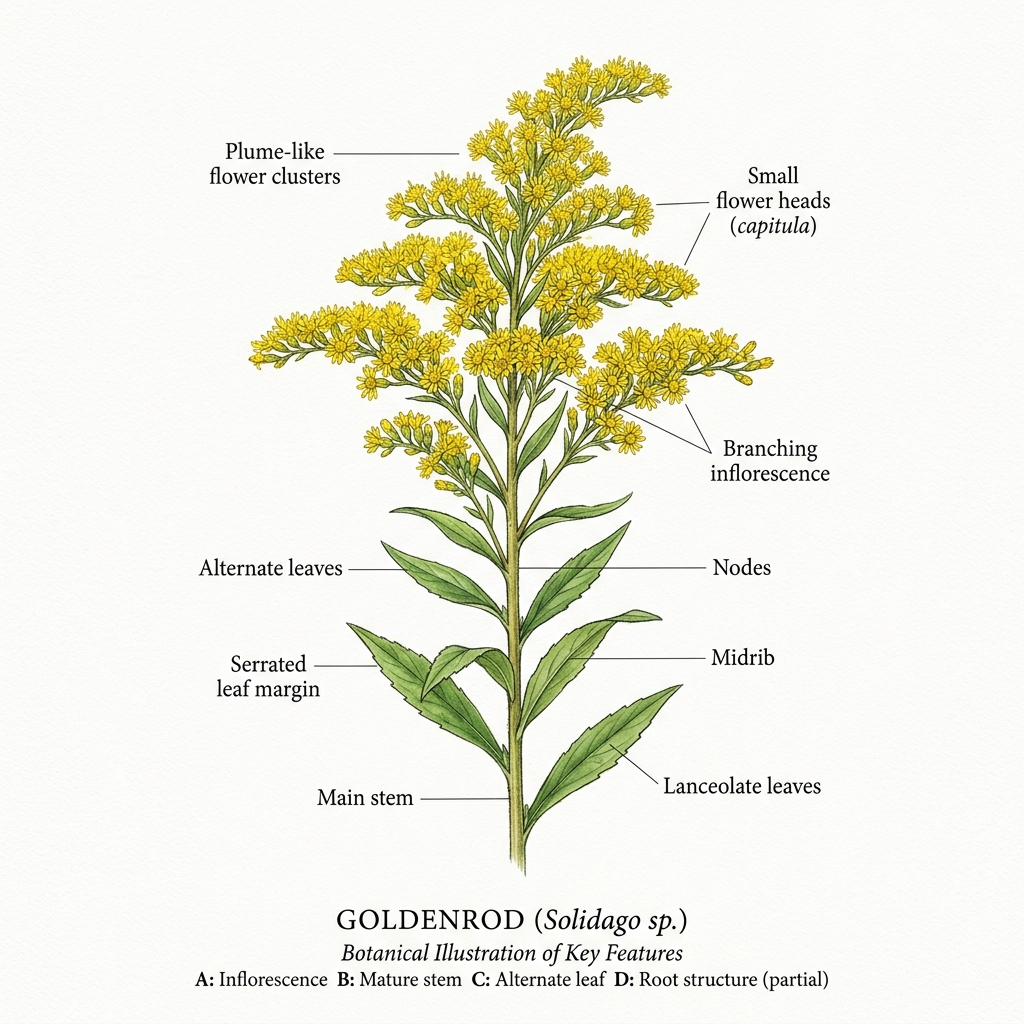
- Showy golden-yellow plumes: Produces dense, arching, one-sided pyramidal panicles of vivid golden-yellow flower heads.
- Undivided lance-shaped leaves: Foliage consists of narrow, unlobed, sharply pointed leaves with serrated edges arranged alternately up the stem.
- Heavy, sticky insect pollen: Pollen grains are large and tacky, clinging to visiting bees and migrating Monarch butterflies rather than floating in the air.
- Rhizomatous perennial habit: Grows 2 to 5 feet tall from persistent underground rhizomes that return every year in sturdy colonies.
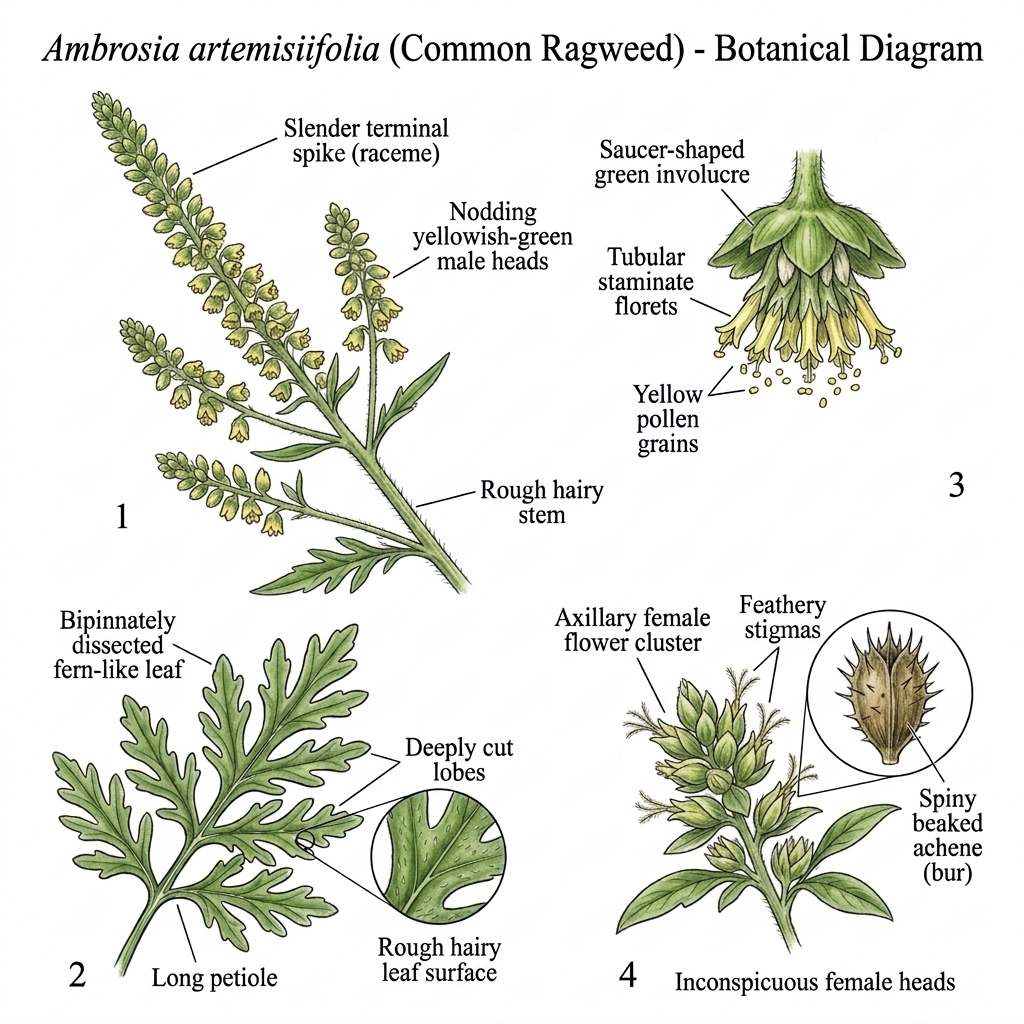
- Inconspicuous green flower spikes: Bears slender, leafless terminal racemes lined with tiny (2–4 mm) nodding, saucer-shaped yellowish-green male heads.
- Fern-like dissected foliage: Leaves are deeply bipinnately lobed and finely divided, closely resembling carrot tops or lacy fern fronds.
- Clouds of airborne yellow pollen: Sheds up to 1 billion buoyant, microscopic wind-borne pollen grains per plant—the #1 trigger of fall hay fever.
- Shallow-rooted annual weed: Sprouts from seed in disturbed soil each spring, branches bushily (1 to 4 feet tall), and dies completely at the first hard frost.
Which Should You Choose?
- Choose Goldenrod for your garden borders and native prairie beds—it delivers breathtaking autumn gold, fuels migrating Monarch butterflies and native bees, and will never cause hay fever.
- Remove Common Ragweed from home yards in late spring or early summer before its green terminal spikes form, and mulch bare soil to prevent its wind-borne allergenic pollen from triggering autumn sneezing.