
Petunia vs Geranium
Petunia or Geranium for window boxes and containers? Compare flower shape, care requirements, heat and rain tolerance, fragrance, and toxicity. Full side-by-side comparison.
Key Differences: Petunia vs Geranium
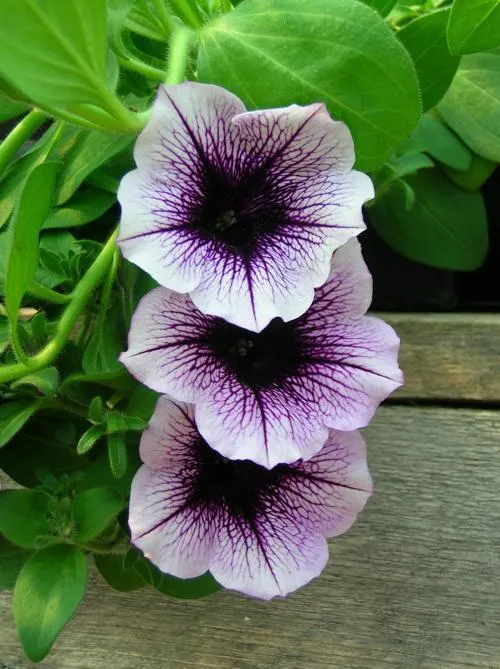
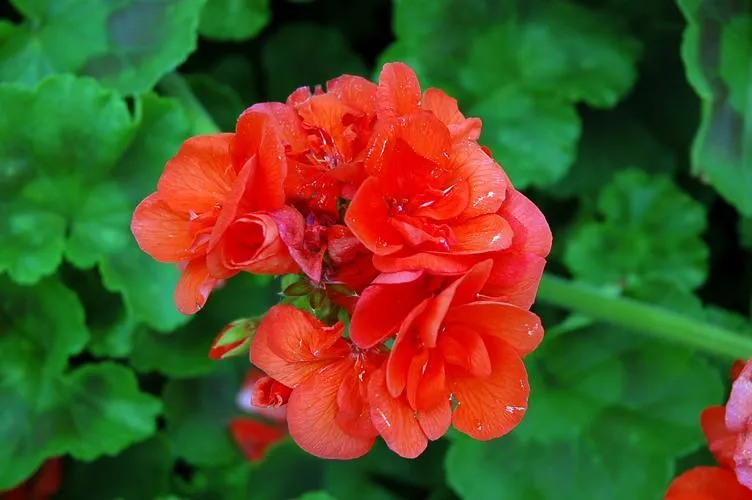
Petunias and Geraniums (Pelargoniums) are the two most popular container and window box plants worldwide, and while they are often planted together, they have quite different care needs and visual characteristics. Petunias (Petunia × hybrida) are trailing or mounding annuals with large, funnel-shaped, velvety flowers that can reach 4 inches across in an enormous color range, but they are rain-sensitive and require deadheading in older varieties. Geraniums (Pelargonium hortorum — technically Pelargoniums, not true Geraniums) are more structurally upright plants with rounded leaf clusters and ball-shaped umbels of flowers, famous for their distinctive aromatic (sometimes citrusy or spicy) leaves. Geraniums tolerate drought and poor conditions far better than petunias, while petunias trail and cascade more effectively over the edges of hanging baskets and window boxes.
Botanical & Care Comparison Table
| Feature | Petunia | Geranium |
|---|---|---|
| Family | Solanaceae | Geraniaceae |
| Colors Available | Purple, Pink, Red, White, Yellow, Bi-color, Striped — widest range of any annual | Red, Salmon, Pink, White, Coral, Bi-color |
| Bloom Season | Spring through autumn (April–October) — all season J F M A M J J A S O N D | Spring through autumn (April–October) — all season J F M A M J J A S O N D |
| Maintenance Level | Moderate — traditional varieties need deadheading; Wave varieties are self-cleaning | Low-Moderate — deadhead spent flower stalks; drought-tolerant |
| Sunlight Needs | Full Sun (6+ hours for best bloom) | Full Sun to Part Shade (more versatile) |
| Watering Needs | Regular — sensitive to both drought and waterlogging; damaged by heavy rain | Low-Moderate — drought-tolerant; let soil dry slightly between waterings |
| Pet Toxicity | ✅ Non-toxic to cats and dogs | ⚠️ Mildly toxic to cats and dogs (geraniol and linalool irritants) |
| Fragrance | No fragrance from flowers; stems are slightly sticky | Highly aromatic foliage (roses, citrus, mint depending on variety); flowers have minimal scent |
| Pests & Diseases | Susceptible to Botrytis (Gray Mold) in wet conditions and Aphids. | Susceptible to Botrytis, Powdery Mildew, and Whitefly. |
| Typical Uses | Hanging baskets, window boxes, ground cover, trailing containers | Containers, window boxes, bedding, indoor pots, patio planters |
How to Spot the Differences (Visual Identification)
Spot the features below to easily distinguish between the two plants in the wild or garden:
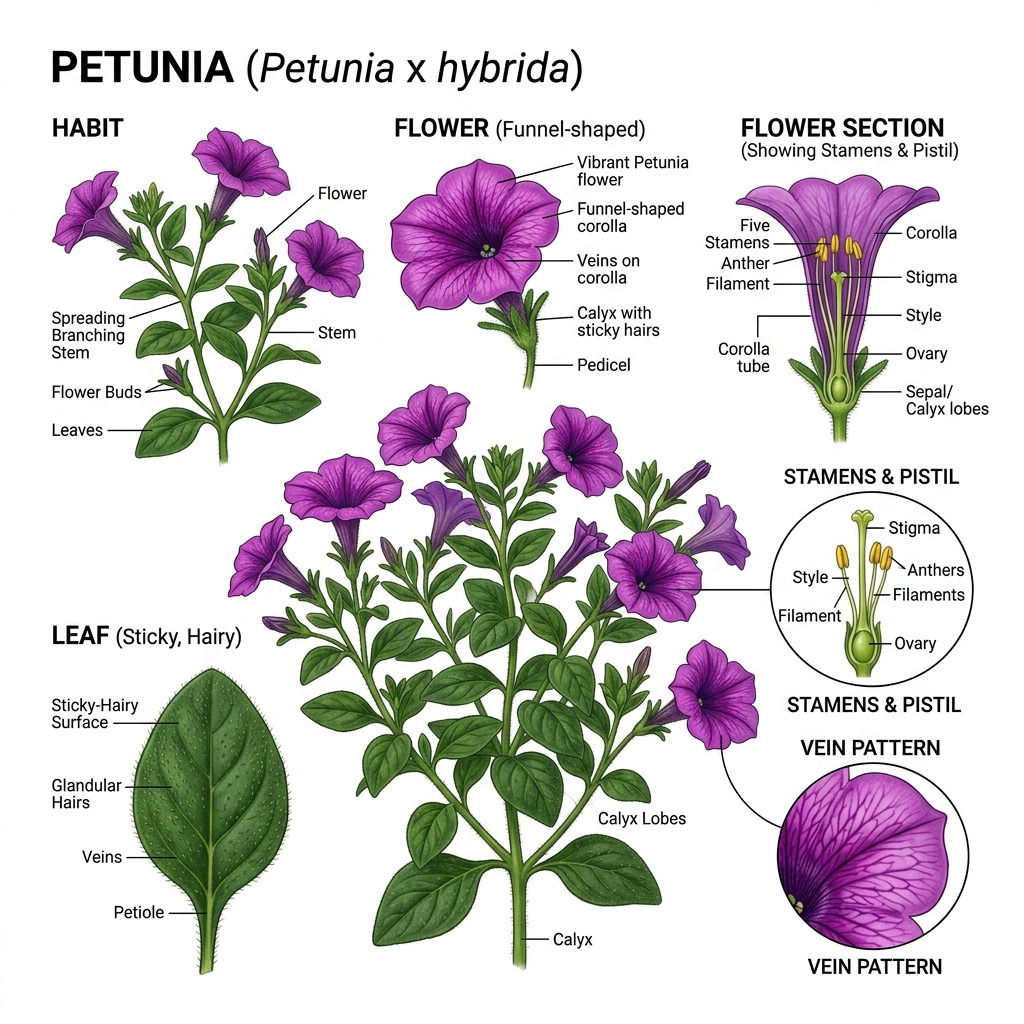
- Large funnel/trumpet-shaped flowers: Individual flowers are large (2–4 inches), velvety, and funnel-shaped with 5 fused petals. Often ruffled or streaked.
- Oval, slightly sticky leaves: Leaves are oval, slightly fuzzy and sticky to the touch, without the distinctive horseshoe zone mark.
- Trailing or cascading habit: Most modern Petunias trail and cascade freely over container edges — ideal for hanging baskets.
- Continuous non-stop bloom: Modern 'Wave' varieties bloom prolifically all season without deadheading.
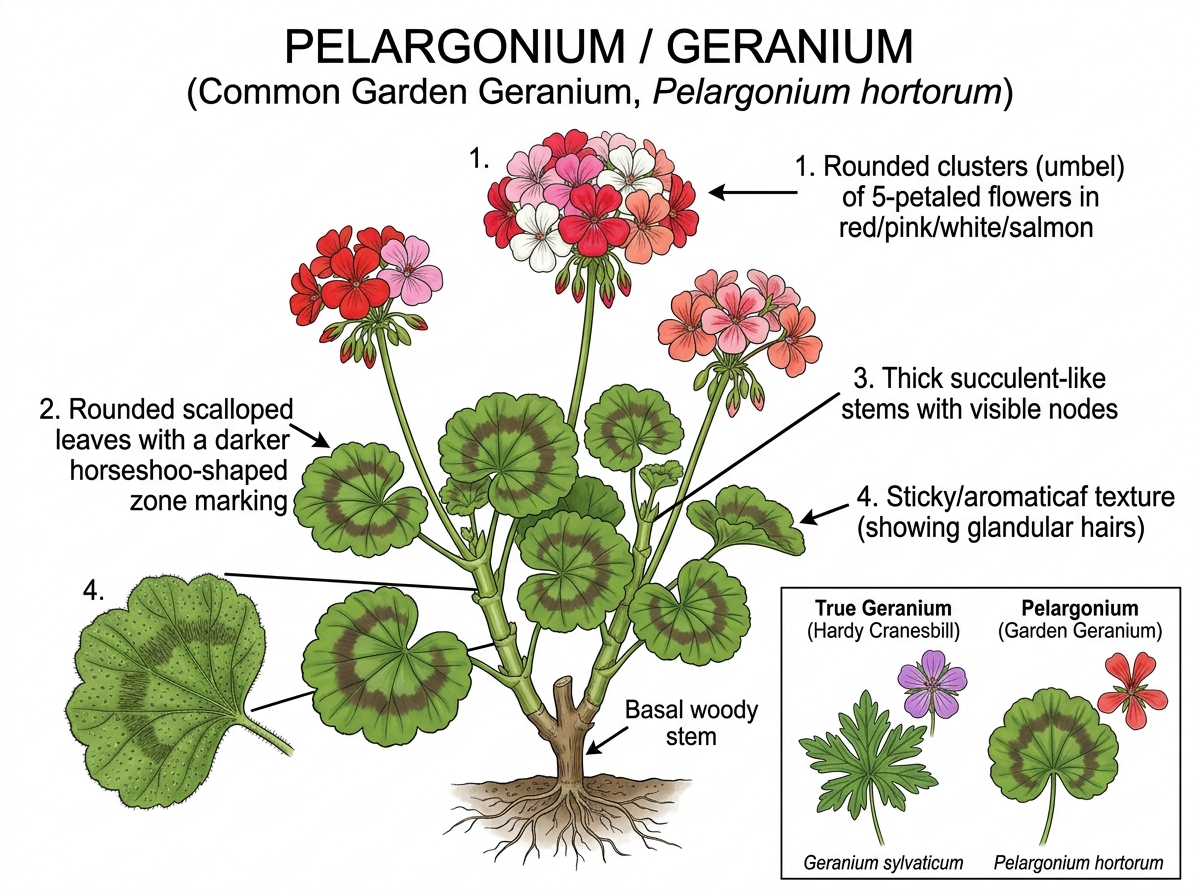
- Rounded ball-like flower clusters: Many small flowers (5-petaled, slightly asymmetric) are grouped in a dome-shaped umbel cluster at the top of each stem.
- Rounded leaves with horseshoe zone: Leaves are rounded with scalloped edges and typically show a darker horseshoe-shaped or butterfly-shaped marking in the center.
- Upright, bushy habit: Grows upright and bushy rather than trailing — better as a centrepiece than a draping edge plant.
- Aromatic foliage: Leaves are distinctively aromatic when rubbed — scented Pelargoniums smell like roses, citrus, mint, or spice depending on variety.
Which Should You Choose?
- Choose Petunias if you want maximum trailing effect in hanging baskets, the widest possible color range and patterns, and are in a sheltered spot that protects them from heavy rain. Modern Wave petunias are some of the easiest, most floriferous annuals available.
- Choose Geraniums (Pelargoniums) if you want an upright, structural container plant that tolerates drought and slightly neglected watering, and appreciate aromatic foliage. They are more forgiving and longer-lasting than petunias when conditions are less than ideal.