
Bee Balm vs Wild Bergamot
Scarlet Bee Balm or Wild Bergamot? Compare Monarda didyma vs Monarda fistulosa by flower color, soil moisture, hummingbird attraction, and herbal uses. Native plant guide.
Key Differences: Bee Balm vs Wild Bergamot
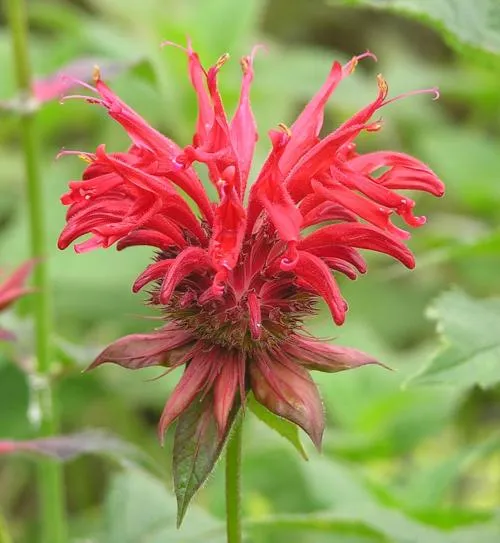
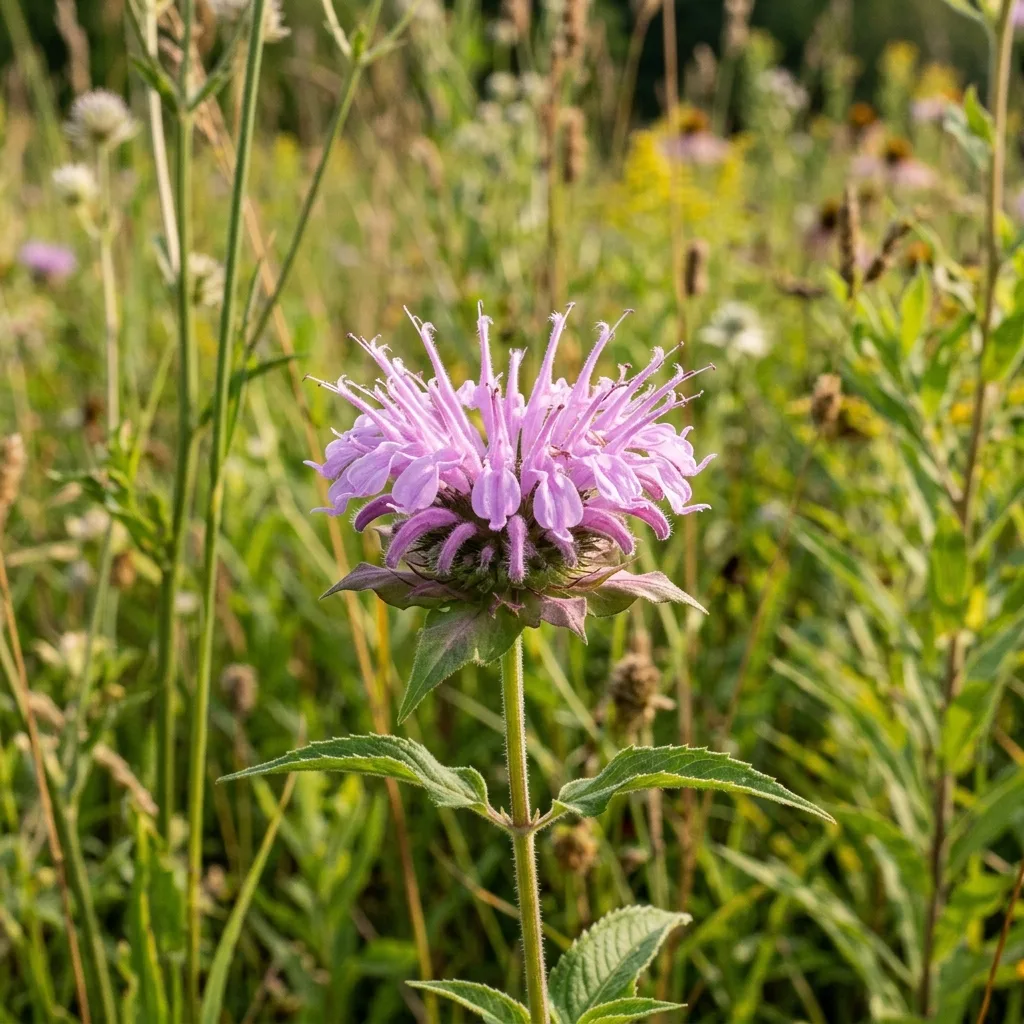
Bee Balm (Monarda didyma) and Wild Bergamot (Monarda fistulosa) are closely related North American native perennials in the genus Monarda (Mint family), celebrated for their shaggy tubular flower heads and aromatic foliage. The primary difference lies in flower color, native habitat, and moisture preference. Bee Balm (Monarda didyma) produces intense scarlet-red flowers supported by red-tinted leaf bracts and thrives in rich, moist to wet soils along streambanks and woodland edges, making it the premier native plant for attracting ruby-throated hummingbirds. Wild Bergamot (Monarda fistulosa) produces lavender to pale pink flowers supported by whitish bracts and is far more drought-tolerant, naturally inhabiting drier open prairies, fields, and sunny slopes. Both species contain thymol-rich essential oils used in Oswego tea.
Botanical & Care Comparison Table
| Feature | Beebalm | Wild Bergamot |
|---|---|---|
| Family | Lamiaceae | Lamiaceae |
| Colors Available | Scarlet Red, Crimson, Deep Pink | Lavender, Lilac, Soft Pink, Purple-Pink |
| Bloom Season | Mid to late summer (July–August) J F M A M J J A S O N D | Mid to late summer (July–September) J F M A M J J A S O N D |
| Maintenance Level | Moderate — requires consistent watering; thin stems to improve airflow | Low — highly drought-tolerant; thrives on rainfall alone once established |
| Sunlight Needs | Full Sun to Part Shade (prefers afternoon shade in hot climate) | Full Sun (thrives in open unshaded sites) |
| Watering Needs | High — requires rich, moist, organic soil; suffers in dry periods | Low to Moderate — drought-tolerant; adapts to dry, sandy, or clay soils |
| Pet Toxicity | ✅ Non-toxic to cats and dogs (safe native perennial) | ✅ Non-toxic to cats and dogs (safe native perennial) |
| Fragrance | Citrusy Earl Grey tea / citrus-mint aroma | Spicy oregano/thyme herbal scent (high thymol) |
| Pests & Diseases | Highly susceptible to Powdery Mildew if soil dries out. | Slightly more mildew-resistant than M. didyma; good airflow essential. |
| Typical Uses | Hummingbird gardens, rain gardens, moist borders, Oswego herbal tea | Prairie restoration, butterfly gardens, dry sunny borders, herbal tea |
How to Spot the Differences (Visual Identification)
Spot the features below to easily distinguish between the two plants in the wild or garden:
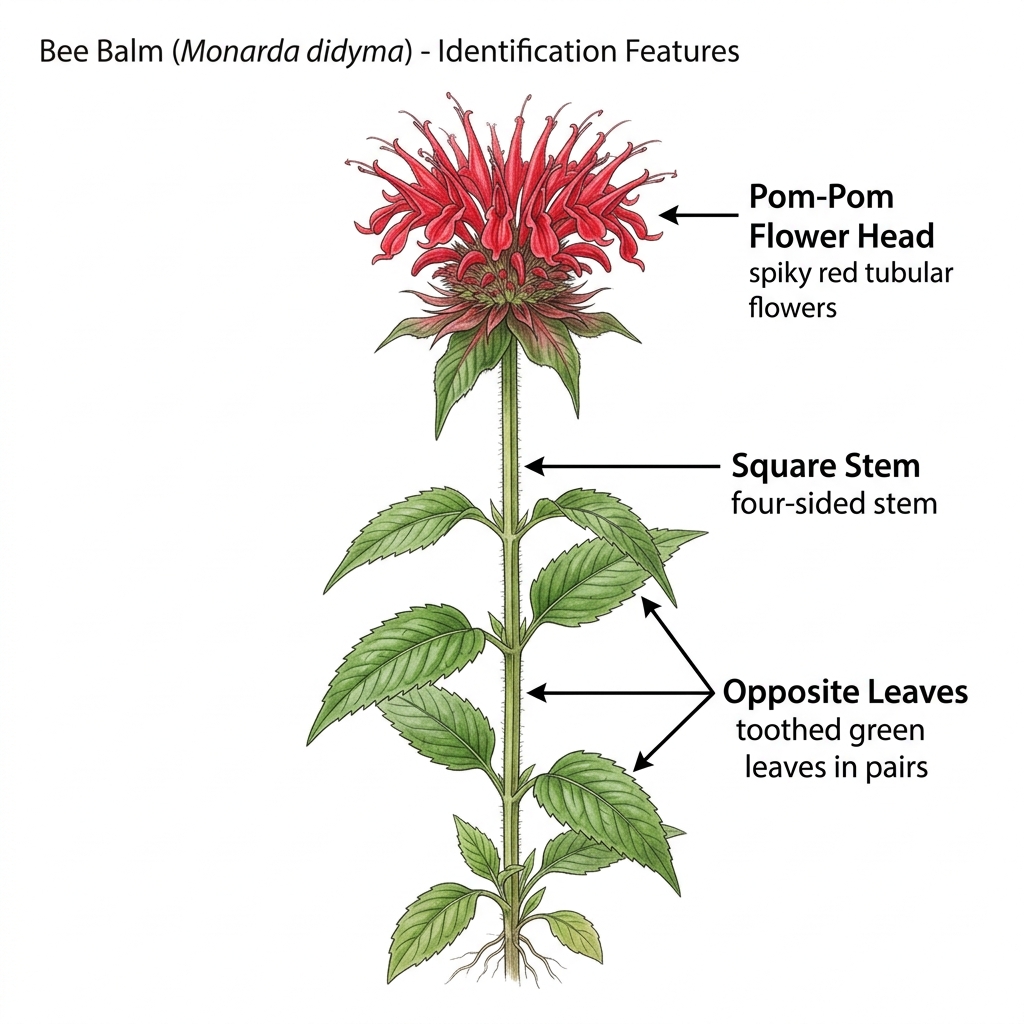
- Intense scarlet-red flowers: Fiery red tubular flowers arranged in a dense terminal crown with red-tinged leafy bracts beneath.
- Moisture-loving woodland habit: Naturally occurs along moist streambanks and wet woods. Demands consistent soil moisture.
- #1 Hummingbird attractor: The bright red tubular blooms are specifically co-evolved for ruby-throated hummingbird pollination.
- Darker green foliage: Leaves are dark green, heart-to-lance-shaped with reddish veins and citrus-bergamot scent.
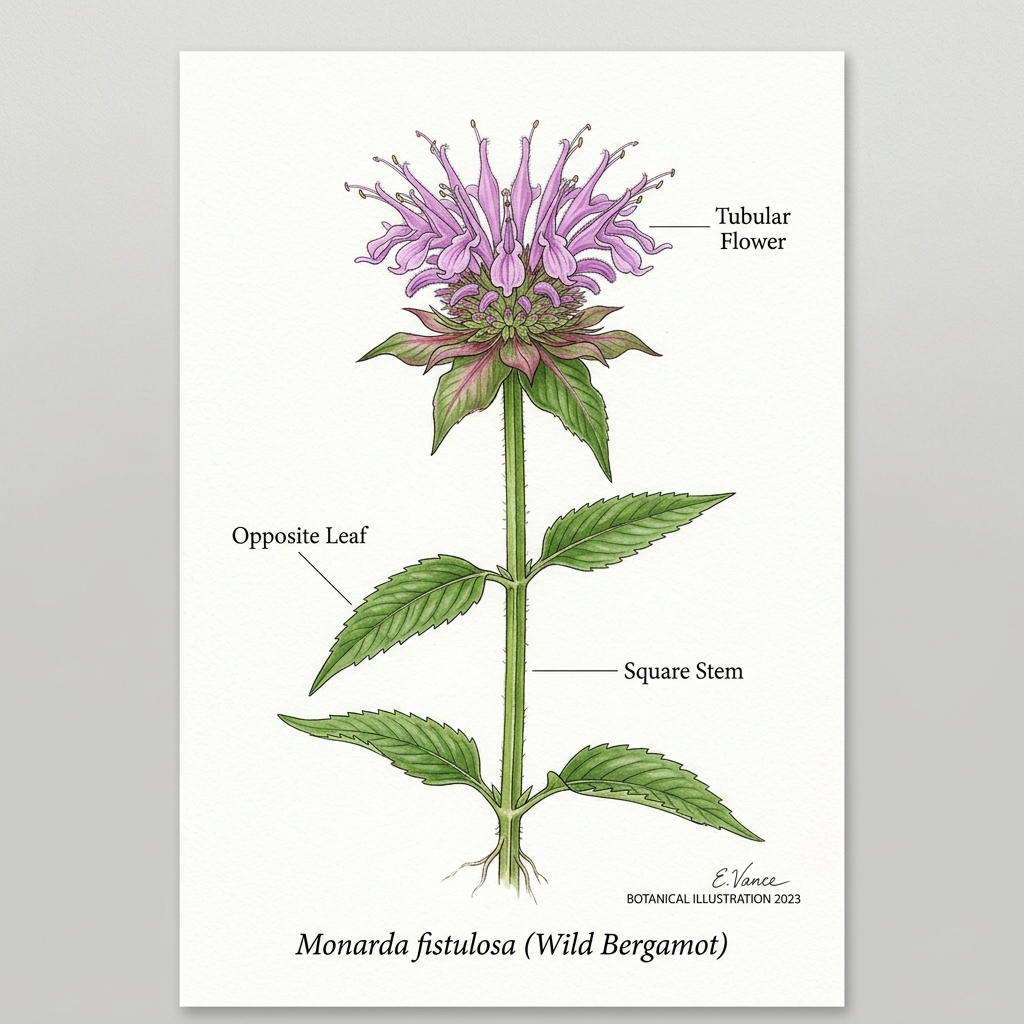
- Lavender to pale pink flowers: Soft lilac, lavender, or rose-pink tubular flowers with pale whitish leaf bracts.
- Drought-tolerant prairie habit: Naturally inhabits dry sunny prairies, meadows, and open slopes. Thrives in dry soil.
- Specialist bee & butterfly attractor: Highly attractive to bumblebees, swallowtail butterflies, and clearwing hummingbird moths.
- Grey-green aromatic foliage: Leaves are lighter grey-green with a stronger oregano/thyme herbal aroma due to higher thymol content.
Which Should You Choose?
- Choose Bee Balm (Monarda didyma) if you have rich, moist soil or a rain garden and want to attract hummingbirds with striking scarlet-red summer blooms.
- Choose Wild Bergamot (Monarda fistulosa) if you have dry, sunny prairie soil, want low-maintenance drought-tolerant color, and want to support native bees and butterflies.