
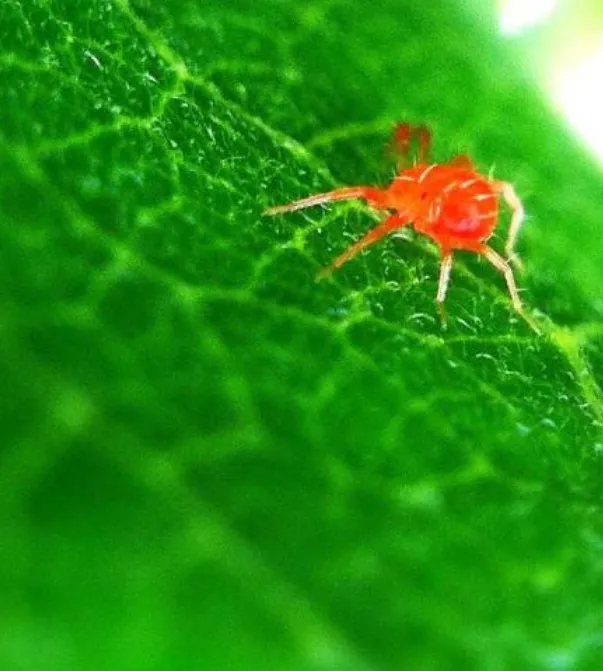
Spider Mite
Tetranychus urticae
About Spider Mite
Spider mites are tiny, sap-sucking arachnids belonging to the family Tetranychidae, with the Two-Spotted Spider Mite (Tetranychus urticae) being the most common and destructive species. These pests are so small that they are often difficult to see with the naked eye, resembling moving grains of pepper on the undersides of leaves. Despite their size, they are formidable pests capable of causing rapid and widespread damage, especially in hot, dry environments where their reproductive rate accelerates to an alarming speed.
The primary damage caused by spider mites is "stippling"—thousands of tiny white or yellow dots on the upper surface of the leaves, which represent individual plant cells that have been drained of their contents. As the population grows, the foliage takes on a pale, bronzed, or grayish appearance and eventually becomes covered in fine, silken webbing. This webbing protects the mites and their eggs from predators and environmental stress. If left unchecked, the plant will eventually lose its leaves and die due to the total loss of chlorophyll and excessive water stress.
The spider mite thrives in hot, dry agricultural zones.
| Crop/Plant Type | Severity Rating | Impact Description |
|---|---|---|
| Strawberries & Tomatoes | Extreme (⭐⭐⭐) | Thick silken webs, leaf bronzing/drying, heavy leaf dropping, and total crop failure under dry heat |
| Roses & Marigolds | High (⭐⭐) | Foliar stippling (yellow dots), webbing on buds, and stunted flower growth |
| Cucumbers & Beans | Medium (⭐) | Moderate foliar speckling, minor webbing, and reduced leaf vigor |
Managing spider mites effectively requires a shift in traditional pest control thinking. Because they are arachnids and not insects, many standard insecticides are ineffective against them and can actually cause outbreaks by killing off their natural predators like ladybugs and lacewings. Success depends on maintaining high humidity, using forceful water sprays to disrupt their webbing and physical presence, and employing biological controls such as predatory mites. Early intervention is critical to prevent the population from reaching the "webbing stage," where control becomes significantly more difficult. For detailed agricultural advice, check our Plant Disease Identifier Hub, or explore related threat profiles like Thrips, Aphid, and Lace Bug, and our diagnostic Garden Pest Classification Guide.
Taxonomy & Features
- Leaf Stippling: Thousands of tiny, pale yellow or white dots on the upper leaf surface where mites have sucked out the cell contents.
- Fine Silken Webbing: Delicate, spider-like webs appearing on the undersides of leaves and between stems, especially in severe infestations.
- Bronzed Foliage: Leaves take on a dull, bronzed, or grayish-yellow appearance as they lose chlorophyll and dry out.
- Tiny Moving Dots: Microscopic mites, often with two dark spots on their back, visible as moving specks on the leaf underside (best seen with a hand lens).
- Premature Leaf Drop: Heavily infested leaves become brittle and fall off the plant prematurely, severely weakening the host.
- Dusty Appearance: The accumulation of cast skins, empty eggshells, and dust trapped in webbing gives the plant a "dirty" or dusty look.
Seasonal Outbreak Calendar
Outbreak risk and activity timeline for Spider Mite based on seasonal climate patterns:
Names in Different Languages
Affected Plant Species
Vegetables & Crops
- Tomato
- Bean
- Cucumber
- Eggplant
- Pepper
- Squash
- Melon
Flowers & Ornamentals
- Rose (Highly susceptible)
- Marigold
- Petunia
- Chrysanthemum
- Carnation
- Spider Plant
Fruits & Berries
- Strawberry
- Raspberry
- Grape
- Apple
- Peach
- Citrus
Prevention & Cure
Natural & Organic Methods
- Forceful Water Spray: Regularly spray the undersides of leaves with a strong stream of water to knock mites off and destroy their protective webbing.
- Increase Humidity: Mites thrive in dry air; misting plants or using humidifiers in greenhouses creates an environment they dislike and slows their reproduction.
- Predatory Mites: Introduce beneficial predatory mites like Phytoseiulus persimilis, which are highly effective at hunting and eating spider mites.
- Horticultural Oils & Neem: Apply Neem oil or light horticultural oils to suffocate the mites and their eggs (ensure good coverage on leaf undersides).
- Insecticidal Soap: Use potassium fatty acid-based soaps to dissolve the mites' outer shells, causing them to dehydrate and die.
Chemical & Professional Control
- Specific Miticides (Acaricides): Use products containing Abamectin, Bifenazate, or Spiromesifen specifically designed for mite control.
- Avoid Carbaryl (Sevin): Never use standard broad-spectrum insecticides like Carbaryl, as they often trigger mite outbreaks by killing natural predators.
- Rotational Application: If using chemicals, rotate between different active ingredient classes to prevent the mites from developing resistance.
Frequently Asked Questions
Are spider mites actually spiders?
No, they are not spiders, but they are arachnids and belong to the same class as spiders and ticks. They have eight legs as adults and the ability to produce silk webbing.
Why did my spider mite problem get worse after I sprayed for aphids?
Many general insecticides kill the natural predators of spider mites (like ladybugs) but don't kill the mites themselves. This "predator vacuum" allows the mite population to explode unchecked.
Can spider mites survive the winter?
Yes. In cold climates, they overwinter as eggs or as "diapausing" (dormant) orange females in soil, leaf litter, or crevices in bark and greenhouse structures.
Recommended diagnostics based on crop family and symptoms:
Remedy Disclaimer & Safety Notice
This disease guide is for educational screening purposes only. Pathogen behavior, severity, and host susceptibility can vary dramatically based on seed variety, weather conditions, and regional microclimates. Chemical pesticides and organic treatments are subject to strict regional environmental regulations and registration mandates. Please verify all chemical registrations and review manufacturer safety labels carefully with local certified agronomists or agricultural extension service offices before applying.