
Sunflower vs Marigold
Sunflower or Marigold? Compare height, flower structure, pest-deterrent benefits, companion planting, and care requirements. Full botanical comparison.
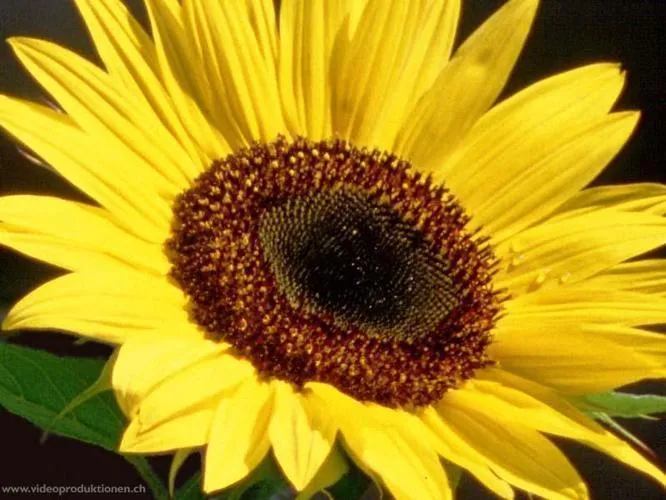
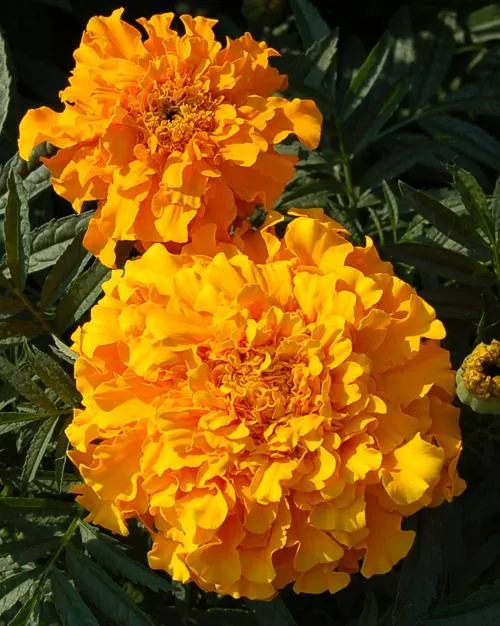
Key Differences: Sunflower vs Marigold
Sunflowers (Helianthus annuus) and Marigolds (Tagetes spp.) are both beloved warm-season annuals in the daisy family (Asteraceae), but they serve entirely different visual and functional roles in the garden. Sunflowers are towering vertical giants (4 to 15 feet tall) with single massive composite heads carrying edible seeds, while Marigolds are bushy, compact plants (6 to 36 inches tall) with pungent aromatic foliage and tightly ruffled carnation-like or daisy blooms in shades of yellow, orange, and mahogany. In vegetable gardens, they form the classic organic companion planting duo: Sunflowers attract specialist pollinators and songbirds, while Marigolds emit pest-repelling scent compounds (alpha-terthienyl) from their roots that suppress harmful soil nematodes and drive away tomato hornworms and whiteflies.
Botanical & Care Comparison Table
| Feature | Sunflower | Marigold |
|---|---|---|
| Family | Asteraceae | Asteraceae |
| Colors Available | Yellow, Gold, Bronze, Red, Mahogany | Yellow, Orange, Gold, Red-Brown, Bi-color |
| Bloom Season | Mid-summer to late autumn (July–October) J F M A M J J A S O N D | Late spring through first frost (May–November) J F M A M J J A S O N D |
| Maintenance Level | Low — stake very tall varieties in windy sites | Very Low — deadhead spent blooms for continuous flower output |
| Sunlight Needs | Full Sun (6–8+ hours daily) | Full Sun (requires warm sunny spots) |
| Watering Needs | Moderate — deep watering for strong taproots; drought-tolerant once established | Low to Moderate — highly drought-tolerant; avoid waterlogged soil |
| Pet Toxicity | ✅ Non-toxic to cats, dogs, and horses | ✅ Non-toxic to cats and dogs (French & African Marigolds are pet-safe) |
| Fragrance | Faint earthy floral scent | Pungent, herbal, musky/spicy scent from crushed foliage |
| Pests & Diseases | Susceptible to Powdery Mildew and rust. | Highly pest-resistant; susceptible to spider mites in hot dry conditions. |
| Typical Uses | Background garden screens, cut flowers, bird gardens, edible seed crops | Vegetable garden borders, companion planting, pest control, window boxes |
How to Spot the Differences (Visual Identification)
Spot the features below to easily distinguish between the two plants in the wild or garden:
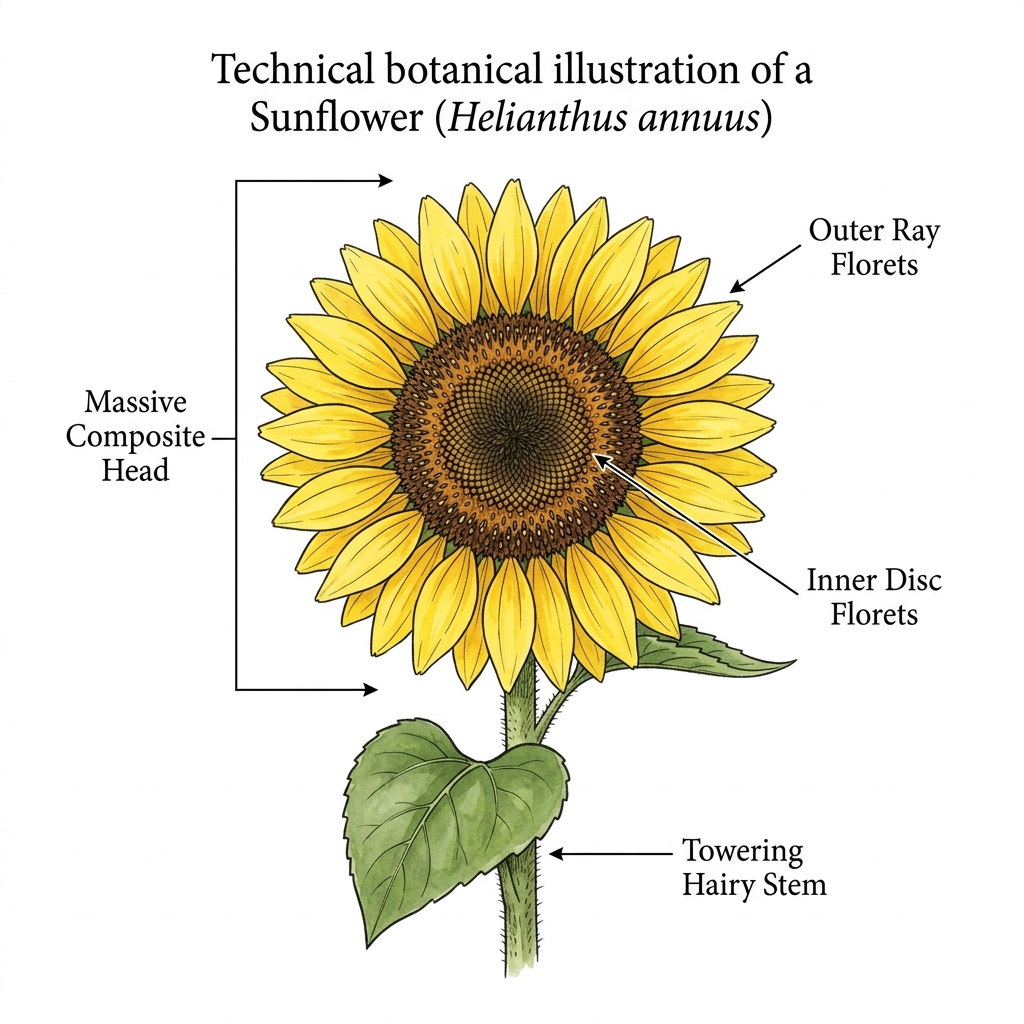
- Towering single stalk: Grows 4–15 feet tall on a thick, coarse, unbranched stem anchored by a deep taproot.
- Massive composite flower head: Single head measuring 4–12 inches across with sterile yellow outer ray petals and a dark central disk of seed-producing florets.
- Heliotropism: Young flower buds track the sun daily from east to west.
- Edible seeds & bird attractor: Produces hundreds of oil-rich seeds that attract wild birds and provide human food.
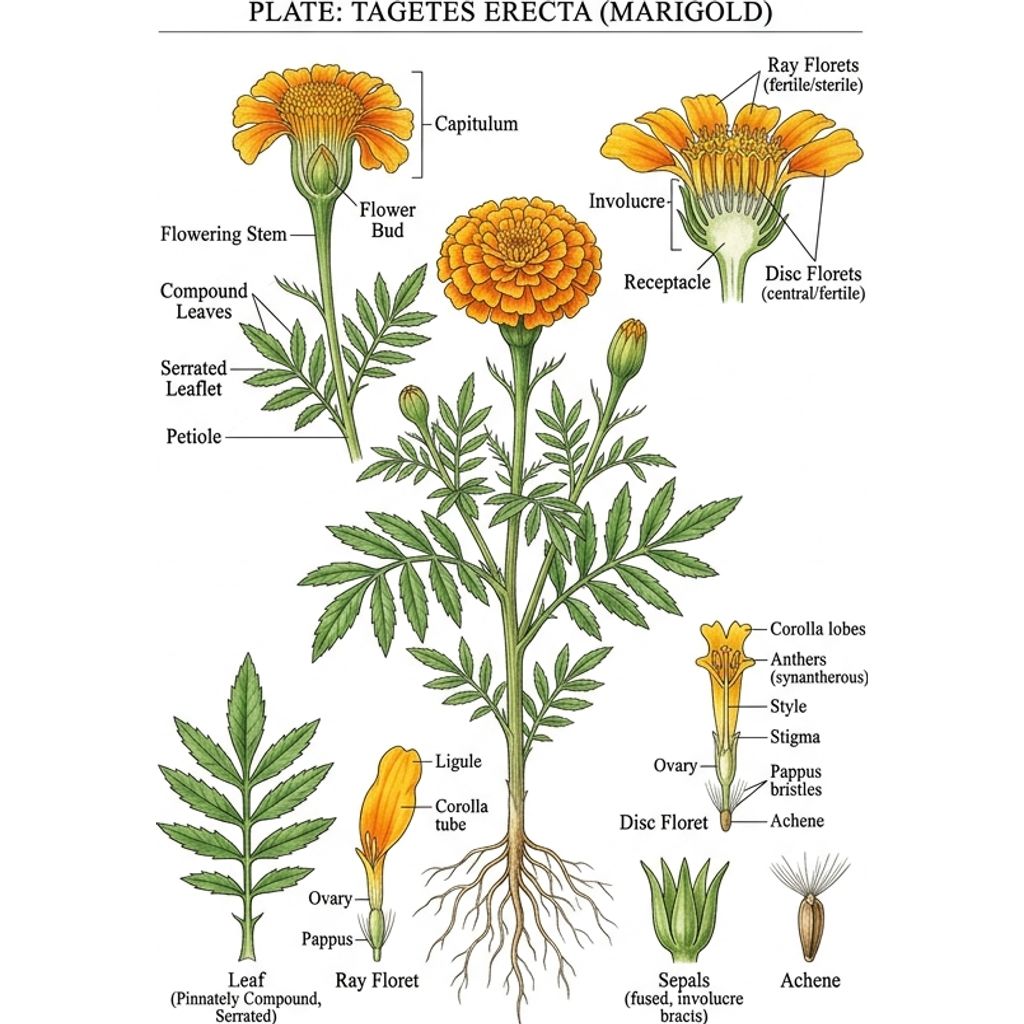
- Compact bushy growth habit: Grows 6–36 inches tall in multi-branched mounds ideal for garden borders.
- Densely ruffled flowers: Flower heads are densely petaled carnation-like or single daisy forms in yellow, orange, and mahogany.
- Aromatic pest-repelling foliage: Leaves emit a strong spicy scent that deters garden pests.
- Root exudates combat nematodes: Roots exude alpha-terthienyl, naturally suppressing harmful root-knot nematodes in garden soil.
Which Should You Choose?
- Choose Sunflower if you want dramatic vertical scale (up to 15 feet), large golden flower heads, and an edible seed crop that attracts songbirds to your autumn garden.
- Choose Marigold if you want a compact, long-blooming border annual that acts as a natural pest deterrent alongside tomatoes, peppers, and squash in your vegetable garden.