
Scale Insect
Coccoidea, Coccomorpha
About Scale Insect
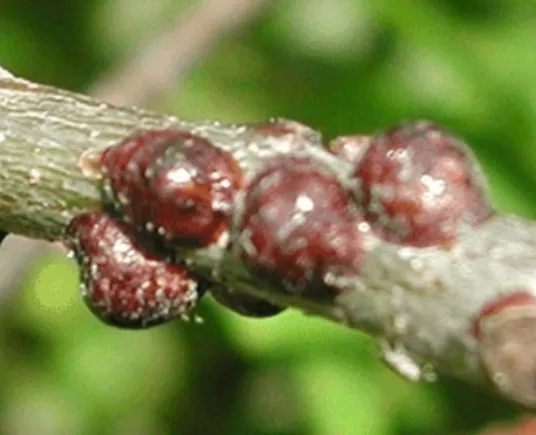
Scale insects are small, sap-sucking pests belonging to the superfamily Coccoidea, comprising over 8,000 described species. They are unique among garden pests because adult females are generally immobile and covered by a waxy or armored shell, often causing them to be mistaken for fungal growths, galls, or inanimate bumps on stems and leaves. These insects are divided into two primary categories: armored scales (Diaspididae), which have a hard, separate cover, and soft scales (Coccidae), which produce a waxy coating as part of their body. By piercing plant tissue and draining essential nutrients, scale insects weaken the host, leading to stunted growth, yellowing foliage, and significant yield loss in commercial fruit and ornamental crops.
Identification relies on recognizing the characteristic 'bumps' that range from 1 to 5 mm in diameter and vary in color from black and brown to snowy white or translucent. Soft scales are typically larger and more convex than armored scales. A definitive sign of soft scale infestation is the presence of honeydew—a sticky, shiny residue on leaves—which often becomes covered in black sooty mold. Armored scales do not produce honeydew but cause distinct yellow or red chlorotic spots on the leaf surface directly surrounding the feeding site. Because they are stationary, they often cluster in large numbers along leaf midribs, twigs, and sheltered branch junctions.
Scale insects target high-value orchard fruits and garden shade plants.
| Crop/Plant Type | Severity Rating | Impact Description |
|---|---|---|
| Fruit Trees (Citrus, Peach) | Extreme (⭐⭐⭐) | Bark encrustation, twig dieback, sticky honeydew, black sooty mold, and yield loss |
| Ornamental Shrubs (Euonymus) | High (⭐⭐) | Yellow leaf chlorosis, leaf dropping, stunted shoots, and compromised aesthetic value |
| Houseplants & Palms | Medium (⭐) | Localized leaf spotting, minor honeydew, and slow foliage growth |
Managing scale infestations requires a multi-staged integrated approach focusing on the vulnerable crawler stage. Since the waxy shell of adults is nearly impervious to contact insecticides, horticultural oils and neem oil are preferred as they work by suffocating the insect. For small infestations, manual removal with a soft brush or a cotton swab dipped in isopropyl alcohol is highly effective. Systemic treatments like imidacloprid can be used for severe cases on non-edible ornamentals, as the chemical is drawn into the plant sap where the insects feed. Encouraging natural predators, such as ladybird beetles and parasitic wasps, provides long-term biological suppression in balanced garden ecosystems. For comprehensive pest-control strategies, check our Plant Disease Identifier Hub, or explore similar sucking pest profiles like Aphids, Mealybugs, and Whitefly.
Because sap-sucking garden pests share similar foliage damage patterns (leaf yellowing, honeydew, and sooty mold), it is vital to differentiate Scale Insects (*Coccoidea*) from Mealybugs (*Pseudococcidae*) and Aphids (*Aphidoidea*). Adult Scale Insects are uniquely stationary, encased under a hard or waxy protective shell that resembles small woody scabs or shell bumps on plant stems. Mealybugs, while also producing a waxy coating, form soft, cottony white clusters and remain mobile throughout their life. Aphids are soft-bodied, pear-shaped, highly mobile insects with visible legs and cornicles (rear tail tubes). Review the diagnostic comparison table below to identify your sap-sucking pest:
| Diagnostic Feature | Scale Insect (Coccoidea) | Mealybug (Pseudococcidae) | Aphid (Aphidoidea) |
|---|---|---|---|
| Physical Appearance & Shell | Hard or waxy shell bumps (1-5mm) looking like bark scabs | Soft, white cottony or powdery wax masses clustered on joints | Soft, pear-shaped body (green, black, or pink) with visible legs |
| Adult Mobility | Completely immobile (legs degenerate after crawler stage) | Mobile (crawls slowly along stems and leaf axils) | Highly mobile (crawls rapidly, winged adults fly) |
| Honeydew & Mold Production | Soft scales produce heavy honeydew & mold; armored scales produce none | Abundant sticky honeydew attracting ants & black sooty mold | Extremely heavy honeydew production covering lower leaves |
| Primary Feeding Site | Woody stems, branches, twigs, and leaf midribs | Stem joints, leaf axils, undersides of leaves, and roots | Tender new shoot tips, flower buds, and soft leaf undersides |
| Pesticide Resistance | High resistance (shell repels contact sprays; requires oil suffocation) | Moderate resistance (wax coat repels light water sprays) | Low to Moderate (vulnerable to contact insecticidal soaps & neem) |
Taxonomy & Features
- Waxy Armor Protection: Adult females secrete a hard, waxy, or armored shell that provides a formidable barrier against predators and most contact pesticides.
- Immobile Adult Stage: Once a female scale insect settles on a feeding site and begins to grow its shell, it loses its legs and remains stationary for its entire life.
- Honeydew & Sooty Mold: Soft scale species excrete a sticky, sugar-rich residue called honeydew, which promotes the growth of black sooty mold and interferes with photosynthesis.
- Mobile 'Crawler' Phase: The first-instar nymphs are the only mobile stage, capable of moving to new parts of the plant or being carried by wind to neighboring hosts.
- Chlorotic Spotting: The feeding process causes localized yellow or red spotting on leaves, as the insect injects toxins and removes vital cell contents.
- Ant Mutualism: Ants often protect soft scale colonies from natural predators (like ladybugs) in exchange for the honeydew they produce, making ant control a prerequisite for scale management.
Seasonal Outbreak Calendar
Outbreak risk and activity timeline for Scale Insect based on seasonal climate patterns:
Names in Different Languages
Affected Plant Species
Vegetables & Crops
- Cassava (occasional)
- Eggplant (occasional)
Flowers & Ornamentals
- Roses
- Gardenias
- Oleander
- Orchids
Fruits & Berries
- Citrus (Lemon, Orange, Lime)
- Apples
- Pears
- Peaches
- Figs
Prevention & Cure
Natural & Organic Methods
- Horticultural Oils: Apply neem oil or paraffin-based oils to suffocate the insects by clogging their breathing pores.
- Manual Removal: Use a soft brush or cloth dipped in isopropyl alcohol to gently scrub scales off infested stems.
- Beneficial Insects: Release natural predators like Ladybugs or Lacewings, which feed on the crawler stage.
Chemical & Professional Control
- Systemic Insecticides: Apply products containing Imidacloprid or Dinotefuran as a soil drench for long-term control.
- Contact Sprays: Use Malathion or Acetamiprid specifically during the 'crawler' phase when insects are unprotected.
- Dormant Sprays: Apply lime sulfur during the winter to kill overwintering scales on deciduous trees.
Frequently Asked Questions
Are scale insects harmful to humans?
No, scale insects do not bite or sting humans and pose no direct health risk. However, the sooty mold they promote can cause respiratory irritation in sensitive individuals.
How can I tell if a scale insect is dead?
Dead scales often look dried out or flaky. If you scrape them off and they are dry underneath rather than moist, the treatment was likely successful.
Can I use vinegar to kill scale?
Vinegar is generally too acidic for most plants and can cause foliage burn. It is better to use alcohol or insecticidal soap.
Recommended diagnostics based on crop family and symptoms:
Remedy Disclaimer & Safety Notice
This disease guide is for educational screening purposes only. Pathogen behavior, severity, and host susceptibility can vary dramatically based on seed variety, weather conditions, and regional microclimates. Chemical pesticides and organic treatments are subject to strict regional environmental regulations and registration mandates. Please verify all chemical registrations and review manufacturer safety labels carefully with local certified agronomists or agricultural extension service offices before applying.