
Powdery Mildew
Erysipheae, Erysiphaceae
About Powdery Mildew
Powdery Mildew (*order Erysiphales*, primarily families *Erysiphaceae*), a highly widespread and recognizable fungal disease belonging to the class *Leotiomycetes* of the phylum *Ascomycota*, is a major threat to agricultural, greenhouse, and home garden crops. Caused by diverse obligate biotrophic fungi, this disease lives on the surface of host leaves and stems, sending specialized feeding tubes called haustoria into the plant cells to drain nutrients. Over time, it severely reduces the plant's photosynthetic capability, stunts vegetative growth, and lowers crop yields.
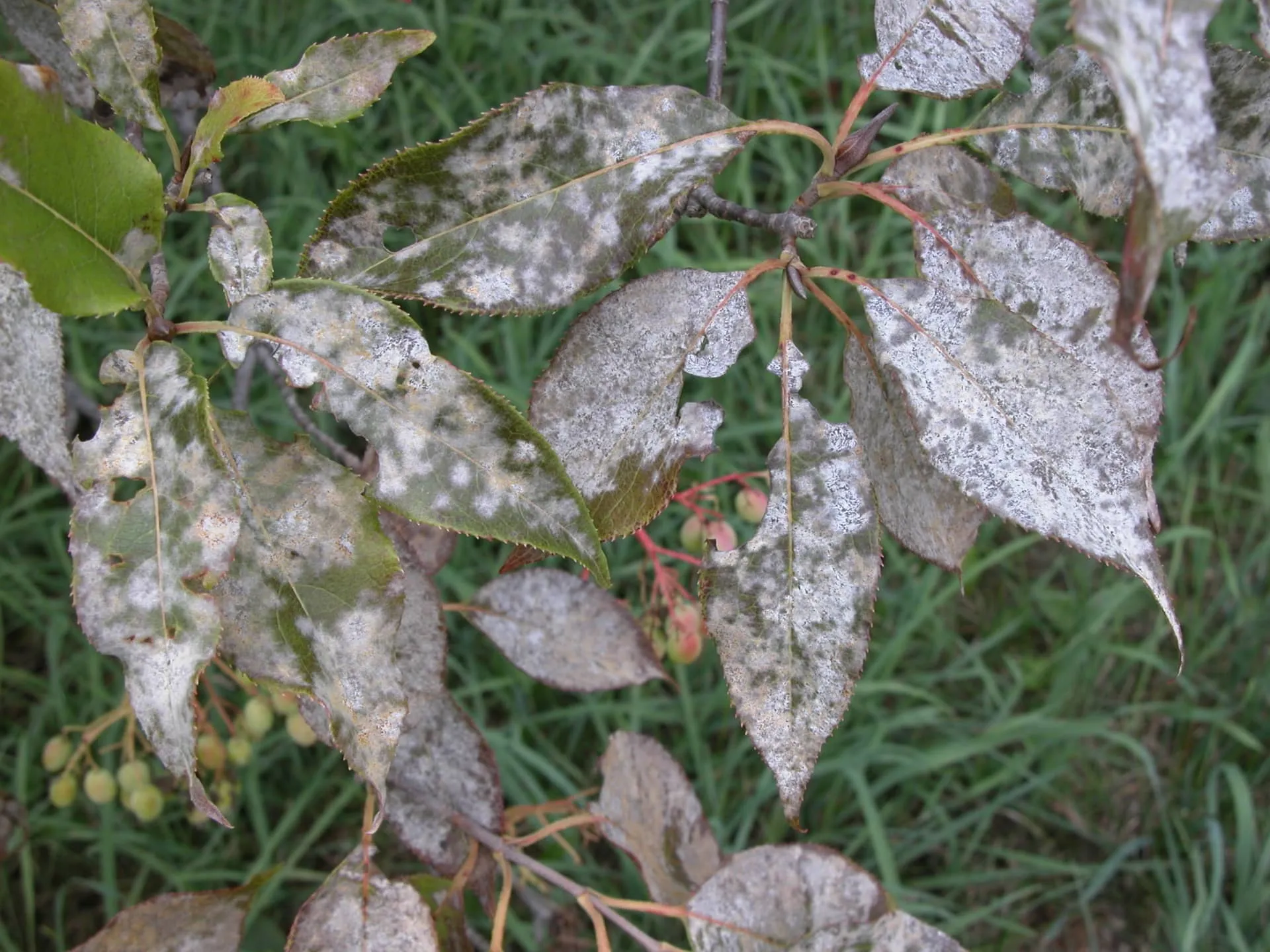
Identifying powdery mildew is simple due to its highly distinct, white-to-light-grey dry powdery coating on host leaves, stems, flower buds, and sometimes fruit. The infection starts as small, circular white spots on the upper or lower surface of leaves. As the disease spreads, these spots expand and merge, making the foliage look as though it has been dusted with flour. Under high disease pressure, leaves puck, twist, turn yellow, and drop prematurely, while flower buds fail to open.
Powdery mildew has an extremely broad host range, affecting hundreds of plant species.
| Affected Crops / Plants | Severity Rating | Damage Symptoms |
|---|---|---|
| Squash, Cucumbers, Pumpkins | Extreme (⭐⭐⭐) | Total white coating, early defoliation, sunburned fruit |
| Grapes, Apples, Strawberries | Extreme (⭐⭐⭐) | Powdery fruit, scarred skins, stunted shoot tips |
| Roses, Zinnias, Lilacs | High (⭐⭐) | Deformed buds, leaf distortion, white powdery stems |
The powdery mildew fungus overwinters as dormant mycelium or small, black overwintering structures called chasmothecia in buds and leaf debris. In spring, conidia are produced and carried by wind currents to establish new infections. Unlike most other fungal pathogens, powdery mildew conidia do NOT require free-standing water on the leaf surface to germinate; they can infect plants in relatively dry weather as long as the relative humidity is high (above 70%). It thrives in warm, dry days (20°C to 30°C) followed by cool, humid nights, and in shaded, overcrowded garden beds. For organic management, prune and discard crowded shoots to open up the canopy, and apply foliar sprays of wettable sulfur, potassium bicarbonate, or neem oil to establish a protective barrier. A classic, highly effective home remedy is a spray consisting of 1 tablespoon of baking soda and 1 teaspoon of liquid soap in 1 gallon of water. Biological control is achieved by using *Bacillus subtilis* to colonize leaf surfaces. Chemical treatments include systemic strobilurin or triazole fungicides like myclobutanil or triadimefon. Prevent outbreaks by planting disease-resistant cultivars, placing plants in full sun, and avoiding broad-spectrum chemical sprays that kill natural biocontrol agents. For complete support, browse our Plant Disease Identifier Hub, or explore related guides on Downy Mildew, Black Spot, and Aphids. For specialized diagnosis of related crop threats, see our guide on Grape Downy Mildew.
Taxonomy & Features
- Named 'powdery' because the fungal growth looks like white or grey powder dusted on plant surfaces. Unlike downy mildew, this powder is dry and easily rubs off.
- Flour-Like Foliage: Appears as expanding circular white patches, eventually covering stems, shoots, and leaves in a white flour-like sheet.
- Dry Germination: Fungal spores uniquely germinate and infect in the absence of free-standing surface water, relying solely on high air humidity.
- Haustoria Feeding: Fungus lives externally on the cuticle, sending specialized feeding structures (haustoria) inside host cells to extract sugar.
- Shade Attraction: Highly aggressive in low-light environments, crowded plantings, or internal branches where air circulation is restricted.
- Bicarbonate Disruptor: Applying potassium bicarbonate or sodium bicarbonate alters the leaf surface pH, instantly destroying fungal hyphae.
Seasonal Outbreak Calendar
Outbreak risk and activity timeline for Powdery Mildew based on seasonal climate patterns:
Names in Different Languages
Affected Plant Species
Vegetables & Crops
- Zucchini
- Cucumber
- Squash
- Pumpkin
- Peas
- Beans
Flowers & Ornamentals
- Roses
- Zinnias
- Peonies
- Lilacs
- Phlox
- Begonias
Fruits & Berries
- Grapes
- Apples
- Strawberries
- Melons
- Peaches
Prevention & Cure
Natural & Organic Methods
- Baking Soda Spray: Spray a mixture of 1 tablespoon baking soda and 1 teaspoon horticultural soap in 1 gallon water to raise leaf surface pH.
- Pruning for Air: Thin out dense interior foliage to improve sunlight penetration and air movement within the plant canopy.
- Neem Oil: Spray leaves with 0.5-1% cold-pressed neem oil to disrupt spore growth and establish a preventative barrier.
- Potassium Bicarbonate: Use EPA-approved potassium bicarbonate formulations for commercial-grade organic contact control.
Chemical & Professional Control
- Triazole Fungicides: Spray myclobutanil or triadimefon systemically to eliminate deep-seated powdery mildew colonies.
- Strobilurins: Apply Azoxystrobin preventatively to protect foliage and fruits during high disease pressure cycles.
- Wettable Sulfur: Apply early-season sulfur sprays to block fungal protein synthesis (do not apply within 2 weeks of oil sprays or above 32°C).
Frequently Asked Questions
How do I distinguish powdery mildew from downy mildew?
Powdery mildew (Erysiphe) produces a dry, white, flour-like powder primarily on the upper surfaces of leaves and easily rubs off with your fingers. Downy mildew (Peronospora) is a water-mold relative that creates angular yellow spots on the upper leaf surface and a fuzzy, purplish-grey mold strictly on the leaf undersides, which cannot be easily rubbed off.
Does powdery mildew require rain or wet leaves to infect my plants?
No. This is a common misconception. Unlike almost all other fungal diseases, powdery mildew spores (conidia) do not require free water on the leaf surface to germinate. In fact, standing water can actually inhibit their germination. They only require high relative humidity in the air surrounding the plant, which makes them highly aggressive during dry, warm summer weather.
Is powdery mildew harmful to humans or pets?
No, powdery mildew is not directly toxic or harmful to humans or animals. However, you should avoid eating heavily infected edible leaves (like spinach or lettuce) as the fungus ruins the flavor, makes the foliage tough, and can trigger mild allergic reactions in highly sensitive individuals.
Recommended diagnostics based on crop family and symptoms:
Remedy Disclaimer & Safety Notice
This disease guide is for educational screening purposes only. Pathogen behavior, severity, and host susceptibility can vary dramatically based on seed variety, weather conditions, and regional microclimates. Chemical pesticides and organic treatments are subject to strict regional environmental regulations and registration mandates. Please verify all chemical registrations and review manufacturer safety labels carefully with local certified agronomists or agricultural extension service offices before applying.