
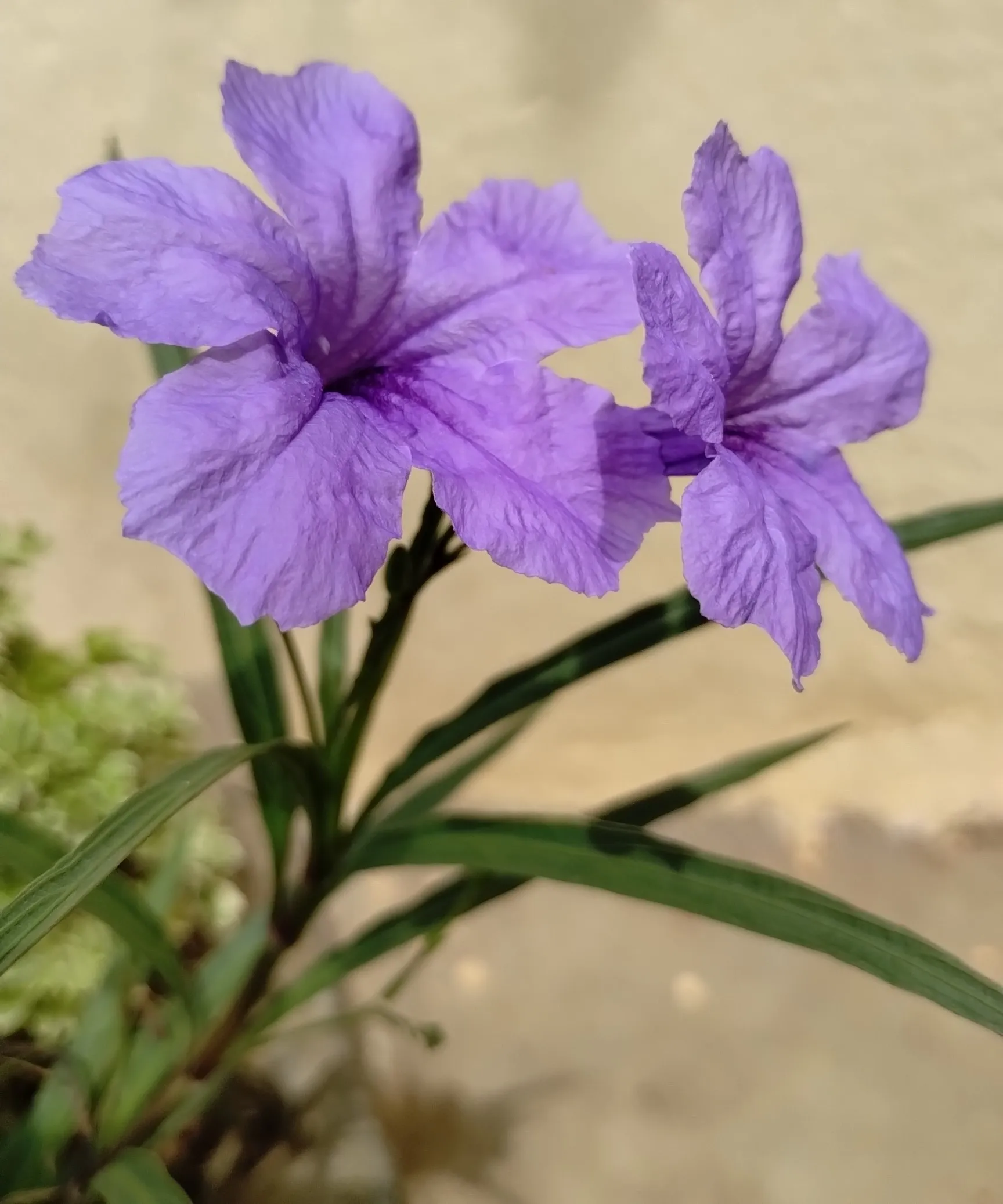
Mexican Petunia
Ruellia simplex
How to Identify Mexican Petunia
NON-TOXIC. 100% pet-safe for cats, dogs, and horses, and represents a premier choice for chemical-free, wildlife-friendly rain gardens.
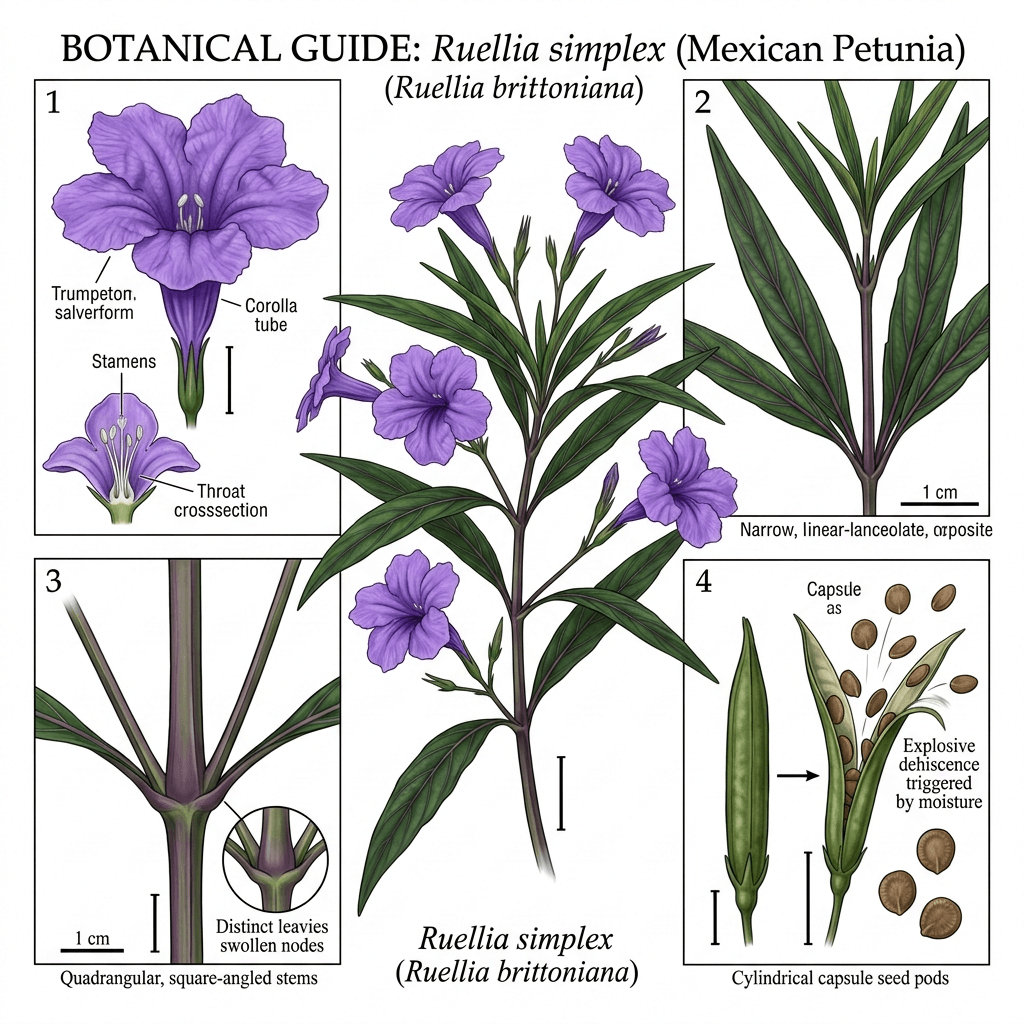
A detailed guide to identifying Mexican Petunia (Ruellia simplex / Ruellia brittoniana) by its key botanical features:
- Trumpet-Shaped Crinkled Corolla: Delicate, funnelform or trumpet-shaped flowers measuring 1.5 to 2 inches across, featuring five spreading, wavy, tissue-paper-like petal lobes in vivid violet-purple, lavender-blue, soft pink, or white.
- Narrow Willow-Like Foliage: Long, linear-lanceolate opposite leaves measuring 6 to 12 inches long and under 1 inch wide. The dark emerald-green foliage often develops an attractive purplish-bronze metallic sheen in full sun.
- Quadrangular (Square) Stems: Distinctly 4-angled, square stems that are rigid, erect, and conspicuously tinged with deep purple or reddish-brown coloration, especially around the swollen leaf nodes.
- Explosive Seed Capsules: Slender, cylindrical, pointed seed pods (capsules) that mature from green to chestnut brown. When exposed to water or rain, the capsules undergo explosive dehiscence, flinging flat, circular seeds up to 10 feet away.
- Ephemerous Daily Blooms: Individual blossoms last only a single day, opening brightly with the morning sun and dropping cleanly by late afternoon, replaced continuously by newly emerging buds.
Varieties & Growth Forms of Mexican Petunia
Ruellia simplex is cultivated across several distinct horticultural selections based on height and bloom coloration:
- By Plant Height & Stature:
- Standard Upright Mexican Petunia (Ruellia simplex): Vigorous, multi-stemmed perennial standing 3 to 4 feet tall, creating lush vertical screens or massed perennial backdrops.
- Dwarf Mexican Petunia ('Katie' / 'Katie Dwarf'): Compact mounding cultivar reaching only 6 to 12 inches in height and spreading 12 inches wide, ideal for neat garden borders and container bowls.
- By Floral Coloration:
- Purple / Violet Form ('Purple Showers'): The iconic, standard deep royal violet-blue cultivar; the most prolific and heat-hardy.
- Pink Form ('Chi Chi'): Delightful cultivar producing pastel rosy-pink flowers with darker magenta throat veins.
- White Form ('White Whispers'): Elegant selection bearing pristine snowy-white blooms on contrasting deep purple-green stems.
Care & Growing Guide
Mexican Petunia Care & Growing Guide:
- Light: Full direct sun to partial shade (at least 4 to 6 hours of sun daily). Full sunshine produces darker purple stem pigment and maximum flower production.
- Watering: Highly versatile. While exceptionally drought-tolerant once established, it thrives in wet soils and can even grow in up to 2 inches of standing water along pond margins.
- Soil & pH: Extremely adaptable to virtually any soil type, from heavy clay and muck to poor, rocky sandy soils with pH ranging from 5.5 to 7.8.
- Temperature & Hardiness: Perennial in USDA Zones 8 through 11; grown as an annual in Zones 3-7. Root-hardy down to 20°F (-6°C); foliage dies back in light frost but resprouts quickly in spring.
- Fertilization: Requires minimal feeding. A light application of balanced slow-release fertilizer in early spring supports vigorous early-season growth.
- Pruning & Maintenance: Shear back by one-third after heavy bloom flushes to encourage dense branching and deadhead old spent capsules to limit self-seeding.
Seasonal Blooming & Hardiness
Seasonal Blooming Calendar (US Hardiness Zones 8-11 as perennial; Zones 3-7 as warm-season annual):
- Peak Bloom: Late spring through autumn until the first winter frost (typically May through November).
- Year-Round Potential: In tropical, frost-free landscapes (Zones 10b-11), Mexican Petunia flowers continuously all 12 months.
- Pruning Window: Cut back old woody stems to ground level in late winter just before new spring growth emerges.
Bloom Timeline
About Mexican Petunia
The Mexican Petunia, botanically classified as Ruellia simplex (and historically referred to as Ruellia brittoniana), is an exceptionally vigorous, upright herbaceous perennial belonging to the Acanthaceae (acanthus) family. Native to the warm, moisture-rich woodlands, riverbanks, and wet meadows of Mexico, Central America, and parts of South America, this highly resilient species has become a staple of southern gardens. Famed for its bright, petunia-like trumpet blossoms and its unparalleled ability to thrive in extremely challenging, wet soils, it stands as both a beautiful landscape asset and a highly aggressive spreader.
Growing in multi-stemmed upright clumps that reach heights of 3 to 4 feet, Ruellia simplex features narrow, opposite, lance-shaped leaves that measure 6 to 12 inches in length. The dark-green leaves are often tinged with purple or metallic blue and are held on rigid, square-angled stems. From late spring until the first winter frost, the plant produces continuous clusters of showy, trumpet-shaped flowers that measure 1.5 to 2 inches across. The crinkly, paper-textured blossoms come in royal purple, cobalt blue, rosy pink, and pure white, with each individual bloom opening in the morning and dropping by sunset.
The reproductive architecture of the Mexican Petunia is represented by the botanical floral formula EBr ⊕ ⚥ K(5) C(5) A4 G(2). This formula indicates that the flower is ebracteate, radially symmetrical (actinomorphic), and bisexual. The calyx is composed of 5 long, narrow fused sepals forming a deeply toothed cup, while the corolla features 5 fused petals that flare into 5 rounded, spreading lobes. The androecium contains 4 fertile stamens of different lengths (didynamous) attached directly to the inner walls of the corolla tube, surrounding a 2-carpellate superior ovary.
Ruellia simplex is legendary for its extreme vigor and adaptability. It performs magnificently in full, hot sun, which triggers the most intense flowering display, but can easily tolerate partial shade. Uniquely, it thrives in wet, heavy clay, bogs, and shallow standing water where other ornamental flowers would quickly drown from root rot, making it a favorite for rain gardens and pond margins. However, it is highly drought-tolerant once established and thrives in USDA zones 8 through 11, though frost will kill the foliage back to the ground.
The genus name Ruellia honors the prominent 16th-century French physician and botanist Jean Ruelle, who served as a personal physician to King Francis I and translated ancient botanical texts. The specific epithet simplex refers to the plant's simple, unbranched lanceolate leaves. In regional languages, it is known as Petunia silvestre or Campanas in Spanish, and চটকন (Chatkan) or পটপটি (Potpoti) in Bengali, the latter name referencing the snapping sound made by the ripe, dry seed capsules when exposed to moisture.
For pet owners, the Mexican Petunia is an incredibly safe and highly rewarding choice. Ruellia simplex is classified as completely NON-TOXIC to cats, dogs, and horses by major veterinary toxicology associations, including the ASPCA. Its robust foliage contains no harmful sap or toxic compounds, making it a worry-free selection for low-lying borders where pets play. Furthermore, its continuous supply of nectar makes it a magnet for hummingbirds and butterflies. To design a pet-safe garden that welcomes local wildlife, explore our Pet Guard catalog.
Mexican Petunia is occasionally confused with true garden Petunias (Solanaceae) or wild Bluebells. It is easily distinguished from true Petunias because Ruellia simplex grows on tall, rigid, woody upright stalks with narrow, willow-like leaves and produces explosive dry seed capsules, whereas true Petunias are low, trailing, sticky-leaved annuals. It serves as a stunning backdrop for low-growing, pet-safe flowers; we suggest planting it behind trailing Wild Pansy or colorful Phlox. To discover more waterside perennials, check out our Flower Identifier.
For more botanical profiles and flower identification features, see our guides on Meadow Buttercup and Mussaenda.
Floral Formula & Features
Ebracteate, radially symmetrical, bisexual, 5 fused sepals forming deeply lobed calyx, 5 fused petals forming tubular corolla, 4 didynamous stamens attached to the corolla, 2 fused carpels with superior ovary
- Scientific Name & Classification: Ruellia simplex (Acanthaceae). Known widely as Mexican Petunia, Mexican Bluebell, Desert Petunia, and Chatkan.
- Identification Markers: Tall, rigid, square-angled stems with narrow, willow-like dark green leaves. Continuous flushes of trumpet-shaped, crinkly purple-blue blossoms.
- Floral Formula (EBr ⊕ ⚥ K(5) C(5) A4 G(2)): Actinomorphic, bisexual tubular flowers with 5 fused sepals, 5 fused petals, 4 stamens, and a superior ovary.
- Growing Requirements: Full sun to partial shade; thrives in wet, heavy clay, standing water, and boggy pond margins, but is highly drought-tolerant once established (Zones 8-11).
- Cultural Significance: Genus honors botanist Jean Ruelle. Famed in Bengal as Potpoti due to the cracking noise of its explosive seed pods when wet.
- Safety & Toxicity: NON-TOXIC. 100% pet-safe for cats, dogs, and horses, and represents a premier choice for chemical-free, wildlife-friendly rain gardens.
- Common Look-alikes: Confused with trailing garden petunias, but easily distinguished by its tall, upright, woody habit, narrow foliage, and explosive seed pods.
- Internal Links: Creates a magnificent tall backdrop planted behind trailing Wild Pansy or low-growing Phlox; find more wet-tolerant species in our Flower Identifier.
Names in Different Languages
Botanical Classification: Mexican Petunia belongs to the Acanthaceae family. Learn how to identify its floral symmetry, stamen arrangement, and structural formulas in our Botanical Family Classification Guide.
Toxicity & Safety
Frequently Asked Questions
What is Floral Formula?
A floral formula is a symbolic representation of a flower's structure using letters, numbers, and special symbols. It provides a concise way to describe the arrangement and number of floral parts.
This formula describes the flower's symmetry, sepals, petals, stamens, and carpels in a standardized format.
Formula Sequence
- Bract: Br or Ebr
- Bracteole: Brl or Ebrl
- Symmetry: % (Radial) or ⊕ (Bilateral)
- Sex: ♀ (Female), ♂ (Male), or ⚥ (Bisexual)
- Calyx/Sepal: K<number> (Free or Fused)
- Corolla/Petal: C<number> (Free or Fused)
- Androecium: A<number> (Free or Fused)
- Gynaecium: G<number> (Superior or Inferior Ovary)
Symbol Meanings
- Numbers: Indicate quantity of parts
- Parentheses (): Parts are fused together
- Plus (+): Parts in different whorls
- Underline: Superior ovary position
- Overline: Inferior ovary position
- ∞: Numerous parts (too many to count)
Understanding floral formulas helps botanists quickly identify and classify flowers based on their structural characteristics.
Similar Flowers
Discover flowers that share botanical characteristics
Same Family
4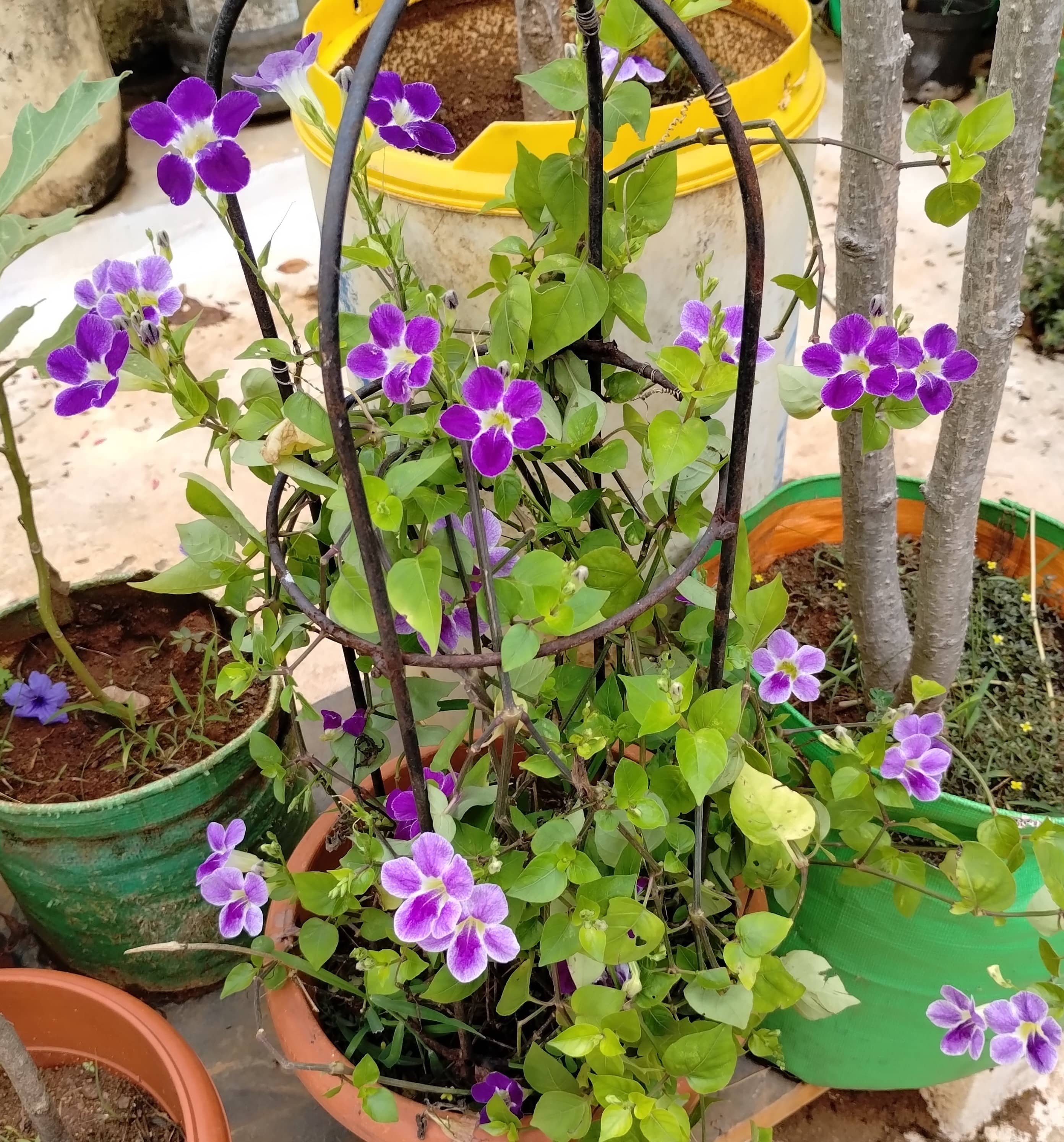
Thunbergia (King's Mantle)
Thunbergia erecta
Thunbergia erecta, popularly known as the "King's Mantle" or "Bush Clock Vine," is a sophisticated and regal tropical shrub that brings a touch of aristocratic elegance to any garden. A member of the Acanthaceae family, this evergreen species is native to the coastal regions of western Africa, fr...
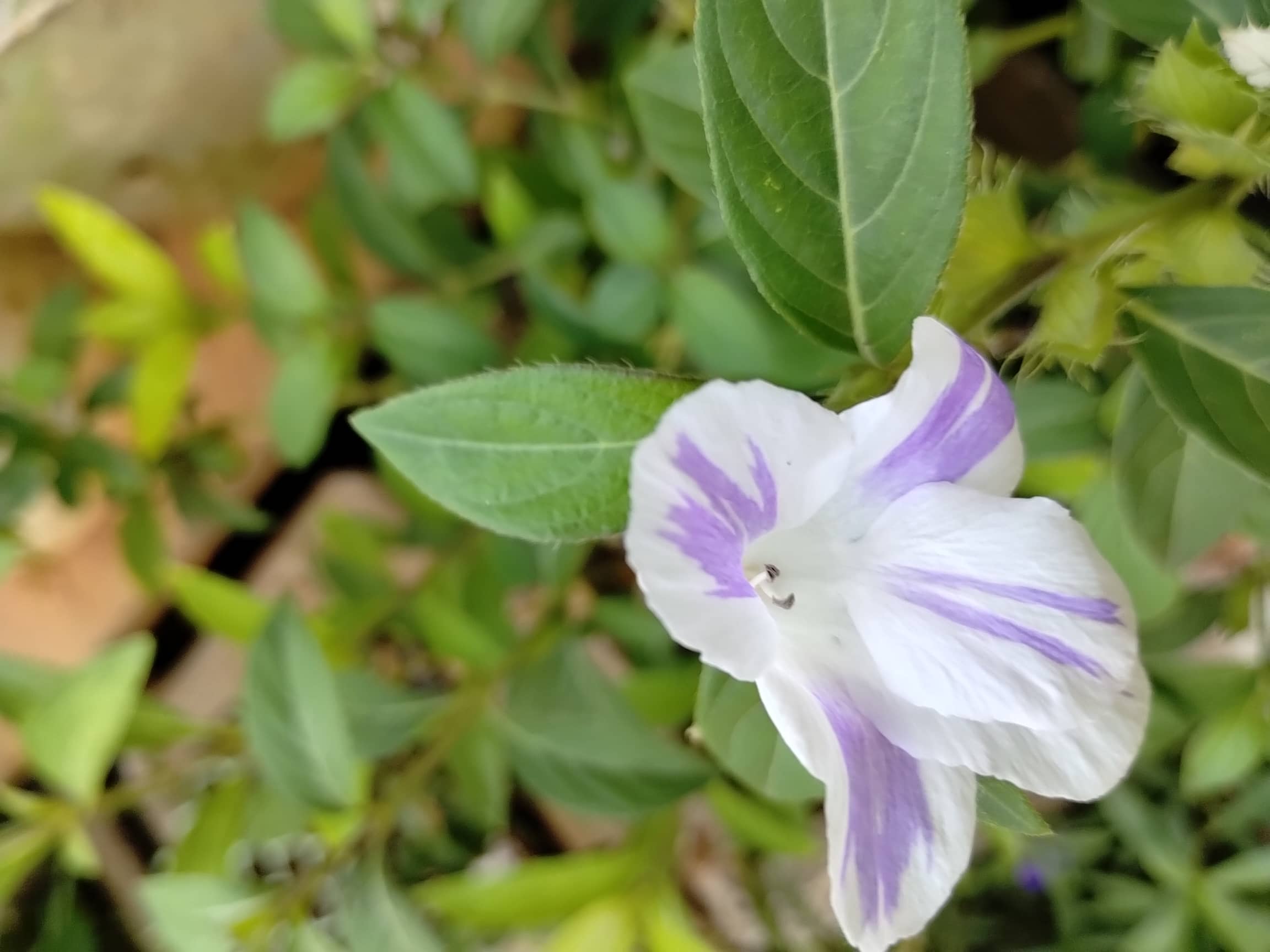
December
Barleria Cristata, Barleria prionitis
The December Flower, botanically classified under the genus Barleria within the family Acanthaceae (the acanthus family), is a highly attractive, fast-growing evergreen tropical shrub. Native to the sunny forest edges, dry riverbanks, and open scrublands of tropical Asia—spanning India, Myanmar,...
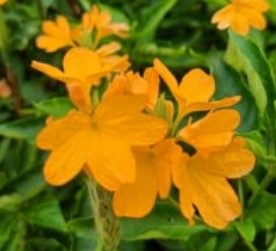
Crossandra Firecracker
Crossandra infundibuliformis
The Firecracker Flower, scientifically known as Crossandra infundibuliformis and popularly called Aboli or Kanakambaram in India, is a beautiful tropical evergreen shrub belonging to the Acanthaceae family. Native to the shady forest understories of southern India and Sri Lanka, particularly the...
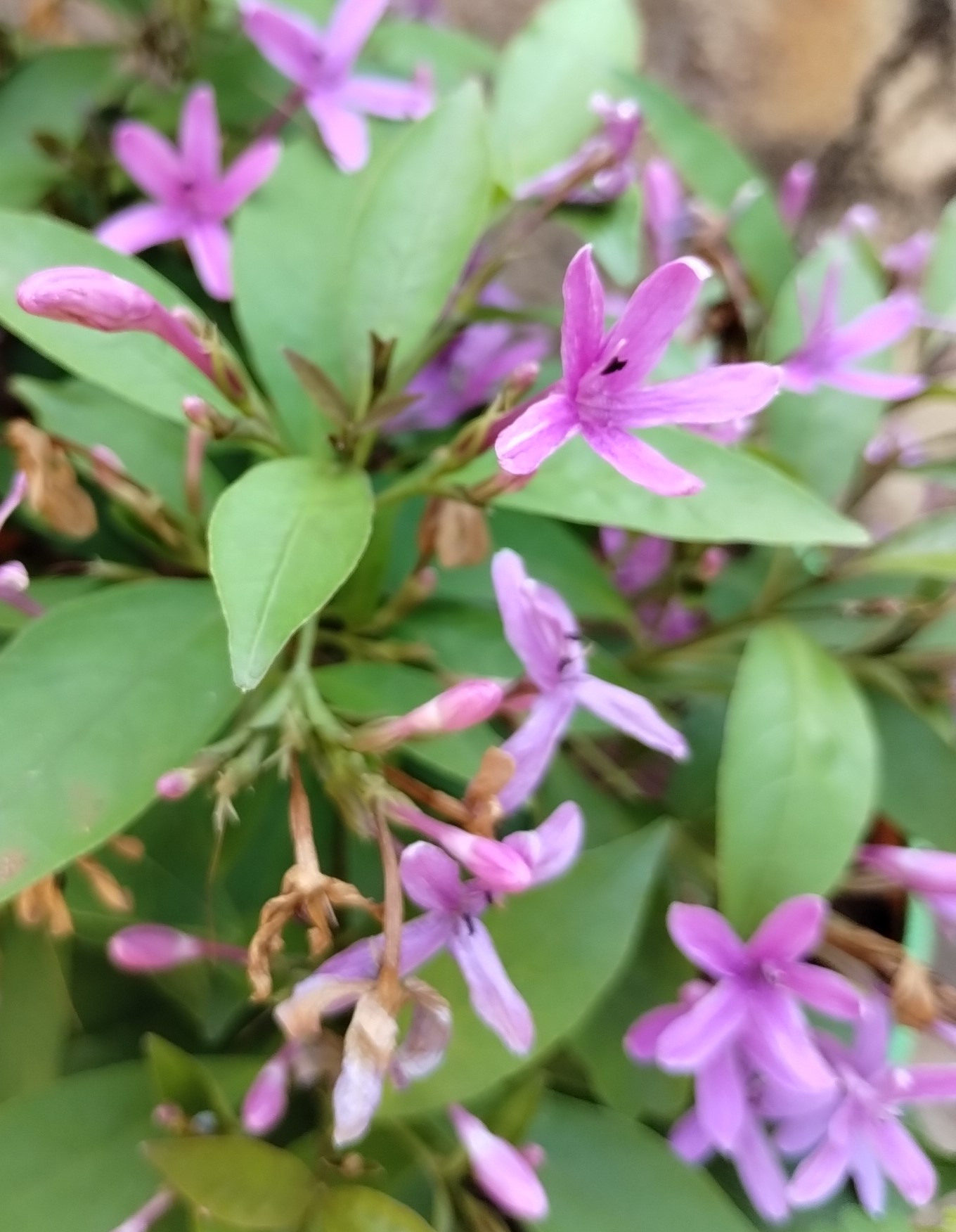
Pseuderanthemum
Pseuderanthemum
Pseuderanthemum, a highly diverse genus within the Acanthaceae family, encompasses a variety of stunning tropical shrubs and subshrubs native to the dense rainforests of Polynesia, Melanesia, and parts of Asia. Unlike many tropicals, they are predominantly cultivated globally for their spectacula...
Similar Characteristics
4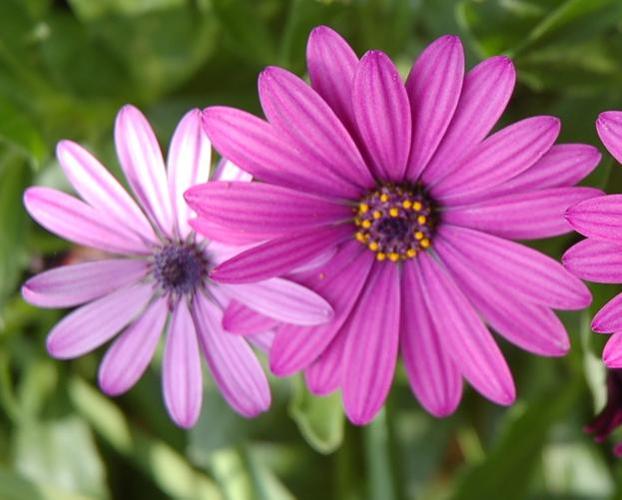
African Daisy (Osteospermum)
Dimorphotheca ecklonis
Osteospermum, commonly known as the African Daisy or Cape Daisy, is a genus of flowering plants that represents the sheer brilliance of the South African floral kingdom. Belonging to the Calenduleae tribe within the massive Asteraceae family, these daisies are celebrated for their sophisticated,...
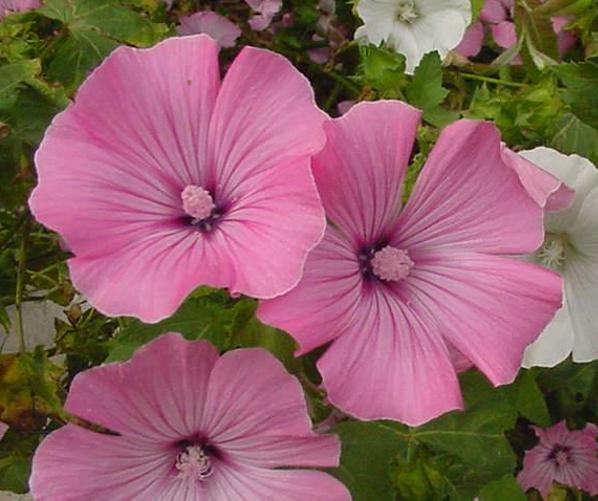
Tree Mallow
Malva arborea
The Tree Mallow, botanically classified as Malva arborea (and previously known as Lavatera arborea), is a robust, fast-growing biennial or short-lived perennial shrub belonging to the Malvaceae (mallow) family. Native to the Mediterranean basin and the rugged, salt-swept coastal cliffs of Western...
River Jasmine (Fluminense)
Jasminum fluminense
Jasminum fluminense, commonly known as the River Jasmine or Brazilian Jasmine—and widely known across South Asia as Nitya Malli or Nithya Malligai (meaning 'ever-blooming jasmine')—is a vigorous and aromatic evergreen climber that embodies the lush, tropical essence of South America. Native to th...
California poppy
Eschscholzia californica
Eschscholzia californica, famously known as the California Poppy or Golden Poppy, is a brilliant wildflower that serves as a luminous symbol of the American West. Belonging to the Papaveraceae (Poppy) family, this resilient species is celebrated for its silky, cup-shaped blossoms that range from...