
Tomato
Tomatoes are one of the most widely grown vegetable crops. They require rich, well-draining soil and consistent moisture. They are highly susceptible to calcium starvation causing Blossom End Rot, magnesium interveinal chlorosis, and aggressive pathogens like blights and wilt.
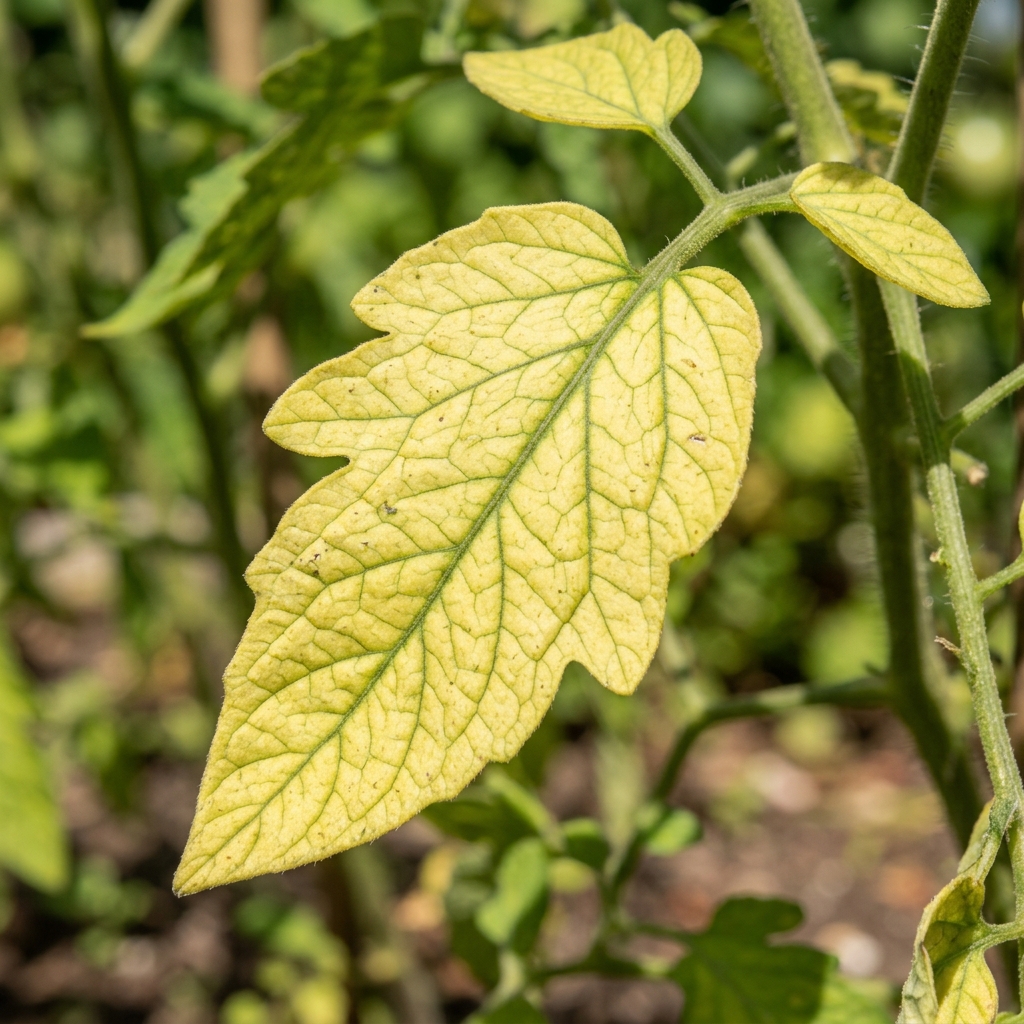
Nitrogen Deficiency
Nitrogen Deficientia
Key Visual Symptoms
Lower leaves turn a uniform pale light yellow. Stems become thin, fibrous, and may develop a purplish color due to anthocyanin accumulation. Yield and fruit size are drastically reduced.
Organic Remedy
- Incorporate well-decomposed farmyard manure (FYM) or mature compost (10-15 tons/ha) during land preparation to establish baseline soil nitrogen.
- Drench root zone with fermented mustard cake tea or biofertilizers (Azotobacter or Azospirillum at 2 kg/acre mixed with compost).
- Foliar spray 3% Panchagavya or 0.5% Fish Amino Acid (FAA) during cool morning hours to supply bioavailable amino nitrogen directly to leaves.
- Mulch with leguminous crop residues (clover, sunn hemp, or lucerne) to slowly release nitrogen while conserving root zone moisture.
Chemical Correction
- Side-dress with Calcium Ammonium Nitrate (CAN) or Urea at 15-20 kg/acre, followed immediately by light irrigation to prevent volatilization.
- For fast recovery, foliar spray 19:19:19 water-soluble fertilizer at 4-5 g/L (0.4-0.5%) in 200 liters of water per acre.
- Inject fertigation-grade Calcium Nitrate (15.5-0-0 + 18.8% Ca) at 2-3 kg/acre weekly through drip lines during high-demand flowering and fruit set.
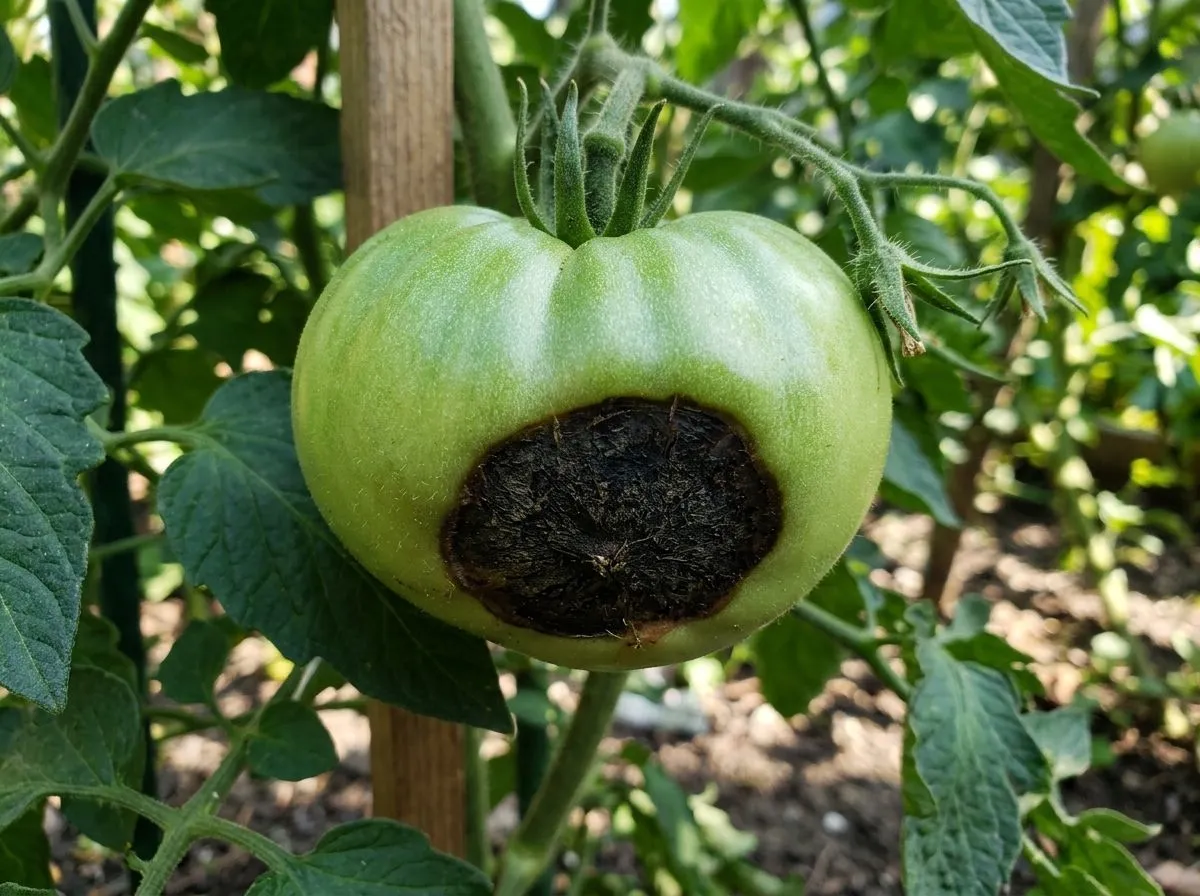
Calcium Deficiency
Calcium Deficientia
Key Visual Symptoms
A water-soaked area appears at the blossom end (bottom) of the tomato fruit. This spot gradually enlarges, flattens, and turns into a dark brown or black, dry, leathery sunken scar. Affected fruits ripen prematurely and are unmarketable.
Organic Remedy
- Maintain strictly consistent soil moisture via drip irrigation and 3-inch straw mulching; fluctuating wet-dry cycles are the #1 trigger for blossom-end rot.
- Apply gypsum (calcium sulfate at 50-100 kg/acre) before planting to supply calcium without increasing soil pH.
- Avoid excessive ammonium-based nitrogen or potassium fertilizers during early fruiting, which compete aggressively with calcium uptake.
- Avoid severe root pruning during weeding or cultivation, which destroys the active root tips responsible for calcium absorption.
Chemical Correction
- Fertigate with greenhouse-grade Calcium Nitrate (15.5-0-0 + 18.8% Ca) at 2.5-3 kg/acre weekly through drip lines from fruit set onwards.
- Foliar spray Calcium Chloride (0.3-0.4%, 3-4 g/L) or Calcium Nitrate (0.5%, 5 g/L) targeting flower clusters and young fruitlets early in the morning.
- In soils with pH below 6.0, apply agricultural lime (calcium carbonate at 200-400 kg/acre based on soil test) 6 weeks before transplanting.
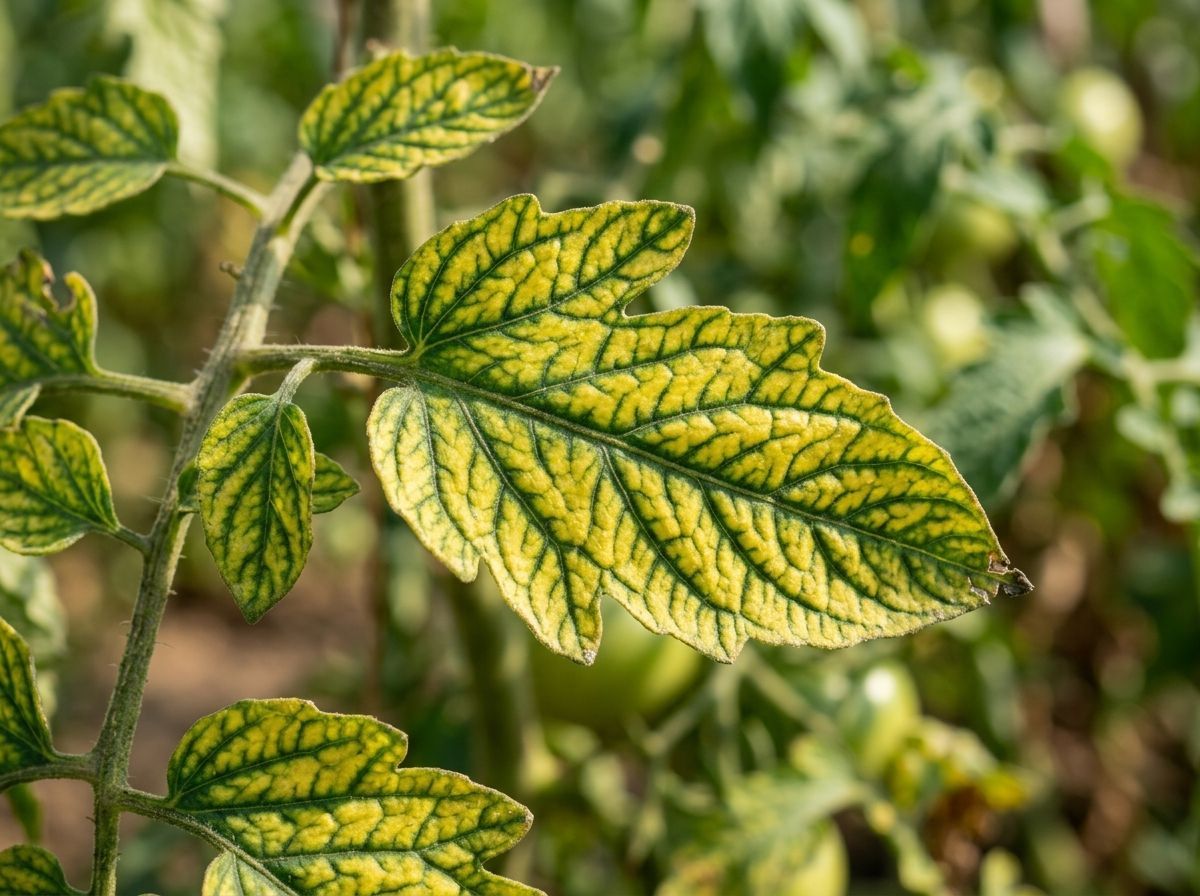
Magnesium Deficiency
Magnesium Deficientia
Key Visual Symptoms
Interveinal chlorosis (yellowing between the veins) begins on older lower leaves. The main veins remain green, creating a sharp green network pattern. In severe cases, leaf margins curl upward and turn brittle.
Organic Remedy
- Test soil for potassium-magnesium ratio; avoid excessive potash application (K:Mg ratio should not exceed 3:1), which competitively blocks magnesium absorption.
- In acid soils (pH < 6.0), apply agricultural dolomitic limestone (150-250 kg/acre) during pre-planting tillage.
- Drench plant basins with food-grade Epsom salt (magnesium sulfate at 20 g/10L) every 14 days during active fruit load.
- Add organic compost rich in decomposed leaf mold to enhance cation exchange capacity (CEC) and magnesium retention.
Chemical Correction
- Foliar spray technical-grade Magnesium Sulfate (Epsom salt, MgSO4 · 7H2O) at 10-15 g/L (1-1.5%) in 200 L water per acre at first sign of interveinal chlorosis.
- For fertigated crops, inject Magnesium Nitrate or Magnesium Sulfate at 1.5-2.0 kg/acre weekly through drip lines.
- In severe deficiency under heavy fruiting load, combine foliar MgSO4 (1%) with 0.1% urea to accelerate cuticular penetration and greening.
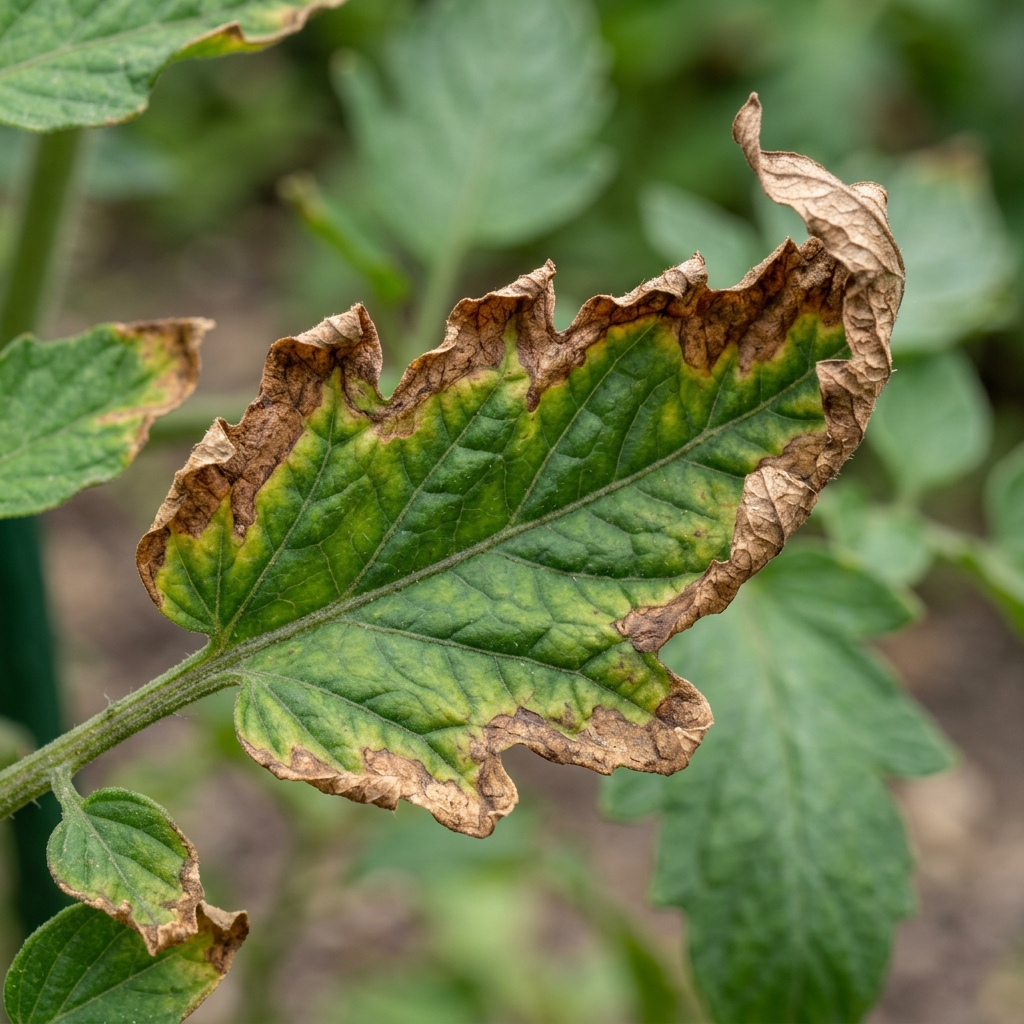
Potassium Deficiency
Potassium Deficientia
Key Visual Symptoms
Older leaf margins turn yellow, then brown and papery, resulting in a distinct scorched border. Fruits develop uneven, blotchy ripening ('greenback' or yellow shoulder) and remain soft.
Organic Remedy
- Incorporate screened wood ash (50-80 kg/acre in acid soils) or greensand before planting to build soil potassium reserves.
- Apply bio-potash liquid (potassium mobilizing bacteria / Frateuria aurantia at 1 L/acre) with compost to convert mineral potassium into plant-available form.
- Drench roots with fermented banana peel extract and liquid seaweed (1:10 dilution) every 10 days during fruit development.
- Mulch heavily with straw or lucerne to prevent potassium leaching in light, sandy soils.
Chemical Correction
- Fertigate with Sulfate of Potash (0:0:50 SOP) or Potassium Nitrate (13:0:45) at 3-4 kg/acre weekly via drip from first fruit set through harvest.
- Foliar spray Potassium Nitrate (13:0:45) at 5-8 g/L (0.5-0.8%) during cool morning hours to rapidly arrest marginal scorch and eliminate green shoulders.
- In heavy fruit-bearing crops, apply 0:52:34 (MKP) at 4-5 g/L during fruit expansion to ensure firm, uniform fruit ripening.
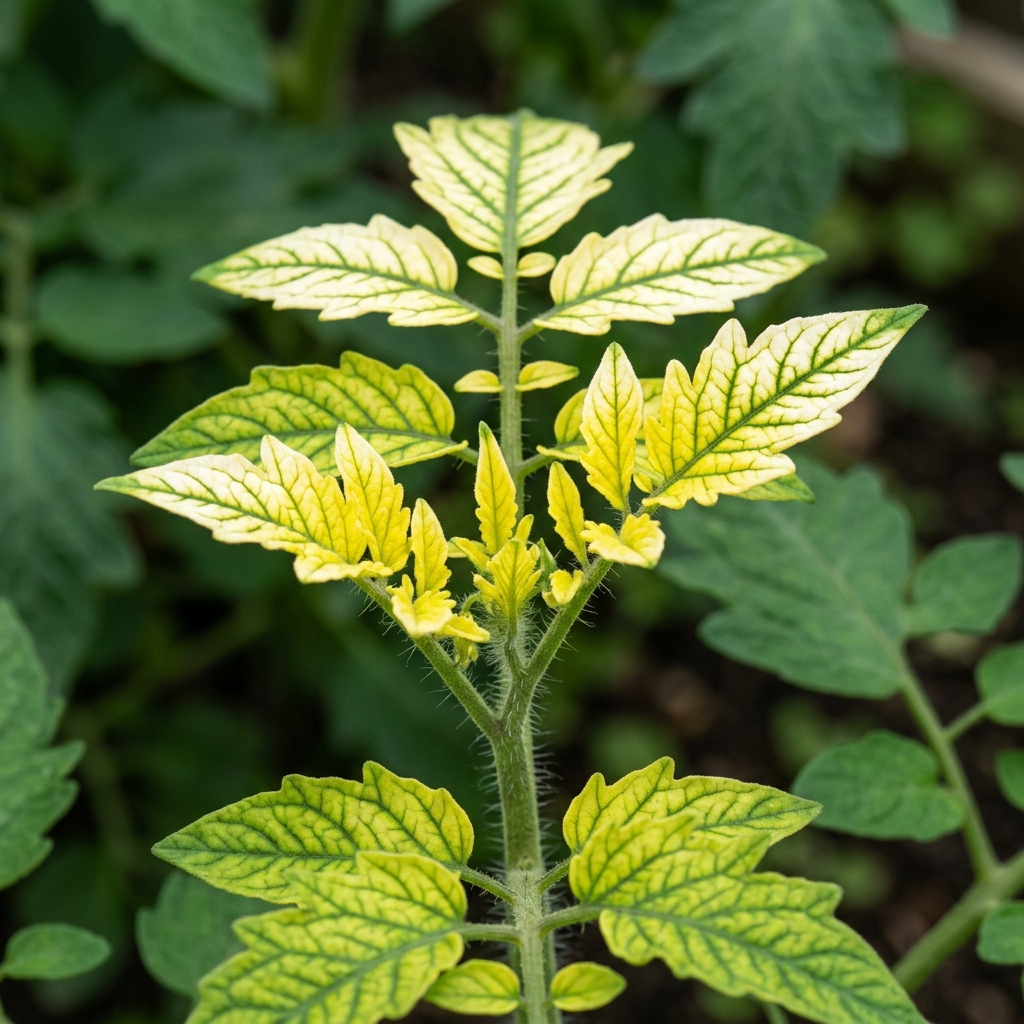
Iron Deficiency
Ferrum Deficientia
Key Visual Symptoms
Interveinal chlorosis develops on the youngest, emerging leaves at the top of the plant. The leaf blade turns pale yellow or white, while even the finest veins remain dark green. In severe cases, new leaves emerge completely bleached.
Organic Remedy
- Test soil pH; if above 7.2, apply elemental sulfur or acidic organic matter (peat moss, pine bark compost) to bring pH toward the optimal 6.2–6.8 range.
- Apply liquid humic acid (12%) at 1 liter/acre through drip irrigation to naturally chelate soil-bound iron and enhance root absorption.
- Avoid over-irrigation and root-zone waterlogging, which creates anaerobic conditions and induces bicarbonate-induced iron chlorosis.
- Mulch heavily with organic leaf litter and aerate compacted soils around the root zone to promote healthy fine root hair respiration.
Chemical Correction
- For alkaline or calcareous soils (pH > 7.5), apply Fe-EDDHA (6% iron chelate) at 1–2 kg/acre via drip irrigation or 10–15 g/plant as a root drench.
- For soils with pH below 7.0, foliar spray Fe-EDTA (12% chelate) at 1.0–1.5 g/L water during early morning hours to rapidly deliver iron through the cuticle.
- Alternatively, apply 0.5% Ferrous Sulfate (5 g/L) buffered with 0.1% citric acid to avoid leaf scorch, repeating every 7–10 days until chlorosis clears.
Tomato Diagnostic Guide: Diseases vs. Deficiencies
Leaf and fruit yellowing in tomatoes can signify disease or nutrient starvation. Use this comparative key to distinguish them.
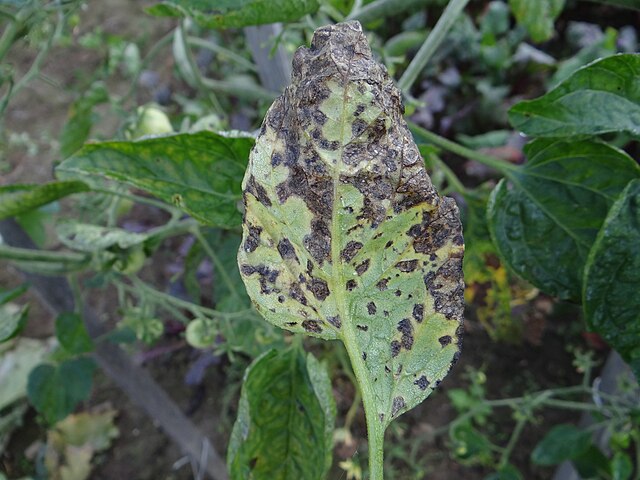
Early Blight Target Spots
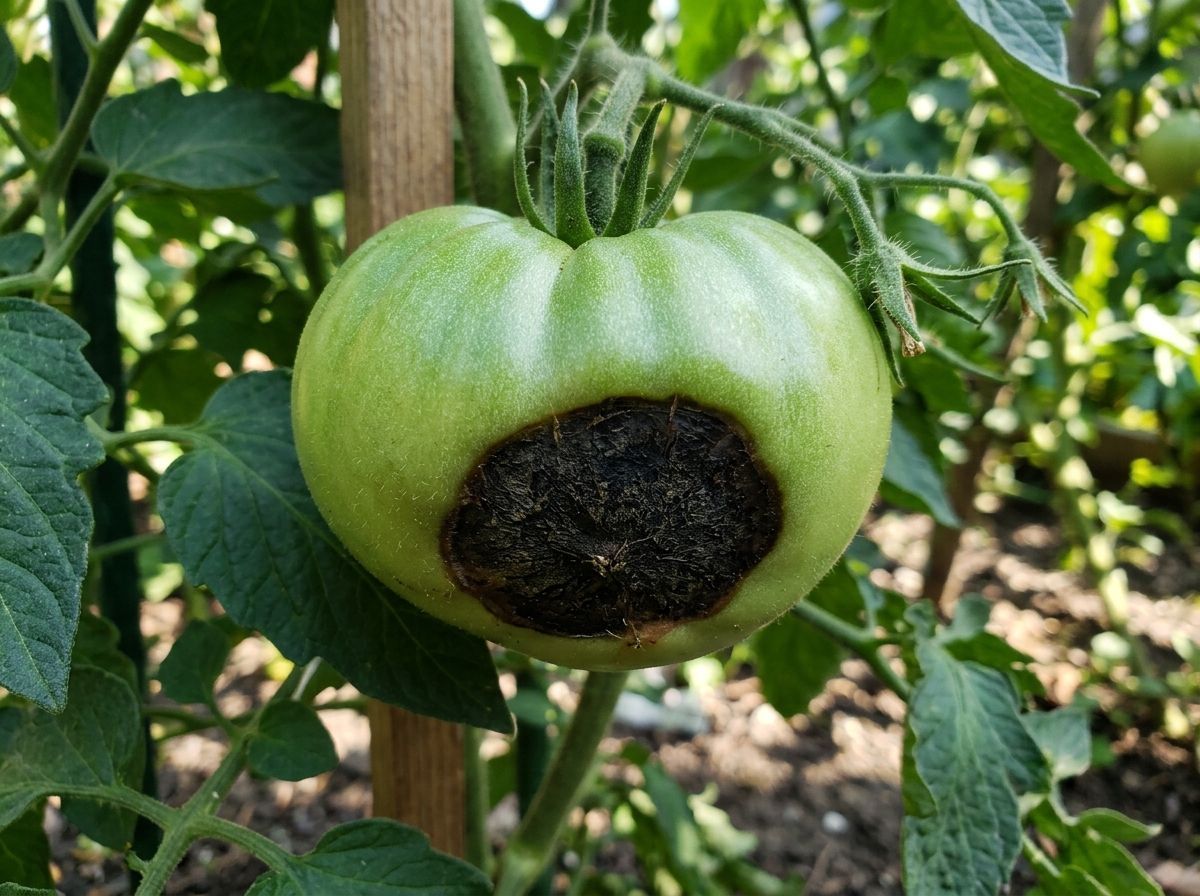
Blossom End Rot
Key Indicators to Look For:
- Leaf Position: Magnesium deficiency affects older lower leaves first, causing yellowing between green veins. Early Blight starts as spots on lower leaves but quickly develops concentric target rings.
- Symmetry: Calcium Blossom End Rot is symmetric and isolated strictly to the blossom end of the tomato fruit. Fungal Buckeye Rot or Phytophthora creates irregular, asymmetric rings anywhere on the fruit.
- Texture: Blossom End Rot lesions are flat, dry, and leathery. Fungal fruit rots are water-soaked, soft, and quickly turn the entire fruit mushy.
Diagnose Your Tomato Crop Instantly
Take or upload a photo of your leaf or field damage to let our AI model scan for diseases, insect pests, or nutritional deficiencies.
Seasonal Outbreak Calendar
Track peak infestation and disease risk months by geographic region. Access the interactive dashboard to see what diseases are active this month.
Explore Disease CalendarFeatured Agronomy Guide
Read our comprehensive guide comparing plant nutrient deficiencies, infectious diseases, and pests.
Read Symptom Diagnosis GuideExplore Other Crop Hubs
Rice (Paddy) Hub
Grain health, blast management, and water guides.
Wheat Hub
Cereal growth guides, rust diagnosis, and soil prep.
Coconut Hub
Palm care, potassium checks, and organic pest remedies.
Mango Hub
Mango variety guides, zinc sprays, and leaf curl tips.
Onion Hub
Allium health, bulb expansions, and sulfur timing.