
Cutworm
Agrotis ipsilon
About Cutworm
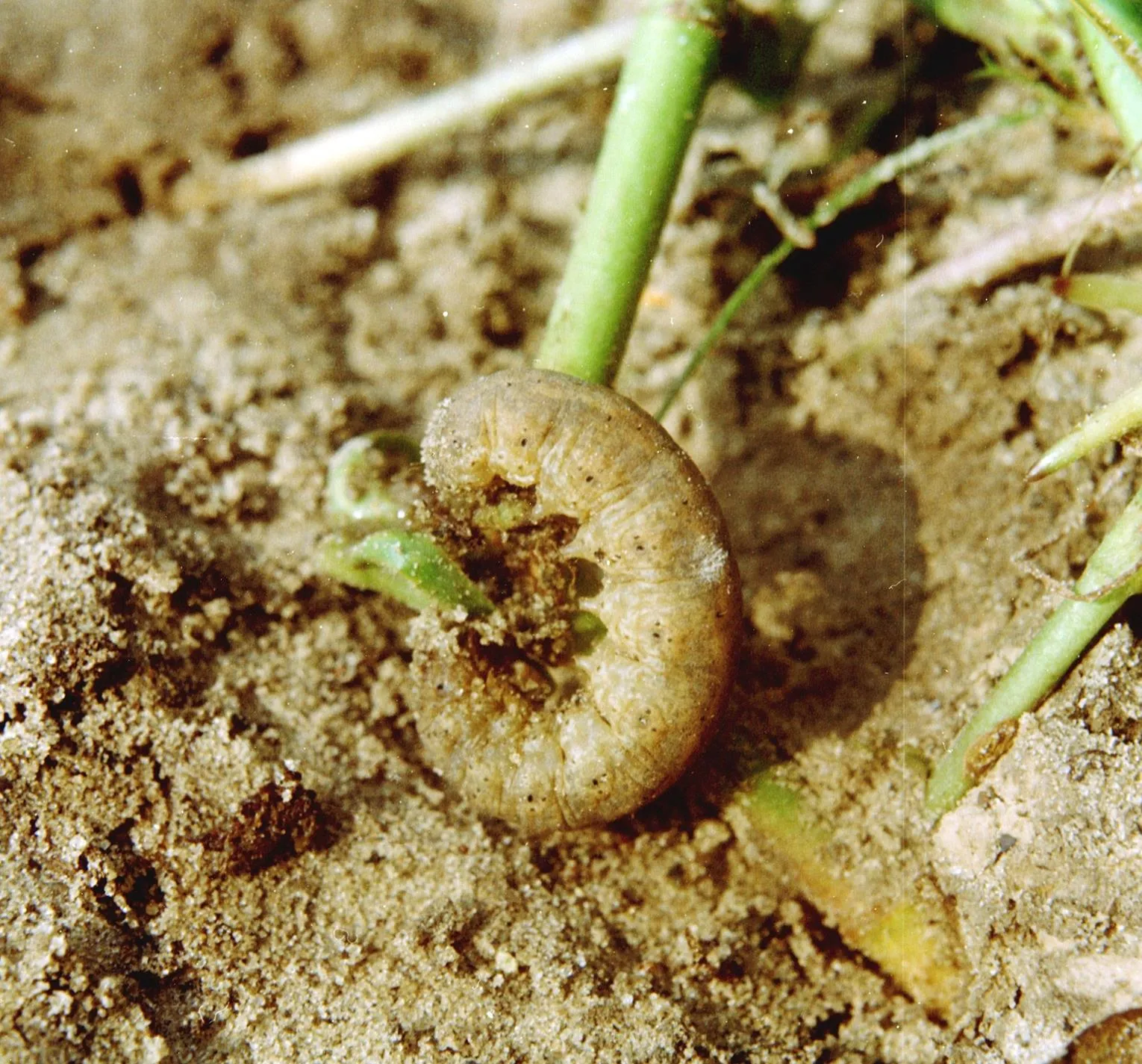
Cutworms, belonging primarily to the owlet moth family *Noctuidae* under the order *Lepidoptera*, are among the most registered seedling pests in agriculture. The term refers to the larvae of several moth species, with the Black Cutworm (*Agrotis ipsilon*) being the most widespread. These soil-dwelling caterpillars hide in leaf litter or under the soil during the day and emerge at night to feed, targeting succulent young seedlings right at the soil level.
Identifying cutworm damage is straightforward but tragic. The classic symptom is a healthy seedling found snapped off flat at the soil surface, as if cut down with tiny shears. The caterpillar typically feeds on only a small portion before moving on to cut down the next seedling. When uncovered by digging gently in the soil within a few inches of the severed plant, the culprit will curl tightly into a neat C-shape—a diagnostic defense posture.
To distinguish cutworm injury from other soil pests, review this diagnostic comparison table:
| Pest Category | Primary Damage Pattern | Feeding Location & Behavior |
|---|---|---|
| Cutworm (Agrotis) | Clean basal stem severing at soil line | Nocturnal surface feeder, curls into C-shape in topsoil during day |
| Armyworm (Spodoptera) | Mass leaf defoliation & skeletonization | Marches in swarms across foliage (see our Armyworm Guide) |
| Wireworm (Elateridae) | Subterranean root & seed tunneling | Hard-bodied yellow larvae tunneling inside tubers and roots |
| Snails & Slugs (Gastropoda) | Irregular smooth leaf holes + slime trails | Nocturnal soft mollusks (see our Snails and Slugs Guide) |
Management strategies focus on seedling protection and cultural practices. Wrapping the base of transplants with cardboard collars or aluminum foil creates an effective physical barrier that cutworms cannot chew through. Spreading diatomaceous earth or crushed eggshells around seedlings deters crawling larvae. Applying beneficial nematodes (*Steinernema carpocapsae*) kills larvae in the soil organically. For crop establishment tips, check our Plant Disease Identifier Hub, or explore related profiles like Snails and Slugs, Armyworm, Cabbage Maggot, and Wireworm.
Taxonomy & Features
- C-Shaped Defense Curl: Larvae curl tightly into a distinct C-shape when disturbed or dug up from the soil.
- Basal Stem Cutting: Feeds on the base of succulent young plants, severing them clean off at the soil surface.
- Nocturnal Feeding Habit: Hides underground during daylight hours, emerging to feed only under the cover of night.
- Dull Fleshy Body: Thick, greasy-looking caterpillars in shades of grey, brown, or black (growing up to 5 cm).
- Debris Overwintering: Overwinters as larvae or pupae in grass margins, crop residues, and weedy garden patches.
- Digger Wasp Predators: Naturally hunted by predatory digger wasps and ground beetles that search the topsoil.
Seasonal Outbreak Calendar
Outbreak risk and activity timeline for Cutworm based on seasonal climate patterns:
Names in Different Languages
Affected Plant Species
Vegetables & Crops
- Tomato
- Cabbage
- Peppers
- Beans
- Corn
- Lettuce
- Potato
Flowers & Ornamentals
- Zinnias
- Marigolds
- Petunias
- Sunflowers
Fruits & Berries
- Strawberry
Prevention & Cure
Natural & Organic Methods
- Cardboard Collars: Wrap a 2-inch cardboard collar around transplant stems, burying it 1 inch deep in soil.
- Diatomaceous Earth: Sprinkle food-grade diatomaceous earth around seedling stems to deter crawling caterpillars.
- Beneficial Nematodes: Apply Steinernema carpocapsae nematodes to moist soil to parasitize cutworms.
Chemical & Professional Control
- Bacillus thuringiensis (Bt): Drench the soil base and spray leaves of young seedlings with Bt formulations.
- Permethrin Soil Sprays: Apply contact pyrethroids around the base of vulnerable crops in late afternoon.
- Bran Baits: Disperse bran baits infused with spinosad or carbaryl on the soil surface at dusk.
Frequently Asked Questions
Why do cutworms cut down seedlings and not eat the whole plant?
Cutworms feed on the tender sap and cambium of young stems. Severing the stem is a side effect of their girdling feeding behavior, and they often leave the foliage untouched.
How deep do cutworms hide during the day?
They burrow just 1 to 2 inches beneath the soil surface, usually within a few inches of the plants they cut down. You can find them by gently scraping the soil with your fingers.
Do cutworms affect mature plants?
Generally no. Once stems become woody and thick, cutworms can no longer sever them, though climbing cutworms may climb stems to chew leaves.
Recommended diagnostics based on crop family and symptoms:
Remedy Disclaimer & Safety Notice
This disease guide is for educational screening purposes only. Pathogen behavior, severity, and host susceptibility can vary dramatically based on seed variety, weather conditions, and regional microclimates. Chemical pesticides and organic treatments are subject to strict regional environmental regulations and registration mandates. Please verify all chemical registrations and review manufacturer safety labels carefully with local certified agronomists or agricultural extension service offices before applying.