
Bacterial Wilt
Ralstonia solanacearum
About Bacterial Wilt
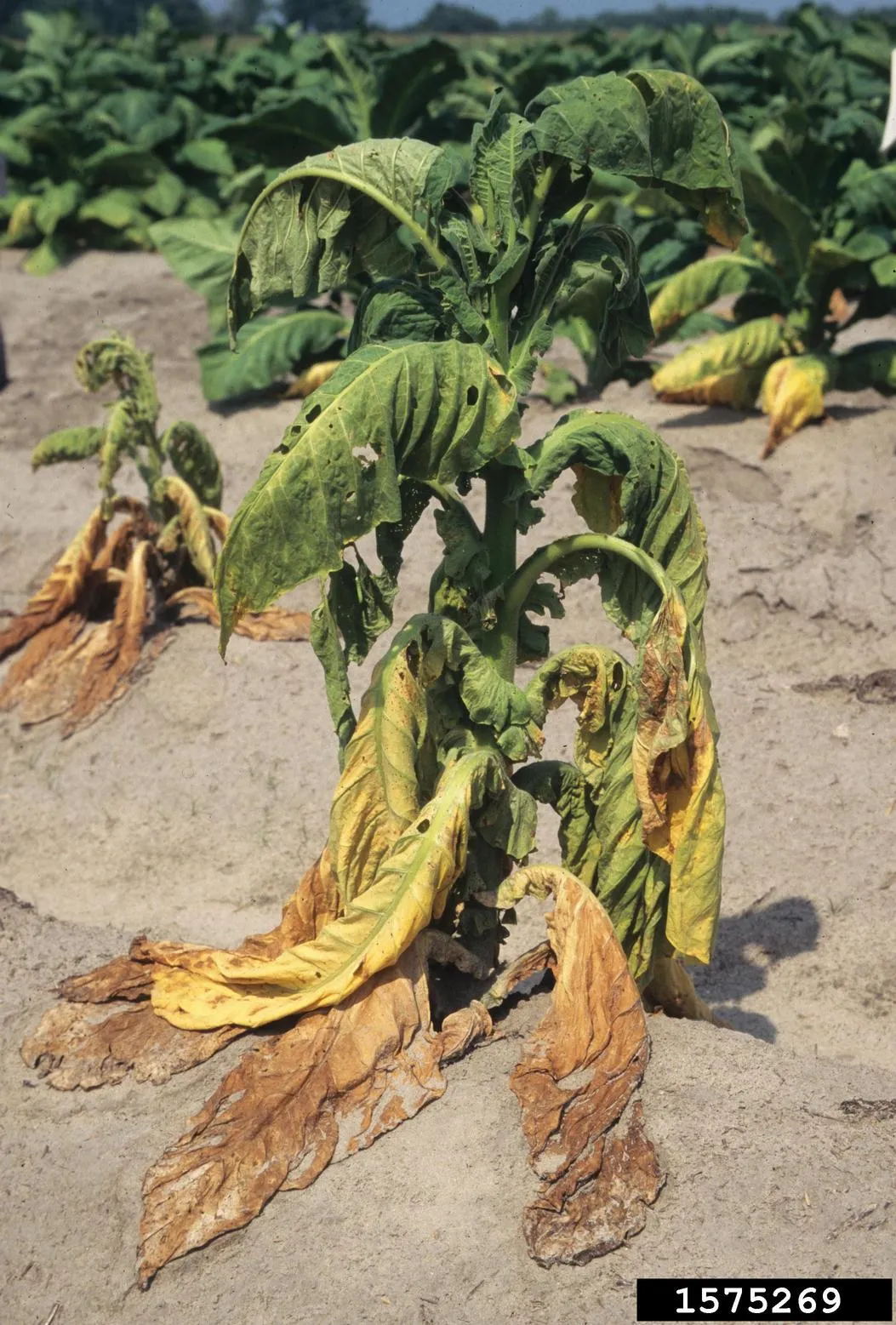
Bacterial Wilt, primarily caused by the soil-borne pathogen *Ralstonia solanacearum*, is a highly destructive and economically devastating vascular disease affecting a wide range of host crops, most notably Solanaceous plants like potatoes, tomatoes, and eggplants. Belonging to the class *Betaproteobacteria* in the phylum *Proteobacteria*, this pathogen is highly persistent, surviving deep in soil, water, and weed hosts. The bacteria enter the host plant through root wounds or natural openings, rapidly colonizing and clogging the water-transporting xylem vessels. This vascular blockage prevents water translocation, leading to sudden, irreversible systemic wilting and crop death. To distinguish Bacterial Wilt from simple underwatering or overwatering root rot, refer to our Symptom Diagnosis Guide.
Identifying a bacterial wilt infestation involves distinguishing it from fungal wilts or environmental dry-out. The most diagnostic symptom is the sudden, rapid wilting of leaves and shoots during the warm afternoon, which often recovers slightly overnight before becoming permanent. Unlike fungal wilts, the leaves usually retain their green color rather than yellowing before wilting. Slicing the lower stem of an infected plant reveals a dark brown discoloration of the vascular ring. Placing a cut stem segment in a clear glass of water produces a highly diagnostic, slimy white stream of bacterial ooze discharging from the cut vascular bundles.
Bacterial wilt has an extremely broad host range, targeting nightshades, bananas, ginger, and various ornamental and weed plants.
| Affected Crops / Plants | Severity Rating | Damage Symptoms |
|---|---|---|
| Potato, Tomato, Eggplant | Extreme (⭐⭐⭐) | Sudden green wilting, brown vascular ring, tuber brown rot, plant collapse |
| Banana, Plantain (Moko disease) | High (⭐⭐) | Yellowing leaves, vascular discoloration, internal fruit rot |
| Ginger, Chili Peppers | Medium (⭐) | Localized wilting, rhizome rot, reduced crop yield |
Ralstonia solanacearum overwinters in infected crop debris, volunteer plants, soil, and deep root systems of weeds. The bacterium is highly sensitive to temperatures, thriving in warm, wet soils (28°C to 35°C) with poor drainage. It spreads via infected seed tubers, runoff water, farm machinery, and pruning tools. Organic management relies on planting certified disease-free seeds, practicing a 5-year crop rotation with non-hosts like corn or grass, and applying bio-fumigants like mustard meal. Chemical options are extremely limited, though soil sanitizers or copper drenching can suppress soil populations. For complete vascular disease guides, visit our Plant Disease Identifier Hub, or explore similar threat profiles like Fusarium Wilt, Verticillium Wilt, and Root Rot. For specialized diagnosis of related crop threats, see our guide on Bacterial Speck.
If your solanaceous crops (tomatoes, potatoes, eggplants) are exhibiting sudden wilting, it is essential to distinguish Bacterial Wilt from fungal wilts like Fusarium Wilt or Verticillium Wilt. Bacterial Wilt is caused by the vascular bacterium *Ralstonia solanacearum* and is characterized by rapid, systemic wilting where leaves remain green during collapse, accompanied by a milky-white bacterial ooze streaming from cut stems submerged in clear water. In contrast, Fusarium and Verticillium wilts are fungal infections that cause progressive leaf chlorosis (yellowing), bottom-up yellowing, and lack bacterial streaming in water. Review the diagnostic difference table below to confirm your vascular plant pathogen:
| Diagnostic Trait | Bacterial Wilt (Ralstonia) | Fusarium Wilt (Fungal) | Verticillium Wilt (Fungal) |
|---|---|---|---|
| Causative Pathogen | Bacterium: Ralstonia solanacearum | Fungus: Fusarium oxysporum | Fungus: Verticillium dahliae |
| Foliar Symptom Pattern | Sudden green wilting without prior leaf yellowing | Progressive yellowing of lower leaves (often one-sided) | V-shaped yellow chlorotic blotches on lower leaves |
| Water Stem Streaming Test | Positive: Milky-white slimy bacterial ooze streams out | Negative: Clear water, no ooze stream | Negative: Clear water, no ooze stream |
| Optimal Temperature | High Heat & Moisture: 28°C to 35°C (82°F to 95°F) | Warm Soil: 25°C to 30°C (77°F to 86°F) | Cool to Moderate: 20°C to 25°C (68°F to 77°F) |
| Vascular Discoloration | Dark brown vascular ring with bacterial slime | Dark brown ring extending high up the main stem | Light tan to brown ring confined to lower stem |
Taxonomy & Features
- Lethal Xylem Clogging: Pathogen colonizes and blocks the water-conducting xylem vessels, causing rapid, systemic wilting and complete plant collapse.
- Sudden Green Wilting: Leaves wilt rapidly during hot afternoons while remaining green, distinguishing it from the progressive yellowing of fungal wilts.
- Bacterial Streaming Test: Slicing infected stems and placing them in water produces a visible, milky-white stream of bacterial ooze, serving as a primary field diagnostic.
- Brown Tuber Rot: In potatoes, the bacteria cause 'brown rot,' characterized by vascular ring browning and sticky white ooze exuding from the tuber eyes.
- Soil & Water Persistence: Extremely persistent pathogen that can survive for decades deep in soil, irrigation water, and wild weed root systems.
- Strict Sanitation Control: Spreads readily via farm tools, shoes, and machinery, making thorough sterilization with sanitizers critical for containment.
Seasonal Outbreak Calendar
Outbreak risk and activity timeline for Bacterial Wilt based on seasonal climate patterns:
Names in Different Languages
Affected Plant Species
Vegetables & Crops
- Potato
- Tomato
- Eggplant
- Chili Pepper
- Ginger
Flowers & Ornamentals
- Geraniums
- Marigolds
- Petunias
- Dahlias
Fruits & Berries
- Banana
- Plantain
Prevention & Cure
Natural & Organic Methods
- Certified Seeds: Always plant certified disease-free seed tubers and seedlings from reputable nurseries.
- Crop Rotation: Practice a 4-to-5-year crop rotation using non-host crops such as maize, wheat, sorghum, or grass.
- Bio-Fumigation: Grow and till mustard or brassica cover crops into the soil before planting; their glucosinolates suppress bacteria.
- Weed Control: Eradicate wild solanaceous weeds (like nightshades) around fields, as their roots act as bacterial reservoirs.
Chemical & Professional Control
- Soil Disinfection: Treat nursery soil with registered chemical soil sterilants or steam pasteurization before sowing.
- Copper Drenching: Drench soil bases with copper oxychloride (0.3%) to suppress bacterial multiplication in infected areas.
- Tool Sterilization: Regularly dip pruning shears, knives, and boots in a 10% bleach or quaternary ammonium solution.
Frequently Asked Questions
How do I perform the bacterial streaming water test for wilt?
Cut a 2-3 inch segment of the lower stem from a newly wilting plant. Suspend the stem segment vertically in a clear glass of clean, still water, with the cut surface just touching the water level. Within a few minutes, if the plant is infected with bacterial wilt, a distinct, milky-white thread of bacterial slime (ooze) will stream down from the cut vascular bundles.
What is the difference between Bacterial Wilt and Fusarium or Verticillium wilt?
Bacterial Wilt causes rapid, sudden green wilting of the leaves, often starting in the afternoon, while the leaves usually remain green. Fusarium and Verticillium wilts are fungal pathogens that cause a slower, progressive yellowing (chlorosis) of the leaves, starting from the lower foliage and moving upward over several weeks.
Can I save a plant once it shows signs of Bacterial Wilt?
No. Once a plant displays wilting symptoms, the xylem vessels are already heavily colonized and irreversibly blocked by bacterial slime. There is no curative treatment. The infected plant should be immediately uprooted, along with its surrounding soil, and burned or discarded to prevent the bacteria from spreading through runoff water.
Recommended diagnostics based on crop family and symptoms:
Remedy Disclaimer & Safety Notice
This disease guide is for educational screening purposes only. Pathogen behavior, severity, and host susceptibility can vary dramatically based on seed variety, weather conditions, and regional microclimates. Chemical pesticides and organic treatments are subject to strict regional environmental regulations and registration mandates. Please verify all chemical registrations and review manufacturer safety labels carefully with local certified agronomists or agricultural extension service offices before applying.