
Damping Off
Pythium spp., Rhizoctonia solani, Fusarium spp.
About Damping Off
Damping off is a devastating disease complex caused by a group of soil-borne oomycetes and fungi (primarily Pythium spp., Rhizoctonia solani, and Fusarium spp.) that targets newly germinated seeds and young seedlings. Pythium species belong to the Pythiaceae family and are water molds (oomycetes), while Rhizoctonia is a true basidiomycete fungus. This disease complex is the primary cause of seedling failure in agricultural greenhouses and indoor seed-starting setups, capable of destroying entire trays of young plants overnight, severely impacting starting seasons.
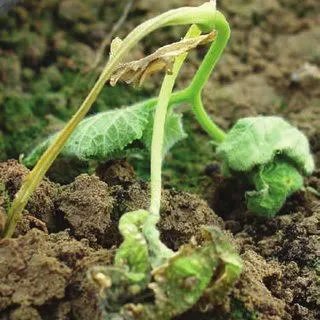
Identifying Damping Off is highly direct due to the rapid, characteristic collapse of young seedlings. Symptoms are divided into pre-emergence damping off (seeds rot in soil before germinating) and post-emergence damping off (young seedlings suddenly tip over and die at the soil surface). Upon closer inspection, the base of the tiny stem appears water-soaked, dark, soft, or shriveled to a thin, wiry thread while the roots appear brown and rotten. Our diagnostic photograph highlights a tray of collapsed tomato seedlings, capturing the pinched, shriveled stem bases at the soil line that characterize a Pythium outbreak.
The life cycle of these pathogens is highly adapted to moist environments. They persist as dormant oospores or sclerotia in unsterilized soil, pots, and organic matter. In cool, wet, overwatered soil, flagellated zoosporic oomycetes physically swim through water films to infect germinating roots. The disease spreads rapidly under high humidity and stagnant air, with multiple cycles in greenhouse benches.
| Crop / Plant Type | Severity Rating | Damage Symptoms |
|---|---|---|
| Seedlings (Tomatoes, Peppers, Okra) | Extreme (⭐⭐⭐) | Sudden stem collapse, pinched wiry stem bases, 100% loss of young starts |
| Microgreens & Turfgrass | High (⭐⭐) | Circular expanding patches of dead, melting seedlings with white web-like mold |
| Root Vegetables (Carrots, Beets) | Medium (⭐) | Poor seedling emergence, stunted early taproots, patchy crop stands |
Managing Damping Off relies entirely on dry cultivation habits and sanitation, as collapsed seedlings cannot be saved. For organic control, start seeds exclusively in sterile, well-draining soil-less mix. Dust the soil surface with powdered cinnamon (a potent natural fungicide) or water seeds with cool chamomile tea or dilute copper sprays to suppress pathogens. For professional greenhouses, chemical control is achieved using fungicide seed treatments containing metalaxyl, fludioxonil, or thiram. Prevent outbreaks by bottom-watering, ensuring excellent air circulation with fans, and avoiding overcrowding. For further advice, consult our Plant Disease Identifier Hub, or explore guides on Root Rot, Fusarium Wilt, and Fungus Gnat.
Taxonomy & Features
- Pinched Stem Collapse: Causes newly germinated seedlings to suddenly shrivel at the soil line and tip over.
- Pre-Emergence Rot: Pathogens attack seeds before they germinate, resulting in complete seed rot and barren trays.
- Water-Mold Swimming Spores: Pythium species produce flagellated zoospores that physically swim through overwatered soil.
- Soggy Soil Activist: Thrives in cool, wet, compacted soils with poor drainage, spreading rapidly through water films.
- Brown Root Rot: Seedling roots turn brown, soft, and mushy, losing their ability to take up nutrients.
- Bottom-Watering Defense: Best prevented by using sterilized soil-less starting mixes, running air fans, and bottom-watering.
Seasonal Outbreak Calendar
Outbreak risk and activity timeline for Damping Off based on seasonal climate patterns:
Names in Different Languages
Affected Plant Species
Vegetables & Crops
- Tomato
- Pepper
- Eggplant
- Okra
- Cabbage
- Onion
Flowers & Ornamentals
- Petunias
- Pansies
- Snapdragons
- Impatiens
- Marigolds
- Salvia
Fruits & Berries
- Melon
- Watermelon
- Cucumber
- Squash
Prevention & Cure
Natural & Organic Methods
- Cinnamon Powder: Dust ground cinnamon onto the soil surface of seedling trays to act as a natural, safe antifungal barrier.
- Chamomile Tea: Water seedlings with dilute, cooled organic chamomile tea to suppress Pythium and Rhizoctonia pathogens.
- Sterile Soil-less Mix: Always use fresh, sterile peat-based seed-starting mixes instead of garden soil to start seeds.
- Air Fan Circulation: Set up an electric desk fan to blow a gentle breeze over seedling trays, drying the soil surface quickly.
Chemical & Professional Control
- Metalaxyl Seed Treatment: Treat seeds with metalaxyl protectants to chemically shield them from Pythium swimming spores.
- Fludioxonil: Apply as a commercial seed drench to inhibit Rhizoctonia and Fusarium spore development during germination.
- Thiram Dust: Coat seeds lightly with thiram fungicide to provide a broad-spectrum protective shield in early spring soil.
Frequently Asked Questions
Can collapsed seedlings be saved if I water them with fungicide?
No, once a seedling has tipped over due to damping off, the vascular tissue at the base of the stem is permanently destroyed and shriveled. It cannot be repaired. The seedling will die and should be removed immediately to prevent spores from spreading to neighboring starts.
How does using garden soil cause damping off?
Outdoor garden soil naturally contains high populations of Pythium, Rhizoctonia, and Fusarium species. While mature plants are strong enough to resist these pathogens, tender young seedlings started indoors have thin skins and no defense, making them easy prey. Always use sterile starting mixes.
Why is bottom-watering highly recommended for seedlings?
Bottom-watering keeps the actual surface of the soil relatively dry while drawing moisture upward to the deep roots. Since damping off pathogens thrive and swim on the moist top layer of soil, keeping this layer dry prevents their germination and stops infections.
Recommended diagnostics based on crop family and symptoms:
Remedy Disclaimer & Safety Notice
This disease guide is for educational screening purposes only. Pathogen behavior, severity, and host susceptibility can vary dramatically based on seed variety, weather conditions, and regional microclimates. Chemical pesticides and organic treatments are subject to strict regional environmental regulations and registration mandates. Please verify all chemical registrations and review manufacturer safety labels carefully with local certified agronomists or agricultural extension service offices before applying.